Introduction
Web design software enables individuals and teams to create visually appealing, functional, and responsive websites. Unlike basic website builders, web design software often provides greater control over layout, styling, interactions, and sometimes code, making it ideal for designers and developers who want flexibility.
With the increasing demand for better user experiences and visually engaging digital products, web design tools have evolved into powerful platforms combining design, prototyping, collaboration, and development workflows. Businesses now require tools that not only design websites but also support team collaboration, design systems, and performance optimization.
Common Use Cases
- Designing website layouts and UI/UX interfaces
- Creating responsive web designs for multiple devices
- Prototyping and testing user flows
- Collaborating across design and development teams
- Building and exporting production-ready code
What Buyers Should Evaluate
- Ease of use vs learning curve
- Design flexibility and customization
- Prototyping and interaction capabilities
- Collaboration features for teams
- Integration with development workflows
- Export options (code, assets, design systems)
- Performance and reliability
- Cross-platform compatibility
- Pricing and licensing model
Best for: UI/UX designers, web designers, front-end developers, product teams, and agencies working on modern web experiences.
Not ideal for: Users looking for simple website creation without design complexity or those who prefer fully automated website builders.
Key Trends in Web Design Software
- AI-assisted design: Tools suggesting layouts, components, and design improvements
- Real-time collaboration: Multiple users working simultaneously on the same project
- Design-to-code workflows: Bridging the gap between design and development
- Component-based design systems: Reusable UI elements across projects
- Cloud-first platforms: Accessibility from anywhere without installation
- Interactive prototyping: Simulating real user experiences
- Cross-platform design consistency: Ensuring uniform experiences across devices
- Integration with developer tools: Seamless handoff to engineering teams
- Automation in workflows: Reducing repetitive design tasks
How We Selected These Tools (Methodology)
- Industry adoption among designers and teams
- Feature completeness across design, prototyping, and collaboration
- Performance and reliability in real-world usage
- Ease of use vs flexibility balance
- Integration with development and product workflows
- Support for design systems and scalability
- Cross-platform compatibility
- Community, plugins, and ecosystem strength
- Continuous innovation and updates
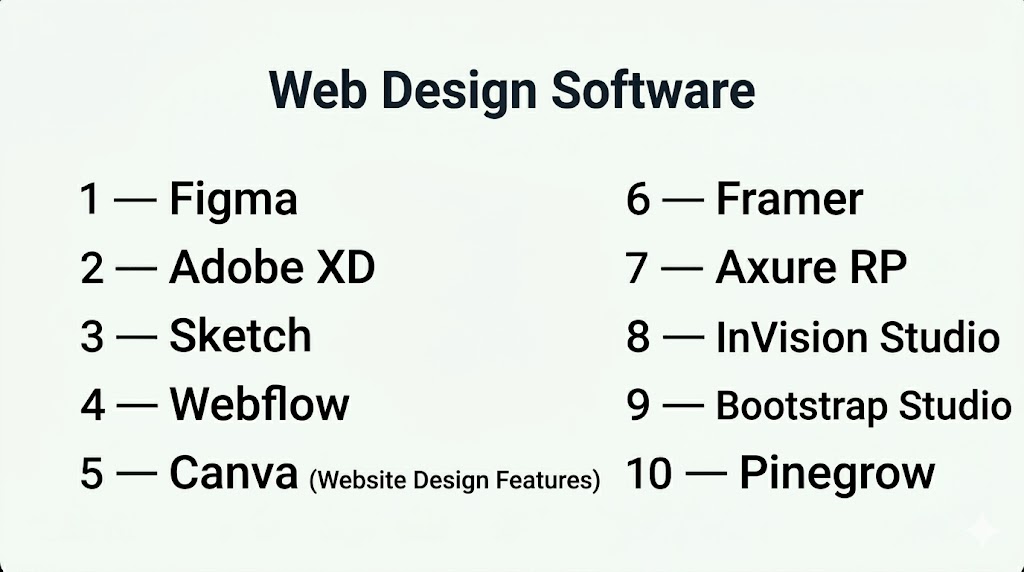
Top 10 Web Design Software
#1 — Figma
Short description: A cloud-based design tool known for real-time collaboration and modern UI/UX workflows.
Key Features
- Real-time collaboration
- Vector design tools
- Prototyping capabilities
- Design systems and components
- Plugin ecosystem
- Cloud-based access
Pros
- Excellent collaboration features
- Works directly in the browser
Cons
- Requires internet connection for full functionality
- Can become complex for large projects
Platforms / Deployment
Web / macOS / Windows
Security & Compliance
SSO, encryption. Additional details: Not publicly stated
Integrations & Ecosystem
- Design plugins
- Developer tools
- APIs
Support & Community
Large global community and strong documentation
#2 — Adobe XD
Short description: A UI/UX design and prototyping tool integrated into the Adobe ecosystem.
Key Features
- UI design tools
- Prototyping
- Design systems
- Collaboration
- Asset sharing
- Integration with Adobe tools
Pros
- Seamless Adobe integration
- Strong design capabilities
Cons
- Slower updates compared to competitors
- Limited plugin ecosystem
Platforms / Deployment
Windows / macOS
Security & Compliance
Not publicly stated
Integrations & Ecosystem
- Adobe Creative Cloud
- APIs
Support & Community
Strong documentation and support
#3 — Sketch
Short description: A macOS-based design tool widely used for UI/UX design and prototyping.
Key Features
- Vector editing
- Symbols and components
- Prototyping
- Plugin ecosystem
- Design systems
Pros
- Lightweight and fast
- Strong plugin ecosystem
Cons
- macOS only
- Collaboration features limited compared to cloud tools
Platforms / Deployment
macOS
Security & Compliance
Not publicly stated
Integrations & Ecosystem
- Plugins
- Developer tools
- APIs
Support & Community
Large and active design community
#4 — Webflow
Short description: A visual web design tool that combines design with development and hosting capabilities.
Key Features
- Visual CSS editor
- Responsive design tools
- CMS
- Hosting
- Animations and interactions
- Code export
Pros
- High design flexibility
- Bridges design and development
Cons
- Learning curve
- Pricing can scale quickly
Platforms / Deployment
Web / Cloud
Security & Compliance
Not publicly stated
Integrations & Ecosystem
- CMS integrations
- APIs
- Third-party tools
Support & Community
Strong documentation and community
#5 — Canva (Website Design Features)
Short description: A beginner-friendly design tool with basic web design and landing page capabilities.
Key Features
- Drag-and-drop editor
- Templates
- Graphic design tools
- Collaboration
- Branding kits
Pros
- Extremely easy to use
- Affordable
Cons
- Limited advanced web design features
- Not developer-focused
Platforms / Deployment
Web / iOS / Android
Security & Compliance
Not publicly stated
Integrations & Ecosystem
- Marketing tools
- Content integrations
Support & Community
Large user base and tutorials
#6 — Framer
Short description: A modern web design tool combining design, prototyping, and publishing.
Key Features
- Interactive design
- Animations
- Real-time preview
- CMS
- Hosting
- Code components
Pros
- Strong interactivity features
- Modern UI workflows
Cons
- Learning curve
- Smaller ecosystem
Platforms / Deployment
Web / Cloud
Security & Compliance
Not publicly stated
Integrations & Ecosystem
- APIs
- Design tools
Support & Community
Growing community and documentation
#7 — Axure RP
Short description: A prototyping tool focused on advanced UX workflows and complex interactions.
Key Features
- Advanced prototyping
- Conditional logic
- Wireframing
- Documentation tools
- Collaboration
Pros
- Powerful for complex UX design
- Detailed prototyping
Cons
- Steep learning curve
- Not beginner-friendly
Platforms / Deployment
Windows / macOS
Security & Compliance
Not publicly stated
Integrations & Ecosystem
- APIs
- Design integrations
Support & Community
Strong enterprise usage
#8 — InVision Studio
Short description: A design and prototyping tool focused on collaboration and workflow management.
Key Features
- Prototyping
- Animation tools
- Collaboration
- Design systems
- Workflow integration
Pros
- Strong collaboration features
- Good prototyping tools
Cons
- Reduced development activity
- Smaller ecosystem
Platforms / Deployment
Windows / macOS
Security & Compliance
Not publicly stated
Integrations & Ecosystem
- Design tools
- APIs
Support & Community
Moderate community support
#9 — Bootstrap Studio
Short description: A desktop application for building responsive websites using Bootstrap framework.
Key Features
- Drag-and-drop interface
- Bootstrap components
- Responsive design
- Code export
- Templates
Pros
- Developer-friendly
- Clean code output
Cons
- Requires Bootstrap knowledge
- Limited design flexibility
Platforms / Deployment
Windows / macOS / Linux
Security & Compliance
Not publicly stated
Integrations & Ecosystem
- Code integrations
- APIs
Support & Community
Moderate community
#10 — Pinegrow
Short description: A desktop web editor offering full control over HTML, CSS, and responsive design.
Key Features
- Visual editor
- Code editing
- Responsive design
- CSS frameworks support
- Multi-page editing
Pros
- Full control over code
- Works offline
Cons
- Less intuitive
- Not beginner-friendly
Platforms / Deployment
Windows / macOS / Linux
Security & Compliance
Not publicly stated
Integrations & Ecosystem
- Code integrations
- APIs
Support & Community
Smaller community
Comparison Table (Top 10)
| Tool Name | Best For | Platform(s) Supported | Deployment | Standout Feature | Public Rating |
|---|---|---|---|---|---|
| Figma | Teams | Web | Cloud | Real-time collaboration | N/A |
| Adobe XD | Designers | Desktop | Local | Adobe integration | N/A |
| Sketch | Mac users | macOS | Local | Lightweight design | N/A |
| Webflow | Designers/devs | Web | Cloud | Design-to-code workflow | N/A |
| Canva | Beginners | Web | Cloud | Ease of use | N/A |
| Framer | Modern design | Web | Cloud | Interactive design | N/A |
| Axure RP | UX experts | Desktop | Local | Advanced prototyping | N/A |
| InVision Studio | Teams | Desktop | Local | Collaboration | N/A |
| Bootstrap Studio | Developers | Desktop | Local | Bootstrap integration | N/A |
| Pinegrow | Developers | Desktop | Local | Full code control | N/A |
Evaluation & Scoring of Web Design Software
| Tool Name | Core | Ease | Integrations | Security | Performance | Support | Value | Weighted Total |
|---|---|---|---|---|---|---|---|---|
| Figma | 9 | 9 | 9 | 8 | 9 | 9 | 8 | 8.9 |
| Adobe XD | 8 | 8 | 8 | 7 | 8 | 8 | 7 | 7.9 |
| Sketch | 8 | 7 | 8 | 7 | 8 | 8 | 7 | 7.8 |
| Webflow | 9 | 6 | 8 | 7 | 9 | 8 | 7 | 8.0 |
| Canva | 6 | 10 | 6 | 6 | 7 | 8 | 9 | 7.6 |
| Framer | 8 | 7 | 7 | 7 | 8 | 7 | 7 | 7.6 |
| Axure RP | 9 | 5 | 7 | 7 | 8 | 7 | 6 | 7.5 |
| InVision Studio | 7 | 7 | 7 | 6 | 7 | 7 | 7 | 7.1 |
| Bootstrap Studio | 7 | 7 | 6 | 6 | 8 | 6 | 8 | 7.2 |
| Pinegrow | 7 | 6 | 6 | 6 | 8 | 6 | 8 | 7.1 |
How to interpret scores:
- Scores are relative comparisons across tools
- Higher scores indicate stronger overall capabilities
- Design-first tools score higher in usability
- Developer tools score higher in flexibility
- Choose based on your workflow needs
Which Web Design Software Is Right for You?
Solo / Freelancer
- Best: Canva, Figma
- Focus on ease of use and collaboration
SMB
- Best: Figma, Webflow
- Balance between design and deployment
Mid-Market
- Best: Webflow, Framer
- Need scalability and advanced features
Enterprise
- Best: Figma, Axure RP
- Complex workflows and collaboration
Budget vs Premium
- Budget: Canva
- Premium: Figma, Webflow
Feature Depth vs Ease of Use
- Deep features: Axure RP, Webflow
- Easy to use: Canva, Figma
Integrations & Scalability
- Strong integrations: Figma
- Moderate: Framer
Security & Compliance Needs
- Enterprise-ready: Figma
- Basic: Canva
Frequently Asked Questions (FAQs)
What is web design software?
Tools used to design websites, layouts, and user interfaces.
Do I need coding skills?
Not always, but some tools offer advanced coding options.
Can I export code?
Some tools allow code export, others focus only on design.
Are these tools free?
Many offer free plans with limited features.
What is the difference from website builders?
Design tools focus on layout and UX, not full site deployment.
Can teams collaborate?
Many modern tools support real-time collaboration.
Are they suitable for beginners?
Some tools are beginner-friendly, others are advanced.
Do they support responsive design?
Yes, most tools support responsive layouts.
Can I use them offline?
Some desktop tools allow offline use.
Which tool is best overall?
Depends on your needs—there is no single best tool.
Conclusion
Web design software has evolved into powerful platforms that combine design, prototyping, and collaboration. They enable teams to create high-quality digital experiences while improving efficiency and workflow.
The right choice depends on your needs—whether you prioritize ease of use, design flexibility, or developer control. Tools like Figma and Webflow offer strong all-around capabilities, while Canva and Axure serve specific use cases.
