Introduction
Behavioral Biometrics Tools help organizations verify users based on how they behave rather than only what they know or possess. In simple terms, these tools analyze patterns such as typing rhythm, mouse movement, touchscreen gestures, device handling, navigation style, session behavior, pressure, swipe patterns, and interaction speed to detect whether a user is genuine, suspicious, automated, or potentially compromised.
Behavioral biometrics matter because fraudsters can steal passwords, bypass weak MFA, use phishing kits, operate bots, or take over authenticated sessions. Traditional authentication checks identity at login, but behavioral biometrics can continuously monitor user behavior during the session. Common use cases include account takeover detection, bot detection, digital banking fraud prevention, payment fraud detection, ecommerce account protection, call center fraud reduction, new account fraud detection, and continuous authentication.
Buyers should evaluate behavioral signal quality, passive authentication accuracy, fraud detection capabilities, device intelligence, bot detection, privacy controls, explainability, integration options, API maturity, real-time decisioning, false positive rates, reporting, compliance fit, and support quality.
Best for: banks, fintechs, ecommerce platforms, payment providers, insurance companies, gaming platforms, marketplaces, customer identity teams, fraud teams, and enterprises that need invisible fraud detection and continuous user trust. Not ideal for: very small teams with low fraud risk, organizations that only need basic MFA, or businesses without enough user traffic to train and validate behavioral risk models effectively.
Key Trends in Behavioral Biometrics Tools
- Continuous authentication is becoming more important: Organizations want to evaluate user trust throughout the session, not only at login.
- Passive fraud detection is reducing customer friction: Behavioral biometrics can detect risk silently without forcing every user through extra verification steps.
- Account takeover prevention is a major use case: Fraud teams use behavioral patterns to detect when a real user’s account is being controlled by someone else.
- Bot detection is becoming more behavior-driven: Instead of relying only on IP reputation or CAPTCHA, platforms now analyze interaction patterns to identify automated activity.
- Device intelligence and behavioral analytics are converging: Many platforms combine device fingerprinting, network signals, emulator detection, and behavioral traits into one risk score.
- Financial services adoption is strong: Banks, fintechs, payment apps, and lending platforms use behavioral biometrics to protect login, payments, transfers, and onboarding.
- Privacy-by-design is becoming a buying requirement: Buyers want fraud protection without collecting unnecessary sensitive biometric or personal data.
- Explainability matters for fraud teams: Analysts need to understand whether risk came from typing behavior, device change, session anomalies, bot behavior, or suspicious navigation.
- Behavioral biometrics are being used after login: Fraud can happen after authentication, so monitoring payment changes, address updates, withdrawals, and account settings is critical.
- Integration with identity and fraud stacks is expanding: Behavioral biometrics now commonly connect with CIAM, MFA, transaction monitoring, fraud engines, SIEM tools, and case management workflows.
How We Selected These Tools
The tools below were selected based on practical relevance to behavioral biometrics, fraud detection, account takeover prevention, bot detection, continuous authentication, customer identity protection, and digital risk management.
- Feature completeness: Tools were evaluated for behavioral analytics, passive authentication, device intelligence, bot detection, risk scoring, session monitoring, and fraud decisioning.
- Market adoption and mindshare: Preference was given to platforms recognized by fraud teams, financial institutions, ecommerce businesses, fintechs, and digital identity teams.
- Fraud detection depth: Platforms with strong coverage for account takeover, bot attacks, mule activity, social engineering, scams, and session hijacking were prioritized.
- Integration strength: APIs, SDKs, web and mobile support, CIAM integrations, fraud engine integrations, and case management compatibility were considered.
- Real-time decisioning: Tools that can support immediate risk scoring and step-up decisions during login, onboarding, payment, or transaction flows were rated higher.
- Security and privacy posture: Data minimization, encryption, access control, privacy controls, auditability, and compliance readiness were considered where clearly known.
- User experience impact: Tools that support passive analysis and reduce unnecessary user friction were prioritized.
- Buyer fit: The list includes options for banks, fintechs, ecommerce companies, SaaS platforms, gaming companies, marketplaces, and enterprises.
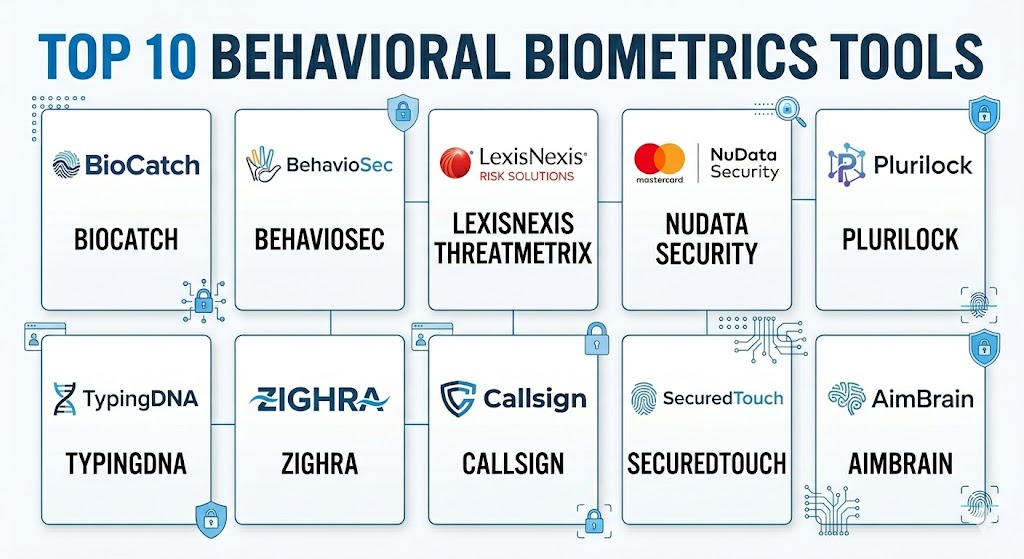
Top 10 Behavioral Biometrics Tools
#1 — BioCatch
Short description: BioCatch is one of the most recognized behavioral biometrics platforms for fraud detection and digital banking security. It analyzes user behavior, device interaction, session signals, and digital patterns to detect account takeover, scams, bot activity, and suspicious transactions. BioCatch is especially strong in financial services, where fraud teams need continuous risk analysis across login, onboarding, payments, and transfers. It is best for banks, fintechs, and large digital businesses with serious fraud prevention needs.
Key Features
- Behavioral biometric analysis across web and mobile sessions.
- Account takeover and session hijacking detection.
- Bot, malware, remote access, and scam-related risk signals.
- Continuous authentication and passive user profiling.
- Real-time risk scoring for fraud decisioning.
- Support for digital banking and payment workflows.
- Fraud analytics and investigation support.
Pros
- Strong reputation in behavioral biometrics and financial fraud prevention.
- Useful for detecting fraud after login.
- Helps reduce unnecessary friction for legitimate users.
- Strong fit for banks, fintechs, and regulated digital platforms.
Cons
- May be more suitable for larger organizations with high fraud exposure.
- Implementation requires fraud strategy and data integration planning.
- Pricing may be enterprise-oriented.
- Teams need analyst workflows to act on risk signals effectively.
Platforms / Deployment
Cloud / API / Web SDK / Mobile SDK / Fraud detection platform.
Security & Compliance
Security capabilities may include encrypted data handling, access controls, risk scoring, audit workflows, and enterprise controls depending on deployment. Specific certifications and compliance claims should be verified directly. If uncertain, write: Not publicly stated.
Integrations & Ecosystem
BioCatch fits fraud prevention workflows where behavioral signals need to connect with identity, transaction, and risk systems.
- Digital banking platforms
- Payment systems
- Fraud engines
- Customer identity platforms
- Case management workflows
- Transaction monitoring systems
Support & Community
BioCatch provides enterprise support, fraud expertise, implementation guidance, and customer success resources. It is strongest for organizations with mature fraud operations and high-value digital transactions.
#2 — LexisNexis BehavioSec
Short description: LexisNexis BehavioSec provides behavioral biometrics and continuous authentication capabilities for digital identity and fraud prevention. It analyzes behavioral patterns such as keystrokes, mouse movements, touch gestures, and device interactions to identify whether the user behavior matches the expected profile. The platform is useful for account takeover detection, remote access fraud, bot activity, and suspicious sessions. It is best for organizations already using broader LexisNexis Risk Solutions identity and fraud intelligence.
Key Features
- Behavioral biometrics for web and mobile interactions.
- Continuous authentication and user behavior profiling.
- Account takeover and suspicious session detection.
- Keystroke, mouse, swipe, and device interaction analysis.
- Risk scoring for authentication and transaction workflows.
- Integration with identity verification and fraud intelligence.
- Passive user experience with low friction.
Pros
- Strong fit for fraud and identity risk programs.
- Useful as part of broader LexisNexis risk intelligence.
- Helps detect suspicious behavior without forcing extra steps.
- Good option for financial services and digital businesses.
Cons
- Best value may come when used with broader risk products.
- Requires traffic and behavioral data for effective profiling.
- Implementation may require fraud and identity expertise.
- Buyers should validate exact use-case fit and coverage.
Platforms / Deployment
Cloud / API / Web SDK / Mobile SDK / Risk intelligence platform.
Security & Compliance
Security features may include access controls, risk scoring, data protection, and auditability depending on configuration. Specific certifications and compliance details should be verified directly. If uncertain, write: Not publicly stated.
Integrations & Ecosystem
LexisNexis BehavioSec fits organizations that need behavioral risk signals connected to broader identity verification, fraud detection, and risk scoring workflows.
- Identity verification systems
- Fraud prevention platforms
- Customer login flows
- Digital banking apps
- Transaction risk systems
- Case management workflows
Support & Community
LexisNexis Risk Solutions provides enterprise support, documentation, implementation resources, and fraud risk expertise. It is best suited for organizations with established identity and fraud operations.
#3 — Nuance Gatekeeper
Short description: Nuance Gatekeeper is a biometric security and fraud prevention platform that includes voice biometrics and behavioral biometrics for authentication and fraud detection. It is especially useful for banks, telecoms, insurers, and contact centers that need to verify users across voice and digital channels. Gatekeeper can help detect fraudsters, authenticate legitimate customers, and reduce friction during service interactions. It is best for organizations that need omnichannel biometric identity assurance.
Key Features
- Voice biometrics for contact center authentication.
- Behavioral biometrics for digital interaction analysis.
- Fraudster detection and watchlist capabilities.
- Omnichannel authentication across voice and digital channels.
- Passive authentication to reduce customer friction.
- Risk scoring and identity assurance workflows.
- Useful for contact center and digital fraud prevention.
Pros
- Strong fit for contact centers and voice channels.
- Combines voice and behavioral biometric capabilities.
- Helps reduce call center authentication friction.
- Useful for detecting known fraudster patterns.
Cons
- Best suited to organizations with voice and customer service workflows.
- Implementation can require telephony and digital integration planning.
- May be more complex than digital-only behavioral tools.
- Buyers should validate privacy and consent requirements carefully.
Platforms / Deployment
Cloud / API / Contact center integrations / Web and mobile digital channels.
Security & Compliance
Security features may include biometric matching, risk scoring, access controls, watchlist support, and fraud detection workflows depending on configuration. Specific certifications should be verified directly. If uncertain, write: Not publicly stated.
Integrations & Ecosystem
Nuance Gatekeeper fits organizations where customer authentication spans digital apps, websites, call centers, and voice interactions.
- Contact center platforms
- Voice authentication workflows
- Digital banking apps
- Fraud detection systems
- Customer identity platforms
- Case management tools
Support & Community
Nuance provides enterprise support, implementation guidance, and biometric security expertise. It is strongest for large organizations with omnichannel customer identity and fraud challenges.
#4 — Mastercard NuDetect
Short description: Mastercard NuDetect provides behavioral analytics and device intelligence for fraud detection and account protection. It analyzes how users interact with devices, apps, and digital sessions to detect suspicious activity and reduce account takeover risk. NuDetect is useful for financial institutions, merchants, payment providers, and digital platforms that need real-time risk scoring. It is best for organizations that want behavioral biometrics connected to payment and identity risk workflows.
Key Features
- Behavioral biometrics and device intelligence.
- Account takeover and fraud risk detection.
- Passive analysis of user interactions.
- Real-time risk scoring for digital sessions.
- Useful for payment and financial service workflows.
- Bot and anomaly detection support.
- Integration with fraud and authentication decisioning.
Pros
- Strong fit for payment and financial risk environments.
- Combines behavioral and device signals.
- Useful for reducing login and transaction fraud.
- Helps balance security with customer experience.
Cons
- Product fit and availability should be validated by region and use case.
- Best suited to organizations with significant digital transaction volume.
- Implementation requires fraud workflow integration.
- Pricing and packaging may be enterprise-oriented.
Platforms / Deployment
Cloud / API / Web SDK / Mobile SDK / Risk intelligence platform.
Security & Compliance
Security capabilities may include device intelligence, behavioral analysis, risk scoring, access controls, and fraud workflow support depending on configuration. Specific certifications should be verified directly. If uncertain, write: Not publicly stated.
Integrations & Ecosystem
Mastercard NuDetect fits payment, banking, and digital commerce workflows where behavioral risk must support real-time decisions.
- Payment platforms
- Banking apps
- Fraud engines
- Customer authentication flows
- Ecommerce platforms
- Transaction monitoring systems
Support & Community
Mastercard provides enterprise support, payment risk expertise, and implementation resources. It is best suited for financial institutions and digital businesses with payment-related fraud exposure.
#5 — ThreatMark
Short description: ThreatMark provides digital identity protection and behavioral intelligence for fraud detection, scam prevention, account takeover detection, and session risk analysis. It analyzes user behavior, device interactions, session context, and digital journey signals to identify suspicious activity. ThreatMark is especially relevant for banks and financial institutions that need visibility into online and mobile banking fraud. It is best for organizations that want behavioral analytics combined with fraud intelligence and scam detection.
Key Features
- Behavioral intelligence for web and mobile sessions.
- Account takeover and scam detection support.
- Remote access and malware-related risk indicators.
- Session monitoring and user journey analytics.
- Risk scoring for authentication and transaction workflows.
- Digital banking fraud detection capabilities.
- Fraud investigation and alerting features.
Pros
- Strong fit for banking and financial fraud prevention.
- Useful for scam and social engineering detection.
- Helps detect abnormal user behavior during active sessions.
- Supports digital identity protection workflows.
Cons
- Best suited to organizations with meaningful fraud risk.
- Requires careful implementation and signal tuning.
- May not be ideal for small low-risk applications.
- Buyers should validate integration effort and analyst workflow fit.
Platforms / Deployment
Cloud / API / Web SDK / Mobile SDK / Fraud detection platform.
Security & Compliance
Security capabilities may include risk scoring, session monitoring, fraud analytics, access controls, and reporting depending on configuration. Specific certifications should be verified directly. If uncertain, write: Not publicly stated.
Integrations & Ecosystem
ThreatMark fits digital banking and fintech environments where fraud teams need behavioral intelligence across user journeys.
- Online banking platforms
- Mobile banking apps
- Fraud detection systems
- Transaction monitoring workflows
- Case management tools
- Customer identity systems
Support & Community
ThreatMark provides enterprise support, fraud expertise, and implementation resources. It is strongest for financial institutions and digital businesses needing behavioral fraud detection.
#6 — Plurilock AI
Short description: Plurilock AI provides behavioral biometrics and continuous authentication capabilities for workforce identity and enterprise security. It analyzes user behavior patterns to help verify that the person using a system is the legitimate user throughout the session. Plurilock is useful for organizations that need invisible identity assurance for employees, contractors, and high-risk users. It is best for enterprises, government agencies, and security-sensitive teams focused on workforce protection.
Key Features
- Continuous authentication based on user behavior.
- Behavioral biometric profiling for workforce environments.
- Passive identity verification during active sessions.
- Risk detection for account misuse and insider threats.
- Support for enterprise security workflows.
- User behavior analytics for identity assurance.
- Helps reduce dependence on repeated manual authentication.
Pros
- Strong fit for workforce continuous authentication.
- Useful for high-security and regulated environments.
- Helps detect account misuse after login.
- Passive monitoring can reduce user disruption.
Cons
- May not be focused on consumer fraud or ecommerce workflows.
- Requires enterprise deployment and tuning.
- User privacy and employee monitoring concerns must be managed carefully.
- Best value depends on high-risk workforce use cases.
Platforms / Deployment
Cloud / Enterprise endpoint and identity environments / Deployment options may vary.
Security & Compliance
Security features may include continuous authentication, behavioral analysis, risk scoring, access controls, and enterprise monitoring depending on configuration. Specific certifications should be verified directly. If uncertain, write: Not publicly stated.
Integrations & Ecosystem
Plurilock AI fits enterprise security programs where user identity assurance must continue after login.
- Workforce identity systems
- Endpoint environments
- Security operations workflows
- Insider risk programs
- Enterprise access systems
- High-assurance user monitoring
Support & Community
Plurilock provides enterprise support, implementation guidance, and security expertise. It is best suited for organizations with defined workforce security and continuous authentication needs.
#7 — TypingDNA
Short description: TypingDNA provides typing biometrics for authentication, fraud detection, and user verification based on keystroke dynamics. It analyzes how a user types rather than what they type, creating a behavioral pattern that can help verify identity. TypingDNA is useful for MFA, step-up authentication, online learning, employee access, and fraud prevention workflows. It is best for organizations that want a focused typing-based biometric layer with developer-friendly APIs.
Key Features
- Keystroke dynamics-based biometric authentication.
- Typing pattern analysis for user verification.
- API support for authentication and fraud workflows.
- Passive or active typing verification depending on implementation.
- Useful for step-up authentication and online identity checks.
- Can support web application login flows.
- Focused behavioral biometric capability.
Pros
- Simple and focused behavioral biometric use case.
- Developer-friendly for typing-based authentication.
- Useful where typing interaction is common.
- Can add an invisible or low-friction authentication layer.
Cons
- Less useful for mobile-only or low-typing experiences.
- Not a complete fraud platform by itself.
- Accuracy depends on available typing samples and context.
- May need complementary device and risk signals.
Platforms / Deployment
Cloud / API / Web application integration.
Security & Compliance
Security depends on implementation, data handling, typing sample storage, authentication policy, and backend controls. Specific certifications and compliance claims should be verified directly. If uncertain, write: Not publicly stated.
Integrations & Ecosystem
TypingDNA fits applications where users type enough to build and verify behavioral patterns.
- Web login flows
- MFA systems
- Online education platforms
- Workforce access systems
- Fraud prevention workflows
- Developer APIs
Support & Community
TypingDNA provides documentation, developer resources, and support options. It is strongest for teams that need typing biometrics rather than a broad fraud intelligence platform.
#8 — Callsign
Short description: Callsign provides digital identity, authentication, and fraud prevention technology that uses behavioral signals, device intelligence, and risk analytics to verify users. It is useful for organizations that need to reduce friction while detecting suspicious activity across digital channels. Callsign is commonly considered for banking, financial services, and digital customer authentication use cases. It is best for businesses that need intelligent authentication decisions based on behavior, device, and journey context.
Key Features
- Behavioral analytics for digital identity verification.
- Device intelligence and contextual risk signals.
- Authentication orchestration and risk-based decisions.
- Fraud prevention for login and transaction flows.
- Passive user recognition and step-up support.
- Customer identity security workflows.
- Useful for regulated and high-risk digital channels.
Pros
- Strong fit for customer identity and fraud prevention.
- Helps reduce friction for trusted users.
- Useful for banking and financial services.
- Combines behavior, device, and authentication context.
Cons
- Buyers should validate current product availability and support.
- Implementation may require identity journey design.
- Pricing may be enterprise-focused.
- May need complementary fraud and transaction monitoring tools.
Platforms / Deployment
Cloud / API / Web and mobile identity workflows.
Security & Compliance
Security capabilities may include behavioral risk scoring, device intelligence, authentication policy controls, and fraud detection features depending on configuration. Specific certifications should be verified directly. If uncertain, write: Not publicly stated.
Integrations & Ecosystem
Callsign fits digital identity journeys where login risk, device trust, user behavior, and fraud signals need to work together.
- Banking apps
- Customer identity platforms
- Fraud engines
- Transaction workflows
- Mobile and web applications
- Authentication systems
Support & Community
Support is typically vendor-led with enterprise onboarding and implementation guidance. Buyers should evaluate documentation, deployment references, and long-term support fit during a pilot.
#9 — SecuredTouch
Short description: SecuredTouch provides behavioral biometrics and device intelligence for fraud prevention, user authentication, and account protection. It analyzes how users interact with devices, including touch patterns, motion, typing behavior, and session dynamics. SecuredTouch is useful for mobile-first businesses that need to detect account takeover, bot activity, and suspicious access patterns. It is best for fintechs, banks, ecommerce platforms, and mobile apps with high fraud exposure.
Key Features
- Behavioral biometrics for mobile and web interactions.
- Touch, typing, device movement, and session behavior analysis.
- Account takeover and bot detection support.
- Risk scoring for login and transaction flows.
- Passive fraud detection with low user friction.
- Device intelligence and anomaly detection.
- Useful for customer-facing digital apps.
Pros
- Strong fit for mobile-first fraud prevention.
- Useful for passive authentication and risk scoring.
- Helps detect account takeover and automation.
- Good option for fintech and ecommerce use cases.
Cons
- Buyers should validate current product packaging and support.
- Mobile SDK integration may require app development effort.
- May need complementary transaction monitoring tools.
- Accuracy depends on traffic volume and behavioral data quality.
Platforms / Deployment
Cloud / API / Web SDK / Mobile SDK.
Security & Compliance
Security capabilities may include behavioral risk scoring, device intelligence, access controls, and fraud analytics depending on configuration. Specific certifications should be verified directly. If uncertain, write: Not publicly stated.
Integrations & Ecosystem
SecuredTouch fits digital fraud prevention workflows where behavioral and device signals are needed in real time.
- Mobile banking apps
- Ecommerce apps
- Customer authentication systems
- Fraud engines
- Payment workflows
- Risk decisioning systems
Support & Community
Support and documentation are typically vendor-led. Buyers should validate current availability, integration support, and product roadmap before production deployment.
#10 — AimBrain
Short description: AimBrain provides biometric authentication and fraud prevention capabilities, including behavioral biometrics, facial recognition, and voice-related identity signals depending on product configuration. It is useful for organizations that want multiple biometric layers to support identity verification and fraud reduction. AimBrain is especially relevant for fintech, banking, and digital platforms that need stronger authentication beyond passwords. It is best for teams exploring multi-modal biometric authentication with behavioral risk signals.
Key Features
- Behavioral biometric authentication capabilities.
- Support for multi-modal biometric identity signals depending on setup.
- Fraud detection and user verification workflows.
- API and SDK-based integration.
- Useful for login and step-up authentication.
- Can support customer identity risk workflows.
- Helps reduce reliance on password-only authentication.
Pros
- Multi-modal biometric approach can improve identity assurance.
- Useful for fintech and digital authentication use cases.
- API and SDK integration supports custom workflows.
- Can complement MFA and fraud detection tools.
Cons
- Buyers should validate current product availability and support.
- Biometric privacy and consent requirements must be carefully managed.
- May require complementary device and transaction risk tools.
- Implementation quality strongly affects user experience.
Platforms / Deployment
Cloud / API / Mobile SDK / Web integration.
Security & Compliance
Security depends on biometric data handling, encryption, consent management, access controls, storage design, and implementation practices. Specific certifications and compliance claims should be verified directly. If uncertain, write: Not publicly stated.
Integrations & Ecosystem
AimBrain fits identity and fraud workflows that need biometric verification, step-up authentication, and behavioral risk signals.
- Fintech applications
- Customer login flows
- Mobile authentication
- Identity verification workflows
- Fraud detection systems
- Step-up authentication journeys
Support & Community
Support is typically vendor-led. Buyers should test documentation, SDK quality, privacy controls, and implementation guidance before selecting it for production.
Comparison Table
| Tool Name | Best For | Platform Supported | Deployment | Standout Feature | Public Rating |
|---|---|---|---|---|---|
| BioCatch | Banking fraud and account takeover prevention | Web / Mobile / API | Cloud | Advanced behavioral biometrics for financial fraud | N/A |
| LexisNexis BehavioSec | Identity risk and continuous authentication | Web / Mobile / API | Cloud | Behavioral biometrics connected to risk intelligence | N/A |
| Nuance Gatekeeper | Voice and digital biometric authentication | Contact center / Web / Mobile / API | Cloud | Omnichannel biometrics for fraud prevention | N/A |
| Mastercard NuDetect | Payment and account risk detection | Web / Mobile / API | Cloud | Behavioral analytics with device intelligence | N/A |
| ThreatMark | Digital banking fraud and scam detection | Web / Mobile / API | Cloud | Behavioral intelligence for session risk | N/A |
| Plurilock AI | Workforce continuous authentication | Enterprise endpoints / Identity environments | Cloud / Varies | Continuous workforce identity assurance | N/A |
| TypingDNA | Keystroke biometrics | Web / API | Cloud | Typing pattern-based authentication | N/A |
| Callsign | Customer identity and adaptive authentication | Web / Mobile / API | Cloud | Behavior and device-based identity decisions | N/A |
| SecuredTouch | Mobile-first fraud prevention | Web / Mobile / API | Cloud | Touch and device behavior analysis | N/A |
| AimBrain | Multi-modal biometric authentication | Web / Mobile / API | Cloud | Behavioral and biometric identity signals | N/A |
Evaluation & Scoring of Behavioral Biometrics Tools
| Tool Name | Core 25% | Ease 15% | Integrations 15% | Security 10% | Performance 10% | Support 10% | Value 15% | Weighted Total |
|---|---|---|---|---|---|---|---|---|
| BioCatch | 10 | 8 | 9 | 9 | 9 | 9 | 8 | 8.95 |
| LexisNexis BehavioSec | 9 | 8 | 9 | 9 | 9 | 9 | 8 | 8.70 |
| Nuance Gatekeeper | 9 | 7 | 8 | 9 | 8 | 9 | 7 | 8.10 |
| Mastercard NuDetect | 9 | 8 | 9 | 9 | 9 | 9 | 8 | 8.70 |
| ThreatMark | 9 | 8 | 8 | 9 | 8 | 8 | 8 | 8.40 |
| Plurilock AI | 8 | 7 | 8 | 9 | 8 | 8 | 7 | 7.85 |
| TypingDNA | 7 | 9 | 7 | 8 | 8 | 7 | 8 | 7.70 |
| Callsign | 8 | 7 | 8 | 8 | 8 | 7 | 7 | 7.55 |
| SecuredTouch | 8 | 7 | 8 | 8 | 8 | 7 | 7 | 7.55 |
| AimBrain | 7 | 7 | 7 | 8 | 7 | 7 | 7 | 7.20 |
These scores are comparative and based on behavioral biometrics fit, not absolute product quality. A higher score means the tool aligns strongly with behavioral signal depth, fraud detection, integrations, passive authentication, security, and enterprise readiness. Banking-focused platforms score strongly for account takeover and fraud workflows, while specialized tools score well for focused use cases such as typing biometrics or workforce continuous authentication. Buyers should adjust the weighting based on whether they need customer fraud protection, workforce authentication, mobile fraud detection, or omnichannel identity assurance.
Which Behavioral Biometrics Tool Is Right for You?
Solo / Freelancer
Solo users usually do not need a full behavioral biometrics platform unless they are building a security product or fraud prevention workflow. If you are developing a small web app, a focused tool like TypingDNA may be easier to test for keystroke-based authentication. For most solo developers, standard MFA, passkeys, device controls, and risk-based authentication may be enough. Behavioral biometrics becomes more valuable when there is meaningful traffic, fraud risk, and enough behavioral data to analyze.
SMB
SMBs should focus on tools that are easy to integrate and clearly tied to fraud reduction. Ecommerce companies, fintech startups, and marketplaces may evaluate TypingDNA, Mastercard NuDetect, LexisNexis BehavioSec, or ThreatMark depending on use case and budget. If the app is mobile-first, behavioral and device intelligence coverage should be tested carefully. SMBs should start with login and high-risk transaction flows before expanding to full-session monitoring.
Mid-Market
Mid-market companies often need stronger account takeover detection, fraud scoring, session monitoring, and integration with existing risk systems. BioCatch, ThreatMark, Mastercard NuDetect, and LexisNexis BehavioSec are strong candidates for digital fraud prevention. Nuance Gatekeeper is useful if the business also has contact center authentication needs. Mid-market teams should compare false positives, analyst workflows, API performance, and reporting before selecting a platform.
Enterprise
Enterprises should prioritize scale, support, privacy, explainability, integration depth, and fraud operations maturity. BioCatch, LexisNexis BehavioSec, Mastercard NuDetect, ThreatMark, and Nuance Gatekeeper are strong options for large financial services and digital identity teams. Plurilock AI may fit workforce continuous authentication use cases. Enterprises should involve fraud, security, legal, privacy, IAM, and customer experience teams before deployment.
Budget vs Premium
Budget-conscious teams should avoid deploying a large behavioral biometrics platform before measuring fraud exposure. Basic MFA, device fingerprinting, bot detection, and transaction monitoring may be enough for low-risk environments. Premium behavioral biometrics tools are more valuable when account takeover, scams, bot attacks, or payment fraud are causing real losses. Total cost should include licensing, implementation, analyst review, false positives, user support, and integration maintenance.
Feature Depth vs Ease of Use
For deep fraud detection, BioCatch, LexisNexis BehavioSec, Mastercard NuDetect, and ThreatMark are strong options. For simpler typing-based authentication, TypingDNA is more focused and easier to understand. For omnichannel voice and digital identity, Nuance Gatekeeper is stronger. For workforce continuous authentication, Plurilock AI is more relevant. The right choice depends on whether the business needs fraud intelligence, authentication assurance, bot detection, or user behavior monitoring.
Integrations & Scalability
Integration needs usually include web SDKs, mobile SDKs, APIs, fraud engines, CIAM systems, transaction monitoring tools, case management platforms, and analytics systems. Banks and fintechs should test login, payment, transfer, beneficiary change, and device change workflows. Ecommerce platforms should test checkout, account recovery, and bot behavior. Scalability should include traffic volume, model training, real-time scoring, latency, and analyst workflow capacity.
Security & Compliance Needs
Behavioral biometrics can involve sensitive user interaction data, so buyers should evaluate privacy, consent, data minimization, retention, encryption, access controls, and auditability. Fraud teams should also ensure risk scores are explainable enough for case review and policy tuning. Regulated organizations should involve legal and privacy teams early. No behavioral biometrics tool should be treated as a standalone security solution; it works best alongside MFA, device intelligence, fraud monitoring, and identity governance.
Frequently Asked Questions
1. What are behavioral biometrics tools?
Behavioral biometrics tools identify users based on patterns in how they interact with devices and applications. They may analyze typing rhythm, mouse movement, touch gestures, device handling, navigation behavior, and session patterns. These tools help detect fraud, account takeover, bots, and suspicious behavior without always asking the user for extra verification. They are often used in banking, fintech, ecommerce, and customer identity security.
2. How are behavioral biometrics different from physical biometrics?
Physical biometrics use traits such as fingerprints, face, iris, or voice. Behavioral biometrics use interaction patterns such as typing speed, swipe behavior, mouse movement, pressure, device motion, and navigation style. Physical biometrics usually verify identity at a specific moment, while behavioral biometrics can monitor behavior continuously. Both can be useful, but they solve different authentication and fraud problems.
3. What are common use cases for behavioral biometrics?
Common use cases include account takeover detection, bot detection, scam prevention, online banking fraud detection, payment fraud prevention, customer authentication, workforce continuous authentication, and remote access risk detection. These tools are also used to identify unusual behavior after login. They are especially useful when fraudsters have valid credentials but behave differently from the genuine user.
4. Are behavioral biometrics tools accurate?
Accuracy depends on data quality, traffic volume, user behavior consistency, device type, model training, and implementation. Behavioral signals are powerful but should not be treated as perfect. False positives and false negatives can happen, especially during early deployment or with limited user history. Strong deployments combine behavioral biometrics with device intelligence, transaction risk, MFA, and fraud analyst review.
5. Do behavioral biometrics create friction for users?
One major benefit of behavioral biometrics is that they can work passively in the background. Legitimate users may not notice the tool at all, while suspicious sessions can be challenged, blocked, or reviewed. This helps reduce unnecessary MFA prompts and manual verification. However, teams must tune policies carefully so risk scores do not create too many false challenges.
6. Are behavioral biometrics privacy-friendly?
Behavioral biometrics can be privacy-friendly when designed with data minimization, secure processing, limited retention, and transparent policies. However, they still involve user behavior data, so privacy review is important. Organizations should avoid collecting unnecessary data and should define clear consent and retention practices. Legal and privacy teams should review implementation, especially in regulated regions or employee monitoring scenarios.
7. How are behavioral biometrics tools priced?
Pricing varies by vendor and use case. Some platforms charge by monthly active users, number of sessions, transaction volume, API calls, modules, or enterprise contract size. Large fraud prevention platforms may be priced for banks and high-volume digital businesses. Focused tools may be more accessible for smaller teams. Buyers should compare total cost against fraud losses, false positive reduction, and operational savings.
8. What integrations should buyers look for?
Important integrations include web SDKs, mobile SDKs, CIAM platforms, MFA tools, fraud engines, transaction monitoring systems, payment platforms, case management tools, SIEM systems, and data warehouses. Financial institutions should prioritize login, payment, transfer, and account recovery flows. Ecommerce teams should test checkout, bot detection, and account takeover workflows. Integration quality directly affects detection accuracy and response speed.
9. What are common implementation mistakes?
A common mistake is expecting behavioral biometrics to stop fraud alone. Another mistake is deploying the tool without enough traffic or without fraud analyst workflows. Teams may also fail to define which actions should happen for low, medium, and high risk scores. Successful deployments start with high-risk journeys, test against known fraud patterns, tune thresholds, monitor false positives, and combine signals with other controls.
10. What is the best behavioral biometrics tool overall?
There is no single best behavioral biometrics tool for every organization. BioCatch is strong for financial fraud and account takeover prevention, LexisNexis BehavioSec is useful for identity risk and continuous authentication, Nuance Gatekeeper fits voice and digital channels, Mastercard NuDetect is strong for payment and device risk, and ThreatMark is useful for digital banking fraud. The best choice depends on your fraud type, traffic volume, integration needs, industry, and risk tolerance.
Conclusion
Behavioral Biometrics Tools help organizations detect fraud, verify users, reduce friction, and protect accounts by analyzing how people interact with digital systems. The right tool depends on your environment: BioCatch, LexisNexis BehavioSec, Mastercard NuDetect, and ThreatMark are strong for financial fraud and account takeover detection, Nuance Gatekeeper is useful for voice and digital authentication, Plurilock AI fits workforce continuous authentication, and TypingDNA is a focused option for keystroke biometrics. Callsign, SecuredTouch, and AimBrain can support customer identity and mobile fraud use cases depending on product fit and availability. Buyers should not choose based only on brand recognition; they should test signal quality, SDK integration, false positives, privacy controls, real-time scoring, and analyst workflows. Start with one high-risk journey, pilot against real traffic, tune policies with fraud teams, validate privacy requirements, then scale gradually across login, payment, account recovery, and transaction flows.

This article clearly explains behavioral biometrics tools and how they help strengthen security by analyzing user behavior patterns for authentication and fraud prevention.
This article clearly explains behavioral biometrics tools and how they help organizations improve user authentication, fraud prevention, and overall digital security.
Behavioral biometrics work best when continuously adapted to changing user patterns. Static models can become less effective as user behavior naturally evolves over time.