Introduction
Third-Party Risk Management (TPRM) Tools help organizations identify, assess, and mitigate risks associated with outsourcing, vendor partnerships, and supplier relationships. These platforms allow businesses to monitor compliance, cybersecurity, financial stability, and operational performance of their third-party partners.
In today’s interconnected business ecosystem, third-party risks pose significant challenges, including regulatory non-compliance, data breaches, and operational disruptions. TPRM tools provide structured workflows, centralized risk assessments, and real-time monitoring to safeguard organizations against these threats.
Use cases include:
- Assessing vendor cybersecurity and compliance posture
- Monitoring supplier financial health and operational risk
- Automating third-party onboarding and offboarding workflows
- Tracking contractual obligations and regulatory compliance
- Reporting and analytics for internal audits and executive visibility
Key criteria buyers should evaluate:
- Depth of risk assessment modules
- Automation and workflow capabilities
- Integration with procurement and contract management systems
- Real-time monitoring and alerting
- Reporting and analytics features
- Regulatory compliance coverage (SOC 2, ISO, GDPR, etc.)
- Scalability for number of vendors and risk categories
Best for: Risk managers, procurement teams, compliance officers, and enterprises managing a large ecosystem of suppliers.
Not ideal for: Small businesses with minimal vendor dependencies, where manual tracking may suffice.
Key Trends in Third-Party Risk Management (TPRM) Tools
- Increasing use of AI/ML for risk scoring and predictive analytics
- Automation of vendor onboarding and continuous monitoring
- Integration with GRC, procurement, and contract management platforms
- Cloud-native solutions enabling real-time dashboards and alerts
- Regulatory compliance automation across GDPR, SOC 2, ISO 27001, HIPAA
- Centralized repository for vendor documents, certifications, and contracts
- Continuous monitoring of cybersecurity and financial health
- Enhanced collaboration tools for cross-functional risk assessments
How We Selected These Tools (Methodology)
- Market adoption and vendor credibility
- Feature set completeness for risk assessment, monitoring, and reporting
- Security posture and compliance alignment
- Integration ecosystem with procurement, GRC, and IT systems
- Reliability and performance in real-world deployments
- Customer fit across enterprise and mid-market segments
- Automation capabilities for workflows and risk scoring
- AI-enabled predictive risk analytics
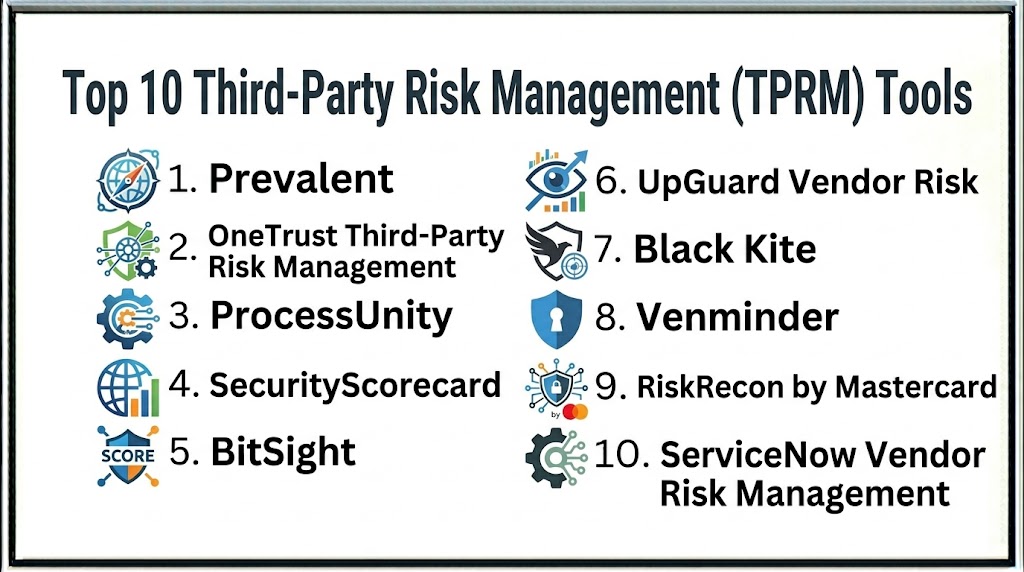
Top 10 Third-Party Risk Management (TPRM) Tools
#1 — RSA Archer Third-Party Risk Management
Short description: RSA Archer provides a comprehensive platform for managing third-party risks, automating vendor assessments, and maintaining compliance. It is designed for large enterprises with complex vendor ecosystems.
Key Features
- Centralized vendor risk repository
- Automated assessments and questionnaires
- Risk scoring and reporting dashboards
- Compliance monitoring (SOC, ISO, GDPR)
- Workflow automation for remediation
- Continuous vendor monitoring
Pros
- Robust enterprise-grade features
- Strong integration with GRC frameworks
Cons
- High cost and complex setup
- Requires training to fully utilize
Platforms / Deployment
- Web
- Cloud / On-premises
Security & Compliance
- SOC 2, ISO 27001, GDPR compliance
- RBAC and SSO integration
Integrations & Ecosystem
- SAP, ServiceNow, Workday
- API integrations for custom workflows
- Document management systems
Support & Community
Comprehensive onboarding, support tiers, active community
#2 — MetricStream Third-Party Risk Management
Short description: MetricStream offers a scalable TPRM solution for enterprise risk management, providing automated vendor assessments and continuous monitoring.
Key Features
- Vendor risk dashboards
- Workflow automation for onboarding/offboarding
- Continuous compliance tracking
- Analytics and reporting
- Centralized document repository
Pros
- Enterprise-scale solution
- Advanced risk scoring
Cons
- Learning curve for non-technical users
- Requires integration for some workflows
Platforms / Deployment
- Web
- Cloud
Security & Compliance
- SOC 2, ISO 27001
- GDPR compliance
Integrations & Ecosystem
- ERP and procurement systems
- API and custom integration support
- Workflow automation platforms
Support & Community
Onboarding guides, documentation, support tiers
#3 — OneTrust Vendor Risk Management
Short description: OneTrust provides an AI-enabled TPRM platform to assess vendor risk, automate due diligence, and monitor ongoing compliance.
Key Features
- Automated questionnaires and vendor assessments
- Risk scoring and prioritization
- Compliance monitoring across multiple regulations
- Continuous vendor monitoring
- Analytics dashboards
Pros
- AI-driven insights
- Scalable for large vendor ecosystems
Cons
- Complex features may require training
- Enterprise-focused pricing
Platforms / Deployment
- Web
- Cloud
Security & Compliance
- GDPR, SOC 2, ISO 27001
- RBAC and MFA
Integrations & Ecosystem
- Salesforce, ServiceNow, SAP
- API support for custom integration
- Workflow automation tools
Support & Community
Knowledge base, live support, community forums
#4 — Riskonnect Third-Party Risk Management
Short description: Riskonnect offers TPRM as part of its integrated risk management suite, with strong focus on workflow automation and compliance tracking.
Key Features
- Vendor onboarding and risk assessment
- Automated workflows
- Compliance and regulatory monitoring
- Reporting and dashboards
- Document management
Pros
- Integrated with broader risk management suite
- Easy-to-use dashboards
Cons
- Limited AI-driven insights
- Best suited for mid to large enterprises
Platforms / Deployment
- Web
- Cloud
Security & Compliance
- Not publicly stated
Integrations & Ecosystem
- ERP and GRC platforms
- API access
- Document management integrations
Support & Community
Support tiers, documentation, training resources
#5 — Coupa Supplier Risk
Short description: Coupa Supplier Risk provides automated monitoring of supplier risk with real-time alerts and analytics, suitable for procurement-heavy organizations.
Key Features
- Continuous monitoring of supplier risks
- Risk scoring dashboards
- Integration with procurement systems
- Vendor questionnaires
- Alerts for compliance breaches
Pros
- Strong focus on procurement risk
- Real-time monitoring
Cons
- Limited to organizations using Coupa ecosystem
- Some advanced features require customization
Platforms / Deployment
- Web
- Cloud
Security & Compliance
- SOC 2
- GDPR compliant
Integrations & Ecosystem
- ERP systems
- API for custom alerts
- Procurement platforms
Support & Community
Customer support, documentation, onboarding
#6 — Aravo
Short description: Aravo is a vendor risk management platform providing automated workflows, risk scoring, and compliance tracking for large enterprises.
Key Features
- Automated risk assessments
- Vendor onboarding and offboarding
- Compliance tracking
- Reporting dashboards
- Centralized document repository
Pros
- Scalable for global enterprises
- Strong workflow automation
Cons
- Interface may feel dated
- Learning curve for first-time users
Platforms / Deployment
- Web
- Cloud
Security & Compliance
- SOC 2, ISO 27001
- GDPR compliance
Integrations & Ecosystem
- ERP systems, procurement platforms
- API integrations
- Workflow automation connectors
Support & Community
Live support, documentation, user forums
#7 — Prevalent Third-Party Risk Management
Short description: Prevalent offers a cloud-based TPRM solution with vendor risk assessments, automation, and real-time dashboards.
Key Features
- Vendor risk scoring
- Automated onboarding
- Compliance monitoring
- Reporting and analytics
- Document management
Pros
- Rapid deployment
- Cloud-native solution
Cons
- Less suitable for highly complex workflows
- Premium pricing for advanced features
Platforms / Deployment
- Web
- Cloud
Security & Compliance
- SOC 2, ISO 27001
- GDPR-ready
Integrations & Ecosystem
- ERP and GRC platforms
- API connectors
- Workflow automation
Support & Community
Customer support, training, online documentation
#8 — LogicGate Risk Cloud
Short description: LogicGate Risk Cloud provides a flexible TPRM framework with customizable workflows and dashboards for vendor risk monitoring.
Key Features
- Customizable workflows
- Automated vendor assessments
- Compliance tracking
- Analytics and reporting
- Centralized repository
Pros
- Highly customizable
- Good visualization dashboards
Cons
- Implementation may be longer
- Some modules require technical expertise
Platforms / Deployment
- Web
- Cloud
Security & Compliance
- Not publicly stated
Integrations & Ecosystem
- ERP and CRM systems
- API for custom connectors
- Workflow integration
Support & Community
Training, support tiers, online community
#9 — BitSight Vendor Risk
Short description: BitSight provides cyber risk ratings and continuous monitoring for vendors, suitable for cybersecurity-focused organizations.
Key Features
- Cyber risk scoring
- Continuous monitoring
- Alerts for security incidents
- Reporting dashboards
- Vendor benchmarking
Pros
- Strong focus on cybersecurity
- Real-time risk updates
Cons
- Less coverage for non-cyber risks
- Enterprise pricing
Platforms / Deployment
- Web
- Cloud
Security & Compliance
- SOC 2, ISO 27001
- GDPR-ready
Integrations & Ecosystem
- SIEM tools, ERP, GRC platforms
- API access
- Alerting system integration
Support & Community
Documentation, onboarding, support tiers
#10 — NAVEX Global Third-Party Risk
Short description: NAVEX provides TPRM with compliance and ethics tracking, suitable for regulated industries.
Key Features
- Risk assessments and scoring
- Automated vendor onboarding/offboarding
- Compliance monitoring
- Centralized documentation
- Analytics dashboards
Pros
- Compliance-focused platform
- Supports global vendor ecosystem
Cons
- May require integration with other risk systems
- Customization is limited
Platforms / Deployment
- Web
- Cloud
Security & Compliance
- SOC 2, ISO 27001
- GDPR-ready
Integrations & Ecosystem
- ERP, GRC, and procurement systems
- API connectors
- Workflow integration
Support & Community
Support tiers, onboarding guides, online resources
Comparison Table
| Tool Name | Best For | Platform(s) Supported | Deployment | Standout Feature | Public Rating |
|---|---|---|---|---|---|
| RSA Archer | Enterprise | Web | Cloud/On-prem | Comprehensive risk management | N/A |
| MetricStream | Enterprise | Web | Cloud | Automated vendor assessments | N/A |
| OneTrust | Mid-market & enterprise | Web | Cloud | AI-driven risk scoring | N/A |
| Riskonnect | Mid-market | Web | Cloud | Workflow automation | N/A |
| Coupa Supplier Risk | Procurement teams | Web | Cloud | Real-time supplier monitoring | N/A |
| Aravo | Large enterprise | Web | Cloud | Scalable automation | N/A |
| Prevalent | Mid-market | Web | Cloud | Rapid deployment | N/A |
| LogicGate | Flexible/custom workflows | Web | Cloud | Customizable workflows | N/A |
| BitSight | Cybersecurity-focused | Web | Cloud | Vendor risk ratings | N/A |
| NAVEX Global | Regulated industries | Web | Cloud | Compliance-focused | N/A |
Evaluation & Scoring of Third-Party Risk Management Tools
| Tool Name | Core (25%) | Ease (15%) | Integrations (15%) | Security (10%) | Performance (10%) | Support (10%) | Value (15%) | Weighted Total |
|---|---|---|---|---|---|---|---|---|
| RSA Archer | 9 | 8 | 9 | 8 | 9 | 8 | 7 | 8.4 |
| MetricStream | 9 | 8 | 8 | 8 | 8 | 7 | 7 | 8.0 |
| OneTrust | 9 | 8 | 8 | 8 | 8 | 8 | 7 | 8.1 |
| Riskonnect | 8 | 8 | 7 | 7 | 8 | 7 | 7 | 7.6 |
| Coupa Supplier Risk | 8 | 8 | 7 | 8 | 7 | 7 | 7 | 7.6 |
| Aravo | 8 | 7 | 7 | 8 | 8 | 7 | 7 | 7.6 |
| Prevalent | 8 | 8 | 7 | 7 | 7 | 7 | 7 | 7.5 |
| LogicGate | 7 | 7 | 7 | 7 | 7 | 7 | 7 | 7.0 |
| BitSight | 8 | 7 | 7 | 9 | 8 | 7 | 7 | 7.8 |
| NAVEX Global | 8 | 7 | 7 | 8 | 7 | 7 | 7 | 7.4 |
Interpretation: Weighted total highlights relative strengths and suitability across core features, integrations, and security. Scores are comparative for decision-making.
Which Third-Party Risk Management Tool Is Right for You?
Solo / Freelancer
- Prevalent or LogicGate for simpler vendor portfolios and minimal complexity
SMB
- OneTrust, Coupa Supplier Risk for scalable monitoring and automation
Mid-Market
- MetricStream, Riskonnect for structured workflows and moderate vendor volumes
Enterprise
- RSA Archer, Aravo, NAVEX Global for large-scale third-party ecosystems and regulatory compliance
Budget vs Premium
- Budget: Prevalent, LogicGate
- Premium: RSA Archer, OneTrust, Aravo
Feature Depth vs Ease of Use
- Depth: RSA Archer, MetricStream, OneTrust
- Ease: Prevalent, Coupa
Integrations & Scalability
- Enterprise-focused: Aravo, RSA Archer, NAVEX Global
Security & Compliance Needs
- Highly regulated: NAVEX Global, RSA Archer, OneTrust
Frequently Asked Questions (FAQs)
1. What pricing models do TPRM tools typically use?
Most platforms offer subscription-based pricing, often tiered by number of vendors or features. Enterprise licenses are available.
2. How long does onboarding take?
SMB solutions like Prevalent can be onboarded in a few days, enterprise solutions may take several weeks.
3. Are these tools suitable for global vendors?
Yes, leading TPRM tools support multi-country compliance monitoring and multi-language interfaces.
4. Can risk scoring be automated?
Yes, AI-driven scoring is available in tools like OneTrust and RSA Archer.
5. How do TPRM tools handle regulatory compliance?
They track vendor certifications, SOC reports, ISO standards, and GDPR/HIPAA compliance automatically.
6. Are these tools scalable?
Yes, enterprise TPRM platforms handle thousands of vendors and complex risk hierarchies.
7. Do they integrate with procurement and contract systems?
Yes, most leading tools integrate with ERP, GRC, and contract management platforms.
8. Can smaller organizations use TPRM tools effectively?
Yes, but lighter platforms like Prevalent or LogicGate are often more cost-effective.
9. What common mistakes should be avoided?
Skipping continuous monitoring, relying solely on manual assessments, and ignoring analytics can reduce effectiveness.
10. Are mobile platforms supported?
Many TPRM tools provide web access on mobile devices, but dedicated apps vary by vendor.
Conclusion
Third-Party Risk Management (TPRM) Tools are essential for organizations seeking to mitigate risks from vendor and supplier relationships. Choosing the right platform depends on your business size, vendor ecosystem, regulatory needs, and integration requirements. Start by shortlisting a few tools, test automation and monitoring features, and ensure alignment with internal workflows to enhance efficiency and reduce risk exposure.

A practical challenge in third-party risk management is keeping assessments current as vendors and business relationships evolve. Tools that make ongoing monitoring simple can be far more valuable than those focused only on initial evaluations.