Introduction
Vendor Management Systems VMS tools are software platforms built to help organizations manage suppliers, contractors, service providers, and vendor relationships in one centralized system. Instead of relying on spreadsheets, email chains, and disconnected procurement workflows, a VMS creates structure across onboarding, contracts, compliance, performance tracking, invoicing, and reporting.
As businesses increasingly depend on external vendors for staffing, logistics, IT services, procurement, and outsourced operations, vendor management has become a strategic business function—not just an administrative task. A strong VMS helps reduce operational risk, improve visibility into vendor performance, automate approvals, and control spending more effectively.
Real-world use cases include:
- Vendor onboarding and qualification workflows
- Contract and compliance tracking
- Contingent workforce management
- Vendor performance scorecards and SLAs
- Invoice reconciliation and spend visibility
- Procurement workflow automation
What buyers should evaluate:
- Vendor onboarding automation
- Compliance and document tracking
- Contract lifecycle visibility
- Workflow automation and approvals
- Analytics and reporting depth
- ERP / CRM integration capabilities
- Supplier collaboration portals
- Security and access controls
- Scalability for multi-region operations
- Total cost of ownership
Best for: Procurement teams, HR teams, finance leaders, operations teams, and enterprises managing multiple vendors or external workforce programs.
Not ideal for: Very small businesses managing only a handful of vendors with simple purchasing workflows.
Key Trends in Vendor Management Systems
- AI-assisted vendor scoring and risk analysis
- Automated compliance verification and renewals
- Greater ERP and procurement suite integration
- Real-time supplier performance dashboards
- Supplier self-service portals for collaboration
- Workflow automation for approvals and invoice routing
- Cloud-first deployment for faster scalability
- Better analytics for spend optimization
- Increased governance and audit trail requirements
- Vendor diversity and ESG tracking becoming more common
How We Selected These Tools (Methodology)
We selected these VMS platforms based on:
- Market adoption and enterprise usage
- Vendor lifecycle feature depth
- Compliance and governance controls
- Workflow automation maturity
- Integration ecosystem strength
- Reporting and analytics capabilities
- Deployment flexibility
- Security readiness signals
- Support quality and implementation maturity
- Overall value across SMB, mid-market, and enterprise use cases
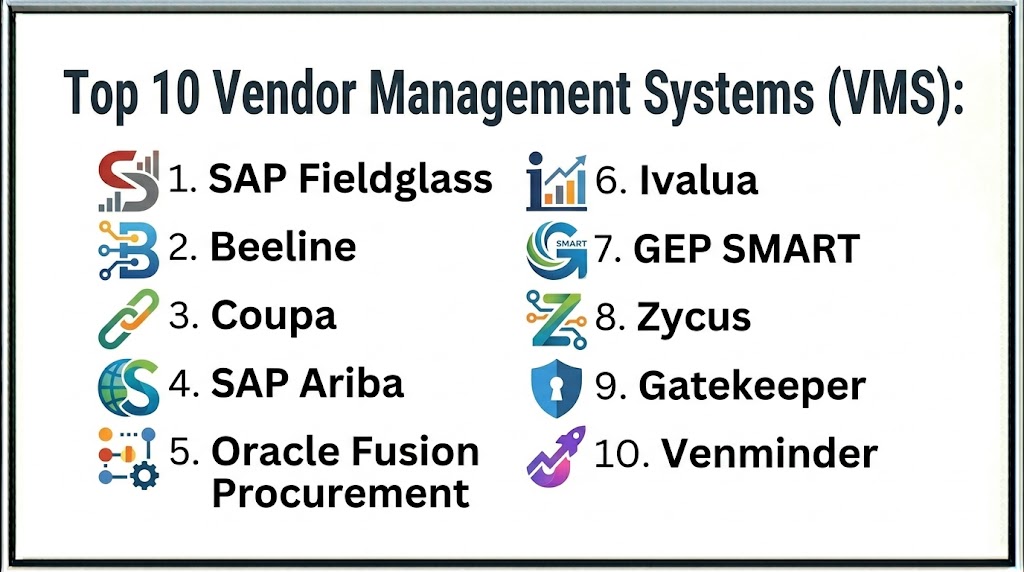
Top 10 Vendor Management Systems Tools
#1 — SAP Fieldglass
Short description: A leading enterprise VMS platform focused on contingent workforce management, services procurement, and vendor compliance at global scale.
Key Features
- Contingent workforce lifecycle management
- Services procurement workflows
- Rate card and spend controls
- Compliance automation
- Supplier performance tracking
- Advanced analytics
Pros
- Enterprise-grade scalability
- Strong compliance capabilities
- Deep procurement controls
Cons
- Complex implementation
- Premium pricing
- Best suited for large organizations
Platforms / Deployment
Cloud
Security & Compliance
SSO, MFA, encryption, RBAC, auditability, enterprise governance controls publicly emphasized
Integrations & Ecosystem
Strong ecosystem for enterprise operations.
- SAP ecosystem
- ERP integrations
- Procurement platforms
- APIs
- HR systems
Support & Community
Large enterprise partner ecosystem and mature implementation network.
#2 — Beeline
Short description: A highly configurable VMS built for contingent workforce and supplier management programs.
Key Features
- Supplier lifecycle workflows
- Direct sourcing support
- Vendor analytics
- Services procurement
- Compliance automation
- Flexible workflows
Pros
- Strong configurability
- Broad workforce coverage
- Good enterprise reporting
Cons
- Learning curve
- Setup complexity
- Enterprise-focused pricing
Platforms / Deployment
Cloud
Security & Compliance
Enterprise-grade controls, auditability, role-based access
Integrations & Ecosystem
- APIs
- ERP systems
- HR systems
- Procurement connectors
Support & Community
Strong enterprise support ecosystem.
#3 — Coupa
Short description: A spend management platform with robust vendor management, supplier collaboration, and procurement workflows.
Key Features
- Supplier onboarding
- Risk visibility
- Spend analytics
- Invoice workflows
- Procurement automation
- Vendor collaboration tools
Pros
- Strong spend visibility
- Broad procurement ecosystem
- Mature analytics
Cons
- Implementation effort required
- Broad suite may be more than needed
- Enterprise cost structure
Platforms / Deployment
Cloud
Security & Compliance
Encryption, RBAC, audit logging, governance controls
Integrations & Ecosystem
- ERP systems
- Procurement tools
- APIs
- Finance platforms
Support & Community
Large enterprise adoption base.
#4 — SAP Ariba
Short description: A supplier and procurement platform designed for complex enterprise vendor ecosystems.
Key Features
- Supplier onboarding
- Contract alignment
- Sourcing workflows
- Vendor collaboration
- Spend management
- Analytics
Pros
- Strong supplier ecosystem
- Deep procurement functionality
- Enterprise-grade governance
Cons
- Complex deployment
- Best within SAP-heavy environments
- Premium pricing
Platforms / Deployment
Cloud
Security & Compliance
Enterprise security controls, auditability, access governance
Integrations & Ecosystem
- SAP ecosystem
- ERP
- Procurement networks
- APIs
Support & Community
Very mature enterprise ecosystem.
#5 — Oracle Fusion Procurement
Short description: A procurement and vendor platform built for operational visibility, workflow automation, and supplier governance.
Key Features
- Supplier onboarding
- Procurement automation
- Vendor analytics
- Approval routing
- Invoice matching
- Contract visibility
Pros
- Strong enterprise workflows
- Good operational visibility
- Scalable architecture
Cons
- Complex setup
- Best for Oracle ecosystem users
- Training required
Platforms / Deployment
Cloud
Security & Compliance
Enterprise access controls, encryption, audit logs
Integrations & Ecosystem
- Oracle Cloud ecosystem
- ERP integrations
- APIs
- Procurement workflows
Support & Community
Strong enterprise support structure.
#6 — Ivalua
Short description: A flexible procurement and supplier management platform with strong customization capabilities.
Key Features
- Supplier onboarding
- Risk management
- Contract workflows
- Spend analysis
- Collaboration portals
- Workflow automation
Pros
- Flexible architecture
- Strong supplier lifecycle tools
- Good enterprise fit
Cons
- Implementation can be lengthy
- Advanced setup may require specialists
- Higher cost for smaller teams
Platforms / Deployment
Cloud / Hybrid
Security & Compliance
Encryption, access controls, auditability
Integrations & Ecosystem
- APIs
- ERP integrations
- Procurement connectors
- Supplier networks
Support & Community
Strong enterprise implementation support.
#7 — GEP SMART
Short description: A unified procurement and vendor platform with strong sourcing and supplier visibility.
Key Features
- Supplier management
- Procurement automation
- Analytics
- Contract workflows
- Collaboration tools
- Spend visibility
Pros
- Broad suite capability
- Good analytics
- Enterprise scalability
Cons
- Large-suite complexity
- Training needed
- Broad platform footprint
Platforms / Deployment
Cloud
Security & Compliance
Enterprise-grade controls publicly emphasized
Integrations & Ecosystem
- ERP
- APIs
- Procurement workflows
- Supplier tools
Support & Community
Well-established enterprise support model.
#8 — Zycus
Short description: A procurement-focused platform with AI-driven supplier and vendor management features.
Key Features
- Vendor onboarding
- AI analytics
- Risk monitoring
- Procurement workflows
- Contract visibility
- Automation tools
Pros
- Strong AI capabilities
- Good supplier intelligence
- Mature procurement workflows
Cons
- Broad suite learning curve
- Enterprise pricing
- Implementation effort required
Platforms / Deployment
Cloud
Security & Compliance
Encryption, access controls, auditability
Integrations & Ecosystem
- APIs
- ERP tools
- Procurement systems
- Supplier integrations
Support & Community
Strong enterprise customer base.
#9 — SimplifyVMS
Short description: A vendor and contingent workforce management platform focused on visibility, sourcing, and operational agility.
Key Features
- Vendor data visibility
- Onboarding automation
- AI-driven matching
- Workflow controls
- Reporting dashboards
- Compliance tracking
Pros
- Workforce-focused design
- Good operational visibility
- Modern workflow model
Cons
- Smaller ecosystem than major suites
- Enterprise implementation still required
- Category specialization
Platforms / Deployment
Cloud
Security & Compliance
Not publicly stated
Integrations & Ecosystem
- APIs
- Workforce systems
- Procurement tools
Support & Community
Growing enterprise adoption.
#10 — ComplianceQuest
Short description: A vendor quality and compliance management platform built around supplier governance and risk management.
Key Features
- Vendor qualification
- Risk management
- Document control
- Audit readiness
- Compliance workflows
- Performance visibility
Pros
- Strong compliance orientation
- Good for regulated industries
- Scalable workflows
Cons
- More governance-focused than procurement-first
- May exceed SMB needs
- Implementation planning required
Platforms / Deployment
Cloud
Security & Compliance
Governance-focused controls publicly emphasized
Integrations & Ecosystem
- APIs
- Operational systems
- Workflow integrations
Support & Community
Strong implementation-led support.
Comparison Table
| Tool Name | Best For | Platform(s) Supported | Deployment | Standout Feature | Public Rating |
|---|---|---|---|---|---|
| SAP Fieldglass | Enterprise workforce vendors | Web | Cloud | External workforce management | N/A |
| Beeline | Contingent workforce | Web | Cloud | Flexible configuration | N/A |
| Coupa | Spend + vendors | Web | Cloud | Spend visibility | N/A |
| SAP Ariba | Supplier ecosystems | Web | Cloud | Procurement network | N/A |
| Oracle Fusion Procurement | Enterprise operations | Web | Cloud | Operational visibility | N/A |
| Ivalua | Flexible sourcing | Web | Hybrid | Custom workflows | N/A |
| GEP SMART | Unified procurement | Web | Cloud | Broad suite capability | N/A |
| Zycus | AI-driven procurement | Web | Cloud | Supplier intelligence | N/A |
| SimplifyVMS | Workforce programs | Web | Cloud | Vendor visibility | N/A |
| ComplianceQuest | Compliance-heavy industries | Web | Cloud | Vendor governance | N/A |
Conclusion
Vendor Management Systems have evolved from operational software into strategic business platforms that improve visibility, governance, and vendor performance across the enterprise. Whether an organization manages staffing suppliers, procurement vendors, outsourced services, or complex compliance workflows, a modern VMS can centralize fragmented processes into one controlled system. Enterprise platforms like SAP Fieldglass, Beeline, and Coupa lead in scale and automation, while specialized solutions provide focused value in compliance, workforce, or supplier lifecycle management. The right choice depends on vendor volume, workflow complexity, procurement maturity, and integration requirements. Businesses should prioritize operational fit over feature count alone. A structured pilot rollout with procurement, finance, and operations teams is often the best way to validate platform value before full deployment. The best VMS is the one that simplifies vendor operations while improving control, compliance, and business agility.

One aspect that often drives long-term value is how well a VMS supports collaboration between vendors and internal teams. Clear communication and streamlined processes can help prevent delays and strengthen supplier relationships over time.