Introduction
Security Information & Event Management (SIEM) platforms provide centralized collection, correlation, and analysis of security data from endpoints, networks, cloud environments, and applications. They enable organizations to detect threats, respond to incidents, and maintain regulatory compliance efficiently.
Modern SIEM solutions combine AI-driven analytics, behavioral detection, and automated response workflows to improve threat visibility and operational efficiency.
Real-world use cases include:
- Detecting suspicious activity across multiple systems and networks
- Correlating logs from diverse sources to uncover complex attacks
- Real-time alerts for unauthorized access or abnormal activity
- Supporting audits and regulatory compliance
- Threat hunting and forensic investigations
Key evaluation criteria for buyers:
- Log collection, normalization, and storage
- Real-time monitoring and alerting
- Event correlation and analytics
- Integration with EDR, NDR, cloud, and endpoint solutions
- Deployment flexibility (cloud, on-prem, hybrid)
- Automated response and orchestration
- Scalability across enterprise environments
- Dashboard usability and reporting capabilities
- Vendor support and community presence
- Cost and licensing models
Best for: SOC teams, security analysts, mid-market and enterprise organizations needing centralized threat detection
Not ideal for: Small organizations with minimal log volume; managed security services may be more practical
Key Trends in SIEM
- AI and ML-driven threat detection and anomaly recognition
- Cloud-native SIEM with hybrid deployment options
- Integration with XDR, NDR, and EDR for unified security visibility
- Automated incident response and orchestration
- Behavioral analytics for insider threat detection
- Scalable architectures to manage high-volume logs
- Compliance-focused dashboards and automated reporting
- Subscription or consumption-based pricing models
- Encrypted traffic monitoring capabilities
- Real-time threat intelligence integration
How We Selected These Tools (Methodology)
- Evaluated market adoption and reputation across enterprise and mid-market segments
- Assessed core SIEM features including log collection, correlation, alerting, and analytics
- Reviewed performance and reliability from user feedback and independent sources
- Considered security posture and compliance certifications
- Examined integrations with EDR, NDR, cloud, and endpoint security tools
- Evaluated fit across SMBs, mid-market, and enterprise organizations
- Analyzed ease of deployment, dashboards, and management interface
- Considered vendor support, documentation, and community engagement
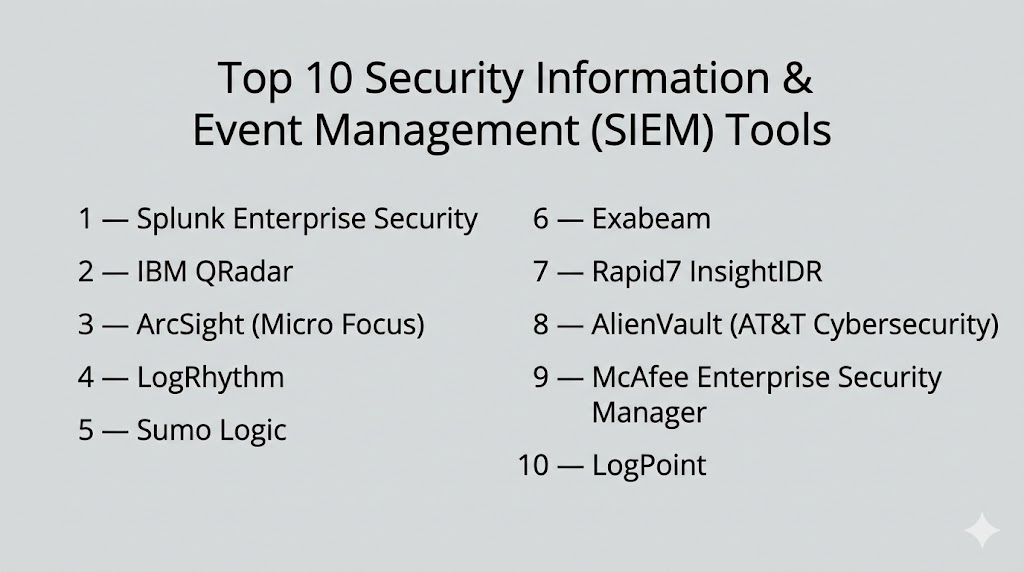
Top 10 Security Information & Event Management (SIEM) Tools
#1 — Splunk Enterprise Security
Short description: SIEM platform for centralized monitoring, advanced analytics, and automated threat response
Key Features
- Centralized log collection and normalization
- Real-time monitoring and alerting
- Advanced correlation and analytics
- Threat intelligence integration
- Automated incident response workflows
- Custom dashboards and reporting
Pros
- High scalability for large enterprises
- Strong analytics and visualization
Cons
- High cost for large deployments
- Requires skilled analysts for advanced features
Platforms / Deployment
- Windows / Linux / Cloud / Hybrid
Security & Compliance
- SOC 2, ISO 27001
- MFA, encryption
Integrations & Ecosystem
- Integrates with EDR, NDR, cloud apps
- REST APIs and Splunkbase apps
- Threat intelligence feeds
Support & Community
Enterprise support; extensive documentation and active community
#2 — IBM QRadar
Short description: Enterprise SIEM for threat detection, log management, and compliance reporting
Key Features
- Centralized log collection and correlation
- AI-driven analytics and anomaly detection
- Threat intelligence integration
- Automated alerts and workflows
- Compliance reporting dashboards
Pros
- Strong threat correlation and compliance capabilities
- Scalable for large enterprise networks
Cons
- Complex deployment and maintenance
- Cost-intensive for small or mid-market organizations
Platforms / Deployment
- Windows / Linux / Cloud / Hybrid
Security & Compliance
- SOC 2, ISO 27001, GDPR
- MFA, encryption
Integrations & Ecosystem
- Integrates with EDR, NDR, cloud platforms
- API access for automation
- IBM X-Force threat intelligence
Support & Community
Enterprise support; detailed documentation
#3 — ArcSight (Micro Focus)
Short description: SIEM platform for event correlation, log management, and compliance in large enterprises
Key Features
- Real-time event correlation
- Centralized log management
- Advanced analytics for threat detection
- Compliance reporting dashboards
- Custom alerts and dashboards
Pros
- Mature enterprise-grade platform
- Strong analytics and compliance support
Cons
- Requires tuning and training for best results
- Legacy interface may be complex
Platforms / Deployment
- Windows / Linux / Cloud / Hybrid
Security & Compliance
- SOC 2, ISO 27001
- MFA, encryption
Integrations & Ecosystem
- Integrates with EDR, NDR, and cloud services
- API support for workflows
- Threat intelligence connectors
Support & Community
Enterprise support; active user community
#4 — LogRhythm
Short description: SIEM and UEBA platform for threat detection, incident response, and centralized monitoring
Key Features
- Security analytics and event correlation
- User and entity behavior analytics (UEBA)
- Automated response workflows
- Centralized dashboards and reporting
- Threat intelligence integration
Pros
- Strong automation capabilities
- Effective insider threat detection
Cons
- Complex deployment
- Licensing costs for large deployments
Platforms / Deployment
- Windows / Linux / Cloud / Hybrid
Security & Compliance
- SOC 2, ISO 27001
- MFA, encryption
Integrations & Ecosystem
- Integrates with EDR, NDR, cloud apps
- REST APIs and playbooks
- Threat intelligence feeds
Support & Community
Enterprise support; active documentation
#5 — Sumo Logic
Short description: Cloud-native SIEM for log monitoring, analytics, and threat detection
Key Features
- Cloud log collection and analysis
- Real-time monitoring and alerting
- Automated incident detection
- Threat intelligence integration
- Compliance dashboards
Pros
- Fully cloud-native and scalable
- Quick deployment and low maintenance
Cons
- Advanced analytics require expertise
- Limited on-prem deployment
Platforms / Deployment
- Cloud
Security & Compliance
- SOC 2, ISO 27001
- MFA, encryption
Integrations & Ecosystem
- Cloud apps, EDR, NDR integration
- APIs for automation
- Security dashboards
Support & Community
Documentation and enterprise support available
#6 — Exabeam
Short description: Next-gen SIEM with UEBA, automation, and threat detection
Key Features
- User and entity behavior analytics
- Automated incident response
- Threat detection and correlation
- Security orchestration
- Cloud and on-prem monitoring
Pros
- Advanced analytics
- Scalable for enterprise use
Cons
- Steeper learning curve
- Premium pricing
Platforms / Deployment
- Windows / Linux / Cloud / Hybrid
Security & Compliance
- SOC 2, ISO 27001
- MFA, encryption
Integrations & Ecosystem
- Integrates with SIEM, EDR, NDR
- REST APIs and playbooks
- Threat intelligence feeds
Support & Community
Enterprise support; robust documentation
#7 — Rapid7 InsightIDR
Short description: Cloud-focused SIEM with automated detection and response
Key Features
- Log management and correlation
- UEBA for insider threat detection
- Automated alerts and response
- Cloud and on-prem monitoring
- Threat intelligence integration
Pros
- Cloud-native
- Strong automation capabilities
Cons
- Advanced features may require professional services
- Costly for small environments
Platforms / Deployment
- Windows / Linux / Cloud / Hybrid
Security & Compliance
- SOC 2, ISO 27001
- MFA, encryption
Integrations & Ecosystem
- EDR, NDR, cloud apps
- APIs and playbooks
- Threat intelligence feeds
Support & Community
Enterprise support; active user community
#8 — AlienVault
Short description: Unified SIEM with threat detection, vulnerability management, and compliance
Key Features
- Log collection and correlation
- Threat intelligence integration
- Vulnerability assessment
- Compliance reporting
- Automated alerts
Pros
- All-in-one platform
- Effective for SMBs and mid-market
Cons
- Limited scalability for large enterprises
- Cloud and hybrid features vary
Platforms / Deployment
- Windows / Linux / Cloud / Hybrid
Security & Compliance
- SOC 2, ISO 27001
- MFA, encryption
Integrations & Ecosystem
- EDR, NDR, cloud apps
- API and alert integration
- Threat intelligence feeds
Support & Community
Enterprise support; documentation available
#9 — McAfee Enterprise Security Manager
Short description: SIEM for real-time monitoring, log analysis, and compliance
Key Features
- Real-time event correlation
- Threat intelligence integration
- Compliance dashboards
- Automated alerts
- Scalable architecture
Pros
- High-speed analytics
- Mature enterprise platform
Cons
- Complex deployment
- Licensing can be expensive
Platforms / Deployment
- Windows / Linux / Cloud / Hybrid
Security & Compliance
- SOC 2, ISO 27001
- MFA, encryption
Integrations & Ecosystem
- SIEM integration with EDR, NDR
- APIs for automation
- Threat intelligence feeds
Support & Community
Enterprise support and documentation
#10 — LogPoint
Short description: SIEM platform for log management, threat detection, and compliance
Key Features
- Event correlation and analytics
- Automated alerts and workflows
- Threat intelligence integration
- Compliance dashboards
- Cloud and on-prem deployment
Pros
- Flexible deployment
- User-friendly dashboards
Cons
- Advanced analytics require training
- Smaller community than competitors
Platforms / Deployment
- Windows / Linux / Cloud / Hybrid
Security & Compliance
- SOC 2, ISO 27001
- MFA, encryption
Integrations & Ecosystem
- SIEM, EDR, NDR integration
- APIs for automation
- Threat intelligence feeds
Support & Community
Documentation and enterprise support available
Comparison Table (Top 10)
| Tool Name | Best For | Platform(s) Supported | Deployment | Standout Feature | Public Rating |
|---|---|---|---|---|---|
| Splunk Enterprise Security | Enterprise / SOC teams | Windows, Linux, Cloud / Hybrid | Cloud / Hybrid | Advanced analytics | N/A |
| IBM QRadar | Enterprise / Compliance | Windows, Linux, Cloud / Hybrid | Cloud / Hybrid | Threat correlation | N/A |
| ArcSight | Large enterprise | Windows, Linux, Cloud / Hybrid | Cloud / Hybrid | Real-time event correlation | N/A |
| LogRhythm | Enterprise / Mid-market | Windows, Linux, Cloud / Hybrid | Cloud / Hybrid | UEBA and automation | N/A |
| Sumo Logic | Cloud-focused enterprises | Cloud | Cloud | Cloud-native scalability | N/A |
| Exabeam | Enterprise / SOC teams | Windows, Linux, Cloud / Hybrid | Cloud / Hybrid | UEBA and automated response | N/A |
| Rapid7 InsightIDR | Cloud-native deployments | Windows, Linux, Cloud / Hybrid | Cloud / Hybrid | Cloud-first automation | N/A |
| AlienVault | SMB / Mid-market | Windows, Linux, Cloud / Hybrid | Cloud / Hybrid | All-in-one platform | N/A |
| McAfee Enterprise Security Manager | Enterprise | Windows, Linux, Cloud / Hybrid | Cloud / Hybrid | High-speed analytics | N/A |
| LogPoint | SMB / Mid-market | Windows, Linux, Cloud / Hybrid | Cloud / Hybrid | Flexible dashboards | N/A |
Evaluation & Scoring of SIEM
| Tool Name | Core (25%) | Ease (15%) | Integrations (15%) | Security (10%) | Performance (10%) | Support (10%) | Value (15%) | Weighted Total (0–10) |
|---|---|---|---|---|---|---|---|---|
| Splunk Enterprise Security | 10 | 9 | 9 | 9 | 10 | 9 | 7 | 9.1 |
| IBM QRadar | 9 | 8 | 8 | 10 | 9 | 8 | 8 | 8.8 |
| ArcSight | 8 | 7 | 7 | 9 | 8 | 8 | 7 | 8.0 |
| LogRhythm | 8 | 8 | 7 | 9 | 8 | 8 | 7 | 8.1 |
| Sumo Logic | 8 | 9 | 6 | 8 | 8 | 7 | 7 | 7.8 |
| Exabeam | 9 | 8 | 7 | 9 | 8 | 8 | 7 | 8.1 |
| Rapid7 InsightIDR | 8 | 8 | 7 | 8 | 8 | 7 | 7 | 7.8 |
| AlienVault | 7 | 8 | 6 | 8 | 7 | 7 | 7 | 7.3 |
| McAfee Enterprise Security Manager | 8 | 7 | 7 | 8 | 8 | 7 | 7 | 7.6 |
| LogPoint | 7 | 8 | 6 | 8 | 7 | 7 | 7 | 7.2 |
Which SIEM Tool Is Right for You?
Solo / Freelancer
Cloud-native platforms like Sumo Logic or AlienVault are lightweight, easy to deploy, and suitable for small teams.
SMB
Exabeam, AlienVault, or LogPoint provide a balance of cost, usability, and analytics for growing organizations.
Mid-Market
LogRhythm and ArcSight provide UEBA, automation, and enterprise-grade compliance features.
Enterprise
Splunk, IBM QRadar, and McAfee Enterprise Security Manager deliver advanced analytics, scalability, and multi-source integration.
Budget vs Premium
Premium SIEMs offer deep analytics and automated response; budget-friendly tools focus on cloud monitoring and compliance reporting.
Feature Depth vs Ease of Use
High-feature platforms require trained analysts; cloud-native tools prioritize simplicity and faster deployment.
Integrations & Scalability
Enterprises needing integration with EDR, NDR, and cloud services should select SIEMs with pre-built connectors and APIs.
Security & Compliance Needs
Organizations with strict regulatory requirements should prioritize platforms with SOC 2, ISO 27001, GDPR, and HIPAA compliance reporting.
Frequently Asked Questions (FAQs)
What pricing models do SIEM tools use?
Subscription-based, typically per event, device, or log volume; some offer cloud consumption-based pricing.
How long does deployment take?
Cloud solutions may deploy within hours; on-prem or hybrid setups may take days depending on network complexity.
Can SIEM replace firewalls or EDR?
No, SIEM complements them by correlating events, detecting threats, and automating responses.
Are SIEM solutions suitable for cloud environments?
Yes, most modern SIEM platforms support cloud, hybrid, and multi-cloud monitoring.
Do SIEM tools require skilled analysts?
Yes, SOC teams are recommended to investigate alerts, tune analytics, and interpret correlation dashboards.
How do SIEM platforms integrate with other security tools?
They integrate with EDR, NDR, firewalls, and SOAR solutions for centralized alerts and automated response.
Can SIEM detect insider threats?
Yes, UEBA and anomaly detection identify unusual user behaviors and compromised accounts.
How do SIEM solutions handle encrypted traffic?
Using metadata analysis, flow monitoring, or decrypted traffic feeds to detect threats without full payload inspection.
Are SIEM solutions scalable?
Yes, enterprise-grade SIEMs handle large log volumes across distributed networks and cloud environments.
What are common implementation mistakes?
Underestimating setup complexity, not integrating all log sources, ignoring alert tuning, and insufficient SOC training.
Conclusion
Security Information & Event Management (SIEM) platforms centralize threat detection, log analysis, and compliance reporting, giving organizations visibility across endpoints, networks, and cloud environments. AI-driven analytics, UEBA, and automation improve detection and response efficiency. Choosing the right SIEM depends on organizational size, log volume, SOC capabilities, and compliance needs. Enterprises benefit from platforms with advanced analytics and extensive integrations, while SMBs may prioritize cloud-native, user-friendly solutions. Testing two to three platforms in pilot deployments helps validate detection, workflows, and operational impact. Aligning SIEM capabilities with business objectives enhances security posture, operational efficiency, and regulatory compliance. Selecting the right tool ensures faster incident response, proactive threat hunting, and scalable security monitoring. By combining analytics, automation, and integration, organizations can maintain strong cybersecurity defenses while optimizing SOC operations. SIEM adoption strengthens organizational resilience and provides a centralized view of security events.
