Introduction
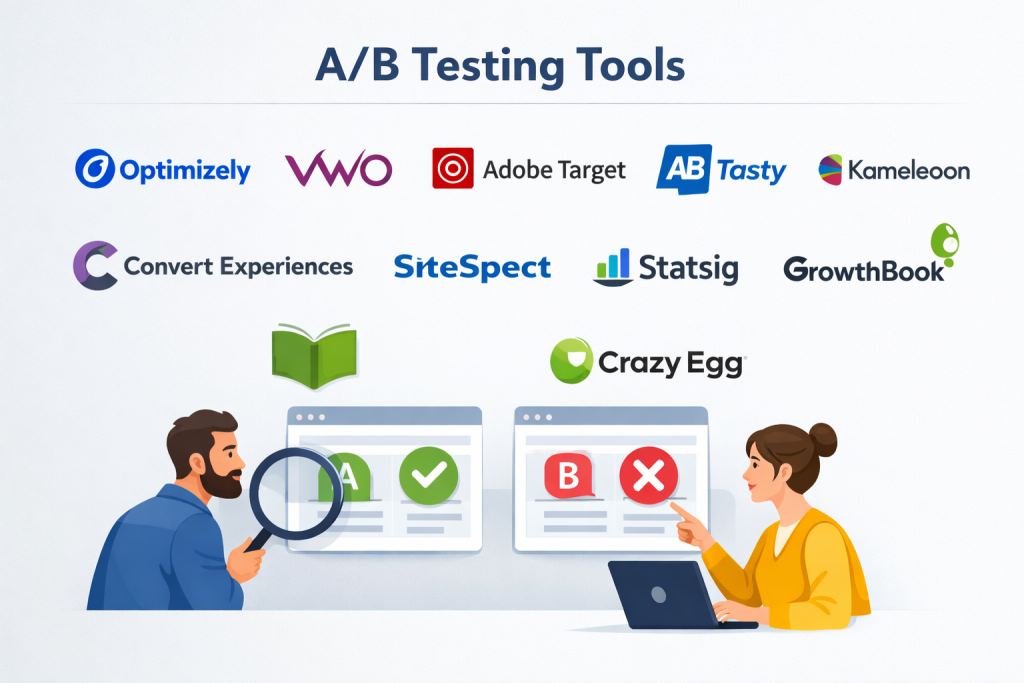
A/B Testing Tools (also known as split testing tools) are software platforms that allow you to compare two or more versions of a webpage, app feature, or experience to determine which performs better.
In simple terms, these tools help you replace guesswork with data-driven decisions—by showing different versions (A and B) to users and measuring which one drives better outcomes like clicks, conversions, or engagement.
Modern A/B testing tools go far beyond simple experiments. They now include AI-driven optimization, personalization engines, feature flagging, and server-side testing, making them essential for product, marketing, and growth teams.
Why it matters now
- Data-driven decision-making is critical for growth
- AI accelerates experimentation cycles
- Personalization improves user experience
- Competition demands continuous optimization
Common use cases
- Landing page optimization
- Pricing and subscription experiments
- Feature rollout testing
- UX/UI improvements
- Marketing campaign optimization
What buyers should evaluate
- Ease of experiment setup (no-code vs developer tools)
- Statistical models (Bayesian vs frequentist)
- Personalization and targeting capabilities
- Integration with analytics and data tools
- Performance impact (flicker-free testing)
- Experiment scalability
- Real-time reporting and insights
- Feature flags and server-side testing
- Privacy and compliance
Best for: Growth teams, marketers, product managers, SaaS companies, and ecommerce businesses focused on improving conversions and user experience.
Not ideal for: Websites with very low traffic where statistical significance is difficult to achieve.
Key Trends in A/B Testing Tools
- AI-driven experimentation: Automated variant generation and winner prediction
- Feature flagging integration: Testing features before full rollout
- Server-side testing adoption: More control and performance optimization
- Multi-armed bandit algorithms: Dynamic traffic allocation to winning variants
- Privacy-first experimentation: Cookieless and compliant tracking
- No-code experimentation tools: Empowering marketers without developers
- Warehouse-native testing: Running experiments directly on data warehouses
- Real-time experimentation insights: Faster decision-making
- Omnichannel testing: Web, mobile, and app experiments in one platform
How We Selected These Tools (Methodology)
- Market adoption and industry recognition
- Feature completeness (testing, personalization, analytics)
- Ease of use for technical and non-technical users
- Integration ecosystem and API capabilities
- Scalability across SMB to enterprise
- Performance impact on websites/apps
- Security and compliance considerations
- Support and documentation quality
- Suitability for different use cases
Top 10 A/B Testing Tools
#1 — Optimizely
Short description: A leading experimentation platform offering full-stack A/B testing, personalization, and feature management.
Key Features
- Full-stack experimentation (web, mobile, server)
- AI-driven personalization
- Feature flags
- Advanced audience targeting
- Statistical engine
- Experiment collaboration tools
Pros
- Enterprise-grade scalability
- Comprehensive experimentation platform
- Strong AI capabilities
Cons
- Expensive
- Steep learning curve
Platforms / Deployment
Web / Mobile
Cloud
Security & Compliance
SSO, encryption, audit logs
SOC 2, GDPR, HIPAA
Integrations & Ecosystem
Strong enterprise ecosystem.
- Analytics tools
- Data warehouses
- APIs
- Marketing platforms
Support & Community
Enterprise-level support and strong documentation.
#2 — VWO
Short description: A comprehensive A/B testing and conversion optimization platform with strong usability for marketers.
Key Features
- Visual editor
- A/B and multivariate testing
- Heatmaps and session recordings
- AI-powered insights
- Funnel analysis
- Personalization tools
Pros
- Easy to use
- All-in-one CRO platform
- Good balance of features
Cons
- Script performance can vary
- Advanced features cost extra
Platforms / Deployment
Web / Mobile
Cloud
Security & Compliance
Varies / Not publicly stated
Integrations & Ecosystem
- Analytics tools
- CMS platforms
- APIs
Support & Community
Good documentation and support.
#3 — Adobe Target
Short description: An enterprise-grade experimentation and personalization platform within Adobe ecosystem.
Key Features
- A/B and multivariate testing
- AI-driven personalization
- Audience segmentation
- Cross-channel optimization
- Automated decisioning
- Advanced reporting
Pros
- Powerful enterprise features
- Strong AI capabilities
- Deep integrations
Cons
- Expensive
- Complex implementation
Platforms / Deployment
Web / Mobile
Cloud
Security & Compliance
SOC 2, ISO 27001, GDPR, HIPAA
Integrations & Ecosystem
- Adobe Experience Cloud
- CRM systems
- APIs
Support & Community
Enterprise-level support.
#4 — AB Tasty
Short description: A user-friendly experimentation platform focused on personalization and customer experience optimization.
Key Features
- A/B and multivariate testing
- AI-driven segmentation
- Personalization engine
- Visual editor
- Feature experimentation
- Campaign templates
Pros
- Easy to use
- Strong personalization features
- Good for marketing teams
Cons
- Limited developer flexibility
- Pricing varies
Platforms / Deployment
Web / Mobile
Cloud
Security & Compliance
Varies / Not publicly stated
Integrations & Ecosystem
- Analytics tools
- Marketing platforms
- APIs
Support & Community
Good onboarding support.
#5 — Kameleoon
Short description: An AI-powered experimentation platform with strong personalization and predictive targeting.
Key Features
- A/B and multivariate testing
- AI-driven targeting
- Personalization engine
- Feature flags
- Predictive analytics
- Real-time data
Pros
- Strong AI capabilities
- Good targeting features
- Enterprise-ready
Cons
- Complex setup
- Pricing varies
Platforms / Deployment
Web
Cloud
Security & Compliance
Varies / Not publicly stated
Integrations & Ecosystem
- APIs
- Data platforms
- CRM tools
Support & Community
Enterprise support.
#6 — Convert Experiences
Short description: A privacy-focused A/B testing platform designed for agencies and data-conscious teams.
Key Features
- A/B and multivariate testing
- Advanced targeting
- Flicker-free testing
- GDPR-focused features
- Unlimited experiments
- Flexible statistical models
Pros
- Privacy-first approach
- Affordable compared to enterprise tools
- High performance
Cons
- Smaller ecosystem
- Less brand recognition
Platforms / Deployment
Web
Cloud
Security & Compliance
GDPR-focused
Varies / Not publicly stated
Integrations & Ecosystem
- Analytics tools
- Ecommerce platforms
- APIs
Support & Community
Moderate support.
#7 — SiteSpect
Short description: A server-side experimentation platform focused on performance and security.
Key Features
- Server-side testing
- No-flicker experiments
- Traffic segmentation
- Real-time analytics
- Multi-channel testing
- Feature control
Pros
- No client-side performance impact
- Strong security
- Reliable
Cons
- Requires technical expertise
- Higher cost
Platforms / Deployment
Web
Cloud
Security & Compliance
Varies / Not publicly stated
Integrations & Ecosystem
- APIs
- Enterprise tools
Support & Community
Enterprise support.
#8 — Statsig
Short description: A modern experimentation platform combining feature flags, analytics, and A/B testing.
Key Features
- Feature flags
- A/B testing
- Real-time analytics
- Warehouse-native approach
- Multi-armed bandit testing
- Experiment tracking
Pros
- Developer-friendly
- Affordable
- Fast experimentation
Cons
- Newer platform
- Smaller ecosystem
Platforms / Deployment
Web
Cloud
Security & Compliance
Varies / Not publicly stated
Integrations & Ecosystem
- Data warehouses
- APIs
Support & Community
Growing community.
#9 — GrowthBook
Short description: An open-source experimentation platform designed for developers and startups.
Key Features
- A/B testing
- Feature flags
- Open-source
- Data warehouse integration
- Analytics dashboards
- API-first design
Pros
- Cost-effective
- Flexible
- Developer-friendly
Cons
- UI complexity
- Limited no-code features
Platforms / Deployment
Web
Cloud / Self-hosted
Security & Compliance
Varies / Not publicly stated
Integrations & Ecosystem
- Data warehouses
- APIs
Support & Community
Active open-source community.
#10 — Crazy Egg
Short description: A user-friendly testing and optimization tool focused on small businesses and marketers.
Key Features
- A/B testing
- Visual editor
- Heatmaps
- Session recordings
- Conversion tracking
- Reports
Pros
- Easy setup
- Beginner-friendly
- Affordable
Cons
- Limited advanced features
- Not enterprise-focused
Platforms / Deployment
Web
Cloud
Security & Compliance
Varies / Not publicly stated
Integrations & Ecosystem
- Marketing tools
- APIs
Support & Community
Good support for SMB users.
Comparison Table (Top 10)
| Tool Name | Best For | Platform(s) Supported | Deployment | Standout Feature | Public Rating |
|---|---|---|---|---|---|
| Optimizely | Enterprise | Web/Mobile | Cloud | Full-stack testing | N/A |
| VWO | SMB & Mid-market | Web/Mobile | Cloud | Visual editor | N/A |
| Adobe Target | Enterprise | Web/Mobile | Cloud | AI personalization | N/A |
| AB Tasty | Marketers | Web/Mobile | Cloud | Personalization | N/A |
| Kameleoon | Enterprise AI | Web | Cloud | Predictive targeting | N/A |
| Convert | Privacy-focused | Web | Cloud | GDPR focus | N/A |
| SiteSpect | Performance | Web | Cloud | Server-side testing | N/A |
| Statsig | Developers | Web | Cloud | Feature flags | N/A |
| GrowthBook | Startups | Web | Hybrid | Open-source | N/A |
| Crazy Egg | SMB | Web | Cloud | Ease of use | N/A |
Evaluation & Scoring of A/B Testing Tools
| Tool Name | Core (25%) | Ease (15%) | Integrations (15%) | Security (10%) | Performance (10%) | Support (10%) | Value (15%) | Weighted Total |
|---|---|---|---|---|---|---|---|---|
| Optimizely | 10 | 7 | 9 | 9 | 9 | 9 | 6 | 8.8 |
| VWO | 9 | 9 | 8 | 8 | 8 | 8 | 8 | 8.5 |
| Adobe Target | 10 | 6 | 9 | 9 | 9 | 9 | 5 | 8.5 |
| AB Tasty | 8 | 9 | 8 | 7 | 8 | 8 | 8 | 8.2 |
| Kameleoon | 9 | 7 | 8 | 8 | 8 | 8 | 7 | 8.1 |
| Convert | 8 | 8 | 7 | 8 | 9 | 7 | 9 | 8.2 |
| SiteSpect | 9 | 6 | 7 | 9 | 9 | 8 | 6 | 8.1 |
| Statsig | 8 | 8 | 8 | 7 | 8 | 7 | 9 | 8.1 |
| GrowthBook | 8 | 7 | 7 | 7 | 8 | 7 | 10 | 8.0 |
| Crazy Egg | 7 | 9 | 6 | 7 | 7 | 7 | 9 | 7.8 |
How to interpret scores:
- Scores are relative comparisons across tools
- Higher scores indicate stronger overall capabilities
- Enterprise tools rank higher in depth and security
- Open-source tools rank higher in value
Which A/B Testing Tool Is Right for You?
Solo / Freelancer
- Best: Crazy Egg, GrowthBook
- Focus on simplicity and cost
SMB
- Best: VWO, AB Tasty
- Balance usability and features
Mid-Market
- Best: Convert, Kameleoon
- Need better targeting and performance
Enterprise
- Best: Optimizely, Adobe Target
- Focus on scalability and AI
Budget vs Premium
- Budget: GrowthBook, Convert
- Premium: Optimizely, Adobe Target
Feature Depth vs Ease of Use
- Advanced: Optimizely, SiteSpect
- Easy: VWO, Crazy Egg
Integrations & Scalability
- Best: Optimizely, Adobe Target
Security & Compliance Needs
- High: Optimizely, Adobe Target
- Standard: VWO, Crazy Egg
Frequently Asked Questions (FAQs)
What is A/B testing?
It compares two versions of a webpage or feature to find the best-performing one.
How does A/B testing work?
Traffic is split between variants and performance is measured.
Do I need coding skills?
Some tools require coding, but many offer no-code editors.
How long should tests run?
Until statistical significance is achieved.
Can A/B testing improve conversions?
Yes, it directly optimizes user experience.
What is multivariate testing?
Testing multiple variables at once.
Are these tools expensive?
Pricing varies widely by features and scale.
Is A/B testing safe?
Yes, when implemented properly.
Can I test mobile apps?
Yes, many tools support mobile testing.
What is the biggest mistake?
Ending tests too early or without enough data.
Conclusion
A/B Testing Tools are essential for optimizing digital experiences and making data-driven decisions. From simple landing page tests to full-scale product experimentation, these tools empower teams to continuously improve performance and user engagement.
