Introduction
Identity Governance & Administration (IGA) platforms are security solutions that manage and govern digital identities, user access rights, and compliance policies across an organization. In simple terms, IGA ensures that the right users have the right access to the right systems at the right time—and nothing more.
IGA goes beyond basic authentication and focuses on governance, compliance, and lifecycle management of identities. It is a critical layer within modern Identity & Access Management (IAM) frameworks and plays a major role in Zero Trust security models.
In modern enterprises, users frequently join, change roles, and leave organizations. Without proper governance, access permissions accumulate and create security risks. IGA platforms solve this by automating identity lifecycle management and enforcing strict access policies.
Why IGA matters today
- Prevents excessive or outdated user permissions
- Enforces compliance with security regulations
- Automates user onboarding and offboarding
- Reduces insider threat risks
- Improves visibility into user access rights
- Supports audit and regulatory reporting
Common use cases
- Employee onboarding/offboarding automation
- Access certification and review campaigns
- Role-based access control (RBAC) enforcement
- Compliance audits and reporting
- Managing privileged and non-privileged identities
- Governance of cloud and hybrid environments
Key evaluation criteria
- Identity lifecycle automation
- Access certification and review workflows
- Role-based access control (RBAC) support
- Policy enforcement capabilities
- Integration with IAM and PAM systems
- Cloud and hybrid deployment support
- Compliance reporting and audit readiness
- Scalability for large enterprises
- Workflow automation and approvals
- API and integration flexibility
Best for:
IGA platforms are best for large enterprises, regulated industries (banking, healthcare, government), SaaS companies, and organizations with complex identity structures.
Not ideal for:
They are less necessary for small businesses with simple user access models and minimal compliance requirements.
Key Trends in Identity Governance & Administration (IGA)
- Shift toward automated identity lifecycle management
- Increased adoption of Zero Trust governance models
- AI-driven access certification and anomaly detection
- Strong integration with cloud IAM and PAM systems
- Expansion of role mining and role engineering tools
- Continuous access review instead of periodic audits
- Identity governance for SaaS and multi-cloud environments
- API-first identity governance architectures
- Increased regulatory compliance automation
- Machine identity governance (non-human identities)
How We Selected These Tools (Methodology)
- Global enterprise adoption and market presence
- Strength of identity lifecycle automation
- Access certification and governance capabilities
- Role-based access control and policy enforcement depth
- Integration with IAM, PAM, and security ecosystems
- Compliance and audit reporting capabilities
- Cloud and hybrid deployment support
- Scalability for large identity environments
- Vendor maturity and reliability
- Real-world enterprise governance effectiveness
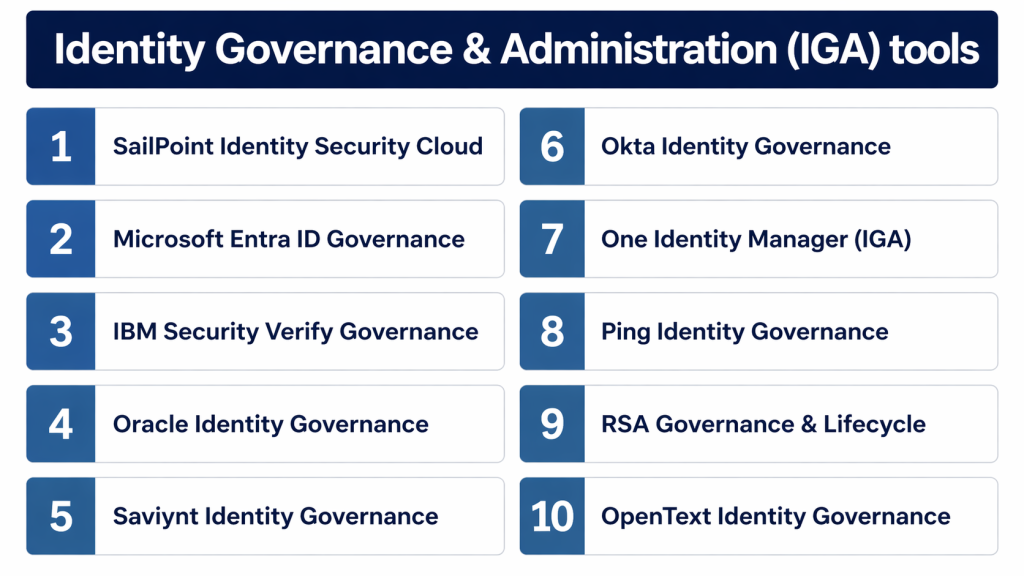
Top 10 Identity Governance & Administration (IGA) Platforms
1 — SailPoint Identity Security Cloud
Short description:
SailPoint is a leading IGA platform focused on identity governance, access intelligence, and compliance automation for enterprises.
Key Features
- Identity lifecycle management automation
- Access certification campaigns
- Role-based access control (RBAC)
- Policy enforcement engine
- Identity risk analytics
- Cloud and SaaS governance
- Audit and compliance reporting
Pros
- Strong enterprise governance capabilities
- Advanced access intelligence
- Excellent compliance support
Cons
- Complex deployment
- Premium pricing
Platforms / Deployment
- Cloud / Hybrid
Security & Compliance
- RBAC and MFA support
- Audit logs
- Compliance automation
Integrations & Ecosystem
- IAM systems
- PAM platforms
- SaaS applications
- Cloud providers
Support & Community
Strong enterprise-grade support ecosystem.
2 — Microsoft Entra ID Governance
Short description:
Microsoft Entra ID Governance provides identity lifecycle management and access governance within the Microsoft ecosystem.
Key Features
- Automated user lifecycle management
- Access reviews and certifications
- Entitlement management
- Conditional access policies
- Role-based access control
- Identity lifecycle workflows
- Integration with Microsoft services
Pros
- Deep Microsoft ecosystem integration
- Strong automation capabilities
- Easy deployment in Azure environments
Cons
- Best suited for Microsoft-centric organizations
- Licensing complexity
Platforms / Deployment
- Cloud / Hybrid
Security & Compliance
- Conditional access
- MFA integration
- Audit reporting
Integrations & Ecosystem
- Microsoft 365
- Azure services
- Enterprise apps
- Security tools
Support & Community
Strong Microsoft enterprise support.
3 — IBM Security Verify Governance
Short description:
IBM IGA provides identity governance, compliance automation, and access lifecycle management for large enterprises.
Key Features
- Identity lifecycle management
- Access certification campaigns
- Role mining and analytics
- Policy-based access control
- Compliance reporting dashboards
- Workflow automation
- Risk-based identity governance
Pros
- Strong enterprise governance features
- Advanced analytics capabilities
- Scalable architecture
Cons
- Complex setup
- Enterprise-focused pricing
Platforms / Deployment
- Cloud / Hybrid
Security & Compliance
- RBAC and encryption
- Audit logs
- Compliance reporting
Integrations & Ecosystem
- IBM security suite
- IAM platforms
- Cloud systems
- SIEM tools
Support & Community
Strong enterprise IBM support.
4 — Oracle Identity Governance
Short description:
Oracle Identity Governance provides enterprise identity lifecycle management and access control for complex environments.
Key Features
- Identity lifecycle automation
- Role-based access control
- Access certification workflows
- Policy enforcement engine
- Role mining and modeling
- Compliance reporting tools
- Provisioning automation
Pros
- Strong enterprise governance depth
- Good scalability
- Tight Oracle integration
Cons
- Complex implementation
- Best within Oracle ecosystems
Platforms / Deployment
- Cloud / Hybrid
Security & Compliance
- Encryption and RBAC
- Audit logs
- Compliance reporting
Integrations & Ecosystem
- Oracle applications
- Enterprise systems
- Cloud platforms
- APIs
Support & Community
Strong Oracle enterprise support.
5 — Saviynt IGA Platform
Short description:
Saviynt provides cloud-native identity governance with strong automation and compliance capabilities.
Key Features
- Cloud identity governance
- Access certification campaigns
- Role-based access control
- Identity lifecycle automation
- Risk-based access analysis
- Application governance
- Policy enforcement engine
Pros
- Strong cloud-native architecture
- Good automation features
- Flexible integration model
Cons
- Learning curve for advanced features
- Enterprise pricing
Platforms / Deployment
- Cloud / Hybrid
Security & Compliance
- RBAC support
- Audit logging
- Compliance automation
Integrations & Ecosystem
- SaaS platforms
- IAM systems
- Cloud providers
- Security tools
Support & Community
Strong enterprise support structure.
6 — Okta Identity Governance
Short description:
Okta IGA provides identity lifecycle management and access governance built into the Okta ecosystem.
Key Features
- Automated provisioning and deprovisioning
- Access certification workflows
- Role-based access control
- Lifecycle management automation
- Identity policy enforcement
- SaaS application governance
- Audit reporting dashboards
Pros
- Strong SaaS ecosystem integration
- Easy deployment
- Scalable architecture
Cons
- Premium pricing
- Advanced governance features limited in basic tiers
Platforms / Deployment
- Cloud
Security & Compliance
- MFA and encryption
- Audit logs
- Compliance reporting
Integrations & Ecosystem
- SaaS applications
- IAM systems
- Cloud services
- APIs
Support & Community
Strong global enterprise support.
7 — One Identity Manager (IGA)
Short description:
One Identity Manager provides comprehensive identity governance with strong lifecycle automation and compliance control.
Key Features
- Identity lifecycle management
- Access certification campaigns
- Role-based access control
- Policy-based governance
- Workflow automation
- Risk-based access analysis
- Audit reporting
Pros
- Strong governance capabilities
- Good hybrid support
- Flexible deployment
Cons
- Complex configuration
- Enterprise-focused model
Platforms / Deployment
- Cloud / On-prem / Hybrid
Security & Compliance
- MFA support
- Audit logs
- Compliance reporting
Integrations & Ecosystem
- IAM systems
- Enterprise apps
- Cloud platforms
- SIEM tools
Support & Community
Strong enterprise support.
8 — Ping Identity Identity Governance
Short description:
Ping Identity offers identity governance and access lifecycle management for enterprise environments.
Key Features
- Identity lifecycle automation
- Access certification workflows
- Role-based access control
- Adaptive identity policies
- Cloud and hybrid governance
- Risk-based access control
- Identity orchestration
Pros
- Strong hybrid identity support
- Flexible architecture
- Good enterprise security
Cons
- Complex setup
- Higher pricing
Platforms / Deployment
- Cloud / Hybrid
Security & Compliance
- MFA support
- Encryption
- Audit logs
Integrations & Ecosystem
- Enterprise applications
- Cloud systems
- IAM platforms
- APIs
Support & Community
Strong enterprise support.
9 — RSA Governance & Lifecycle
Short description:
RSA provides identity governance with strong compliance and lifecycle management capabilities.
Key Features
- Identity lifecycle management
- Access certification campaigns
- Role-based access control
- Risk-based governance
- Workflow automation
- Compliance dashboards
- User provisioning automation
Pros
- Strong compliance focus
- Trusted enterprise vendor
- Good security foundation
Cons
- Complex configuration
- Legacy system feel in parts
Platforms / Deployment
- Cloud / On-prem / Hybrid
Security & Compliance
- MFA integration
- Audit logs
- Compliance reporting
Integrations & Ecosystem
- IAM systems
- SIEM tools
- Enterprise applications
- APIs
Support & Community
Strong enterprise support.
10 — OpenText Identity Governance
Short description:
OpenText provides identity governance solutions focused on compliance, access control, and identity lifecycle management.
Key Features
- Identity lifecycle automation
- Access certification campaigns
- Role-based access control
- Policy enforcement
- Compliance reporting tools
- Workflow automation
- Identity analytics
Pros
- Strong compliance capabilities
- Good enterprise scalability
- Flexible governance model
Cons
- Complex setup
- Smaller ecosystem compared to top vendors
Platforms / Deployment
- Cloud / Hybrid
Security & Compliance
- RBAC and encryption
- Audit logs
- Compliance support
Integrations & Ecosystem
- Enterprise applications
- IAM systems
- Cloud platforms
- APIs
Support & Community
Enterprise-level support available.
Comparison Table (Top 10)
| Tool | Best For | Platform(s) Supported | Deployment | Standout Feature | Public Rating |
|---|---|---|---|---|---|
| SailPoint | Enterprise governance | Multi | Hybrid | Identity intelligence | N/A |
| Microsoft Entra IDG | Microsoft ecosystem | Multi | Hybrid | Access reviews | N/A |
| IBM Verify Gov | Large enterprises | Multi | Hybrid | Role mining | N/A |
| Oracle Identity Gov | Oracle systems | Multi | Hybrid | Role modeling | N/A |
| Saviynt | Cloud enterprises | Multi | Cloud | Automation-first design | N/A |
| Okta IGA | SaaS companies | Multi | Cloud | SaaS governance | N/A |
| One Identity | Hybrid enterprises | Multi | Hybrid | Lifecycle automation | N/A |
| Ping Identity | Enterprises | Multi | Hybrid | Identity orchestration | N/A |
| RSA Governance | Compliance-heavy orgs | Multi | Hybrid | Audit-driven governance | N/A |
| OpenText IGA | Enterprises | Multi | Hybrid | Compliance reporting | N/A |
Evaluation & Scoring of IGA Platforms
| Tool | Core (25%) | Ease (15%) | Integrations (15%) | Security (10%) | Performance (10%) | Support (10%) | Value (15%) | Total |
|---|---|---|---|---|---|---|---|---|
| SailPoint | 10 | 7 | 10 | 10 | 9 | 9 | 7 | 8.8 |
| Entra IDG | 9 | 8 | 10 | 10 | 9 | 9 | 9 | 8.9 |
| IBM Verify | 9 | 7 | 9 | 10 | 9 | 9 | 7 | 8.6 |
| Oracle Gov | 9 | 6 | 9 | 10 | 9 | 9 | 7 | 8.4 |
| Saviynt | 9 | 8 | 9 | 9 | 9 | 8 | 8 | 8.6 |
| Okta IGA | 8 | 9 | 9 | 9 | 9 | 9 | 8 | 8.7 |
| One Identity | 9 | 7 | 9 | 9 | 9 | 9 | 8 | 8.6 |
| Ping | 9 | 7 | 9 | 10 | 9 | 8 | 7 | 8.5 |
| RSA | 8 | 6 | 8 | 9 | 8 | 8 | 8 | 8.0 |
| OpenText | 8 | 7 | 8 | 9 | 8 | 8 | 8 | 8.1 |
Which IGA Platform Is Right for You?
SMB / Startups
- Okta Identity Governance
- Saviynt (light use cases)
Mid-Market
- One Identity
- Ping Identity
- Saviynt
Enterprise
- SailPoint
- Microsoft Entra ID Governance
- IBM Security Verify Governance
- Oracle Identity Governance
Frequently Asked Questions (FAQs)
1. What is IGA?
IGA stands for Identity Governance & Administration. It manages identity lifecycle and access policies across systems.
2. Why is IGA important?
It ensures users only have the access they need. It reduces security risks and supports compliance.
3. What is identity lifecycle management?
It automates onboarding, role changes, and offboarding of users.
4. Is IGA part of IAM?
Yes, IGA is a core part of Identity & Access Management.
5. What is access certification?
It is a process where users’ access rights are reviewed and validated regularly.
6. Does IGA support cloud systems?
Yes, modern IGA platforms support cloud, hybrid, and SaaS environments.
7. What is role mining?
It is the process of identifying and defining user roles based on access patterns.
8. Is IGA difficult to implement?
Enterprise solutions can be complex, but they offer strong automation benefits.
9. Who needs IGA?
Large organizations with complex user access structures and compliance needs.
10. What industries use IGA most?
Banking, healthcare, government, SaaS, and large enterprises.
Conclusion
Identity Governance & Administration (IGA) platforms are essential for managing user identities, enforcing access policies, and ensuring regulatory compliance in modern enterprises. They help organizations maintain control over who has access to what systems and reduce security risks caused by excessive permissions.
From enterprise leaders like SailPoint and IBM to cloud-native platforms like Saviynt and Okta, each solution offers different levels of governance depth and automation.
Choosing the right IGA platform depends on your organizational size, compliance needs, and infrastructure complexity. A strong IGA strategy ensures secure identity lifecycle management, improved compliance, and stronger access governance across all systems.
