Introduction
PEP Screening Tools are compliance solutions used to identify and monitor individuals who are classified as Politically Exposed Persons. These include government officials, senior politicians, military leaders, judges, and their close associates who may present a higher risk of corruption, bribery, or financial crime.
These tools are a critical part of anti-money laundering and compliance frameworks. They automatically screen customers, vendors, and counterparties against global PEP databases, sanctions lists, and risk intelligence sources. Modern platforms go beyond basic matching by using AI, fuzzy logic, and continuous monitoring to reduce false positives and improve detection accuracy.
Common use cases include:
- Customer onboarding risk checks
- Ongoing customer monitoring
- Third-party and vendor screening
- Enhanced due diligence workflows
- Risk scoring and compliance reporting
Key evaluation criteria:
- Global PEP data coverage
- Matching accuracy and false-positive control
- Continuous monitoring capability
- Integration flexibility
- Workflow automation
- Case management features
- Security and audit controls
- Scalability
- Ease of implementation
Best for: Banks, fintech companies, payment providers, insurance firms, crypto platforms, and regulated enterprises handling high-risk customers.
Not ideal for: Small businesses with minimal compliance exposure or organizations that only require occasional manual checks.
Key Trends in PEP Screening Tools
- AI-powered entity matching and name resolution
- Continuous monitoring instead of one-time checks
- Integration of sanctions and adverse media screening
- Beneficial ownership and relationship mapping
- Real-time alerting and risk scoring
- Explainable compliance decisions
- API-first compliance infrastructure
- Cloud-native deployment models
- Reduced false positives through smarter algorithms
- Cross-border multilingual screening
How We Selected These Tools
- Industry adoption and credibility
- Depth of PEP database coverage
- Matching engine sophistication
- Workflow and case management capabilities
- Integration ecosystem maturity
- Security and compliance readiness
- Scalability across organization sizes
- Customer support quality
- Innovation in AI and automation
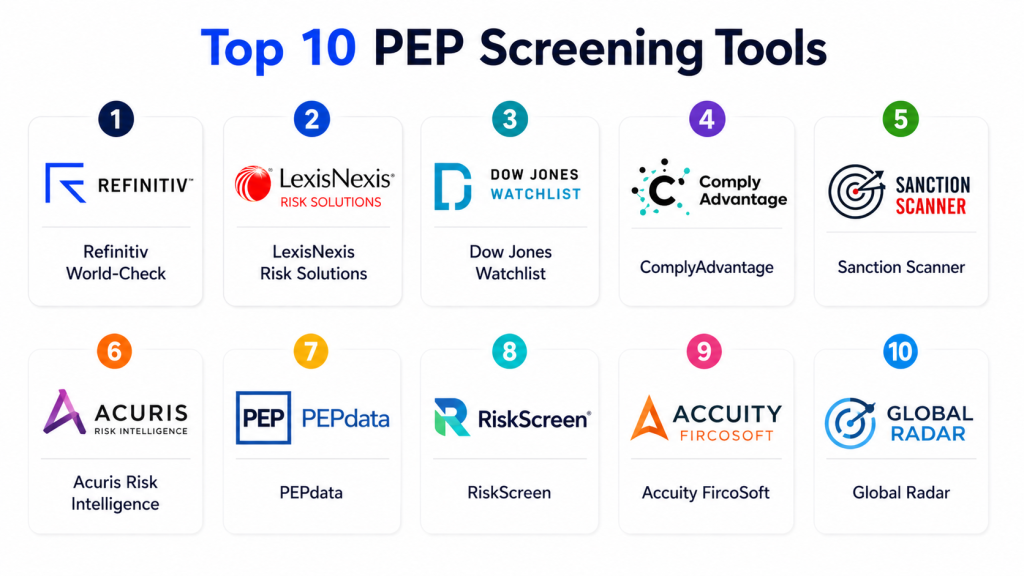
Top 10 PEP Screening Tools
#1 — LSEG World-Check
Short description: LSEG World-Check is one of the most widely used PEP and risk intelligence databases globally, offering deep coverage of PEPs, sanctions, and adverse media for enterprise compliance teams.
Key Features
- Global PEP database
- Adverse media screening
- Risk classification
- Continuous monitoring
- API integrations
- Watchlist screening
Pros
- Extensive global data coverage
- Trusted by large institutions
- Strong compliance workflows
Cons
- Premium pricing
- Complex setup
- Best for large enterprises
Platforms / Deployment
- Web
- Cloud
Security & Compliance
- RBAC
- MFA
- Audit logs
- Encryption
Integrations & Ecosystem
- APIs
- CRM systems
- Compliance platforms
- Banking systems
Support & Community
Strong enterprise support and onboarding.
#2 — Dow Jones Risk & Compliance
Short description: Dow Jones provides PEP screening with rich data intelligence, combining sanctions, watchlists, and adverse media for comprehensive compliance monitoring.
Key Features
- PEP screening
- Adverse media monitoring
- Risk intelligence
- Continuous monitoring
- Reporting tools
- Workflow automation
Pros
- High-quality data sources
- Strong compliance usability
- Broad enterprise fit
Cons
- Premium pricing
- Configuration required
- Best for high-volume screening
Platforms / Deployment
- Web
- Cloud
Security & Compliance
- RBAC
- MFA
- Audit logs
Integrations & Ecosystem
- APIs
- CRM tools
- Compliance systems
- Reporting platforms
Support & Community
Strong enterprise implementation support.
#3 — ComplyAdvantage
Short description: ComplyAdvantage is an AI-driven compliance platform designed for fintechs and digital businesses needing fast and automated PEP screening.
Key Features
- AI name matching
- Real-time screening
- Continuous monitoring
- Risk scoring
- Adverse media checks
- API-first design
Pros
- Fast deployment
- Strong automation
- Developer-friendly APIs
Cons
- Scaling cost increases
- Requires tuning
- Enterprise workflows may need customization
Platforms / Deployment
- Web
- Cloud
Security & Compliance
- RBAC
- MFA
- Audit logs
Integrations & Ecosystem
- APIs
- Payment systems
- CRM platforms
- Fraud tools
Support & Community
Good onboarding and developer support.
#4 — LexisNexis Bridger Insight
Short description: Bridger Insight is a well-established compliance tool for screening PEPs, sanctions, and risk profiles across financial services and enterprise workflows.
Key Features
- PEP screening
- Batch and real-time checks
- Risk scoring
- Watchlist monitoring
- Reporting tools
- Continuous monitoring
Pros
- Mature platform
- Broad adoption
- Strong compliance workflows
Cons
- Traditional interface
- Premium pricing
- Setup complexity varies
Platforms / Deployment
- Web
- Cloud / Hybrid
Security & Compliance
- RBAC
- MFA
- Audit logs
Integrations & Ecosystem
- APIs
- Banking systems
- CRM tools
- Compliance platforms
Support & Community
Strong enterprise support ecosystem.
#5 — Sanction Scanner
Short description: Sanction Scanner offers AML, sanctions, and PEP screening with global database coverage and flexible compliance workflows.
Key Features
- Global PEP screening
- Sanctions checks
- Real-time monitoring
- Risk scoring
- API integrations
- Workflow automation
Pros
- Good global coverage
- Flexible deployment
- Cost-effective for mid-market
Cons
- Smaller brand recognition
- Advanced features vary
- Custom tuning required
Platforms / Deployment
- Web
- Cloud
Security & Compliance
- RBAC
- Audit logs
- Encryption
Integrations & Ecosystem
- APIs
- Fintech systems
- CRM tools
- Compliance workflows
Support & Community
Growing support ecosystem.
#6 — NameScan
Short description: NameScan specializes in advanced name matching and screening technology for PEP, sanctions, and watchlist monitoring.
Key Features
- Fuzzy name matching
- Global screening
- Real-time monitoring
- Risk scoring
- Batch processing
- Reporting tools
Pros
- Strong matching accuracy
- Good for complex names
- Flexible deployment
Cons
- Limited broader compliance features
- Enterprise setup needed
- Smaller ecosystem
Platforms / Deployment
- Web
- Cloud
Security & Compliance
- RBAC
- Audit logs
- Encryption
Integrations & Ecosystem
- APIs
- Screening platforms
- Compliance tools
- Data systems
Support & Community
Specialized support for matching technology.
#7 — Shufti Pro
Short description: Shufti Pro combines identity verification with PEP screening, making it suitable for onboarding-focused compliance workflows.
Key Features
- PEP screening
- Identity verification
- Real-time checks
- Risk scoring
- AML monitoring
- API integration
Pros
- Strong onboarding integration
- Easy to deploy
- Cloud-native platform
Cons
- Limited enterprise customization
- Pricing varies
- Best for digital onboarding use cases
Platforms / Deployment
- Web
- Cloud
Security & Compliance
- RBAC
- Audit logs
- Encryption
Integrations & Ecosystem
- APIs
- Onboarding systems
- Payment platforms
- Compliance tools
Support & Community
Good onboarding and support experience.
#8 — SEON
Short description: SEON provides fraud prevention and compliance tools with integrated PEP screening capabilities for digital businesses.
Key Features
- PEP screening
- Fraud detection
- Risk scoring
- API integration
- Monitoring workflows
- Reporting tools
Pros
- Strong fraud + compliance combo
- Fast integration
- Good for startups
Cons
- Limited enterprise depth
- Compliance features vary
- Not purely PEP-focused
Platforms / Deployment
- Web
- Cloud
Security & Compliance
- RBAC
- Audit logs
- Encryption
Integrations & Ecosystem
- APIs
- Fraud systems
- Payment tools
- CRM platforms
Support & Community
Strong support for fintech startups.
#9 — sanctions.io
Short description: sanctions.io offers flexible API-based screening for PEPs, sanctions, and AML checks with modern workflow capabilities.
Key Features
- API-first screening
- Batch processing
- Continuous monitoring
- Risk alerts
- CRM integrations
- Watchlist coverage
Pros
- Easy integration
- Flexible workflows
- Fast deployment
Cons
- Smaller vendor ecosystem
- Enterprise features vary
- Custom setup needed
Platforms / Deployment
- Web
- Cloud
Security & Compliance
- RBAC
- Audit logs
- Encryption
Integrations & Ecosystem
- APIs
- CRM systems
- SaaS tools
- Compliance platforms
Support & Community
Growing ecosystem and support.
#10 — Sumsub
Short description: Sumsub provides a unified compliance platform combining identity verification, PEP screening, and AML monitoring.
Key Features
- PEP screening
- Identity verification
- Continuous monitoring
- Risk scoring
- Workflow automation
- Reporting dashboards
Pros
- All-in-one compliance solution
- Strong onboarding support
- Scalable platform
Cons
- Pricing varies
- Advanced workflows require setup
- Best for digital-first companies
Platforms / Deployment
- Web
- Cloud
Security & Compliance
- RBAC
- Audit logs
- Encryption
Integrations & Ecosystem
- APIs
- Onboarding systems
- Payment tools
- Compliance workflows
Support & Community
Good enterprise onboarding support.
Comparison Table
| Tool Name | Best For | Platform Supported | Deployment | Standout Feature | Public Rating |
|---|---|---|---|---|---|
| LSEG World-Check | Enterprise compliance | Web | Cloud | Global PEP database | N/A |
| Dow Jones Risk & Compliance | Due diligence | Web | Cloud | Rich data intelligence | N/A |
| ComplyAdvantage | Fintech screening | Web | Cloud | AI matching | N/A |
| LexisNexis Bridger Insight | Enterprise workflows | Web | Cloud / Hybrid | Mature platform | N/A |
| Sanction Scanner | Mid-market compliance | Web | Cloud | Flexible screening | N/A |
| NameScan | Name matching | Web | Cloud | Fuzzy matching | N/A |
| Shufti Pro | Onboarding compliance | Web | Cloud | Identity + PEP screening | N/A |
| SEON | Fraud + compliance | Web | Cloud | Combined risk detection | N/A |
| sanctions.io | API screening | Web | Cloud | Developer-friendly APIs | N/A |
| Sumsub | Unified compliance | Web | Cloud | All-in-one solution | N/A |
Frequently Asked Questions
1. What is PEP screening
PEP screening identifies individuals with political exposure who may pose higher financial crime risk. It helps businesses apply enhanced due diligence. It is a key part of AML compliance.
2. Why are PEPs high risk
PEPs have influence over public funds and decisions, making them more vulnerable to corruption or bribery risks. This increases compliance scrutiny.
3. When should companies perform PEP checks
PEP screening is done during onboarding and continuously throughout the customer lifecycle. Continuous monitoring ensures updated risk visibility.
4. Do PEP tools use AI
Yes, modern tools use AI for matching, risk scoring, and alert prioritization. This improves accuracy. It also reduces false positives.
5. Can PEP screening integrate with AML systems
Most platforms integrate with AML, KYC, and fraud detection systems through APIs. This enables unified compliance workflows.
6. Are PEP screening tools cloud-based
Most modern solutions are cloud-native, though some enterprise tools offer hybrid deployment. Cloud improves scalability and speed.
7. What industries need PEP screening
Financial services, fintech, insurance, crypto, and global enterprises need PEP screening. Any regulated business benefits from it.
8. How accurate are PEP screening tools
Accuracy depends on data quality and matching algorithms. Advanced tools reduce false positives using AI and fuzzy matching.
9. Is implementation difficult
Cloud tools are easier to deploy, while enterprise systems require integration planning and configuration.
10. How should companies choose a tool
Evaluate data coverage, matching accuracy, integrations, workflow automation, and scalability. Pilot testing is recommended.
Conclusion
PEP Screening Tools play a critical role in modern compliance programs by helping organizations identify high-risk individuals and apply enhanced due diligence effectively.
The biggest advantage lies in automation, continuous monitoring, and improved detection accuracy, which significantly reduces manual workload and compliance risk.
Modern platforms are evolving with AI-driven matching, better false-positive control, and deeper integration with AML and fraud systems.

The comparison makes it easy to understand the capabilities of different PEP screening tools and choose the most suitable option for compliance requirements.