Introduction
Transaction Monitoring AML Systems are compliance platforms designed to continuously analyze financial transactions for suspicious activity, unusual patterns, and potential anti money laundering risks. These systems help organizations detect fraud, structuring, money laundering behavior, sanctions exposure, and other financial crime indicators by monitoring payments, transfers, deposits, withdrawals, and account behavior in real time or near real time.
Manual transaction reviews are no longer practical for modern financial institutions because transaction volumes are growing rapidly and regulatory expectations are becoming stricter. Modern AML monitoring platforms use machine learning, behavioral analytics, automated alert scoring, and workflow automation to improve detection quality while reducing false positives.
Common use cases include:
- Suspicious transaction detection
- Fraud pattern identification
- Customer risk monitoring
- Sanctions related payment review
- Automated compliance investigations
Key evaluation criteria:
- Detection intelligence
- Alert accuracy
- False positive reduction
- Real time monitoring
- Workflow automation
- Integration flexibility
- Case management quality
- Security controls
- Reporting readiness
- Scalability
Best for: Banks, fintech companies, payment processors, insurance firms, digital wallets, lending platforms, and regulated financial institutions.
Not ideal for: Small businesses with limited regulated financial activity or organizations needing only occasional compliance screening.
Key Trends in Transaction Monitoring AML Systems
- AI powered anomaly detection
- Behavioral monitoring models
- Continuous customer risk scoring
- Real time alert prioritization
- Lower false positive rates through smarter matching
- Cloud native compliance platforms
- Cross border transaction intelligence
- Integrated fraud and AML monitoring
- API first compliance ecosystems
- Automated regulatory reporting workflows
How We Selected These Tools
- Market credibility in AML compliance
- Detection engine sophistication
- Workflow automation maturity
- Integration ecosystem quality
- Scalability across institution sizes
- Security posture and governance readiness
- Customer support quality
- Reporting and audit workflow depth
- Operational usability for compliance teams
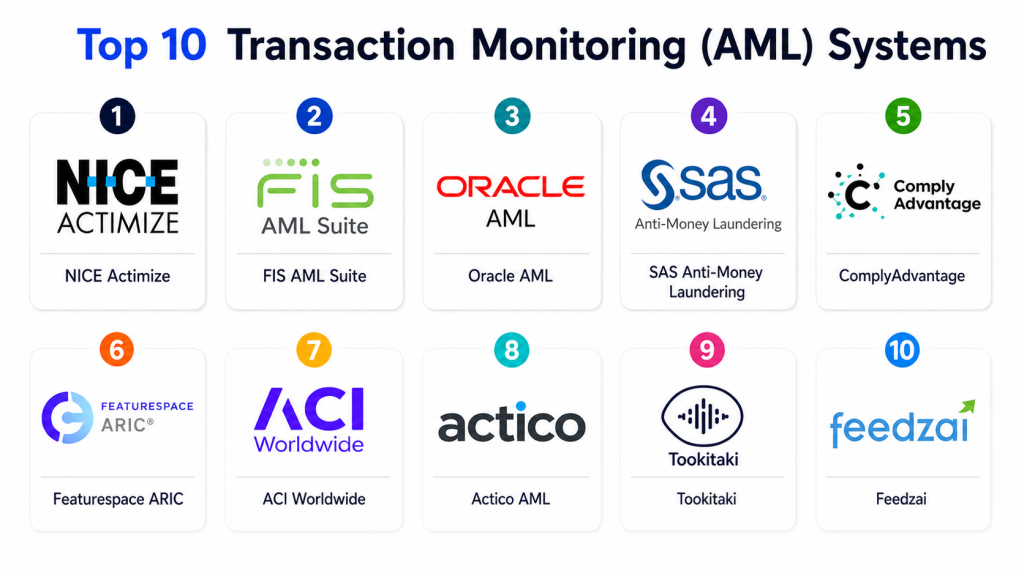
Top 10 Transaction Monitoring AML Systems
#1 — NICE Actimize
Short description: NICE Actimize is one of the leading enterprise AML monitoring platforms, helping financial institutions detect suspicious activity, automate investigations, and strengthen compliance operations at scale.
Key Features
- Real time monitoring
- Behavioral analytics
- AI driven alert scoring
- Case management workflows
- Risk modeling
- Reporting automation
Pros
- Deep enterprise capabilities
- Strong analytics engine
- Mature workflow automation
Cons
- Premium pricing
- Complex implementation
- Best suited for large organizations
Platforms / Deployment
- Web
- Cloud / Hybrid
Security & Compliance
- RBAC
- MFA
- Audit logs
- Encryption
Integrations & Ecosystem
Strong enterprise integrations across financial infrastructure.
- APIs
- Core banking systems
- Analytics platforms
- Compliance workflows
Support & Community
Excellent enterprise onboarding and implementation support.
#2 — Oracle Financial Crime and Compliance Management
Short description: Oracle provides enterprise AML monitoring capabilities for banks and regulated firms that need scalable monitoring, strong analytics, and integrated financial crime workflows.
Key Features
- Transaction monitoring
- Risk scoring
- Alert prioritization
- Workflow automation
- Case management
- Reporting dashboards
Pros
- Broad enterprise compliance suite
- Strong scalability
- Good reporting depth
Cons
- Complex deployment
- Premium enterprise cost
- Requires configuration planning
Platforms / Deployment
- Web
- Cloud / Hybrid
Security & Compliance
- RBAC
- MFA
- Audit logs
Integrations & Ecosystem
- APIs
- Oracle ecosystem
- Banking systems
- Data platforms
Support & Community
Strong enterprise support ecosystem.
#3 — SAS Anti Money Laundering
Short description: SAS delivers advanced analytics driven AML monitoring with strong modeling, risk scoring, and investigative workflows for sophisticated compliance teams.
Key Features
- Advanced analytics
- Risk modeling
- Transaction monitoring
- Case workflows
- Scenario tuning
- Investigation dashboards
Pros
- Powerful analytics
- Strong detection flexibility
- Excellent enterprise scale
Cons
- Technical setup complexity
- Premium pricing
- Skilled teams required
Platforms / Deployment
- Web / Linux
- Cloud / Hybrid
Security & Compliance
- RBAC
- Audit logs
- Encryption
Integrations & Ecosystem
- APIs
- Data warehouses
- Banking platforms
- Reporting tools
Support & Community
Strong enterprise analytics support.
#4 — Fiserv AML Risk Manager
Short description: Fiserv offers AML monitoring designed for banks and financial service providers that need reliable transaction screening, alert management, and compliance reporting.
Key Features
- Transaction monitoring
- Suspicious activity detection
- Alert workflows
- Risk scoring
- Reporting automation
- Case management
Pros
- Strong banking fit
- Reliable workflow tools
- Good operational scalability
Cons
- Enterprise focused pricing
- Deployment varies by environment
- Custom tuning may be required
Platforms / Deployment
- Web
- Cloud / Hybrid
Security & Compliance
- RBAC
- MFA
- Audit logs
Integrations & Ecosystem
- APIs
- Banking systems
- Reporting tools
- Fraud systems
Support & Community
Strong institutional customer support.
#5 — ComplyAdvantage
Short description: ComplyAdvantage is a modern AI powered compliance platform built for fintech and digital financial services that need fast, scalable AML monitoring.
Key Features
- AI monitoring
- Risk scoring
- Real time alerts
- Workflow automation
- API first integrations
- Customer monitoring
Pros
- Fast deployment
- Developer friendly APIs
- Strong automation capabilities
Cons
- Scaling cost increases
- Custom tuning required
- Enterprise depth varies by use case
Platforms / Deployment
- Web
- Cloud
Security & Compliance
- RBAC
- MFA
- Audit logs
Integrations & Ecosystem
- APIs
- Payments systems
- CRM platforms
- Fraud engines
Support & Community
Strong onboarding and developer support.
#6 — Napier AI
Short description: Napier AI combines transaction monitoring, intelligent alerting, and workflow automation for organizations modernizing AML compliance operations.
Key Features
- AI alert scoring
- Transaction monitoring
- Case management
- Risk analytics
- Workflow automation
- Reporting dashboards
Pros
- Strong AI capabilities
- Good alert prioritization
- Scalable architecture
Cons
- Enterprise pricing varies
- Requires setup planning
- Growing ecosystem
Platforms / Deployment
- Web
- Cloud
Security & Compliance
- RBAC
- Audit logs
- Encryption
Integrations & Ecosystem
- APIs
- AML systems
- Reporting tools
- Workflow platforms
Support & Community
Good enterprise implementation support.
#7 — Feedzai
Short description: Feedzai provides AI powered transaction intelligence for AML, fraud prevention, and financial risk detection with strong real time monitoring capabilities.
Key Features
- Real time detection
- Machine learning models
- Behavioral analytics
- Risk scoring
- Alert automation
- Case workflows
Pros
- Excellent AI intelligence
- Strong fraud plus AML coverage
- Fast detection speed
Cons
- Premium platform pricing
- Advanced configuration needed
- Best for mature teams
Platforms / Deployment
- Web
- Cloud
Security & Compliance
- RBAC
- MFA
- Audit logs
Integrations & Ecosystem
- APIs
- Payment infrastructure
- Banking systems
- Data tools
Support & Community
Strong enterprise support model.
#8 — ThetaRay
Short description: ThetaRay specializes in transaction intelligence and anomaly detection using advanced AI models to uncover hidden suspicious patterns.
Key Features
- Anomaly detection
- Network intelligence
- Transaction monitoring
- Risk scoring
- Automated workflows
- Investigative analytics
Pros
- Strong anomaly detection
- Good network analytics
- Scalable monitoring
Cons
- Enterprise focused
- Premium pricing
- Integration planning required
Platforms / Deployment
- Web
- Cloud
Security & Compliance
- RBAC
- Audit logs
- Encryption
Integrations & Ecosystem
- APIs
- Banking platforms
- Analytics tools
- Compliance systems
Support & Community
Strong implementation support.
#9 — Fenergo
Short description: Fenergo supports ongoing customer monitoring, lifecycle compliance, and AML workflow orchestration for regulated financial organizations.
Key Features
- Customer monitoring
- AML workflows
- Risk scoring
- Reporting automation
- Case management
- Compliance orchestration
Pros
- Strong workflow depth
- Good lifecycle compliance fit
- Enterprise scalability
Cons
- Complex setup
- Premium pricing
- Heavy enterprise orientation
Platforms / Deployment
- Web
- Cloud / Hybrid
Security & Compliance
- RBAC
- MFA
- Audit logs
Integrations & Ecosystem
- APIs
- CRM systems
- Banking platforms
- Compliance tools
Support & Community
Strong enterprise onboarding.
#10 — Featurespace
Short description: Featurespace delivers adaptive behavioral analytics for transaction monitoring, fraud prevention, and risk detection across fast moving payment environments.
Key Features
- Adaptive analytics
- Behavioral monitoring
- Risk scoring
- Alert intelligence
- Real time analysis
- Workflow automation
Pros
- Strong adaptive AI
- Good false positive reduction
- Fast decisioning capability
Cons
- Specialized deployment fit
- Premium pricing
- Best for high volume environments
Platforms / Deployment
- Web
- Cloud
Security & Compliance
- RBAC
- Audit logs
- Encryption
Integrations & Ecosystem
- APIs
- Payment systems
- Fraud platforms
- Data infrastructure
Support & Community
Strong enterprise support model.
Comparison Table
| Tool Name | Best For | Platform Supported | Deployment | Standout Feature | Public Rating |
|---|---|---|---|---|---|
| NICE Actimize | Enterprise AML | Web | Cloud / Hybrid | Deep analytics | N/A |
| Oracle Financial Crime | Large institutions | Web | Cloud / Hybrid | Integrated compliance suite | N/A |
| SAS Anti Money Laundering | Advanced analytics | Web / Linux | Cloud / Hybrid | Risk modeling | N/A |
| Fiserv AML Risk Manager | Banking operations | Web | Cloud / Hybrid | Strong banking workflows | N/A |
| ComplyAdvantage | Fintech compliance | Web | Cloud | AI automation | N/A |
| Napier AI | Smart monitoring | Web | Cloud | AI alert scoring | N/A |
| Feedzai | Fraud plus AML | Web | Cloud | Machine learning intelligence | N/A |
| ThetaRay | Transaction intelligence | Web | Cloud | Network anomaly detection | N/A |
| Fenergo | Lifecycle monitoring | Web | Cloud / Hybrid | Workflow orchestration | N/A |
| Featurespace | High volume payments | Web | Cloud | Adaptive analytics | N/A |
Frequently Asked Questions
1. What is transaction monitoring in AML
Transaction monitoring is the process of continuously reviewing financial activity to detect suspicious patterns linked to money laundering or fraud. It helps organizations identify risks faster. It is a core AML requirement.
2. Who needs AML monitoring systems
Banks, fintech firms, payment companies, insurers, lenders, and regulated financial institutions benefit most. Any organization handling large financial transaction volume can improve compliance efficiency with these tools.
3. Do AML monitoring tools use AI
Yes, many modern platforms use machine learning, anomaly detection, and behavioral analytics. This improves detection quality. It also helps reduce false positives.
4. Can these systems monitor transactions in real time
Most modern AML platforms support real time or near real time monitoring. Faster detection helps compliance teams investigate suspicious activity quickly. This improves operational response.
5. How do AML systems reduce false positives
They use smarter scoring models, contextual behavior analysis, and AI assisted prioritization. Better detection logic means compliance teams spend less time reviewing low risk alerts.
6. Are AML monitoring platforms secure
Enterprise platforms typically include encryption, role based access, audit logs, and strong governance controls. Security maturity varies by vendor. Buyers should validate controls carefully.
7. Can AML tools integrate with existing systems
Yes, APIs are a major feature in most platforms. They commonly connect with banking systems, payment platforms, fraud engines, and reporting infrastructure.
8. Is implementation difficult
Cloud native tools are usually faster to deploy, while enterprise AML platforms may require larger implementation projects. Complexity depends on integrations and regulatory scope.
9. Can smaller fintech companies use AML systems
Yes, many API first platforms are designed for fast growing fintech businesses. These tools provide automation without requiring large compliance operations teams.
10. How should companies choose a platform
Evaluate detection intelligence, workflow quality, integrations, scalability, reporting capabilities, and operational fit. Shortlist a few vendors and run a pilot before making a final decision.
Conclusion
Transaction Monitoring AML Systems have become essential infrastructure for modern financial compliance operations.
They help organizations detect suspicious activity faster, automate investigations, reduce false positives, and strengthen regulatory readiness.
The biggest advantage comes from combining intelligent analytics with automated workflows, allowing compliance teams to focus on high value investigations instead of manual reviews.

The comparison presents the key features and differences of AML transaction monitoring systems in a clear way, helping readers make more informed decisions.