Introduction
Security Data Lakes are centralized platforms that store, normalize, and analyze massive volumes of security-related data from across an organization’s entire digital ecosystem. This includes logs, network traffic, endpoint telemetry, cloud activity, identity events, SaaS usage data, and threat intelligence feeds.
In 2026 and beyond, security data lakes have become essential because modern environments generate high-velocity, high-volume, and highly diverse security telemetry. Traditional SIEM systems alone can no longer efficiently store or analyze this scale of data without cost or performance limitations.
Common use cases include threat detection, forensic investigations, threat hunting, incident response, compliance reporting, anomaly detection, AIOps-driven security analytics, and long-term security data retention for regulatory requirements.
Buyers should evaluate ingestion scalability, query performance, data normalization capabilities, AI/ML analytics support, integration ecosystem, cost efficiency, storage architecture, real-time processing capability, and security governance controls.
Best for: SOC teams, security engineering teams, MDR providers, large enterprises, cloud-native organizations, and compliance-heavy industries.
Not ideal for: small IT environments, low-log-volume systems, or organizations without centralized security monitoring needs.
Key Trends in Security Data Lakes
- Shift from SIEM-only to Security Data Lake + SIEM hybrid models
- Separation of storage and compute for cost-efficient scaling
- AI-driven security analytics and anomaly detection are becoming core features
- Real-time streaming ingestion is replacing batch log processing
- Unified telemetry (logs, metrics, traces, identity, cloud events) is standard
- Security + observability convergence is increasing rapidly
- Data lakehouse architecture is replacing traditional monolithic storage models
- Threat intelligence enrichment is embedded directly into data pipelines
- GenAI-assisted security queries and investigations are emerging
- Cloud-native security data lakes are dominating over on-prem deployments
How We Selected These Tools
- Focused on platforms providing large-scale security telemetry storage and analytics
- Included SIEM-extended and standalone security data lake solutions
- Prioritized cloud-native and scalable architectures
- Evaluated support for real-time and batch ingestion pipelines
- Considered integration with SIEM, SOAR, EDR, and cloud security tools
- Included platforms supporting AI/ML-based threat detection
- Reviewed data normalization and schema flexibility capabilities
- Ensured enterprise and hyperscale readiness
- Included both vendor-specific and open ecosystem tools
- Used Not publicly stated where compliance or ratings are unknown
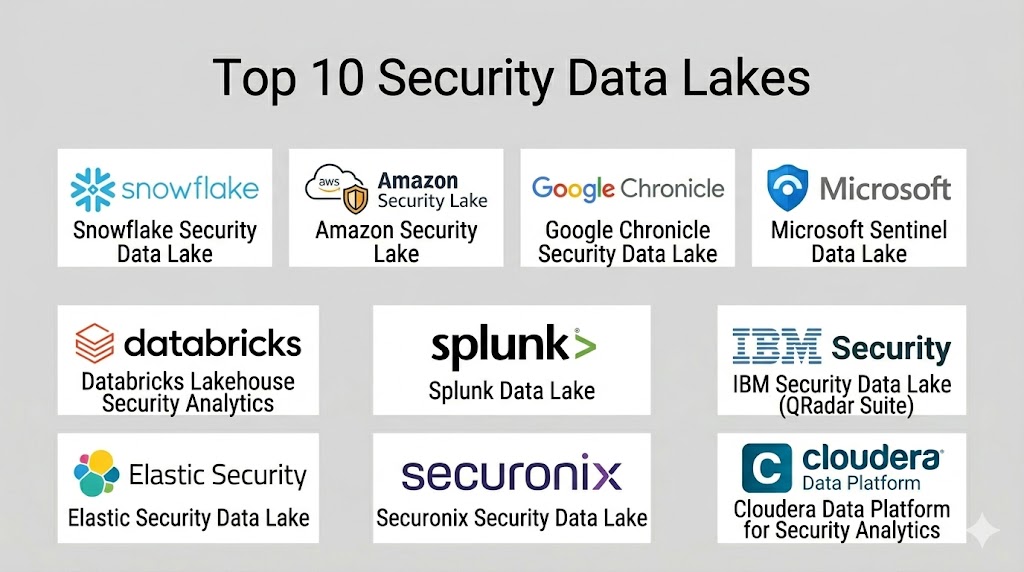
Top 10 Security Data Lakes
1- Microsoft Sentinel (Azure Data Lake Integration)
Short description: Microsoft Sentinel is a cloud-native SIEM built on Azure that uses a scalable security data lake architecture to ingest, store, and analyze security data across Microsoft and third-party environments. It provides advanced analytics, threat detection, and incident response capabilities.
Key Features
- Cloud-native security data ingestion
- Scalable log analytics engine
- Built-in AI-driven threat detection
- Data normalization via KQL
- Real-time security analytics
- SOAR automation workflows
- Threat intelligence integration
Pros
- Deep Microsoft ecosystem integration
- Highly scalable cloud architecture
- Strong AI-based detection
- Unified SIEM + data lake model
Cons
- Complex query language (KQL)
- Cost increases with ingestion scale
- Best value within Azure ecosystem
- Requires tuning for optimization
Platforms / Deployment
Cloud-native (Azure-based)
Security & Compliance
Includes encryption, RBAC, audit logging, and enterprise security controls. Compliance certifications vary and are Not publicly stated.
Integrations & Ecosystem
- Azure services
- Microsoft Defender suite
- Third-party SIEM tools
- APIs and connectors
- Threat intelligence feeds
Support & Community
Strong enterprise support and global adoption.
2- Splunk Data Lake (Splunk Platform)
Short description: Splunk provides a powerful security data lake capability through its scalable indexing and search architecture, enabling real-time analysis of massive security datasets.
Key Features
- High-volume data ingestion
- Real-time log indexing and search
- Security event correlation
- AI-driven anomaly detection
- Custom dashboards and queries
- Threat intelligence integration
- Distributed data architecture
Pros
- Extremely powerful search capabilities
- Mature enterprise platform
- Strong security analytics ecosystem
- Flexible data ingestion
Cons
- High storage and compute cost
- Requires SPL expertise
- Complex scaling management
- Resource-intensive architecture
Platforms / Deployment
Cloud and hybrid enterprise environments
Security & Compliance
Enterprise-grade controls included. Compliance details are Not publicly stated.
Integrations & Ecosystem
- SIEM tools
- Cloud providers
- Security systems
- DevOps tools
- APIs
Support & Community
Strong enterprise support and large analyst community.
3- Google Chronicle Security Data Lake
Short description: Google Chronicle is a hyperscale security data lake built on Google infrastructure, designed for long-term storage and fast querying of security telemetry at massive scale.
Key Features
- Hyperscale log storage
- Ultra-fast search across security data
- AI-based threat detection
- Unified security telemetry ingestion
- Threat intelligence enrichment
- Timeline-based investigations
- MITRE ATT&CK mapping
Pros
- Extremely scalable architecture
- Fast query performance
- Strong Google Cloud integration
- Low-latency search at scale
Cons
- Enterprise-focused pricing
- Requires cloud maturity
- Complex onboarding
- Limited SMB suitability
Platforms / Deployment
Cloud-native (Google Cloud)
Security & Compliance
Includes enterprise-grade encryption and access controls. Compliance is Not publicly stated.
Integrations & Ecosystem
- Google Cloud services
- SIEM systems
- Security tools
- APIs
- DevOps pipelines
Support & Community
Strong enterprise-level support.
4- Snowflake Security Data Lake
Short description: Snowflake provides a cloud data platform widely used as a security data lake for storing and analyzing large-scale security telemetry.
Key Features
- Scalable data storage and compute separation
- Security log ingestion
- SQL-based analytics engine
- Data sharing across teams
- Real-time and batch processing
- AI/ML integration support
- Data governance controls
Pros
- Highly scalable architecture
- Flexible data processing
- Strong multi-cloud support
- Efficient cost model
Cons
- Requires engineering expertise
- Not security-native by default
- Needs SIEM integration
- Complex security modeling
Platforms / Deployment
Cloud-based (multi-cloud support)
Security & Compliance
Enterprise-grade security controls available. Compliance details are Not publicly stated.
Integrations & Ecosystem
- SIEM platforms
- Cloud services
- Security tools
- Data pipelines
- APIs
Support & Community
Strong enterprise and data engineering ecosystem.
5- Databricks Security Lakehouse
Short description: Databricks combines data lake and data warehouse capabilities into a lakehouse architecture that supports security analytics and threat detection.
Key Features
- Security lakehouse architecture
- Streaming and batch ingestion
- AI/ML-driven threat detection
- Unified data processing
- Real-time analytics
- Notebook-based investigations
- Scalable data pipelines
Pros
- Strong AI/ML integration
- Unified analytics platform
- Scalable architecture
- Good real-time processing
Cons
- Requires data engineering skills
- Complex setup for security teams
- Not security-native
- Cost increases with scale
Platforms / Deployment
Cloud-based (multi-cloud support)
Security & Compliance
Includes encryption and access control features. Compliance is Not publicly stated.
Integrations & Ecosystem
- Cloud platforms
- SIEM systems
- Data engineering tools
- APIs
- Security pipelines
Support & Community
Strong data engineering and enterprise support.
6- Elastic Security Data Lake (Elasticsearch)
Short description: Elastic provides a powerful security data lake using Elasticsearch for storing, indexing, and analyzing large-scale security data.
Key Features
- High-speed data indexing
- Full-text search across logs
- Security analytics dashboards
- Anomaly detection
- Threat hunting support
- SIEM integration
- Machine learning features
Pros
- Highly flexible search engine
- Strong open-source ecosystem
- Scalable architecture
- Powerful analytics
Cons
- Requires tuning for performance
- Complex scaling at enterprise level
- Resource-heavy deployment
- Operational overhead
Platforms / Deployment
Self-hosted and cloud options
Security & Compliance
Security depends on deployment configuration. Compliance is Not publicly stated.
Integrations & Ecosystem
- SIEM tools
- Cloud platforms
- DevOps pipelines
- APIs
- Security systems
Support & Community
Strong open-source community and enterprise support.
7- AWS Security Lake
Short description: AWS Security Lake centralizes security data from AWS and third-party sources into a scalable data lake for security analytics.
Key Features
- Centralized security data ingestion
- Normalized data schema (OCSF support)
- Cloud-native storage
- Integration with AWS services
- Security analytics pipelines
- SIEM integration support
- Scalable log storage
Pros
- Deep AWS ecosystem integration
- Scalable cloud architecture
- Simplifies security data aggregation
- Cost-efficient storage model
Cons
- AWS ecosystem dependency
- Requires configuration expertise
- Limited cross-cloud abstraction
- Still evolving feature set
Platforms / Deployment
Cloud-native (AWS)
Security & Compliance
Includes AWS security controls. Compliance certifications vary and are Not publicly stated.
Integrations & Ecosystem
- AWS security tools
- SIEM platforms
- Cloud services
- APIs
- Third-party security tools
Support & Community
Strong AWS enterprise support.
8- Sumo Logic Security Data Platform
Short description: Sumo Logic is a cloud-native log analytics platform that functions as a security data lake for real-time threat detection and monitoring.
Key Features
- Cloud-native log ingestion
- Real-time analytics engine
- Security event correlation
- AI-based anomaly detection
- Dashboards and visualization
- Threat intelligence integration
- SIEM capabilities
Pros
- Easy cloud deployment
- Strong real-time analytics
- Good scalability
- Simplified architecture
Cons
- Limited deep customization
- Cost grows with ingestion
- Less flexible than open systems
- Requires tuning for accuracy
Platforms / Deployment
Cloud-based SaaS platform
Security & Compliance
Includes encryption and RBAC controls. Compliance is Not publicly stated.
Integrations & Ecosystem
- Cloud providers
- SIEM tools
- APIs
- DevOps systems
- Security platforms
Support & Community
Good enterprise support.
9- Panther Security Data Lake
Short description: Panther is a cloud-native security analytics platform built as a security data lake with strong detection-as-code capabilities.
Key Features
- Detection-as-code framework
- Cloud-native data ingestion
- Real-time threat detection
- Scalable log storage
- Python-based detection rules
- SIEM replacement capabilities
- Alert correlation engine
Pros
- Modern detection engineering approach
- Highly scalable architecture
- Strong cloud-native design
- Developer-friendly
Cons
- Requires engineering expertise
- Smaller ecosystem
- Limited enterprise maturity
- Learning curve for analysts
Platforms / Deployment
Cloud-based SaaS platform
Security & Compliance
Security controls included with RBAC and encryption. Compliance is Not publicly stated.
Integrations & Ecosystem
- Cloud platforms
- SIEM tools
- APIs
- DevSecOps pipelines
- Security tooling
Support & Community
Growing developer and enterprise adoption.
10- Devo Security Data Platform
Short description: Devo is a cloud-native security data platform that functions as a high-performance security data lake for real-time analytics and threat detection.
Key Features
- Real-time log ingestion
- Scalable security data storage
- AI-driven analytics
- Threat detection engine
- Security dashboards
- Event correlation
- Cloud-native architecture
Pros
- High-performance data processing
- Strong real-time analytics
- Scalable cloud platform
- Good security visibility
Cons
- Enterprise pricing model
- Requires onboarding effort
- Less known than major SIEMs
- Integration complexity
Platforms / Deployment
Cloud-based SaaS platform
Security & Compliance
Enterprise security controls included. Compliance is Not publicly stated.
Integrations & Ecosystem
- SIEM systems
- Cloud platforms
- APIs
- Security tools
- DevOps pipelines
Support & Community
Enterprise support available.
Comparison Table
| Tool Name | Best For | Platforms Supported | Deployment | Standout Feature | Public Rating |
|---|---|---|---|---|---|
| Microsoft Sentinel | Azure security analytics | Cloud | Cloud | SIEM + data lake hybrid | N/A |
| Splunk | Enterprise log analytics | Cloud + Hybrid | Cloud/Hybrid | Powerful search engine | N/A |
| Chronicle | Hyperscale security data | Cloud | Cloud | Ultra-fast querying | N/A |
| Snowflake | Multi-purpose security lake | Cloud | Cloud | Compute-storage separation | N/A |
| Databricks | AI-driven security analytics | Cloud | Cloud | Lakehouse architecture | N/A |
| Elastic Security | Flexible security search | Multi-source | Self/Cloud | Full-text search engine | N/A |
| AWS Security Lake | AWS-native security lake | Cloud | Cloud | OCSF normalization | N/A |
| Sumo Logic | Real-time log analytics | Cloud | Cloud | Simple cloud SIEM | N/A |
| Panther | Detection engineering | Cloud | Cloud | Detection-as-code | N/A |
| Devo | High-speed analytics | Cloud | Cloud | Real-time ingestion | N/A |
Evaluation & Scoring of Security Data Lakes
| Tool Name | Core 25% | Ease 15% | Integrations 15% | Security 10% | Performance 10% | Support 10% | Value 15% | Weighted Total |
|---|---|---|---|---|---|---|---|---|
| Microsoft Sentinel | 9.2 | 8.8 | 9.2 | 9.3 | 9.0 | 9.0 | 8.8 | 9.0 |
| Splunk | 9.3 | 7.5 | 9.3 | 9.3 | 9.2 | 9.0 | 8.0 | 8.8 |
| Chronicle | 9.2 | 8.0 | 9.2 | 9.2 | 9.4 | 9.0 | 8.3 | 8.9 |
| Snowflake | 9.0 | 8.5 | 9.0 | 9.0 | 9.0 | 8.8 | 8.8 | 8.8 |
| Databricks | 9.1 | 8.0 | 9.0 | 9.0 | 9.0 | 8.8 | 8.5 | 8.8 |
| Elastic Security | 8.8 | 8.8 | 9.0 | 8.5 | 8.8 | 8.7 | 9.2 | 8.8 |
| AWS Security Lake | 8.9 | 8.2 | 9.0 | 9.0 | 9.0 | 8.8 | 8.6 | 8.8 |
| Sumo Logic | 8.7 | 8.7 | 8.8 | 8.6 | 8.7 | 8.6 | 8.8 | 8.7 |
| Panther | 8.8 | 8.5 | 8.8 | 8.8 | 8.8 | 8.6 | 8.7 | 8.7 |
| Devo | 8.8 | 8.3 | 8.8 | 8.8 | 8.9 | 8.6 | 8.6 | 8.7 |
Which Security Data Lake Is Right for You?
Solo / Freelancer
Elastic Security is best for learning security data analysis and building hands-on labs.
SMB
Sumo Logic, AWS Security Lake, and Elastic Security provide manageable cloud-native options.
Mid-Market
Databricks, Snowflake, and Microsoft Sentinel offer strong analytics and scalability.
Enterprise
Splunk, Microsoft Sentinel, and Chronicle dominate large-scale security operations.
Budget vs Premium
Elastic Security is cost-effective, while Splunk and Chronicle are premium solutions.
Feature Depth vs Ease of Use
Elastic is flexible but complex, while Sumo Logic is easier to adopt.
Integrations & Scalability
Enterprise tools should integrate with SIEM, SOAR, cloud platforms, and threat intelligence systems.
Security & Compliance Needs
Organizations should prioritize encryption, RBAC, audit logs, and long-term data retention capabilities.
Frequently Asked Questions
1. What is a security data lake?
A security data lake is a centralized repository that stores large volumes of security-related data such as logs, events, and telemetry. It allows advanced analysis and threat detection. It is used for security analytics and investigations. It supports scalable data storage.
2. How is a security data lake different from SIEM?
A SIEM focuses on real-time alerting and correlation. A security data lake focuses on storing and analyzing large-scale data. SIEM is more structured, while data lakes are more flexible. Many modern systems combine both.
3. Why are security data lakes important?
They are important because modern systems generate massive amounts of security data. Traditional SIEM systems struggle with scale and cost. Data lakes allow long-term storage and deeper analysis. They improve threat detection.
4. What data is stored in a security data lake?
They store logs, metrics, network traffic, endpoint telemetry, cloud events, and identity data. They may also include threat intelligence feeds. This helps build a complete security picture. It enables advanced analytics.
5. Are security data lakes cloud-based?
Most modern security data lakes are cloud-based. Cloud platforms offer scalability and cost efficiency. Some organizations still use hybrid models. On-premise systems are less common today.
6. What is AIOps in security data lakes?
AIOps uses artificial intelligence to analyze security data automatically. It helps detect anomalies and threats. It reduces manual investigation work. It improves incident response speed.
7. Do security data lakes replace SIEM?
Not completely. They often work together with SIEM systems. Some modern platforms combine both capabilities. The architecture depends on organizational needs.
8. Are security data lakes expensive?
They can be expensive due to data storage and processing costs. However, they offer better scalability than traditional systems. Cost depends on ingestion volume. Optimization is important.
9. Who uses security data lakes?
They are used by SOC teams, security engineers, cloud security teams, and large enterprises. They are essential for organizations with high telemetry volumes. They support threat hunting and compliance.
10. What is the best security data lake?
There is no single best tool. Microsoft Sentinel and Splunk are leaders in enterprise environments. Chronicle is best for hyperscale needs. Elastic is best for flexibility and open-source ecosystems.
Conclusion
Security data lakes are becoming a foundational part of modern cybersecurity architecture because they enable organizations to store, analyze, and correlate massive volumes of security telemetry at scale. As threats become more advanced and distributed, platforms like Microsoft Sentinel, Splunk, Chronicle, and Databricks provide powerful analytics and AI-driven detection capabilities. Open systems like Elastic Security offer flexibility, while cloud-native solutions like AWS Security Lake and Sumo Logic simplify deployment. The best approach depends on data volume, cloud strategy, and security maturity, but every organization benefits from centralized security data visibility and advanced analytics capabilities.

This article clearly explains security data lakes and how they help organizations store, analyze, and manage large volumes of security data for better threat detection and investigation.
Good comparison guide explaining how different security data lake platforms help centralize security data for better visibility, analytics, and threat investigation.
A key aspect often missed is how the data lake manages long-term cost, schema evolution, and high-volume ingestion without degrading query performance in security investigations.