Introduction
Bug bounty platforms are online marketplaces that connect ethical hackers with organizations that want to discover and fix security vulnerabilities in their applications, APIs, and infrastructure. These platforms allow companies to crowdsource security testing from global researchers and reward them financially for valid vulnerability reports.
In today’s cybersecurity landscape, bug bounty platforms are more important than ever because applications are highly distributed across cloud, APIs, and microservices. Attack surfaces are expanding rapidly, and traditional internal testing alone is no longer sufficient. Even AI-driven security tools are increasing the speed of vulnerability discovery, pushing platforms to evolve toward higher-quality, validated findings rather than volume-based reporting.
Common use cases include public bug bounty programs, private security testing, responsible disclosure programs, Web3 and DeFi vulnerability discovery, API security testing, penetration testing as a service, and continuous security validation.
Buyers should evaluate platform reputation, researcher community quality, payout reliability, program management tools, vulnerability validation systems, reporting workflows, enterprise integration, compliance support, and scope management capabilities.
Best for: Security teams, DevSecOps teams, enterprises with public-facing applications, SaaS companies, fintech platforms, Web3 projects, and organizations with complex digital infrastructure.
Not ideal for: very small internal applications with limited attack surface, offline systems, or organizations without internet-facing products.
Key Trends in Bug Bounty Platforms
- AI-assisted vulnerability discovery is increasing, helping researchers find bugs faster and increasing submission volumes
- Quality over quantity is becoming a priority, as platforms struggle with AI-generated low-quality reports
- Private bug bounty programs are growing faster than public programs for enterprise security control
- Web3 and blockchain bug bounty platforms are expanding rapidly, especially in DeFi ecosystems
- Automated triage systems are improving report validation and reducing security team workload
- Higher payouts for critical vulnerabilities are becoming more common in enterprise programs
- Hybrid models combining bug bounty + penetration testing as a service are emerging
- Continuous security testing is replacing one-time bounty campaigns in mature organizations
- Integration with CI/CD pipelines and DevSecOps workflows is becoming standard
- Platform reputation systems for researchers are becoming more important for report trust scoring
How We Selected These Tools
- Focused on platforms with strong global researcher communities
- Included both public and private bug bounty marketplaces
- Prioritized platforms with real enterprise adoption
- Considered payout reliability and program maturity
- Evaluated vulnerability validation and triage systems
- Included Web3 and traditional security platforms
- Reviewed integration with enterprise security workflows
- Balanced between beginner-friendly and expert-focused platforms
- Avoided unverified claims and used Not publicly stated where needed
- Ensured representation of global leaders in bug bounty ecosystem
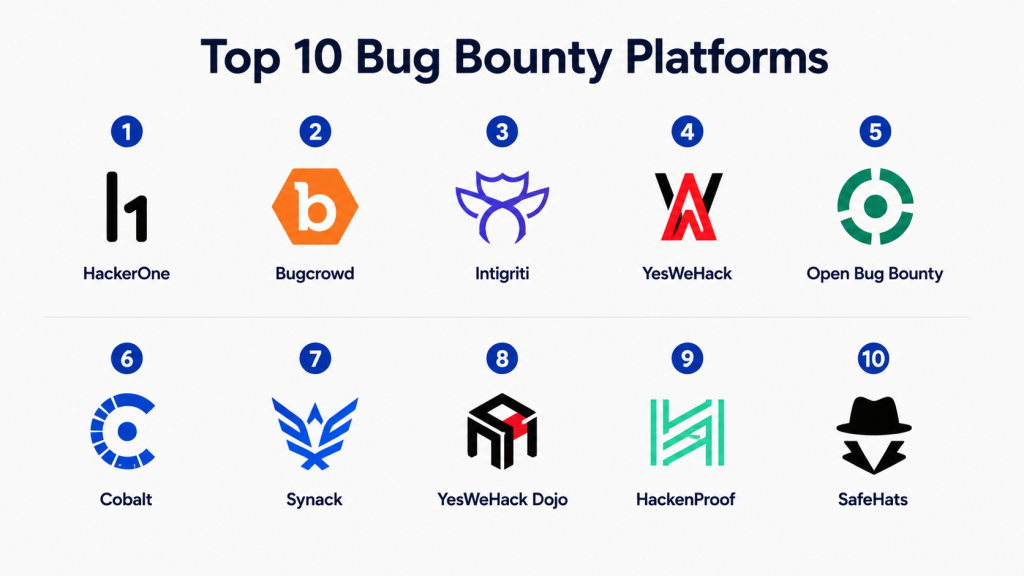
Top 10 Bug Bounty Platforms
1- HackerOne
Short description: HackerOne is one of the largest and most widely used bug bounty platforms in the world. It connects organizations with a global community of ethical hackers to identify and responsibly disclose security vulnerabilities. It is known for its large researcher base, enterprise adoption, and reliable vulnerability triage system.
Key Features
- Global ethical hacker community
- Public and private bug bounty programs
- Vulnerability triage and validation system
- Responsible disclosure workflows
- Advanced reporting dashboards
- API and security integrations
- Enterprise security program management
Pros
- Largest researcher community
- Strong enterprise adoption
- Reliable vulnerability validation
- Wide program variety
Cons
- High competition among researchers
- Complex program scopes for beginners
- Enterprise-focused pricing model
- Report volume can be high
Platforms / Deployment
Cloud-based SaaS platform
Security & Compliance
Supports enterprise security workflows including access controls, audit logs, and role-based permissions. Compliance certifications are Not publicly stated.
Integrations & Ecosystem
- SIEM systems
- CI/CD pipelines
- Security orchestration tools
- API integrations
- Enterprise dashboards
Support & Community
Strong global community with extensive documentation and enterprise support options.
2- Bugcrowd
Short description: Bugcrowd is a leading bug bounty and crowdsourced security platform that connects organizations with vetted security researchers. It is known for its strong triage system, researcher onboarding, and managed security testing services.
Key Features
- Crowdsourced security testing programs
- Managed bug bounty services
- Vulnerability triage and validation
- Continuous security testing options
- Researcher ranking system
- API security testing support
- Program management dashboards
Pros
- Strong researcher onboarding
- Good program management tools
- Efficient vulnerability triage
- Flexible security testing models
Cons
- Pricing may be high for SMBs
- Complex setup for first-time users
- Heavy reliance on platform workflows
- Learning curve for program owners
Platforms / Deployment
Cloud-based platform
Security & Compliance
Enterprise-grade security controls available. Compliance certifications are Not publicly stated.
Integrations & Ecosystem
- CI/CD pipelines
- Security tools
- SIEM platforms
- API integrations
- DevSecOps systems
Support & Community
Strong enterprise support and active researcher community.
3- Intigriti
Short description: Intigriti is a European bug bounty platform that offers public and private vulnerability disclosure programs. It is known for its strong focus on structured security programs and live hacking events.
Key Features
- Public and private bug bounty programs
- Live hacking events
- Vulnerability disclosure programs
- Researcher collaboration tools
- Program management dashboards
- Security testing workflows
- EU-focused compliance alignment
Pros
- Strong European presence
- Good for structured programs
- Active researcher community
- Flexible security models
Cons
- Smaller global footprint than HackerOne
- Limited enterprise tooling depth in some areas
- Less exposure outside Europe
- Program availability varies
Platforms / Deployment
Cloud-based SaaS platform
Security & Compliance
Security controls available for enterprise usage. Compliance details are Not publicly stated.
Integrations & Ecosystem
- Security workflows
- API integrations
- CI/CD pipelines
- Enterprise tools
- Vulnerability tracking systems
Support & Community
Strong researcher community and enterprise support for structured programs.
4- Synack
Short description: Synack is a hybrid bug bounty platform that combines vetted security researchers with AI-driven vulnerability validation. It is more exclusive than open platforms and focuses on high-quality, verified security testing.
Key Features
- Vetted security researcher network
- Hybrid AI + human testing model
- Continuous penetration testing
- Vulnerability validation system
- Private enterprise programs
- Security analytics dashboards
- Real-time reporting
Pros
- High-quality verified findings
- Strong enterprise focus
- Reduced noise in reports
- Trusted researcher network
Cons
- Invite-only access model
- Limited accessibility for beginners
- Higher cost structure
- Smaller researcher base
Platforms / Deployment
Cloud-based enterprise platform
Security & Compliance
Enterprise security and governance controls included. Compliance certifications are Not publicly stated.
Integrations & Ecosystem
- SIEM systems
- Security operations tools
- CI/CD pipelines
- Enterprise monitoring platforms
- API integrations
Support & Community
Strong enterprise support with managed testing services.
5- YesWeHack
Short description: YesWeHack is a global bug bounty platform that provides vulnerability disclosure programs and bug bounty services for organizations of all sizes.
Key Features
- Public and private bounty programs
- Vulnerability disclosure management
- Researcher collaboration tools
- Live hacking events
- Program customization options
- Security reporting dashboards
- API integrations
Pros
- Strong global reach
- Flexible program design
- Good for enterprise and SMBs
- Active researcher base
Cons
- Smaller ecosystem than top platforms
- Limited advanced analytics in some tiers
- Regional strength varies
- Requires program tuning
Platforms / Deployment
Cloud-based platform
Security & Compliance
Security controls available depending on plan. Compliance details are Not publicly stated.
Integrations & Ecosystem
- CI/CD tools
- Security dashboards
- API integrations
- DevSecOps pipelines
- Vulnerability tracking tools
Support & Community
Active global researcher community with enterprise support options.
6- Immunefi
Short description: Immunefi is a leading bug bounty platform focused on Web3, DeFi, and blockchain ecosystems. It is known for extremely high payouts and crypto-native security programs.
Key Features
- Web3 and DeFi bug bounty programs
- Smart contract vulnerability testing
- High-value bounty payouts
- Blockchain security focus
- Community researcher ecosystem
- Incident response support
- Security disclosure workflows
Pros
- Very high bounty payouts
- Strong Web3 specialization
- Trusted in crypto ecosystem
- Focused security expertise
Cons
- Limited to blockchain/Web3
- Not suitable for traditional apps
- High competition in DeFi space
- Narrow domain coverage
Platforms / Deployment
Cloud-based Web3 security platform
Security & Compliance
Security practices aligned with blockchain ecosystems. Compliance details are Not publicly stated.
Integrations & Ecosystem
- DeFi protocols
- Smart contract platforms
- Blockchain networks
- Security tooling
- Developer ecosystems
Support & Community
Strong Web3 researcher community and protocol partnerships.
7- HackenProof
Short description: HackenProof is a bug bounty platform focused on blockchain, crypto, and cybersecurity programs, offering vulnerability disclosure and ethical hacking services.
Key Features
- Blockchain security programs
- Vulnerability disclosure platform
- Ethical hacker marketplace
- Smart contract auditing support
- Security reporting workflows
- Program management tools
- Crypto-native payouts
Pros
- Strong Web3 focus
- Good for crypto projects
- Active security community
- Flexible bounty structure
Cons
- Limited enterprise adoption outside Web3
- Smaller ecosystem compared to leaders
- Narrow specialization
- Variable program availability
Platforms / Deployment
Cloud-based platform
Security & Compliance
Security controls depend on program configuration. Compliance is Not publicly stated.
Integrations & Ecosystem
- Blockchain networks
- Crypto platforms
- API integrations
- Security workflows
- Developer tools
Support & Community
Active Web3-focused security community.
8- Open Bug Bounty
Short description: Open Bug Bounty is a free, community-driven vulnerability disclosure platform that allows ethical hackers to report security issues responsibly.
Key Features
- Free vulnerability disclosure platform
- Public reporting system
- Website security testing support
- Responsible disclosure workflow
- Community-driven model
- No-cost participation
- Public vulnerability tracking
Pros
- Free to use
- Open access for researchers
- Good for beginners
- Transparent disclosure model
Cons
- No structured enterprise programs
- Limited validation system
- Lower payout structure
- Minimal enterprise features
Platforms / Deployment
Web-based platform
Security & Compliance
Basic disclosure framework. Compliance certifications are Not publicly stated.
Integrations & Ecosystem
- Website security workflows
- Public reporting systems
- Security communities
- Vulnerability tracking tools
Support & Community
Community-driven support model.
9- Cobalt
Short description: Cobalt is a crowdsourced security testing platform that combines bug bounty principles with penetration testing as a service.
Key Features
- Managed security testing programs
- Penetration testing as a service
- Vulnerability reporting dashboards
- Researcher marketplace
- Continuous testing options
- Security insights and reporting
- Program orchestration tools
Pros
- Strong enterprise testing model
- Combines PTaaS + bug bounty
- High-quality findings
- Good security visibility
Cons
- Enterprise-focused pricing
- Less open than traditional bounty platforms
- Limited beginner accessibility
- Requires structured onboarding
Platforms / Deployment
Cloud-based enterprise platform
Security & Compliance
Enterprise-grade security controls available. Compliance details are Not publicly stated.
Integrations & Ecosystem
- CI/CD systems
- Enterprise security tools
- SIEM platforms
- DevSecOps pipelines
- API integrations
Support & Community
Strong enterprise support with structured testing programs.
10- HackenProof Enterprise
Short description: HackenProof Enterprise provides advanced bug bounty and security testing solutions for blockchain and enterprise ecosystems.
Key Features
- Enterprise bug bounty programs
- Blockchain security testing
- Vulnerability disclosure workflows
- Smart contract audits
- Security dashboards
- Researcher marketplace
- Incident response support
Pros
- Strong enterprise + Web3 hybrid
- Flexible program design
- Good security visibility
- Active researcher network
Cons
- Narrow ecosystem focus
- Smaller than top global platforms
- Limited traditional enterprise adoption
- Requires onboarding effort
Platforms / Deployment
Cloud-based platform
Security & Compliance
Enterprise controls available depending on configuration. Compliance is Not publicly stated.
Integrations & Ecosystem
- Blockchain ecosystems
- CI/CD pipelines
- Security tools
- Developer platforms
- API integrations
Support & Community
Web3-focused researcher community and enterprise support.
Comparison Table
| Platform | Best For | Deployment | Researcher Model | Key Strength | Public Rating |
|---|---|---|---|---|---|
| HackerOne | Enterprise bug bounty programs | Cloud | Open global | Largest researcher network | N/A |
| Bugcrowd | Managed security programs | Cloud | Open + managed | Strong triage system | N/A |
| Intigriti | EU-focused programs | Cloud | Open | Live hacking events | N/A |
| Synack | High-quality vetted testing | Cloud | Closed vetted | Verified researchers | N/A |
| YesWeHack | Flexible global programs | Cloud | Open | Program flexibility | N/A |
| Immunefi | Web3 security | Cloud | Crypto researchers | High bounty payouts | N/A |
| HackenProof | Blockchain security | Cloud | Crypto researchers | Web3 specialization | N/A |
| Open Bug Bounty | Beginners | Web | Open community | Free disclosure model | N/A |
| Cobalt | Enterprise PTaaS | Cloud | Managed researchers | Hybrid PTaaS model | N/A |
| HackenProof Enterprise | Web3 + enterprise | Cloud | Managed crypto researchers | Blockchain focus | N/A |
Evaluation & Scoring of Bug Bounty Platforms
| Platform | Core 25% | Ease 15% | Integrations 15% | Security 10% | Performance 10% | Support 10% | Value 15% | Weighted Total |
|---|---|---|---|---|---|---|---|---|
| HackerOne | 9.5 | 8.8 | 9.2 | 9.0 | 9.0 | 9.2 | 8.8 | 9.1 |
| Bugcrowd | 9.2 | 8.7 | 9.0 | 8.8 | 8.8 | 9.0 | 8.7 | 8.9 |
| Intigriti | 8.8 | 8.8 | 8.7 | 8.6 | 8.5 | 8.7 | 8.8 | 8.7 |
| Synack | 9.0 | 7.8 | 8.8 | 9.2 | 9.0 | 9.0 | 8.0 | 8.7 |
| YesWeHack | 8.6 | 8.6 | 8.5 | 8.4 | 8.4 | 8.6 | 8.7 | 8.5 |
| Immunefi | 8.8 | 8.5 | 8.4 | 8.6 | 8.8 | 8.5 | 9.0 | 8.6 |
| HackenProof | 8.2 | 8.3 | 8.2 | 8.0 | 8.4 | 8.2 | 8.5 | 8.3 |
| Open Bug Bounty | 7.8 | 9.2 | 7.8 | 7.5 | 7.8 | 7.5 | 9.2 | 8.1 |
| Cobalt | 8.7 | 8.0 | 8.8 | 9.0 | 8.7 | 8.8 | 8.0 | 8.6 |
| HackenProof Enterprise | 8.3 | 8.2 | 8.5 | 8.6 | 8.5 | 8.4 | 8.2 | 8.4 |
Which Bug Bounty Platform Is Right for You?
Solo / Freelancer
Open Bug Bounty, Intigriti, and YesWeHack are best for learning and starting out.
SMB
Bugcrowd, Intigriti, and YesWeHack offer balanced programs with manageable complexity.
Mid-Market
HackerOne, Bugcrowd, and Cobalt provide strong security workflows and scaling capabilities.
Enterprise
HackerOne, Synack, Bugcrowd, and Cobalt are strong enterprise-grade options.
Web3 / Crypto Projects
Immunefi and HackenProof dominate blockchain and DeFi security ecosystems.
Budget vs Premium
Open Bug Bounty is free, while enterprise platforms like Synack and Cobalt require higher investment but deliver better validation.
Feature Depth vs Ease of Use
Synack and HackerOne offer deep enterprise capabilities, while Intigriti and YesWeHack are easier to adopt.
Integrations & Scalability
Large enterprises should prioritize SIEM integration, CI/CD workflows, and vulnerability management integration.
Security & Compliance Needs
Regulated industries should prioritize platforms with strong triage, validation, audit logs, and controlled researcher access.
Frequently Asked Questions
1. What is a bug bounty platform?
A bug bounty platform is a system that connects companies with ethical hackers to find and report security vulnerabilities. Companies reward researchers for valid findings. It helps improve application security. It is widely used in modern cybersecurity programs.
2. How do bug bounty platforms work?
Companies publish programs defining scope and rules. Ethical hackers test systems and submit vulnerability reports. The platform validates and triages reports. Rewards are given for valid findings.
3. Are bug bounty platforms legal?
Yes, they are legal when hackers follow program rules and scope guidelines. Unauthorized hacking outside scope is illegal. Platforms provide safe harbor conditions for ethical hacking. Researchers must always follow rules.
4. How do researchers earn money?
Researchers earn rewards based on severity and impact of vulnerabilities. Critical issues receive higher payouts. Payment varies by platform and company. Some platforms also offer bonuses.
5. What are the most popular bug bounty platforms?
Popular platforms include HackerOne, Bugcrowd, Intigriti, Synack, and YesWeHack. Web3 platforms like Immunefi are also widely used. These platforms host thousands of programs. They are globally recognized.
6. What skills are needed for bug bounty hunting?
Skills include web security, API testing, networking basics, and understanding vulnerabilities like XSS and SQL injection. Knowledge of tools like Burp Suite is helpful. Continuous learning is important. Experience improves success rates.
7. Can beginners join bug bounty platforms?
Yes, beginners can join platforms like Open Bug Bounty, Intigriti, and YesWeHack. These platforms have beginner-friendly programs. Learning resources are often provided. Practice is key to success.
8. What is the difference between public and private programs?
Public programs are open to all researchers. Private programs are invitation-only and more controlled. Private programs usually offer higher payouts. They also reduce noise in reports.
9. What are shadow bug bounty programs?
Shadow programs refer to internal or private security testing programs not publicly listed. They are used by enterprises for controlled testing. These programs help reduce exposure. They are often more secure.
10. Are bug bounty platforms replacing penetration testing?
No, bug bounty platforms complement penetration testing. Pen tests are structured and periodic, while bug bounties are continuous. Both approaches are used together. They improve overall security posture.
Conclusion
Bug bounty platforms have become a core part of modern cybersecurity strategies by enabling organizations to continuously discover vulnerabilities through global ethical hacker communities. Platforms like HackerOne and Bugcrowd lead enterprise adoption, while Synack and Cobalt provide high-trust vetted testing environments. Intigriti and YesWeHack offer strong accessibility for broader audiences, and Immunefi dominates Web3 security. The best platform depends on your organization’s maturity, security needs, and ecosystem. A combined strategy of public, private, and continuous testing delivers the strongest protection against evolving threats.

This article clearly explains bug bounty platforms and how they help organizations identify security vulnerabilities through responsible and collaborative testing programs.
Interesting comparison guide explaining how bug bounty platforms help organizations discover vulnerabilities through ethical hackers and improve overall application security.