Introduction
Accounts Receivable Automation Tools help businesses automate invoicing, payment collection, reconciliation, and cash flow tracking. Instead of relying on manual spreadsheets and follow-ups, these platforms streamline the entire invoice-to-cash cycle, improving efficiency and reducing errors.
In today’s fast-moving business environment, delayed payments and manual processes can directly impact cash flow and financial health. AR automation tools solve this by introducing AI-driven collections, automated reminders, and real-time visibility into outstanding invoices, making finance operations faster and more predictable.
Common use cases include:
- Automating invoice generation and delivery
- Tracking and managing outstanding payments
- Sending automated payment reminders
- Reconciling payments with invoices
- Forecasting cash flow and financial performance
What buyers should evaluate:
- Automation capabilities across AR workflows
- Integration with ERP and accounting systems
- Ease of use and onboarding
- AI and analytics features
- Payment gateway support
- Security and compliance controls
- Scalability and performance
- Custom workflows and reporting
- Customer self-service capabilities
Best for: Finance teams, CFOs, SaaS companies, eCommerce businesses, and enterprises handling large invoice volumes.
Not ideal for: Freelancers or very small businesses with low transaction volumes where basic accounting tools may be sufficient.
Key Trends in Accounts Receivable Automation Tools
- AI-powered collections: Systems predict payment behavior and automate follow-ups
- Embedded payments: Direct payment links within invoices for faster processing
- Touchless cash application: Automatic matching of payments to invoices
- Real-time dashboards: Instant visibility into cash flow and AR aging
- Customer self-service portals: Clients can manage invoices and payments independently
- API-first platforms: Seamless integration with ERP, CRM, and payment tools
- Multi-currency support: Essential for global businesses
- Workflow automation: Customizable rules for collections and approvals
- Data-driven forecasting: Better cash flow prediction using analytics
- Security-first architecture: Encryption, access controls, and audit logs
How We Selected These Tools (Methodology)
- Evaluated market adoption and industry presence
- Assessed feature completeness across AR workflows
- Reviewed automation depth and AI capabilities
- Considered ease of use and user experience
- Analyzed integration ecosystem and APIs
- Checked security features and compliance readiness
- Compared scalability for SMB to enterprise use
- Reviewed customer feedback and reliability indicators
- Ensured balanced coverage across different business sizes
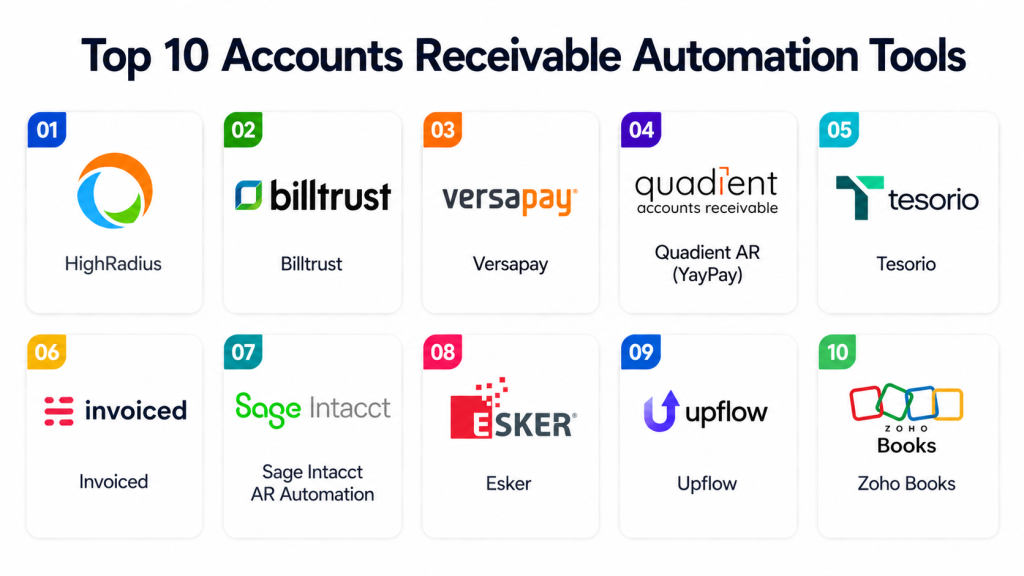
Top 10 Accounts Receivable Automation Tools
#1 — HighRadius
Short description: HighRadius is an enterprise-focused AR automation platform that uses AI to optimize collections, cash application, and credit management. It is widely used by large organizations handling complex financial operations.
Key Features
- AI-driven collections prioritization
- Automated cash application
- Credit risk management
- Dispute resolution workflows
- Real-time analytics dashboards
- Customer payment portals
Pros
- Advanced AI capabilities
- Highly scalable for enterprises
- Comprehensive AR suite
Cons
- Complex implementation
- Higher cost
- Requires dedicated training
Platforms / Deployment
Cloud
Security & Compliance
Encryption, RBAC, audit logs; certifications not publicly stated
Integrations & Ecosystem
Integrates with ERP systems such as SAP and Oracle.
- API support
- Payment gateway integrations
- CRM integrations
Support & Community
Enterprise-grade support with onboarding and training assistance.
#2 — Billtrust
Short description: Billtrust focuses on streamlining billing, payments, and collections with automation tools designed for mid-market and enterprise businesses.
Key Features
- Automated invoicing
- Payment processing
- Collections automation
- Customer communication tools
- Cash application automation
Pros
- Strong billing capabilities
- Flexible payment options
- Reliable reporting
Cons
- User interface can feel outdated
- Customization limitations
- Pricing not transparent
Platforms / Deployment
Cloud
Security & Compliance
MFA, encryption; certifications not publicly stated
Integrations & Ecosystem
Supports major ERP integrations.
- API connectivity
- Payment gateways
- CRM systems
Support & Community
Structured support with onboarding assistance.
#3 — Versapay
Short description: Versapay provides collaborative AR automation with a strong focus on customer portals and payment experiences.
Key Features
- Customer self-service portals
- Automated invoicing
- Payment processing
- Collaboration tools
- Cash application
Pros
- Excellent customer experience
- Easy to use
- Strong payment integration
Cons
- Limited advanced analytics
- Mid-market focus
- Customization limitations
Platforms / Deployment
Cloud
Security & Compliance
Encryption, RBAC; certifications not publicly stated
Integrations & Ecosystem
Integrates with ERP systems and payment platforms.
- API support
- Payment integrations
Support & Community
Good onboarding and customer support.
#4 — Quadient AR (YayPay)
Short description: Quadient AR helps finance teams improve collections and cash flow with automation and analytics-driven insights.
Key Features
- Automated collections workflows
- Payment tracking
- Forecasting tools
- Customer insights dashboards
- Invoice management
Pros
- User-friendly interface
- Strong analytics
- Good for mid-sized companies
Cons
- Limited enterprise depth
- Integration setup required
- Customization constraints
Platforms / Deployment
Cloud
Security & Compliance
Not publicly stated
Integrations & Ecosystem
Works with ERP and accounting systems.
- API integrations
- CRM connectivity
Support & Community
Responsive support and helpful documentation.
#5 — Tesorio
Short description: Tesorio focuses on optimizing cash flow with predictive analytics and automated collections.
Key Features
- Cash flow forecasting
- Automated collections
- Payment tracking
- Risk analysis
- Reporting dashboards
Pros
- Strong forecasting capabilities
- Easy to use
- Insightful analytics
Cons
- Limited invoicing features
- Smaller ecosystem
- Not ideal for large enterprises
Platforms / Deployment
Cloud
Security & Compliance
Not publicly stated
Integrations & Ecosystem
Integrates with accounting and CRM systems.
- API integrations
- Data synchronization
Support & Community
Moderate support with growing ecosystem.
#6 — Esker
Short description: Esker offers AI-driven automation for AR processes, including invoicing, collections, and dispute management.
Key Features
- Invoice automation
- AI-powered cash application
- Collections management
- Dispute workflows
- Analytics dashboards
Pros
- Strong automation engine
- Global capabilities
- Scalable platform
Cons
- Complex implementation
- Interface may need improvement
- Pricing not transparent
Platforms / Deployment
Cloud
Security & Compliance
GDPR support; other certifications not publicly stated
Integrations & Ecosystem
Integrates with enterprise ERP platforms.
- API integrations
- Document management systems
Support & Community
Comprehensive onboarding and support.
#7 — Upflow
Short description: Upflow is designed for SMBs and SaaS companies to manage invoices, payments, and collections efficiently.
Key Features
- Automated reminders
- Payment tracking
- Customer portals
- Analytics dashboards
- Invoice management
Pros
- Easy to use
- Quick setup
- Affordable for SMBs
Cons
- Limited enterprise features
- Basic reporting
- Limited customization
Platforms / Deployment
Cloud
Security & Compliance
Not publicly stated
Integrations & Ecosystem
Integrates with accounting tools and payment platforms.
- API support
- Payment gateways
Support & Community
Strong SMB-focused support and onboarding.
#8 — Invoiced
Short description: Invoiced provides flexible AR automation with strong invoicing and payment features for growing businesses.
Key Features
- Invoice automation
- Payment collection
- Subscription billing
- Analytics tools
- Customer communication
Pros
- Developer-friendly APIs
- Flexible billing options
- Scalable
Cons
- Limited enterprise features
- UI improvements needed
- Pricing varies
Platforms / Deployment
Cloud
Security & Compliance
Not publicly stated
Integrations & Ecosystem
API-first integrations with payment and CRM tools.
- Payment gateways
- CRM integrations
Support & Community
Good developer documentation and support.
#9 — Sage Intacct AR Automation
Short description: Sage Intacct provides AR automation as part of its cloud accounting ecosystem, suitable for mid-sized organizations.
Key Features
- Automated invoicing
- Cash management
- Financial reporting
- Workflow automation
- Multi-entity support
Pros
- Strong accounting integration
- Reliable reporting
- Scalable
Cons
- Requires ecosystem adoption
- Learning curve
- Higher cost for smaller teams
Platforms / Deployment
Cloud
Security & Compliance
SOC 2, encryption, audit logs
Integrations & Ecosystem
Part of Sage ecosystem with ERP integrations.
- API support
- Financial integrations
Support & Community
Strong support with training resources.
#10 — Zoho Books
Short description: Zoho Books offers AR automation features within its accounting platform, ideal for small to mid-sized businesses.
Key Features
- Invoice automation
- Payment reminders
- Expense tracking
- Financial reporting
- Workflow automation
Pros
- Affordable
- Easy to use
- Strong ecosystem
Cons
- Limited enterprise features
- Basic automation depth
- Reporting limitations
Platforms / Deployment
Web / iOS / Android, Cloud
Security & Compliance
Encryption, MFA; certifications not publicly stated
Integrations & Ecosystem
Part of Zoho ecosystem with wide integrations.
- CRM integrations
- Payment gateways
- API access
Support & Community
Strong documentation and community support.
Comparison Table
| Tool Name | Best For | Platform(s) Supported | Deployment | Standout Feature | Public Rating |
|---|---|---|---|---|---|
| HighRadius | Enterprise | Web | Cloud | AI collections | N/A |
| Billtrust | Mid-market | Web | Cloud | Billing automation | N/A |
| Versapay | SMB/Mid | Web | Cloud | Customer portal | N/A |
| Quadient AR | Mid-market | Web | Cloud | Analytics insights | N/A |
| Tesorio | SMB/Mid | Web | Cloud | Forecasting | N/A |
| Esker | Enterprise | Web | Cloud | Document automation | N/A |
| Upflow | SMB | Web | Cloud | Easy collections | N/A |
| Invoiced | SMB | Web | Cloud | API-first design | N/A |
| Sage Intacct | Mid-market | Web | Cloud | Accounting integration | N/A |
| Zoho Books | SMB | Web/Mobile | Cloud | Affordable AR tools | N/A |
Evaluation & Scoring of Accounts Receivable Automation Tools
| Tool | Core | Ease | Integrations | Security | Performance | Support | Value | Weighted Total |
|---|---|---|---|---|---|---|---|---|
| HighRadius | 9 | 7 | 9 | 8 | 9 | 8 | 7 | 8.3 |
| Billtrust | 8 | 7 | 8 | 7 | 8 | 7 | 7 | 7.6 |
| Versapay | 7 | 8 | 7 | 7 | 7 | 7 | 8 | 7.4 |
| Quadient AR | 7 | 8 | 7 | 6 | 7 | 7 | 8 | 7.4 |
| Tesorio | 7 | 8 | 7 | 6 | 7 | 7 | 8 | 7.3 |
| Esker | 8 | 6 | 8 | 8 | 8 | 8 | 7 | 7.8 |
| Upflow | 6 | 9 | 6 | 6 | 7 | 7 | 9 | 7.2 |
| Invoiced | 7 | 8 | 8 | 6 | 7 | 7 | 8 | 7.5 |
| Sage Intacct | 8 | 7 | 8 | 8 | 8 | 8 | 7 | 7.9 |
| Zoho Books | 6 | 9 | 7 | 7 | 7 | 7 | 9 | 7.3 |
Scores are comparative estimates based on feature depth, usability, and ecosystem strength. Enterprises should prioritize core features and security, while SMBs should focus on ease of use and value.
Which Accounts Receivable Automation Tools Tool Is Right for You?
Solo / Freelancer
Use simple accounting tools like Zoho Books. Full AR automation is usually unnecessary.
SMB
Choose Upflow, Invoiced, or Zoho Books for ease of use and affordability.
Mid-Market
Billtrust, Sage Intacct, and Quadient AR provide strong automation and scalability.
Enterprise
HighRadius, Esker, and BlackLine alternatives deliver advanced automation and AI capabilities.
Budget vs Premium
- Budget: Zoho Books, Upflow
- Premium: HighRadius, Esker
Feature Depth vs Ease of Use
- Feature-rich: HighRadius, Esker
- Easy-to-use: Upflow, Zoho Books
Integrations & Scalability
Choose tools with strong ERP integrations for long-term growth.
Security & Compliance Needs
Enterprises should prioritize tools with encryption, audit logs, and compliance readiness.
Frequently Asked Questions (FAQs)
1. What are Accounts Receivable Automation Tools?
They automate invoicing, collections, and payment tracking to improve efficiency and cash flow management.
2. How do these tools improve cash flow?
They reduce delays by automating reminders, simplifying payments, and improving tracking.
3. Are these tools suitable for small businesses?
Yes, especially lightweight tools designed for SMBs with simpler workflows.
4. What integrations are essential?
ERP, CRM, and payment gateway integrations are critical for seamless operations.
5. How long does implementation take?
SMB tools may take days, while enterprise systems can take weeks.
6. Are AR automation tools secure?
Most offer encryption and access controls, but compliance varies by vendor.
7. Can they support global operations?
Many tools support multi-currency and international payments.
8. What pricing models are used?
Subscription-based or usage-based pricing is common.
9. Can I migrate from one tool to another?
Yes, but data migration and integration setup require planning.
10. What mistakes should I avoid?
Choosing tools without checking integrations, scalability, or automation depth.
Conclusion
Accounts Receivable Automation Tools are no longer optional for businesses that want predictable cash flow and efficient finance operations. From SMB-focused solutions like Upflow and Zoho Books to enterprise platforms like HighRadius and Esker, there is a wide range of options available to match different needs. The key is to align your choice with your organization’s size, complexity, and growth plans. Businesses should evaluate automation depth, integration capabilities, and ease of use before making a decision. Security and compliance should also be a priority, especially for organizations operating at scale. Instead of selecting based on popularity alone, it is better to shortlist a few tools that align with your workflows. Running a pilot or trial can help validate real-world performance and usability. With the right tool, companies can significantly improve collections efficiency and financial visibility.
