Introduction
Spend Management Platforms are software solutions that help businesses track, control, and optimize all company expenses in one place. These platforms combine tools like corporate cards, expense tracking, procurement, accounts payable, and budgeting into a unified system.
In today’s business environment, managing spend is not just about tracking expenses—it is about gaining real-time visibility, enforcing policies, reducing waste, and improving financial decision-making. With increasing SaaS subscriptions, global teams, and complex vendor ecosystems, organizations need centralized platforms to control spending efficiently.
Common use cases include:
- Expense tracking and reimbursement
- Corporate card management
- Accounts payable automation
- Budget control and approvals
- Vendor and subscription management
Key evaluation criteria:
- Real-time spend visibility
- Automation of approvals and workflows
- Corporate card integration
- Expense and invoice management
- Integration with accounting systems
- Reporting and analytics
- Ease of use
- Scalability
- Security and compliance
Best for: Finance teams, startups, mid-sized companies, and enterprises managing complex spending across departments.
Not ideal for: Very small businesses with minimal expenses or those using simple accounting tools without complexity.
Key Trends in Spend Management Platforms
- AI-driven spend analysis and savings insights
- Real-time visibility into company expenses
- Automation of expense reporting and approvals
- Integration of corporate cards with software
- Cloud-native platforms with API-first design
- SaaS subscription tracking and optimization
- Multi-currency and global spend management
- Mobile-first expense management
- Predictive analytics for budgeting
- Unified finance platforms combining multiple tools
How We Selected These Tools
- Market adoption and industry relevance
- Feature completeness across spend lifecycle
- Real-world usability and performance
- Integration ecosystem strength
- Scalability across SMB to enterprise
- Vendor support and documentation
- Security and compliance readiness
- Balance between modern and enterprise tools
- Practical financial use cases
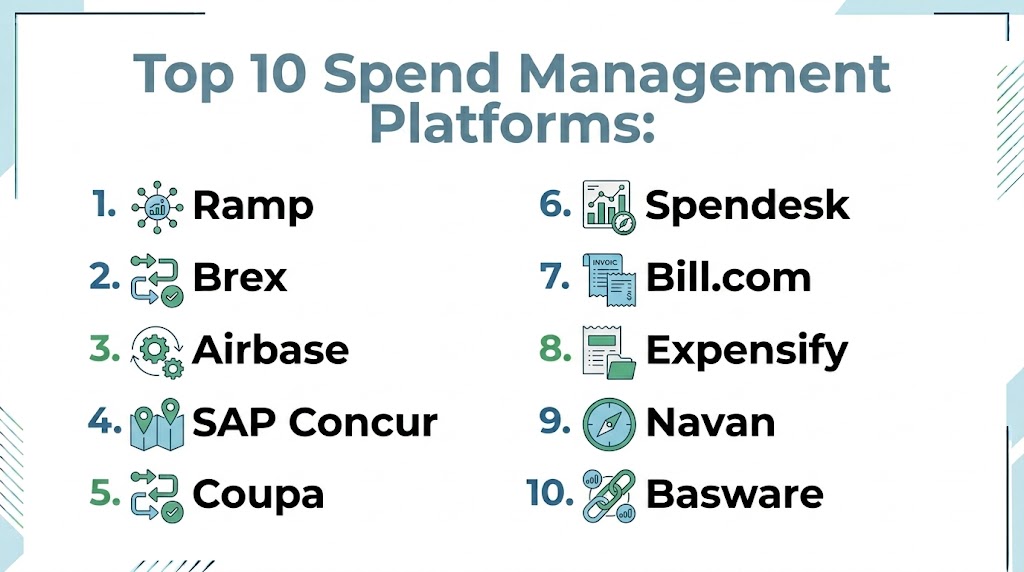
Top 10 Spend Management Platforms
#1 — Ramp
Short description: A modern spend management platform focused on helping companies reduce costs through automation and real-time insights. It combines corporate cards, expense management, and bill payments in one system.
Key Features
- Corporate cards with controls
- AI-powered savings insights
- Expense automation
- Invoice management
- Real-time reporting
Pros
- Strong automation
- Cost-saving focus
Cons
- Region limitations
- Requires platform adoption
Platforms / Deployment
- Web
- Cloud
Security & Compliance
- Not publicly stated
Integrations & Ecosystem
Supports integration with accounting and finance tools.
- APIs
- Accounting software
- Finance systems
Support & Community
Good documentation and support.
#2 — Brex
Short description: A spend management platform designed for startups and global teams. It combines corporate cards, expense management, and travel features.
Key Features
- Corporate cards
- Expense tracking
- Travel management
- Multi-currency support
- Analytics
Pros
- Global support
- Startup-friendly
Cons
- Limited for enterprises
- Pricing varies
Platforms / Deployment
- Web / Mobile
- Cloud
Security & Compliance
- Not publicly stated
Integrations & Ecosystem
- APIs
- Finance tools
Support & Community
Strong startup ecosystem support.
#3 — Airbase
Short description: An all-in-one spend management platform that unifies expense management, accounts payable, and corporate cards into a single system.
Key Features
- Expense management
- Accounts payable automation
- Approval workflows
- Budget tracking
- Reporting
Pros
- Unified platform
- Strong controls
Cons
- Learning curve
- Pricing varies
Platforms / Deployment
- Web
- Cloud
Security & Compliance
- Not publicly stated
Integrations & Ecosystem
- APIs
- ERP systems
Support & Community
Good enterprise support.
#4 — SAP Concur
Short description: A widely used enterprise spend management platform that handles travel, expense, and invoice management with strong policy enforcement.
Key Features
- Travel and expense management
- Invoice automation
- Policy controls
- Reporting
- Analytics
Pros
- Enterprise-ready
- Strong compliance
Cons
- Complex UI
- Setup effort
Platforms / Deployment
- Web / Mobile
- Cloud
Security & Compliance
- Enterprise-grade controls
Integrations & Ecosystem
- ERP integrations
- APIs
Support & Community
Strong enterprise support.
#5 — Coupa
Short description: A comprehensive business spend management platform covering procurement, invoicing, and expense management with advanced analytics.
Key Features
- Spend visibility
- Procurement integration
- Supplier management
- Analytics
- Automation
Pros
- Deep functionality
- Enterprise scalability
Cons
- High cost
- Implementation effort
Platforms / Deployment
- Web / Mobile
- Cloud
Security & Compliance
- Not publicly stated
Integrations & Ecosystem
- ERP systems
- APIs
Support & Community
Enterprise-level support.
#6 — Spendesk
Short description: A spend management platform focused on European businesses, offering corporate cards, expense tracking, and invoice management.
Key Features
- Corporate cards
- Expense tracking
- Approval workflows
- Invoice management
- Budget control
Pros
- Easy to use
- Strong EU compliance
Cons
- Limited global features
- Pricing per user
Platforms / Deployment
- Web / Mobile
- Cloud
Security & Compliance
- GDPR-focused
Integrations & Ecosystem
- APIs
- Accounting tools
Support & Community
Good support.
#7 — Bill.com
Short description: A financial operations platform focused on accounts payable and receivable automation, integrated with spend management capabilities.
Key Features
- Invoice automation
- Payment processing
- Approval workflows
- Reporting
- Integration tools
Pros
- Strong AP automation
- Easy integration
Cons
- Limited full-suite features
- Pricing varies
Platforms / Deployment
- Web
- Cloud
Security & Compliance
- Not publicly stated
Integrations & Ecosystem
- Accounting software
- APIs
Support & Community
Good support.
#8 — Pleo
Short description: A spend management platform designed for SMBs, offering smart company cards and expense tracking with automation.
Key Features
- Smart corporate cards
- Expense tracking
- Receipt capture
- Budget control
- Reporting
Pros
- Easy to use
- Mobile-friendly
Cons
- Limited enterprise features
- Regional focus
Platforms / Deployment
- Web / Mobile
- Cloud
Security & Compliance
- Not publicly stated
Integrations & Ecosystem
- APIs
- Accounting tools
Support & Community
Strong SMB support.
#9 — Expensify
Short description: A widely adopted expense management tool focused on receipt scanning, expense reporting, and reimbursements.
Key Features
- Receipt scanning
- Expense tracking
- Reporting
- Approval workflows
- Reimbursements
Pros
- Easy setup
- Popular tool
Cons
- Limited advanced features
- Scaling challenges
Platforms / Deployment
- Web / Mobile
- Cloud
Security & Compliance
- Not publicly stated
Integrations & Ecosystem
- Accounting tools
- APIs
Support & Community
Large user community.
#10 — Navan
Short description: A spend and travel management platform combining expense tracking with business travel booking and automation.
Key Features
- Travel management
- Expense tracking
- Corporate cards
- Reporting
- Automation
Pros
- Travel integration
- Easy workflows
Cons
- Limited procurement features
- Pricing varies
Platforms / Deployment
- Web / Mobile
- Cloud
Security & Compliance
- Not publicly stated
Integrations & Ecosystem
- APIs
- Finance tools
Support & Community
Good support.
Comparison Table
| Tool Name | Best For | Platform Supported | Deployment | Standout Feature | Public Rating |
|---|---|---|---|---|---|
| Ramp | Startups | Web | Cloud | Cost savings AI | N/A |
| Brex | Global teams | Web/Mobile | Cloud | Corporate cards | N/A |
| Airbase | Mid-market | Web | Cloud | Unified platform | N/A |
| SAP Concur | Enterprise | Web/Mobile | Cloud | Travel + expense | N/A |
| Coupa | Enterprise | Web/Mobile | Cloud | Spend analytics | N/A |
| Spendesk | SMB EU | Web/Mobile | Cloud | Budget control | N/A |
| Bill.com | AP automation | Web | Cloud | Invoice automation | N/A |
| Pleo | SMB | Web/Mobile | Cloud | Smart cards | N/A |
| Expensify | SMB | Web/Mobile | Cloud | Receipt scanning | N/A |
| Navan | Travel + spend | Web/Mobile | Cloud | Travel integration | N/A |
Evaluation & Scoring of Spend Management Platforms
| Tool Name | Core 25% | Ease 15% | Integrations 15% | Security 10% | Performance 10% | Support 10% | Value 15% | Weighted Total |
|---|---|---|---|---|---|---|---|---|
| Ramp | 9 | 8 | 8 | 7 | 9 | 8 | 9 | 8.5 |
| Brex | 8 | 8 | 8 | 7 | 8 | 8 | 8 | 8.0 |
| Airbase | 9 | 7 | 8 | 7 | 8 | 8 | 7 | 8.0 |
| SAP Concur | 9 | 6 | 9 | 8 | 9 | 8 | 6 | 8.1 |
| Coupa | 9 | 6 | 9 | 8 | 9 | 8 | 6 | 8.1 |
| Spendesk | 8 | 8 | 7 | 7 | 8 | 7 | 8 | 7.9 |
| Bill.com | 8 | 8 | 7 | 7 | 8 | 7 | 8 | 7.9 |
| Pleo | 7 | 9 | 6 | 6 | 7 | 7 | 9 | 7.6 |
| Expensify | 7 | 9 | 6 | 6 | 7 | 7 | 8 | 7.5 |
| Navan | 8 | 8 | 7 | 7 | 8 | 7 | 7 | 7.8 |
How to interpret scores:
- Higher scores indicate stronger overall capability
- Enterprise tools excel in integrations and control
- SMB tools lead in ease of use and affordability
- Scores are comparative, not absolute
- Choose based on business needs and scale
Which Spend Management Platform Is Right for You
Solo / Freelancer
Expensify or Pleo are simple and easy to use.
SMB
Ramp, Pleo, and Spendesk offer affordability and automation.
Mid-Market
Airbase and Brex provide better control and scalability.
Enterprise
SAP Concur and Coupa are best for complex financial operations.
Budget vs Premium
- Budget tools include Expensify and Pleo
- Premium tools include Coupa and SAP Concur
Feature Depth vs Ease of Use
- Advanced tools include Coupa and Airbase
- Easy tools include Ramp and Expensify
Integrations & Scalability
- Strong integrations in enterprise tools
- Moderate in SMB tools
Security & Compliance Needs
- Enterprise tools for high compliance
- SMB tools for basic needs
Frequently Asked Questions
1. What is a spend management platform
It is software that helps businesses track and control expenses. It combines expense tracking, payments, and budgeting. It improves financial visibility.
2. Why are these platforms important
They help reduce costs and improve financial control. Businesses gain real-time insights into spending. This improves decision-making.
3. Who should use spend management tools
Finance teams, startups, and enterprises benefit the most. Any business managing expenses can use them. They support all company sizes.
4. Can these tools reduce costs
Yes, they identify unnecessary spending and optimize budgets. Automation reduces manual work. Businesses save time and money.
5. Do they support real-time tracking
Yes, most platforms provide real-time spend visibility. This helps finance teams act quickly. It improves financial control.
6. Are these tools cloud-based
Most platforms are cloud-based. They provide flexibility and remote access. Many include mobile apps.
7. How long does implementation take
SMB tools can be set up quickly. Enterprise tools take longer due to complexity. It depends on customization.
8. Can they integrate with accounting systems
Yes, most tools integrate with accounting and ERP systems. This ensures smooth workflows. Integration is essential.
9. Are spend management platforms secure
Most include security features like access control and audit logs. Compliance varies by vendor. Enterprises require higher standards.
10. Are these platforms expensive
Pricing depends on features and scale. SMB tools are affordable. Enterprise tools require higher investment.
Conclusion
Spend Management Platforms have become essential for modern financial operations. They help businesses gain control over expenses, improve visibility, and automate financial workflows. One of the biggest advantages is real-time insight into spending. Businesses can make faster and more informed decisions. This reduces waste and improves efficiency. Choosing the right platform depends on your organization’s size and complexity. Smaller tools focus on simplicity, while enterprise platforms offer advanced features and scalability. It is important to evaluate integrations, usability, and reporting capabilities. Testing a few tools before final selection is always recommended.
