Introduction
Warehouse Management Systems WMS are software solutions designed to manage and optimize daily warehouse operations such as receiving, storing, picking, packing, and shipping goods. In simple terms, a WMS acts as the control center for warehouse activities, ensuring accuracy, efficiency, and real-time visibility of inventory.
As supply chains become more complex and customer expectations for fast delivery increase, businesses can no longer rely on manual processes or disconnected tools. A modern WMS provides automation, improves accuracy, and connects warehouse operations with broader systems like ERP and transportation management. It plays a crucial role in reducing errors, improving productivity, and ensuring smooth order fulfillment.
Common use cases include:
- Managing inventory across warehouses
- Optimizing picking, packing, and shipping processes
- Tracking goods in real time
- Automating warehouse workflows
- Improving labor productivity and efficiency
Key evaluation criteria:
- Real-time inventory visibility
- Warehouse automation and workflow optimization
- Integration with ERP, OMS, and logistics systems
- Scalability across multiple locations
- Ease of use and implementation
- Reporting and analytics
- Support for automation and robotics
- Security and access control
- Cost and total value
Best for: Logistics teams, manufacturers, retailers, 3PL providers, and enterprises managing complex warehouse operations.
Not ideal for: Very small businesses with minimal storage needs or those managing inventory manually without complexity.
Key Trends in Warehouse Management Systems WMS
- Cloud-based WMS platforms are becoming the standard
- AI-driven task optimization and routing is improving efficiency
- Integration with robotics and automation systems is increasing
- Real-time visibility across multi-warehouse operations
- Mobile and barcode scanning adoption is growing
- Digital twins and simulation tools are emerging
- Stronger analytics for performance tracking
- Microservices and modular architecture for flexibility
- Integration with end-to-end supply chain platforms
- Focus on faster fulfillment and same-day delivery
How We Selected These Tools
- Evaluated market adoption and industry reputation
- Assessed warehouse-specific capabilities and depth
- Reviewed scalability for different business sizes
- Analyzed integration with ERP, OMS, and logistics systems
- Considered security and compliance features
- Covered SMB, mid-market, and enterprise tools
- Evaluated usability and onboarding experience
- Considered vendor ecosystem and support
- Balanced cloud-native and enterprise-grade platforms
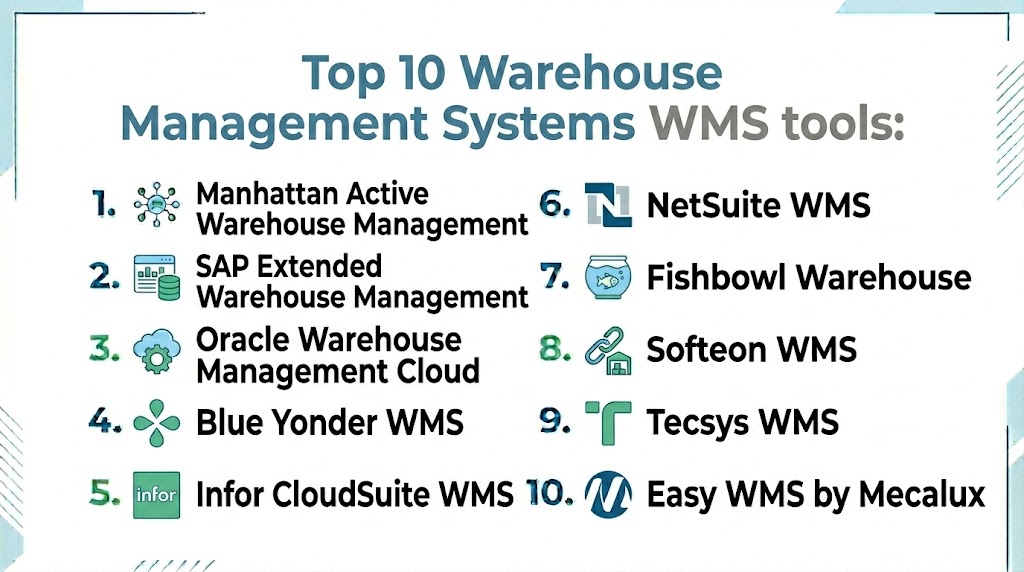
Top 10 Warehouse Management Systems WMS
#1 — Manhattan Active Warehouse Management
Short description: A leading enterprise-grade WMS designed for high-volume, complex warehouse operations. It combines advanced automation, analytics, and labor management in a cloud-native platform.
Key Features
- Advanced task and labor management
- AI-driven task optimization
- Robotics and automation integration
- Real-time analytics
- Multi-site warehouse support
- Cross-docking capabilities
Pros
- Highly scalable for large operations
- Advanced automation capabilities
Cons
- High cost
- Complex implementation
Platforms / Deployment
- Web
- Cloud
Security & Compliance
- SOC 2, ISO 27001, GDPR support
- Audit logs and RBAC
Integrations & Ecosystem
Integrates with ERP, robotics systems, and supply chain tools.
- APIs
- Automation platforms
- ERP systems
Support & Community
Enterprise-level support with global partner ecosystem.
#2 — SAP Extended Warehouse Management
Short description: A powerful WMS solution integrated with SAP systems, designed for large enterprises with complex supply chains.
Key Features
- Advanced warehouse control
- Inventory and labor management
- Automation integration
- Real-time tracking
- Reporting and analytics
Pros
- Strong SAP integration
- Enterprise scalability
Cons
- Complex setup
- Requires SAP ecosystem
Platforms / Deployment
- Web
- Cloud / On-premise
Security & Compliance
- Enterprise-grade security controls
- Compliance support varies
Integrations & Ecosystem
- SAP ERP
- APIs
Support & Community
Strong enterprise support.
#3 — Oracle Warehouse Management Cloud
Short description: A cloud-based WMS offering advanced fulfillment, inventory control, and automation capabilities.
Key Features
- Order fulfillment automation
- Inventory tracking
- Warehouse optimization
- Mobile support
- Reporting tools
Pros
- Cloud-native
- Scalable
Cons
- Complex UI
- Implementation effort
Platforms / Deployment
- Web
- Cloud
Security & Compliance
- Role-based access
- Compliance support varies
Integrations & Ecosystem
- Oracle ecosystem
- APIs
Support & Community
Enterprise-level support.
#4 — Blue Yonder WMS
Short description: A modern WMS platform focused on AI-driven supply chain optimization and warehouse automation.
Key Features
- AI-based forecasting
- Warehouse optimization
- Inventory visibility
- Automation integration
- Analytics
Pros
- Strong AI capabilities
- Scalable
Cons
- Complex setup
- High cost
Platforms / Deployment
- Web
- Cloud
Security & Compliance
- Not publicly stated
Integrations & Ecosystem
- Supply chain tools
- APIs
Support & Community
Enterprise support.
#5 — Infor CloudSuite WMS
Short description: A flexible WMS designed for mid to large enterprises needing advanced warehouse capabilities and cloud deployment.
Key Features
- Inventory tracking
- Labor management
- Automation workflows
- Reporting dashboards
- Cloud deployment
Pros
- Flexible configuration
- Cloud-native
Cons
- Learning curve
- Pricing varies
Platforms / Deployment
- Web
- Cloud
Security & Compliance
- Not publicly stated
Integrations & Ecosystem
- ERP systems
- APIs
Support & Community
Strong enterprise support.
#6 — NetSuite WMS
Short description: A WMS integrated with NetSuite ERP, offering unified inventory and warehouse management for growing businesses.
Key Features
- Inventory tracking
- Warehouse management
- Order fulfillment
- Reporting tools
- ERP integration
Pros
- Unified system
- Scalable
Cons
- Expensive
- Requires NetSuite
Platforms / Deployment
- Web
- Cloud
Security & Compliance
- Role-based access
- Compliance support varies
Integrations & Ecosystem
- NetSuite ecosystem
- APIs
Support & Community
Enterprise support.
#7 — Fishbowl Warehouse
Short description: A warehouse management solution designed for small to mid-sized businesses with strong inventory and manufacturing integration.
Key Features
- Inventory tracking
- Order management
- Warehouse workflows
- Reporting
- Integration with accounting
Pros
- Affordable
- Easy to implement
Cons
- Limited advanced features
- UI outdated
Platforms / Deployment
- Windows
- On-premise / Hybrid
Security & Compliance
- Not publicly stated
Integrations & Ecosystem
- Accounting tools
- APIs
Support & Community
Reliable SMB support.
#8 — Softeon WMS
Short description: A highly configurable WMS platform designed for enterprises needing flexible and scalable warehouse operations.
Key Features
- Configurable workflows
- Inventory tracking
- Automation integration
- Analytics
- Multi-site support
Pros
- Highly customizable
- Scalable
Cons
- Requires expertise
- Implementation effort
Platforms / Deployment
- Web
- Cloud / On-premise
Security & Compliance
- Not publicly stated
Integrations & Ecosystem
- APIs
- ERP systems
Support & Community
Enterprise support.
#9 — Tecsys WMS
Short description: A WMS platform designed for industries like healthcare and retail with strong inventory and compliance capabilities.
Key Features
- Inventory tracking
- Warehouse optimization
- Compliance support
- Analytics
- Workflow automation
Pros
- Industry-specific features
- Scalable
Cons
- Complex setup
- Pricing varies
Platforms / Deployment
- Web
- Cloud
Security & Compliance
- Not publicly stated
Integrations & Ecosystem
- ERP systems
- APIs
Support & Community
Strong enterprise support.
#10 — Easy WMS by Mecalux
Short description: A modern WMS solution designed to optimize warehouse operations with automation and real-time visibility.
Key Features
- Inventory tracking
- Task automation
- Real-time visibility
- Warehouse optimization
- Reporting
Pros
- Easy to use
- Strong automation features
Cons
- Limited enterprise depth
- Customization limits
Platforms / Deployment
- Web
- Cloud / On-premise
Security & Compliance
- Not publicly stated
Integrations & Ecosystem
- ERP systems
- APIs
Support & Community
Good support and onboarding.
Comparison Table
| Tool Name | Best For | Platform Supported | Deployment | Standout Feature | Public Rating |
|---|---|---|---|---|---|
| Manhattan WMS | Enterprise | Web | Cloud | AI task optimization | N/A |
| SAP EWM | Enterprise | Web | Hybrid | ERP integration | N/A |
| Oracle WMS | Enterprise | Web | Cloud | Cloud-native | N/A |
| Blue Yonder | Large enterprises | Web | Cloud | AI optimization | N/A |
| Infor WMS | Mid-large | Web | Cloud | Flexibility | N/A |
| NetSuite WMS | ERP users | Web | Cloud | Unified system | N/A |
| Fishbowl | SMB | Windows | Hybrid | Affordability | N/A |
| Softeon | Custom workflows | Web | Hybrid | Customization | N/A |
| Tecsys | Healthcare/Retail | Web | Cloud | Industry focus | N/A |
| Easy WMS | SMB/Mid | Web | Hybrid | Ease of use | N/A |
Evaluation & Scoring of Warehouse Management Systems WMS
| Tool Name | Core 25% | Ease 15% | Integrations 15% | Security 10% | Performance 10% | Support 10% | Value 15% | Weighted Total |
|---|---|---|---|---|---|---|---|---|
| Manhattan | 10 | 5 | 9 | 9 | 9 | 9 | 5 | 8.4 |
| SAP EWM | 9 | 5 | 9 | 9 | 9 | 8 | 5 | 8.1 |
| Oracle WMS | 9 | 6 | 9 | 8 | 8 | 8 | 6 | 8.0 |
| Blue Yonder | 9 | 6 | 8 | 7 | 8 | 8 | 6 | 7.8 |
| Infor WMS | 8 | 7 | 8 | 7 | 8 | 7 | 7 | 7.6 |
| NetSuite WMS | 8 | 6 | 8 | 8 | 8 | 8 | 6 | 7.7 |
| Fishbowl | 7 | 8 | 7 | 6 | 7 | 7 | 8 | 7.3 |
| Softeon | 8 | 6 | 8 | 7 | 7 | 7 | 7 | 7.4 |
| Tecsys | 8 | 6 | 7 | 7 | 7 | 7 | 7 | 7.3 |
| Easy WMS | 7 | 8 | 7 | 6 | 7 | 7 | 8 | 7.4 |
How to interpret scores:
- Higher scores indicate stronger enterprise capability
- Enterprise tools lead in integration and performance
- SMB tools score higher in ease of use and value
- Scores are comparative, not absolute
- Choose based on operational complexity
Which Warehouse Management System WMS Is Right for You
Solo / Freelancer
Lightweight tools like Fishbowl or basic inventory systems are sufficient for small setups.
SMB
Easy WMS and Infor WMS provide a balance of usability and functionality.
Mid-Market
NetSuite WMS and Softeon offer scalability and integration flexibility.
Enterprise
Manhattan WMS, SAP EWM, and Oracle WMS are best for complex operations.
Budget vs Premium
- Budget tools include Fishbowl and Easy WMS
- Premium tools include Manhattan and SAP
Feature Depth vs Ease of Use
- Advanced tools include Manhattan and Blue Yonder
- Easy tools include Easy WMS and Fishbowl
Integrations & Scalability
- Strong integrations in SAP and Oracle
- Moderate in SMB tools
Security & Compliance Needs
- High compliance needs fit enterprise tools
- Moderate needs fit SMB tools
Frequently Asked Questions
1. What is a Warehouse Management System
A WMS is software that manages warehouse operations like receiving, storing, picking, and shipping goods. It provides real-time visibility and improves efficiency across the warehouse.
2. Why is WMS important
WMS improves accuracy, reduces errors, and increases efficiency in warehouse operations. It also helps businesses manage inventory and fulfill orders faster.
3. Who should use WMS software
Manufacturers, retailers, logistics companies, and eCommerce businesses benefit the most. Any business with warehouse operations can use it.
4. Can WMS integrate with ERP systems
Yes, most WMS tools integrate with ERP systems for better data flow and process management. This ensures end-to-end visibility.
5. Is WMS cloud-based
Many modern WMS solutions are cloud-based, but some also support on-premise or hybrid deployment. Cloud solutions offer more flexibility.
6. How long does WMS implementation take
Implementation depends on complexity and can take weeks to several months. Enterprise systems take longer.
7. What features should I look for in WMS
Key features include inventory tracking, automation, reporting, integrations, and scalability. Ease of use is also important.
8. Can WMS improve warehouse efficiency
Yes, it automates processes, reduces manual work, and optimizes workflows. This leads to faster operations and fewer errors.
9. What industries use WMS
WMS is used in retail, manufacturing, logistics, and eCommerce industries. It is essential for supply chain operations.
10. Is WMS expensive
Costs vary based on features and scale. SMB tools are more affordable, while enterprise solutions require higher investment.
Conclusion
Warehouse Management Systems have become a core part of modern supply chain operations. They provide the structure, automation, and visibility needed to manage increasingly complex warehouse environments efficiently. As businesses scale, the need for accuracy and speed becomes critical, and a WMS helps achieve both. One of the biggest advantages of WMS platforms is their ability to centralize operations. From receiving goods to shipping orders, everything can be tracked and managed in one place. This reduces errors, improves productivity, and enhances overall operational control. Choosing the right WMS depends on your business size, complexity, and integration requirements. Enterprise solutions offer deep functionality and scalability, while smaller tools focus on simplicity and affordability. There is no universal best option.
