Introduction
Route Optimization Tools are software solutions that help businesses plan the most efficient routes for deliveries, logistics, and field operations. These tools use algorithms, real-time traffic data, and constraints like delivery windows to create optimized routes automatically.
With increasing delivery demand and rising fuel costs, businesses need smarter ways to manage routes. Manual planning often leads to inefficiencies, delays, and higher operational costs. Route optimization tools improve delivery speed, reduce fuel consumption, and enhance customer satisfaction.
Common use cases include:
- Multi-stop delivery route planning
- Last-mile delivery optimization
- Field service scheduling
- Fleet route optimization
- Real-time route adjustments
Key evaluation criteria:
- Route optimization accuracy
- Real-time traffic handling
- Multi-vehicle support
- Integration capabilities
- Ease of use
- Scalability
- Reporting and analytics
- Mobile access
- Cost efficiency
Best for: Logistics companies, delivery businesses, and field service teams handling multiple routes daily.
Not ideal for: Businesses with very limited routing needs or single-location operations.
Key Trends in Route Optimization Tools
- AI-driven routing for better accuracy
- Real-time traffic and dynamic updates
- Automation of dispatch and scheduling
- Integration with fleet and logistics tools
- Mobile-first platforms for drivers
- Predictive analytics for planning
- Cloud-based deployment models
- Focus on last-mile delivery efficiency
- API-first architecture for integrations
- Sustainability and fuel optimization tracking
How We Selected These Tools
- Market popularity and adoption
- Feature depth in route optimization
- Real-world performance and reliability
- Integration ecosystem
- Ease of use and onboarding
- Scalability across business sizes
- Vendor support and documentation
- Balance between SMB and enterprise tools
- Practical use case coverage
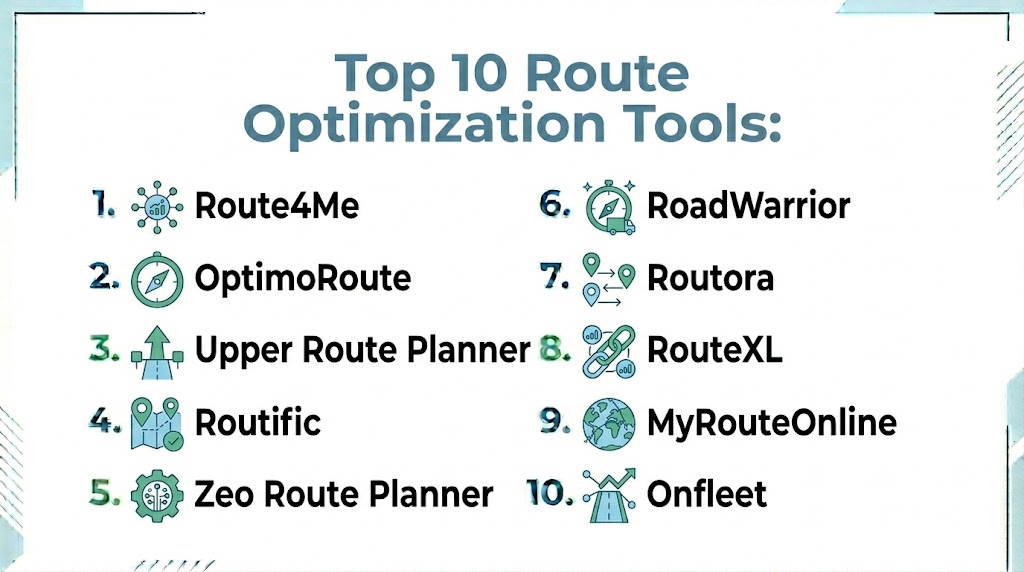
Top 10 Route Optimization Tools
#1 — Route4Me
Short description: A widely used route optimization platform designed for businesses managing large delivery operations. It provides powerful multi-stop routing and real-time tracking capabilities. Ideal for logistics teams needing scalable solutions.
Key Features
- Multi-stop route optimization
- Real-time tracking
- Route automation
- Driver mobile app
- Analytics dashboards
Pros
- Easy to use
- Highly scalable
Cons
- Pricing varies
- Advanced features cost extra
Platforms / Deployment
- Web / iOS / Android
- Cloud
Security & Compliance
- Not publicly stated
Integrations & Ecosystem
Supports integration with logistics and CRM systems.
- APIs
- GPS tools
- Enterprise platforms
Support & Community
Strong documentation and onboarding support.
#2 — OptimoRoute
Short description: A powerful route planning tool focused on delivery scheduling and workforce optimization. It helps businesses manage routes and drivers efficiently. Suitable for growing delivery operations.
Key Features
- Route planning automation
- Delivery scheduling
- Driver tracking
- Analytics
- Real-time updates
Pros
- Strong scheduling features
- Efficient optimization
Cons
- Learning curve
- Pricing varies
Platforms / Deployment
- Web
- Cloud
Security & Compliance
- Not publicly stated
Integrations & Ecosystem
- APIs
- Delivery tools
Support & Community
Reliable support and onboarding.
#3 — Upper Route Planner
Short description: A simple and user-friendly route planning tool for small and mid-sized businesses. It helps optimize routes quickly without complex setup. Ideal for beginners.
Key Features
- Multi-stop routing
- Real-time tracking
- Route optimization
- Mobile access
- Reporting
Pros
- Easy to use
- Affordable
Cons
- Limited enterprise features
- Scaling limitations
Platforms / Deployment
- Web / Mobile
- Cloud
Security & Compliance
- Not publicly stated
Integrations & Ecosystem
- APIs
- Basic integrations
Support & Community
Good SMB support.
#4 — Routific
Short description: A route optimization tool designed for last-mile delivery operations. It focuses on improving delivery efficiency and reducing costs. Suitable for logistics businesses.
Key Features
- Delivery optimization
- Real-time updates
- Driver tracking
- Scheduling
- Analytics
Pros
- Last-mile focus
- Efficient routing
Cons
- Limited customization
- Pricing varies
Platforms / Deployment
- Web
- Cloud
Security & Compliance
- Not publicly stated
Integrations & Ecosystem
- APIs
- Delivery platforms
Support & Community
Strong onboarding support.
#5 — Zeo Route Planner
Short description: A modern route planning tool designed for delivery drivers and small businesses. It offers efficient routing and easy setup. Best for budget-conscious users.
Key Features
- Route optimization
- Multi-stop planning
- Real-time tracking
- Driver app
- Reporting
Pros
- Easy setup
- Affordable
Cons
- Limited advanced features
- Not enterprise-ready
Platforms / Deployment
- Web / Mobile
- Cloud
Security & Compliance
- Not publicly stated
Integrations & Ecosystem
- APIs
- Basic integrations
Support & Community
SMB-focused support.
#6 — RoadWarrior
Short description: A mobile-first route optimization app designed for individual drivers and small teams. It focuses on simplicity and fast route planning.
Key Features
- Route planning
- Multi-stop optimization
- Mobile app
- Real-time updates
- Route sharing
Pros
- Mobile-friendly
- Easy to use
Cons
- Limited enterprise features
- Basic analytics
Platforms / Deployment
- Mobile
- Cloud
Security & Compliance
- Not publicly stated
Integrations & Ecosystem
- Basic integrations
Support & Community
Good support.
#7 — Routora
Short description: A lightweight route optimization tool focused on reducing travel time and improving efficiency. Suitable for small teams and simple operations.
Key Features
- Route optimization
- Multi-stop planning
- Travel time reduction
- Integration support
- Analytics
Pros
- Simple interface
- Efficient routing
Cons
- Limited features
- Not enterprise-ready
Platforms / Deployment
- Web
- Cloud
Security & Compliance
- Not publicly stated
Integrations & Ecosystem
- APIs
Support & Community
Basic support.
#8 — RouteXL
Short description: A simple route optimization tool designed for quick multi-stop route calculations. Ideal for users who need fast results without complexity.
Key Features
- Multi-stop optimization
- Route calculation
- Map visualization
- Export options
- Basic analytics
Pros
- Fast and simple
- Easy onboarding
Cons
- Limited scalability
- Basic features
Platforms / Deployment
- Web
- Cloud
Security & Compliance
- Not publicly stated
Integrations & Ecosystem
- Limited integrations
Support & Community
Basic support.
#9 — MyRouteOnline
Short description: A route planning tool designed for delivery and service businesses. It focuses on simplicity and cost-effectiveness.
Key Features
- Route planning
- Multi-stop optimization
- Scheduling
- Reporting
- Export tools
Pros
- Easy to use
- Cost-effective
Cons
- Limited automation
- Basic UI
Platforms / Deployment
- Web
- Cloud
Security & Compliance
- Not publicly stated
Integrations & Ecosystem
- Basic integrations
Support & Community
Good SMB support.
#10 — PTV Route Optimizer
Short description: An enterprise-grade route optimization solution designed for complex logistics operations. It provides advanced routing algorithms and high accuracy.
Key Features
- Advanced routing
- Multi-vehicle optimization
- Cost reduction
- Real-time planning
- Centralized management
Pros
- Enterprise capabilities
- Accurate routing
Cons
- Complex setup
- Higher cost
Platforms / Deployment
- Web
- Cloud
Security & Compliance
- Not publicly stated
Integrations & Ecosystem
- APIs
- ERP systems
Support & Community
Enterprise-level support.
Frequently Asked Questions
1. What is route optimization software
Route optimization software helps businesses plan the most efficient routes using algorithms and real-time data. It reduces travel time and improves delivery performance. It is widely used in logistics and field operations.
2. Why is route optimization important
It helps reduce fuel costs, improve delivery speed, and increase operational efficiency. Businesses can handle more deliveries with fewer resources. It also improves customer satisfaction.
3. Who should use route optimization tools
Logistics companies, delivery services, and field teams benefit the most. Any business managing multiple stops or routes can use these tools. It is useful for both small and large operations.
4. Can these tools reduce operational costs
Yes, they minimize unnecessary travel and optimize routes. This reduces fuel consumption and labor costs. Over time, businesses see significant savings.
5. Do these tools use real-time data
Most modern tools use real-time traffic and route data. This allows dynamic adjustments during delivery. It improves accuracy and efficiency.
6. Are route optimization tools cloud-based
Yes, most tools are cloud-based and accessible from anywhere. This allows real-time collaboration and updates. Some tools also offer mobile apps.
7. How long does implementation take
Simple tools can be implemented quickly. Enterprise tools may take longer due to customization. The timeline depends on business complexity.
8. Can these tools integrate with other systems
Yes, most tools integrate with ERP, CRM, and fleet management systems. This ensures seamless workflows. Integration improves overall efficiency.
9. Do they support multiple vehicles
Yes, most tools support multi-vehicle and multi-route optimization. They distribute tasks efficiently across drivers. This improves productivity.
10. Are route optimization tools expensive
Pricing varies depending on features and scale. SMB tools are generally affordable. Enterprise solutions require higher investment.
Conclusion
Route Optimization Tools play a critical role in modern logistics and delivery operations. They help businesses improve efficiency, reduce costs, and deliver better customer experiences. As delivery demands continue to grow, these tools become even more essential. One of the biggest advantages of these tools is automation. Businesses can generate optimized routes instantly instead of relying on manual planning. This saves time and reduces operational complexity. Choosing the right tool depends on your business size and needs. Smaller tools are easier to use and affordable, while enterprise tools offer advanced features and scalability. There is no single best option for everyone. Businesses should evaluate how well a tool integrates with existing systems and supports real-time decision-making. Testing a few tools before finalizing is always recommended.
