Introduction
Audit Management Software helps organizations plan, execute, track, and report audits in a structured and automated way. Instead of relying on spreadsheets and manual tracking, these platforms centralize audit workflows, evidence collection, issue tracking, and compliance reporting in one place.
In today’s fast-moving compliance environment, audit tools are no longer optional—they are critical for reducing risk, improving accuracy, and staying audit-ready at all times. Modern platforms now include AI-powered analytics, automation, and real-time monitoring, helping teams move from reactive audits to proactive risk management.
Common use cases include:
- Internal audits and compliance audits
- SOX and regulatory audits
- Risk-based audit planning
- Vendor and third-party audits
- Continuous monitoring and reporting
Key evaluation criteria:
- Automation capabilities (reduce manual work)
- Risk-based audit planning
- Real-time dashboards & reporting
- Integration with GRC / ERP systems
- Scalability for enterprise audits
- Security & audit trails
- Ease of use for auditors
- AI/analytics capabilities
Best for: Enterprises, audit teams, compliance officers, finance teams, and regulated industries.
Not ideal for: Very small businesses with minimal audit needs or organizations that can manage audits manually.
Key Trends in Audit Management Software
- AI-driven audit analytics analyzing full datasets instead of samples
- Continuous auditing replacing periodic audits
- Automation of audit workflows & documentation
- Integration with GRC, ERP, and security systems
- Cloud-first audit platforms for scalability
- Real-time dashboards for audit insights
- Risk-based auditing frameworks
- Mobile audit capabilities for field auditors
- Centralized audit evidence management
- Increased focus on regulatory compliance automation
How We Selected These Tools (Methodology)
- Strong enterprise adoption and market presence
- Coverage of end-to-end audit lifecycle
- Proven scalability and reliability
- Integration with risk, compliance, and ERP systems
- Automation and analytics capabilities
- Usability for audit teams
- Security and audit trail capabilities
- Fit across SMB, mid-market, and enterprise
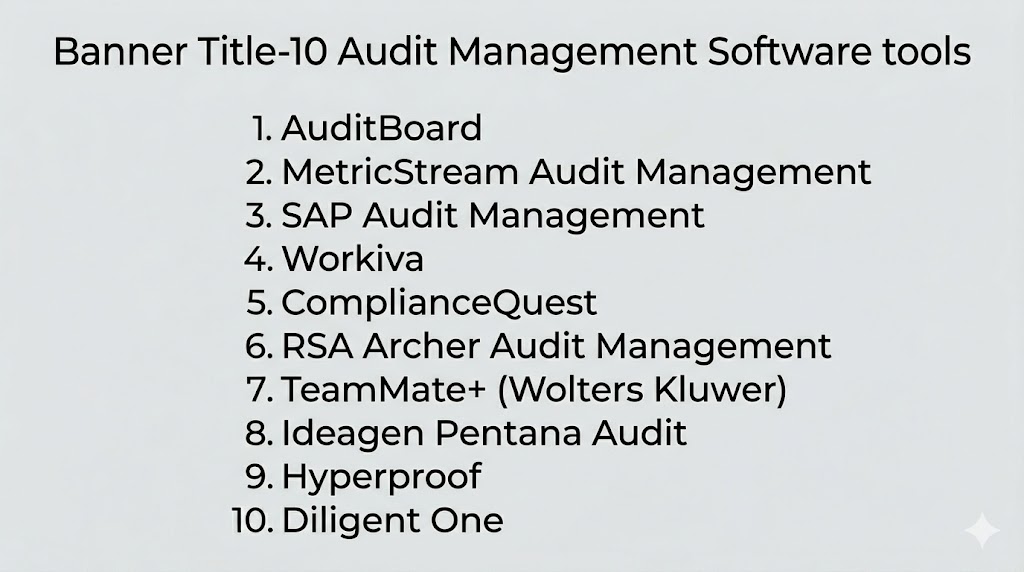
Top 10 Audit Management Software Tools
#1 — AuditBoard
Short description: A modern audit and compliance platform designed to streamline internal audit workflows, risk assessments, and reporting with strong automation capabilities.
Key Features
- Internal audit management
- Risk assessment tools
- SOX compliance support
- Workflow automation
- Reporting dashboards
Pros
- Strong automation & reporting
- User-friendly interface
Cons
- Premium pricing
- Limited customization
Platforms / Deployment
Cloud
Security & Compliance
Encryption, audit logs; Not publicly stated
Integrations & Ecosystem
- APIs
- ERP systems
- Compliance tools
Support & Community
Strong enterprise support
#2 — MetricStream Audit Management
Short description: A comprehensive audit solution integrated into a broader GRC ecosystem, providing centralized risk and audit visibility across the enterprise.
Key Features
- Risk-based audit planning
- Centralized audit management
- Compliance tracking
- Reporting dashboards
- Risk analytics
Pros
- Enterprise-grade scalability
- Deep GRC integration
Cons
- Complex implementation
- Requires training
Platforms / Deployment
Cloud / On-premise
Security & Compliance
Encryption, RBAC; Not publicly stated
Integrations & Ecosystem
- GRC systems
- ERP tools
- APIs
Support & Community
Enterprise-level support
#3 — SAP Audit Management
Short description: A powerful audit solution integrated with SAP systems, helping organizations automate audit processes and improve audit quality.
Key Features
- Audit planning and execution
- Evidence management
- Resource optimization
- Reporting tools
- Mobile audit capabilities
Pros
- Deep SAP integration
- Strong process automation
Cons
- Best for SAP users only
- Complex setup
Platforms / Deployment
Cloud / On-premise
Security & Compliance
Encryption; Not publicly stated
Integrations & Ecosystem
- SAP ecosystem
- ERP tools
- APIs
Support & Community
Strong enterprise support
#4 — Workiva
Short description: A cloud-based audit and reporting platform that connects audit, risk, and compliance workflows for improved transparency and collaboration.
Key Features
- Audit workflow management
- Real-time reporting
- Data linking
- Collaboration tools
- Compliance reporting
Pros
- Excellent reporting capabilities
- Strong collaboration features
Cons
- Limited risk depth
- Pricing may be high
Platforms / Deployment
Cloud
Security & Compliance
Encryption; Not publicly stated
Integrations & Ecosystem
- Financial systems
- APIs
- Data platforms
Support & Community
Strong enterprise support
#5 — ComplianceQuest
Short description: An AI-powered audit and compliance platform designed to automate audit processes and improve efficiency across industries.
Key Features
- AI-powered audit workflows
- Audit tracking
- Compliance automation
- Risk management
- Reporting tools
Pros
- Strong automation capabilities
- Scalable cloud platform
Cons
- Requires configuration
- Learning curve
Platforms / Deployment
Cloud
Security & Compliance
Encryption, audit trails; Not publicly stated
Integrations & Ecosystem
- APIs
- Quality systems
- ERP platforms
Support & Community
Good enterprise support
#6 — RSA Archer Audit Management
Short description: A flexible audit management solution focused on risk-based auditing and enterprise compliance workflows.
Key Features
- Audit lifecycle management
- Risk-based planning
- Compliance tracking
- Reporting dashboards
- Issue management
Pros
- Strong risk management features
- Flexible workflows
Cons
- Complex UI
- Requires expertise
Platforms / Deployment
Cloud / On-premise
Security & Compliance
Encryption; Not publicly stated
Integrations & Ecosystem
- APIs
- Data systems
- Security tools
Support & Community
Enterprise support
#7 — TeamMate+ (Wolters Kluwer)
Short description: A well-known audit management platform designed for internal audit teams, offering analytics and workflow automation.
Key Features
- Audit workflow automation
- Data analytics
- Risk assessment
- Reporting tools
- Audit documentation
Pros
- Strong analytics
- Trusted brand
Cons
- Expensive
- Learning curve
Platforms / Deployment
Cloud / On-premise
Security & Compliance
Encryption; Not publicly stated
Integrations & Ecosystem
- APIs
- Data tools
- Compliance systems
Support & Community
Strong enterprise support
#8 — Ideagen Pentana Audit
Short description: A governance-focused audit tool designed to improve audit performance, compliance tracking, and risk visibility.
Key Features
- Audit planning
- Risk tracking
- Compliance management
- Reporting dashboards
- Workflow automation
Pros
- Strong governance focus
- Easy reporting
Cons
- Limited customization
- UI improvements needed
Platforms / Deployment
Cloud
Security & Compliance
Encryption; Not publicly stated
Integrations & Ecosystem
- APIs
- Governance tools
- Data systems
Support & Community
Good support
#9 — Hyperproof
Short description: A modern compliance and audit management platform designed to automate audit evidence collection and streamline compliance workflows.
Key Features
- Evidence collection automation
- Compliance tracking
- Risk management
- Reporting tools
- Workflow automation
Pros
- Automation-focused
- Easy to use
Cons
- Limited enterprise depth
- Smaller ecosystem
Platforms / Deployment
Cloud
Security & Compliance
Encryption; Not publicly stated
Integrations & Ecosystem
- APIs
- SaaS integrations
- Compliance tools
Support & Community
Good support
#10 — AnyAudit
Short description: A user-friendly audit automation platform designed to improve efficiency, reduce manual effort, and enhance audit quality.
Key Features
- Audit automation
- Workflow management
- Reporting tools
- Data tracking
- Compliance monitoring
Pros
- Easy to use
- Cost-effective
Cons
- Limited enterprise features
- Smaller ecosystem
Platforms / Deployment
Cloud
Security & Compliance
Encryption; Not publicly stated
Integrations & Ecosystem
- APIs
- Data tools
- Business systems
Support & Community
Growing support
Comparison Table (Top 10)
| Tool Name | Best For | Platform(s) Supported | Deployment | Standout Feature | Public Rating |
|---|---|---|---|---|---|
| AuditBoard | Modern audit teams | Web | Cloud | Automation | N/A |
| MetricStream | Enterprise GRC | Web | Cloud/On-prem | Risk integration | N/A |
| SAP Audit | SAP users | Web | Cloud/On-prem | ERP integration | N/A |
| Workiva | Reporting & audit | Web | Cloud | Data linking | N/A |
| ComplianceQuest | AI audits | Web | Cloud | AI automation | N/A |
| RSA Archer | Risk audits | Web | Cloud/On-prem | Risk-based auditing | N/A |
| TeamMate+ | Internal audit | Web | Cloud/On-prem | Analytics | N/A |
| Pentana | Governance audits | Web | Cloud | Risk tracking | N/A |
| Hyperproof | Compliance audits | Web | Cloud | Evidence automation | N/A |
| AnyAudit | SMB audits | Web | Cloud | Simplicity | N/A |
Evaluation & Scoring of Audit Management Software
| Tool Name | Core (25%) | Ease (15%) | Integrations (15%) | Security (10%) | Performance (10%) | Support (10%) | Value (15%) | Weighted Total (0–10) |
|---|---|---|---|---|---|---|---|---|
| AuditBoard | 9 | 8 | 8 | 8 | 9 | 9 | 7 | 8.3 |
| MetricStream | 9 | 6 | 9 | 9 | 9 | 9 | 6 | 8.2 |
| SAP Audit | 9 | 6 | 9 | 9 | 8 | 8 | 6 | 8.1 |
| Workiva | 8 | 8 | 8 | 8 | 8 | 8 | 7 | 8.0 |
| ComplianceQuest | 8 | 7 | 8 | 8 | 8 | 8 | 8 | 8.0 |
| RSA Archer | 9 | 6 | 8 | 8 | 8 | 8 | 7 | 8.0 |
| TeamMate+ | 8 | 7 | 7 | 8 | 8 | 8 | 7 | 7.8 |
| Pentana | 7 | 8 | 7 | 7 | 7 | 7 | 8 | 7.5 |
| Hyperproof | 7 | 9 | 7 | 7 | 7 | 7 | 8 | 7.6 |
| AnyAudit | 7 | 9 | 6 | 7 | 7 | 7 | 9 | 7.6 |
How to interpret scores:
- 8+ = Enterprise-ready tools
- 7–8 = Balanced tools for mid-market
- Below 7.5 = SMB-focused tools
These scores are comparative and should be validated with real-world testing.
Which Audit Management Software Is Right for You?
Solo / Freelancer
Use lightweight tools like AnyAudit for simplicity and cost efficiency
SMB
Hyperproof or ComplianceQuest offer automation with ease of use
Mid-Market
Workiva and Pentana provide balanced features and reporting
Enterprise
AuditBoard, MetricStream, and SAP Audit are best for scale and compliance
Budget vs Premium
- Budget → Simple tools, limited analytics
- Premium → Full automation + enterprise compliance
Feature Depth vs Ease of Use
- Deep features = more control but complex
- Simple tools = faster onboarding
Integrations & Scalability
Choose tools that integrate with ERP, GRC, and cloud systems
Security & Compliance Needs
Highly regulated industries must prioritize audit trails and compliance features
Frequently Asked Questions (FAQs)
1. What is Audit Management Software?
It is a platform that helps organizations plan, execute, and monitor audits efficiently while maintaining compliance and documentation.
2. Why is audit software important?
It reduces manual work, improves accuracy, and ensures organizations remain compliant with regulations.
3. How much does audit software cost?
Pricing varies depending on features and scale. Enterprise tools are typically more expensive.
4. How long does implementation take?
Cloud tools can be deployed quickly, while enterprise solutions may take longer.
5. What are common mistakes when choosing audit software?
Ignoring scalability, choosing overly complex tools, and missing integration needs.
6. Do audit tools support AI?
Yes, many platforms use AI for analytics, automation, and risk detection.
7. Can audit tools integrate with ERP systems?
Yes, most modern tools integrate with ERP and compliance systems.
8. Are audit platforms secure?
They typically include encryption, access controls, and audit logs.
9. Can audit software scale with business growth?
Yes, most enterprise tools are designed for scalability.
10. Are there alternatives to audit software?
Manual processes exist but lack efficiency, scalability, and accuracy.
Conclusion
Audit Management Software has evolved from basic tracking tools into powerful, intelligent platforms that drive risk visibility, compliance, and operational efficiency. Organizations today need more than just audit documentation—they need real-time insights, automation, and continuous monitoring to stay ahead of risks.
Modern platforms bring together audit, risk, and compliance into a single ecosystem, enabling teams to work faster and smarter. However, the right choice depends heavily on your organization’s size, regulatory requirements, and technical maturity.
Enterprises may benefit from feature-rich platforms with deep integrations, while smaller teams should prioritize simplicity and cost efficiency. The goal is not to choose the most complex tool, but the one that aligns best with your workflows and audit strategy.
Start by identifying your key requirements, shortlist a few tools, and test them in real scenarios. This ensures you select a solution that not only meets compliance needs but also improves audit efficiency and business outcomes.
