Introduction
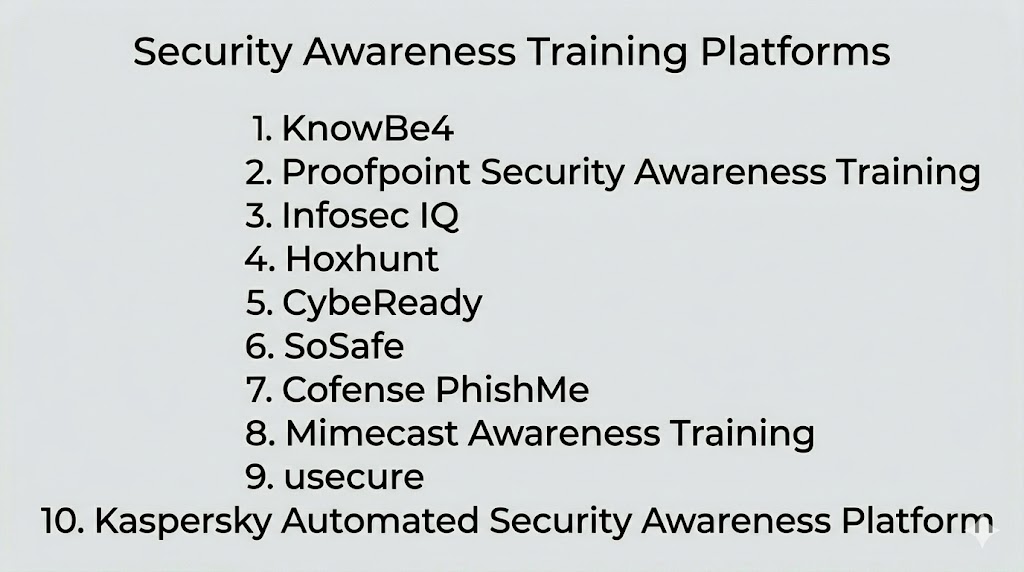
Security Awareness Training Platforms help organizations educate employees about cybersecurity risks, phishing attacks, and safe digital behavior. Since humans remain the weakest link in cybersecurity, these tools play a critical role in reducing breaches caused by social engineering and human error.
Modern platforms go beyond basic training—they combine interactive learning, phishing simulations, AI-driven personalization, and real-time risk analytics to build a strong security culture across organizations.
Common use cases include:
- Phishing simulation and employee training
- Cybersecurity awareness programs
- Compliance training (HIPAA, GDPR, etc.)
- Risk-based employee behavior analysis
- Continuous security education
Key evaluation criteria:
- Phishing simulation capabilities
- AI-driven personalized training
- Content quality & engagement (videos, gamification)
- Automation & campaign management
- Reporting and analytics dashboards
- Integration with security tools (SIEM, email, LMS)
- Scalability for enterprise users
- Ease of deployment and management
Best for: Enterprises, IT/security teams, CISOs, compliance teams, and organizations handling sensitive data.
Not ideal for: Organizations without digital exposure or those not requiring structured cybersecurity training programs.
Key Trends in Security Awareness Training Platforms
- AI-powered adaptive learning tailored to user behavior
- Phishing simulation becoming core capability
- Gamified and microlearning-based training
- Continuous training vs one-time programs
- Integration with email security and SIEM tools
- Behavioral analytics for human risk scoring
- Cloud-native platforms for global teams
- Automation of training campaigns and reporting
- Focus on real-world attack scenarios (deepfakes, social engineering)
- Role-based and personalized training paths
How We Selected These Tools (Methodology)
- Strong market adoption and recognition
- Coverage of training + phishing simulation + analytics
- Proven scalability and enterprise usage
- Security and compliance readiness
- Integration ecosystem with security tools
- Content quality and engagement levels
- Automation and reporting capabilities
- Fit across SMB, mid-market, and enterprise
Top 10 Security Awareness Training Platforms
#1 — KnowBe4
Short description: One of the most widely adopted platforms offering comprehensive training, phishing simulations, and human risk management capabilities.
Key Features
- Extensive training content library
- Phishing simulation engine
- Risk scoring and analytics
- Compliance training modules
- Automated campaigns
Pros
- Industry-leading content library
- Strong phishing simulation capabilities
Cons
- Can be complex to manage
- Premium pricing
Platforms / Deployment
Cloud
Security & Compliance
Encryption, audit logs; Not publicly stated
Integrations & Ecosystem
- Email systems
- SIEM tools
- APIs
- LMS platforms
Support & Community
Strong global community and enterprise support
#2 — Proofpoint Security Awareness Training
Short description: A data-driven training platform focused on identifying high-risk users and reducing human-based cyber threats.
Key Features
- Behavior-based risk analysis
- Phishing simulations
- Targeted training programs
- Reporting dashboards
- Automation
Pros
- Strong risk-based training
- Advanced analytics
Cons
- Requires setup effort
- Enterprise-focused
Platforms / Deployment
Cloud
Security & Compliance
Encryption; Not publicly stated
Integrations & Ecosystem
- Email security tools
- APIs
- Threat intelligence platforms
Support & Community
Enterprise-grade support
#3 — Infosec IQ
Short description: A comprehensive platform combining training modules, phishing simulations, and automated campaigns for cybersecurity education.
Key Features
- Interactive training modules
- Phishing simulations
- Automated campaigns
- Reporting tools
- Role-based training
Pros
- Strong training + simulation combo
- Flexible deployment
Cons
- UI complexity
- Learning curve
Platforms / Deployment
Cloud
Security & Compliance
Encryption; Not publicly stated
Integrations & Ecosystem
- APIs
- LMS tools
- Email systems
Support & Community
Good support and training
#4 — Hoxhunt
Short description: A behavior-driven training platform that uses gamification and AI to improve employee security awareness.
Key Features
- Gamified training
- AI-driven personalization
- Phishing simulations
- Behavioral analytics
- Reporting dashboards
Pros
- Highly engaging content
- Strong behavior analytics
Cons
- Premium pricing
- Limited SMB focus
Platforms / Deployment
Cloud
Security & Compliance
Encryption; Not publicly stated
Integrations & Ecosystem
- Email platforms
- APIs
- Security tools
Support & Community
Strong enterprise support
#5 — CybeReady
Short description: A fully automated training platform that continuously trains employees with real-world phishing simulations.
Key Features
- Automated training campaigns
- Phishing simulations
- Continuous learning model
- Reporting tools
- Risk analysis
Pros
- Fully automated platform
- Minimal management effort
Cons
- Limited customization
- Less control over content
Platforms / Deployment
Cloud
Security & Compliance
Encryption; Not publicly stated
Integrations & Ecosystem
- Email systems
- APIs
- Security tools
Support & Community
Good support
#6 — SoSafe
Short description: A behavior-based security awareness platform focusing on human risk and psychological training methods.
Key Features
- Behavioral science-based training
- Phishing simulations
- Risk analysis
- Reporting dashboards
- Custom campaigns
Pros
- Behavior-focused training
- Strong engagement
Cons
- Limited global presence
- Smaller ecosystem
Platforms / Deployment
Cloud
Security & Compliance
Encryption; Not publicly stated
Integrations & Ecosystem
- APIs
- Security tools
- Email systems
Support & Community
Growing support ecosystem
#7 — Kaspersky Automated Security Awareness Platform
Short description: A structured training platform offering interactive modules and automated learning paths for employees.
Key Features
- Structured learning paths
- Phishing simulations
- Interactive modules
- Reporting tools
- Skill assessments
Pros
- Easy to deploy
- Strong content structure
Cons
- Limited customization
- Smaller ecosystem
Platforms / Deployment
Cloud
Security & Compliance
Encryption; Not publicly stated
Integrations & Ecosystem
- APIs
- Security tools
- Data systems
Support & Community
Good support
#8 — NINJIO
Short description: A security awareness platform using storytelling and microlearning videos to improve engagement and retention.
Key Features
- Microlearning videos
- Gamified training
- Phishing awareness
- Reporting tools
- Compliance training
Pros
- Highly engaging content
- Easy adoption
Cons
- Limited enterprise features
- Focus on content over analytics
Platforms / Deployment
Cloud
Security & Compliance
Encryption; Not publicly stated
Integrations & Ecosystem
- LMS tools
- APIs
- Content platforms
Support & Community
Good SMB support
#9 — usecure
Short description: A security awareness and human risk management platform designed for automation and ease of use.
Key Features
- Automated training
- Phishing simulations
- Risk scoring
- Reporting dashboards
- Compliance tracking
Pros
- Easy to use
- Affordable
Cons
- Limited advanced analytics
- Smaller ecosystem
Platforms / Deployment
Cloud
Security & Compliance
Encryption; Not publicly stated
Integrations & Ecosystem
- APIs
- SaaS tools
- Email systems
Support & Community
Good support
#10 — Fortinet Security Awareness Training
Short description: A cloud-based training solution integrated with Fortinet’s security ecosystem, providing up-to-date threat awareness training.
Key Features
- Cybersecurity training modules
- Phishing simulations
- Compliance training
- Reporting dashboards
- Integration with Fortinet tools
Pros
- Strong security ecosystem integration
- Updated threat content
Cons
- Best for Fortinet users
- Limited flexibility
Platforms / Deployment
Cloud
Security & Compliance
Encryption; Not publicly stated
Integrations & Ecosystem
- Fortinet ecosystem
- APIs
- Security tools
Support & Community
Enterprise support
Comparison Table (Top 10)
| Tool Name | Best For | Platform(s) Supported | Deployment | Standout Feature | Public Rating |
|---|---|---|---|---|---|
| KnowBe4 | Enterprise training | Web | Cloud | Content library | N/A |
| Proofpoint | Risk-based training | Web | Cloud | Human risk analytics | N/A |
| Infosec IQ | Training + phishing | Web | Cloud | Simulations | N/A |
| Hoxhunt | Engagement | Web | Cloud | Gamification | N/A |
| CybeReady | Automation | Web | Cloud | Continuous training | N/A |
| SoSafe | Behavioral training | Web | Cloud | Human risk focus | N/A |
| Kaspersky ASAP | Structured training | Web | Cloud | Learning paths | N/A |
| NINJIO | Content | Web | Cloud | Microlearning videos | N/A |
| usecure | SMB | Web | Cloud | Automation | N/A |
| Fortinet | Security ecosystem | Web | Cloud | Integration | N/A |
Evaluation & Scoring of Security Awareness Platforms
| Tool Name | Core (25%) | Ease (15%) | Integrations (15%) | Security (10%) | Performance (10%) | Support (10%) | Value (15%) | Weighted Total (0–10) |
|---|---|---|---|---|---|---|---|---|
| KnowBe4 | 9 | 8 | 9 | 9 | 9 | 9 | 7 | 8.6 |
| Proofpoint | 9 | 7 | 9 | 9 | 9 | 9 | 7 | 8.5 |
| Infosec IQ | 8 | 7 | 8 | 8 | 8 | 8 | 8 | 8.0 |
| Hoxhunt | 8 | 8 | 7 | 8 | 8 | 8 | 7 | 7.9 |
| CybeReady | 8 | 9 | 7 | 8 | 8 | 8 | 8 | 8.1 |
| SoSafe | 8 | 8 | 7 | 8 | 8 | 7 | 7 | 7.8 |
| Kaspersky | 7 | 9 | 7 | 8 | 7 | 7 | 8 | 7.6 |
| NINJIO | 7 | 9 | 6 | 7 | 7 | 7 | 8 | 7.5 |
| usecure | 7 | 9 | 7 | 7 | 7 | 7 | 9 | 7.7 |
| Fortinet | 8 | 7 | 8 | 9 | 8 | 8 | 7 | 8.0 |
How to interpret scores:
- 8+ → Enterprise-grade platforms
- 7–8 → Balanced mid-market tools
- Below 7.5 → SMB-focused tools
Which Security Awareness Platform Is Right for You?
Solo / Freelancer
Use simple tools or basic training platforms
SMB
usecure and NINJIO offer affordability and ease
Mid-Market
Infosec IQ and CybeReady provide strong automation
Enterprise
KnowBe4 and Proofpoint deliver advanced analytics and scalability
Budget vs Premium
- Budget → Basic training + automation
- Premium → AI + analytics + full risk management
Feature Depth vs Ease of Use
- Deep features → More control
- Simple tools → Faster onboarding
Integrations & Scalability
Choose tools that integrate with email and security systems
Security & Compliance Needs
Highly regulated industries need strong reporting and compliance features
Frequently Asked Questions (FAQs)
1. What is Security Awareness Training?
It is a process of educating employees about cybersecurity risks and safe practices.
2. Why is it important?
It reduces human error, which is a major cause of security breaches.
3. How much do these tools cost?
Pricing varies based on features and organization size.
4. How long does implementation take?
Cloud platforms can be deployed quickly.
5. What are common mistakes?
Ignoring engagement and choosing low-quality content.
6. Do these tools support AI?
Yes, many platforms use AI for personalization and analytics.
7. Can they integrate with security tools?
Yes, most integrate with SIEM and email systems.
8. Are these tools secure?
They include encryption and access controls.
9. Can they scale?
Yes, enterprise tools are highly scalable.
10. Are there alternatives?
Manual training exists but lacks automation and effectiveness.
Conclusion
Security Awareness Training Platforms are no longer optional—they are essential for building a strong human firewall against cyber threats. As attackers increasingly target employees through phishing and social engineering, organizations must invest in continuous, engaging, and data-driven training programs.
Modern platforms combine AI, automation, and behavioral analytics to move beyond traditional training and create measurable risk reduction. However, the right choice depends on your organization’s size, security maturity, and compliance requirements.
Enterprises should prioritize advanced analytics and scalability, while smaller teams should focus on ease of use and cost efficiency. The key is to choose a platform that aligns with your workflows and improves employee behavior over time.
Start by identifying your needs, shortlist a few tools, and run pilot programs. This ensures you select a solution that not only trains employees but also strengthens your overall security posture.
