Introduction
Inventory Management Systems are software solutions that help businesses track, manage, and optimize their stock levels across warehouses, stores, and supply chains. These systems ensure that the right products are available at the right time while minimizing excess inventory and reducing operational costs.
As businesses expand across multiple channels and locations, manual inventory tracking becomes inefficient and error-prone. Inventory systems provide real-time visibility, automate stock updates, and improve demand planning. They are essential for retail, eCommerce, manufacturing, and logistics companies aiming to maintain efficiency and customer satisfaction.
Common use cases include:
- Tracking stock levels across multiple locations
- Automating inventory updates and replenishment
- Managing warehouse operations
- Reducing stockouts and overstock situations
- Improving order fulfillment accuracy
Key evaluation criteria:
- Real-time inventory tracking
- Multi-location and warehouse support
- Integration with ERP, eCommerce, and POS systems
- Automation and demand forecasting
- Ease of use and implementation
- Reporting and analytics
- Scalability across operations
- Security and access control
- Cost and overall value
Best for: Retailers, eCommerce businesses, manufacturers, and logistics teams managing inventory at scale.
Not ideal for: Very small businesses with minimal inventory or those using simple manual tracking methods.
Key Trends in Inventory Management Systems
- Cloud-based inventory systems are becoming standard
- AI-driven demand forecasting is improving accuracy
- Real-time inventory visibility is critical for operations
- Integration with eCommerce and marketplaces is essential
- Automation of replenishment and stock alerts is increasing
- Mobile access for warehouse and field operations
- IoT integration for real-time tracking
- Data analytics for better inventory planning
- Omnichannel inventory management is growing
- Focus on reducing waste and improving efficiency
How We Selected These Tools
- Evaluated market adoption and industry relevance
- Assessed inventory tracking and management capabilities
- Reviewed performance and scalability
- Analyzed integration with ERP and sales systems
- Checked security and compliance features
- Covered SMB to enterprise solutions
- Evaluated ease of use and onboarding
- Considered vendor ecosystem and support
- Balanced modern SaaS and enterprise platforms
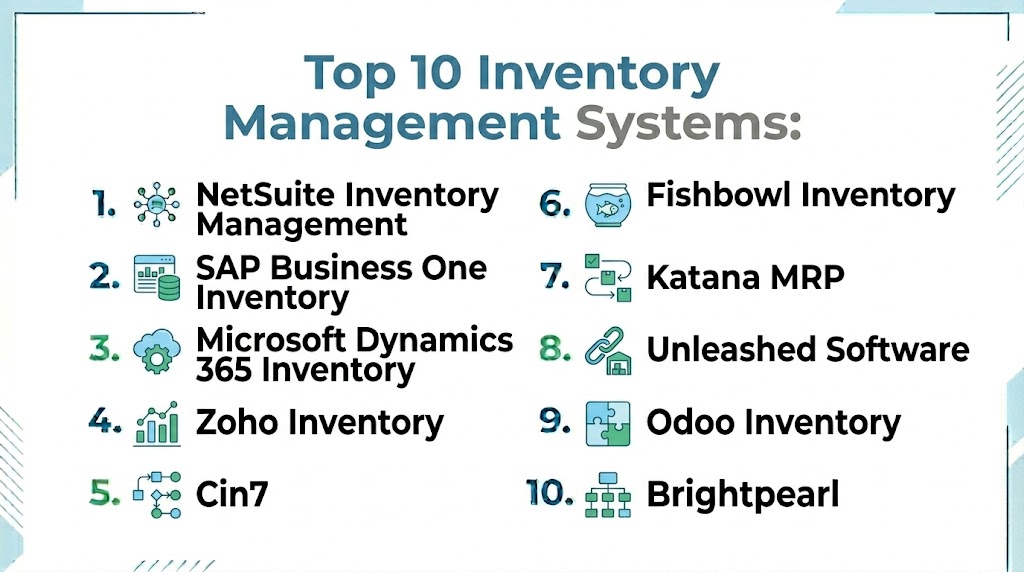
Top 10 Inventory Management Systems
#1 — NetSuite Inventory Management
Short description: A comprehensive cloud-based inventory solution integrated with NetSuite ERP, designed for businesses that need end-to-end visibility across inventory, finance, and operations.
Key Features
- Real-time inventory tracking
- Multi-location support
- Demand planning tools
- Automated replenishment
- Integration with ERP
- Reporting dashboards
Pros
- Unified ERP system
- Scalable for large businesses
Cons
- Expensive
- Complex implementation
Platforms / Deployment
- Web
- Cloud
Security & Compliance
- Role-based access, audit logs
- Compliance support varies
Integrations & Ecosystem
- NetSuite ecosystem
- APIs
Support & Community
Enterprise-level support and onboarding.
#2 — SAP Business One Inventory
Short description: An inventory solution within SAP Business One that helps small and mid-sized businesses manage stock, purchasing, and warehouse operations efficiently.
Key Features
- Inventory tracking
- Warehouse management
- Demand planning
- Reporting tools
- Integration with SAP
Pros
- Strong ERP integration
- Reliable performance
Cons
- Requires SAP environment
- Setup complexity
Platforms / Deployment
- Web / Windows
- Cloud / On-premise
Security & Compliance
- Enterprise security controls
- Compliance support varies
Integrations & Ecosystem
- SAP ecosystem
- APIs
Support & Community
Strong enterprise support.
#3 — Microsoft Dynamics 365 Inventory
Short description: A powerful inventory management solution integrated with Microsoft Dynamics, offering real-time tracking and advanced analytics.
Key Features
- Inventory tracking
- Warehouse management
- Demand forecasting
- Integration with Microsoft tools
- Reporting dashboards
Pros
- Strong integration with Microsoft ecosystem
- Scalable
Cons
- Complex setup
- Higher cost
Platforms / Deployment
- Web
- Cloud
Security & Compliance
- Role-based access
- Compliance support varies
Integrations & Ecosystem
- Microsoft ecosystem
- APIs
Support & Community
Enterprise-level support.
#4 — Zoho Inventory
Short description: An easy-to-use inventory system designed for small businesses to manage stock, orders, and shipping.
Key Features
- Inventory tracking
- Order management
- Multi-channel integration
- Shipping management
- Reporting
Pros
- Affordable
- Easy to use
Cons
- Limited advanced features
- Not ideal for large enterprises
Platforms / Deployment
- Web
- Cloud
Security & Compliance
- Not publicly stated
Integrations & Ecosystem
- Zoho apps
- APIs
Support & Community
Good SMB support.
#5 — Cin7
Short description: A cloud-based inventory platform designed for product businesses managing multi-channel sales and warehouse operations.
Key Features
- Inventory tracking
- Order and warehouse management
- Multi-channel integration
- Automation workflows
- Reporting
Pros
- Strong multi-channel support
- Scalable
Cons
- Learning curve
- Pricing varies
Platforms / Deployment
- Web
- Cloud
Security & Compliance
- Not publicly stated
Integrations & Ecosystem
- eCommerce platforms
- APIs
Support & Community
Strong support and onboarding.
#6 — Fishbowl Inventory
Short description: An inventory solution designed for manufacturing and warehouse management with strong QuickBooks integration.
Key Features
- Inventory tracking
- Manufacturing support
- Warehouse management
- Order tracking
- Reporting
Pros
- Strong accounting integration
- Manufacturing-focused
Cons
- Outdated UI
- Limited cloud features
Platforms / Deployment
- Windows
- On-premise / Hybrid
Security & Compliance
- Not publicly stated
Integrations & Ecosystem
- QuickBooks
- APIs
Support & Community
Reliable support.
#7 — Katana MRP
Short description: A modern inventory and manufacturing solution designed for small manufacturers and product businesses.
Key Features
- Real-time inventory tracking
- Production planning
- Order management
- Shop floor control
- Reporting
Pros
- Easy to use
- Manufacturing focus
Cons
- Limited enterprise features
- Pricing varies
Platforms / Deployment
- Web
- Cloud
Security & Compliance
- Not publicly stated
Integrations & Ecosystem
- eCommerce platforms
- APIs
Support & Community
Good support and onboarding.
#8 — Unleashed Software
Short description: A cloud-based inventory platform designed for growing businesses needing advanced tracking and reporting.
Key Features
- Inventory tracking
- Demand forecasting
- Batch tracking
- Reporting tools
- Integration support
Pros
- Strong reporting
- Scalable
Cons
- Learning curve
- Pricing varies
Platforms / Deployment
- Web
- Cloud
Security & Compliance
- Not publicly stated
Integrations & Ecosystem
- ERP systems
- APIs
Support & Community
Strong support resources.
#9 — Odoo Inventory
Short description: An open-source inventory system with modular capabilities, suitable for businesses needing customization.
Key Features
- Inventory tracking
- Warehouse management
- Automation workflows
- Integration modules
- Reporting
Pros
- Highly customizable
- Cost-effective
Cons
- Requires setup effort
- Technical expertise needed
Platforms / Deployment
- Web
- Cloud / On-premise
Security & Compliance
- Not publicly stated
Integrations & Ecosystem
- Odoo modules
- APIs
Support & Community
Active community and support.
#10 — Brightpearl
Short description: A retail-focused inventory system that combines inventory, order management, and automation for growing brands.
Key Features
- Inventory tracking
- Order management
- Automation workflows
- Reporting dashboards
- Multi-channel support
Pros
- Retail-focused
- Automation features
Cons
- Limited customization
- Pricing varies
Platforms / Deployment
- Web
- Cloud
Security & Compliance
- Not publicly stated
Integrations & Ecosystem
- eCommerce platforms
- APIs
Support & Community
Good onboarding and support.
Comparison Table
| Tool Name | Best For | Platform Supported | Deployment | Standout Feature | Public Rating |
|---|---|---|---|---|---|
| NetSuite Inventory | Enterprise | Web | Cloud | ERP integration | N/A |
| SAP Business One | SMB ERP users | Web/Windows | Hybrid | SAP ecosystem | N/A |
| Microsoft Dynamics | Enterprise | Web | Cloud | Microsoft integration | N/A |
| Zoho Inventory | SMB | Web | Cloud | Ease of use | N/A |
| Cin7 | Multi-channel | Web | Cloud | Channel integration | N/A |
| Fishbowl | Manufacturing | Windows | Hybrid | Accounting integration | N/A |
| Katana MRP | Small manufacturers | Web | Cloud | Production planning | N/A |
| Unleashed | Growing businesses | Web | Cloud | Reporting | N/A |
| Odoo Inventory | Custom workflows | Web | Hybrid | Open-source | N/A |
| Brightpearl | Retail | Web | Cloud | Automation | N/A |
Evaluation & Scoring of Inventory Management Systems
| Tool Name | Core 25% | Ease 15% | Integrations 15% | Security 10% | Performance 10% | Support 10% | Value 15% | Weighted Total |
|---|---|---|---|---|---|---|---|---|
| NetSuite | 9 | 6 | 9 | 9 | 8 | 8 | 6 | 8.0 |
| SAP Business One | 9 | 6 | 9 | 9 | 8 | 8 | 6 | 8.0 |
| Microsoft Dynamics | 9 | 6 | 9 | 9 | 8 | 8 | 6 | 8.0 |
| Zoho Inventory | 7 | 9 | 7 | 6 | 7 | 7 | 9 | 7.6 |
| Cin7 | 8 | 7 | 8 | 6 | 7 | 7 | 7 | 7.4 |
| Fishbowl | 8 | 6 | 7 | 6 | 7 | 7 | 7 | 7.2 |
| Katana | 7 | 8 | 7 | 6 | 7 | 7 | 8 | 7.4 |
| Unleashed | 8 | 7 | 7 | 6 | 7 | 7 | 7 | 7.3 |
| Odoo | 8 | 6 | 8 | 6 | 7 | 7 | 8 | 7.4 |
| Brightpearl | 8 | 8 | 7 | 6 | 7 | 7 | 8 | 7.6 |
How to interpret scores:
- Higher scores indicate stronger overall capabilities
- Enterprise tools excel in integration and scalability
- SMB tools perform better in ease of use and value
- Scores are comparative, not absolute
- Choose based on your operational needs
Which Inventory Management System Is Right for You
Solo / Freelancer
Zoho Inventory is a simple and affordable option for managing small stock levels.
SMB
Cin7 and Katana MRP offer a balance of usability and functionality.
Mid-Market
Unleashed Software and Brightpearl provide scalability and automation.
Enterprise
NetSuite, SAP Business One, and Microsoft Dynamics are best for large-scale operations.
Budget vs Premium
- Budget tools include Zoho Inventory and Odoo
- Premium tools include NetSuite and SAP
Feature Depth vs Ease of Use
- Advanced tools include NetSuite and Microsoft Dynamics
- Easy tools include Zoho Inventory and Katana
Integrations & Scalability
- Strong integrations in NetSuite and SAP
- Moderate in SMB tools
Security & Compliance Needs
- High compliance needs fit enterprise tools
- Moderate needs fit SMB tools
Frequently Asked Questions
1. What is an Inventory Management System
An inventory management system helps businesses track stock levels, manage orders, and optimize inventory across locations. It ensures accurate stock visibility and reduces errors in operations.
2. Why is inventory management important
Proper inventory management prevents stockouts and overstocking, improves cash flow, and ensures smooth business operations. It also enhances customer satisfaction through timely fulfillment.
3. Who should use inventory management software
Retailers, manufacturers, eCommerce businesses, and logistics companies benefit the most. Any business handling physical products can use it effectively.
4. Can inventory systems integrate with other tools
Yes, most systems integrate with ERP, accounting, eCommerce, and shipping platforms. This helps create a unified workflow across operations.
5. Are inventory systems cloud-based
Many modern systems are cloud-based, but some also support on-premise or hybrid deployment. Cloud solutions are more flexible and scalable.
6. How long does implementation take
Implementation depends on business complexity and tool choice. Simple systems can be deployed quickly, while enterprise systems take longer.
7. What features should I look for
Key features include real-time tracking, automation, reporting, integrations, and scalability. Ease of use is also important for adoption.
8. Can inventory software handle multiple warehouses
Yes, most advanced tools support multi-location and warehouse management. This helps businesses scale operations efficiently.
9. Is inventory software expensive
Costs vary depending on features and business size. SMB tools are generally affordable, while enterprise solutions are more expensive.
10. Can inventory systems improve efficiency
Yes, they automate processes, reduce manual work, and provide real-time insights. This leads to better decision-making and operational efficiency.
Conclusion
Inventory Management Systems are essential for businesses that want to maintain control over their stock, reduce operational inefficiencies, and improve overall performance. As supply chains become more complex and customer expectations continue to rise, relying on manual inventory tracking is no longer sustainable. One of the biggest advantages of modern inventory systems is real-time visibility. Businesses can track stock levels across multiple locations, monitor movements, and respond quickly to changes in demand. This level of control helps prevent stockouts and overstocking, both of which can impact profitability. Choosing the right inventory management system depends on your business size, industry, and operational complexity. Enterprise tools offer deep integrations and scalability, while smaller tools focus on simplicity and cost-effectiveness. There is no single best solution for every business.
