Introduction
Consent Management Platforms (CMPs) are tools that help websites and applications collect, manage, and store user consent for data processing activities such as cookies, tracking, and personalization. These platforms ensure compliance with privacy laws by presenting consent banners, capturing user preferences, and maintaining audit-ready records.
As digital privacy regulations expand globally and platforms like Google require consent signals for advertising and analytics, CMPs have become critical infrastructure for modern businesses. They not only ensure compliance but also help maintain data pipelines for marketing, analytics, and personalization.
Common use cases include:
- Cookie consent banners for websites and apps
- GDPR, CCPA, and global compliance management
- Consent signal sharing with analytics and ad platforms
- User preference centers and opt-in management
- Audit trails and compliance reporting
Key evaluation criteria:
- Consent collection and customization
- Compliance coverage across regions
- Integration with marketing and analytics tools
- Automation and workflow capabilities
- Reporting and audit logs
- Performance and scalability
- Ease of implementation
- User experience and opt-in optimization
Best for: Marketing teams, compliance teams, publishers, SaaS companies, and enterprises managing user data across digital channels.
Not ideal for: Organizations without digital user tracking or those with minimal data collection requirements.
Key Trends in Consent Management Platforms
- AI-driven consent banner optimization for higher opt-in rates
- Integration with Google Consent Mode and ad ecosystems
- Real-time cookie scanning and auto-classification
- Multi-channel consent across web, mobile, and apps
- Global compliance coverage across multiple privacy laws
- Preference centers for granular user control
- Automation of consent lifecycle and updates
- Increased focus on transparency and user trust
- API-first platforms for ecosystem integration
- Strong audit and reporting capabilities
How We Selected These Tools (Methodology)
- Market adoption and industry recognition
- Feature completeness across consent lifecycle
- Ease of deployment and usability
- Compliance coverage across global regulations
- Integration with marketing, analytics, and ad tech
- Performance and scalability for large traffic volumes
- Security and audit readiness
- Fit across SMB, mid-market, and enterprise use cases
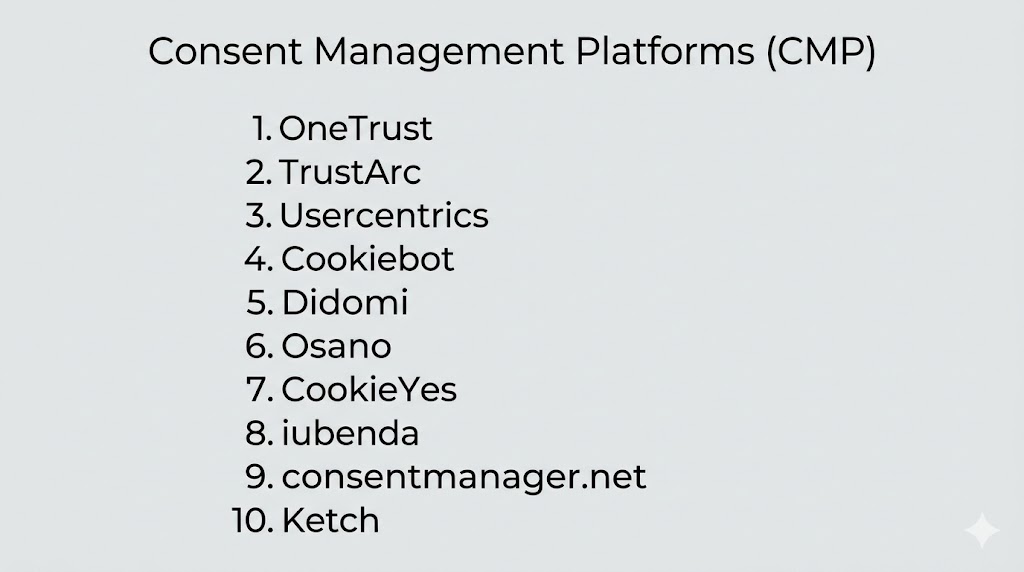
Top 10 Consent Management Platforms (CMP)
#1 — OneTrust Consent & Preferences
Short description: A leading enterprise CMP offering end-to-end consent and preference management across web, mobile, and connected platforms. It is widely used for global compliance and large-scale operations.
Key Features
- Multi-channel consent management
- Preference centers
- Consent analytics
- Regulatory compliance automation
- Data mapping integration
- Audit reporting
Pros
- Enterprise-grade capabilities
- Broad compliance coverage
Cons
- High cost
- Complex setup
Platforms / Deployment
Cloud
Security & Compliance
Encryption, RBAC, audit logs; Not publicly stated
Integrations & Ecosystem
Integrates with enterprise ecosystems and marketing tools
- APIs
- Analytics platforms
- Ad tech systems
- CRM tools
Support & Community
Strong enterprise support and training
#2 — TrustArc CMP
Short description: A flexible consent and privacy platform focused on compliance automation and risk management. Suitable for organizations needing structured privacy workflows.
Key Features
- Consent capture and tracking
- Risk monitoring
- Data inventory
- Compliance reporting
- Workflow automation
Pros
- Strong compliance framework
- Flexible architecture
Cons
- UI complexity
- Implementation effort
Platforms / Deployment
Cloud
Security & Compliance
Encryption; Not publicly stated
Integrations & Ecosystem
Supports enterprise integrations
- APIs
- Governance tools
- Data systems
Support & Community
Enterprise-grade support
#3 — Usercentrics
Short description: A popular CMP focused on consent management for websites and apps, with strong customization and compliance features.
Key Features
- Consent banners
- Auto-blocking of tracking scripts
- Consent analytics
- Multi-language support
- Google Consent Mode integration
Pros
- Easy to implement
- Strong UX customization
Cons
- Limited enterprise depth
- Focus on web use cases
Platforms / Deployment
Cloud
Security & Compliance
Encryption; Not publicly stated
Integrations & Ecosystem
Supports integration with web tools
- CMS platforms
- Marketing tools
- APIs
Support & Community
Strong documentation and support
#4 — Cookiebot (Usercentrics)
Short description: A plug-and-play CMP designed for small to mid-sized businesses, offering automated cookie scanning and compliance features.
Key Features
- Automatic cookie scanning
- Consent banner customization
- Compliance with multiple regulations
- Reporting tools
- Auto-updating cookie declarations
Pros
- Easy setup
- Affordable pricing
Cons
- Limited advanced features
- Not ideal for large enterprises
Platforms / Deployment
Cloud
Security & Compliance
Encryption; Not publicly stated
Integrations & Ecosystem
Integrates with web and analytics tools
- Google tools
- APIs
- CMS platforms
Support & Community
Good SMB-focused support
#5 — Didomi
Short description: A consent and preference management platform designed for global compliance and user-friendly experiences across web and mobile.
Key Features
- Consent collection
- Preference management
- Cross-platform support
- Reporting dashboards
- Compliance frameworks
Pros
- Strong user experience
- Global compliance support
Cons
- Limited full privacy suite features
- Focused primarily on consent
Platforms / Deployment
Cloud
Security & Compliance
Encryption; Not publicly stated
Integrations & Ecosystem
Supports digital integrations
- APIs
- Mobile SDKs
- Web platforms
Support & Community
Good support for product teams
#6 — Osano
Short description: A privacy-focused CMP offering consent management and compliance automation with global regulatory support.
Key Features
- Consent management
- Vendor risk monitoring
- Compliance automation
- Multi-language support
- Audit logs
Pros
- Easy to use
- Strong compliance capabilities
Cons
- Limited customization
- Smaller ecosystem
Platforms / Deployment
Cloud
Security & Compliance
Encryption; Not publicly stated
Integrations & Ecosystem
Supports integrations via APIs
- SaaS tools
- Data systems
- Compliance tools
Support & Community
Good support and onboarding
#7 — CookieYes
Short description: A widely used CMP focused on website compliance and cookie consent management for businesses of all sizes.
Key Features
- Cookie consent banners
- Automated scanning
- Compliance reporting
- Multi-region support
- Preference management
Pros
- Easy to use
- Affordable
Cons
- Limited enterprise features
- Basic analytics
Platforms / Deployment
Cloud
Security & Compliance
Encryption; Not publicly stated
Integrations & Ecosystem
Supports web integrations
- CMS tools
- APIs
- Analytics platforms
Support & Community
Strong SMB support
#8 — iubenda
Short description: A compliance-focused CMP offering legal-grade consent solutions and privacy policy management.
Key Features
- Consent collection
- Policy generation
- Compliance automation
- Preference management
- Reporting
Pros
- Legal-focused features
- Easy setup
Cons
- Limited advanced analytics
- Not enterprise-focused
Platforms / Deployment
Cloud
Security & Compliance
Encryption; Not publicly stated
Integrations & Ecosystem
Supports integration with web platforms
- APIs
- CMS tools
- Web apps
Support & Community
Good documentation
#9 — consentmanager.net
Short description: A customizable CMP supporting multiple languages and compliance frameworks for global businesses.
Key Features
- Multi-language support
- Consent banner customization
- Google Consent Mode support
- Cookie scanning
- Compliance tools
Pros
- Highly customizable
- Strong compliance features
Cons
- UI complexity
- Setup effort
Platforms / Deployment
Cloud
Security & Compliance
Encryption; Not publicly stated
Integrations & Ecosystem
Supports integrations with many tools
- APIs
- Marketing tools
- Analytics platforms
Support & Community
Moderate support
#10 — Ketch
Short description: A modern consent and data control platform focused on real-time consent orchestration and data governance.
Key Features
- Real-time consent management
- Data orchestration
- Compliance automation
- User preference control
- Reporting
Pros
- Advanced data control
- Scalable architecture
Cons
- Complex setup
- Enterprise-focused pricing
Platforms / Deployment
Cloud
Security & Compliance
Encryption, RBAC; Not publicly stated
Integrations & Ecosystem
Supports enterprise integrations
- APIs
- Data platforms
- Marketing systems
Support & Community
Enterprise-level support
Comparison Table (Top 10)
| Tool Name | Best For | Platform(s) Supported | Deployment | Standout Feature | Public Rating |
|---|---|---|---|---|---|
| OneTrust | Enterprise | Web | Cloud | Full privacy suite | N/A |
| TrustArc | Compliance workflows | Web | Cloud | Risk management | N/A |
| Usercentrics | Web apps | Web | Cloud | Custom consent banners | N/A |
| Cookiebot | SMB | Web | Cloud | Auto cookie scanning | N/A |
| Didomi | UX-focused consent | Web/Mobile | Cloud | Cross-platform consent | N/A |
| Osano | Compliance automation | Web | Cloud | Vendor risk management | N/A |
| CookieYes | SMB | Web | Cloud | Easy setup | N/A |
| iubenda | Legal compliance | Web | Cloud | Policy generation | N/A |
| consentmanager.net | Customization | Web | Cloud | Multi-language support | N/A |
| Ketch | Enterprise | Web | Cloud | Real-time consent | N/A |
Evaluation & Scoring of Consent Management Platforms
| Tool Name | Core (25%) | Ease (15%) | Integrations (15%) | Security (10%) | Performance (10%) | Support (10%) | Value (15%) | Weighted Total (0–10) |
|---|---|---|---|---|---|---|---|---|
| OneTrust | 9 | 7 | 9 | 9 | 9 | 9 | 6 | 8.4 |
| TrustArc | 8 | 7 | 8 | 8 | 8 | 8 | 7 | 7.9 |
| Usercentrics | 8 | 9 | 7 | 7 | 8 | 8 | 8 | 8.0 |
| Cookiebot | 7 | 9 | 7 | 7 | 7 | 7 | 8 | 7.6 |
| Didomi | 8 | 8 | 7 | 7 | 7 | 7 | 7 | 7.7 |
| Osano | 8 | 8 | 7 | 8 | 7 | 7 | 7 | 7.8 |
| CookieYes | 7 | 9 | 7 | 7 | 7 | 7 | 8 | 7.6 |
| iubenda | 7 | 9 | 6 | 7 | 7 | 7 | 8 | 7.5 |
| consentmanager.net | 8 | 7 | 7 | 7 | 7 | 7 | 7 | 7.4 |
| Ketch | 9 | 6 | 9 | 9 | 8 | 8 | 6 | 8.2 |
These scores are comparative and based on overall capabilities across features, usability, and integrations. They should be used as a directional guide rather than an absolute ranking.
Which Consent Management Platform Is Right for You?
Solo / Freelancer
CookieYes, iubenda, or Cookiebot are ideal for simple website compliance.
SMB
Usercentrics, Didomi, and Osano offer a balance of features and ease of use.
Mid-Market
TrustArc and consentmanager.net provide structured workflows and flexibility.
Enterprise
OneTrust and Ketch deliver advanced compliance and scalability.
Budget vs Premium
Budget tools prioritize ease and speed; premium tools offer deeper compliance features.
Feature Depth vs Ease of Use
Advanced platforms provide control but require expertise; simpler tools reduce onboarding time.
Integrations & Scalability
Choose platforms that integrate with marketing, analytics, and data systems.
Security & Compliance Needs
Highly regulated industries should prioritize audit-ready platforms.
Frequently Asked Questions (FAQs)
1. What is a Consent Management Platform (CMP)?
A CMP is software that collects, manages, and stores user consent for data processing activities. It ensures compliance with privacy laws and tracks user preferences.
2. Why are CMPs important?
They help organizations comply with privacy regulations and maintain trust with users while enabling marketing and analytics workflows.
3. Do CMPs support global regulations?
Yes, most CMPs support GDPR, CCPA, and other global privacy laws.
4. How much do CMP tools cost?
Pricing varies based on traffic, features, and scale. Many offer subscription or usage-based pricing.
5. Can CMPs integrate with Google tools?
Yes, many CMPs support Google Consent Mode and analytics integration.
6. Are CMPs only for websites?
No, many platforms support mobile apps, OTT platforms, and multi-channel environments.
7. How long does implementation take?
Basic setups can be completed quickly, while enterprise deployments may take longer.
8. What are common mistakes when choosing a CMP?
Ignoring integration needs, compliance coverage, and scalability are common issues.
9. Are CMPs secure?
Most offer encryption, access controls, and audit logs, but verification is important.
10. Can CMPs improve user trust?
Yes, transparent consent processes improve user trust and compliance.
Conclusion
Consent Management Platforms have become essential for organizations operating in a privacy-first digital environment. As regulations expand and user expectations increase, CMPs provide the structure needed to collect, manage, and audit consent efficiently while maintaining transparency.
Modern CMPs go beyond basic cookie banners by integrating with analytics, advertising, and data platforms, ensuring that consent signals flow correctly across the entire digital ecosystem. This makes them a critical component not just for compliance, but also for maintaining business continuity in marketing and data operations.
The right CMP depends on your organization’s size, regulatory exposure, and technical complexity. Enterprises may require comprehensive platforms with deep integrations, while smaller businesses benefit from lightweight and easy-to-deploy solutions.
Instead of selecting a tool based solely on features, focus on usability, integration capabilities, and scalability. A well-chosen CMP can reduce compliance risk, improve operational efficiency, and enhance user trust.
