Introduction
Sanctions Screening Tools are compliance platforms designed to help organizations identify customers, counterparties, vendors, and transactions that may be connected to sanctioned individuals, restricted entities, politically exposed persons, or high-risk jurisdictions. These tools screen names, ownership structures, transaction details, and related entities against global watchlists such as OFAC, UN, EU, UK, and many regional sanctions lists.
As compliance requirements become stricter, manual sanctions checks are no longer practical for regulated businesses. Modern sanctions screening software uses AI-assisted matching, fuzzy name logic, multilingual screening, entity resolution, and continuous monitoring to reduce false positives while improving detection accuracy. Real-time list updates, audit trails, and workflow automation are increasingly becoming standard platform expectations.
Common use cases include:
- Customer onboarding sanctions checks
- Vendor and third-party screening
- Payment and transaction screening
- Continuous customer monitoring
- PEP and adverse media screening
Key evaluation criteria:
- Global sanctions list coverage
- Matching intelligence and false-positive reduction
- Real-time list updates
- API and workflow integrations
- Continuous monitoring
- Case management tools
- Security controls
- Audit readiness
- Scalability
Best for: Banks, fintech companies, payment processors, insurers, marketplaces, crypto businesses, and global enterprises managing compliance risk.
Not ideal for: Very small businesses with limited regulated exposure or teams needing only occasional manual checks.
Key Trends in Sanctions Screening Tools
- AI-powered entity matching
- Lower false-positive screening models
- Real-time sanctions updates
- Continuous monitoring automation
- Beneficial ownership mapping
- Cross-border multilingual screening
- API-first compliance infrastructure
- Integrated adverse media intelligence
- Explainable alert scoring
- Cloud-native compliance delivery
How We Selected These Tools
- Market credibility in AML and compliance
- Breadth of sanctions list coverage
- Matching engine sophistication
- Alert management quality
- Workflow automation maturity
- Integration ecosystem strength
- Security and governance readiness
- Scalability across business sizes
- Vendor support reputation
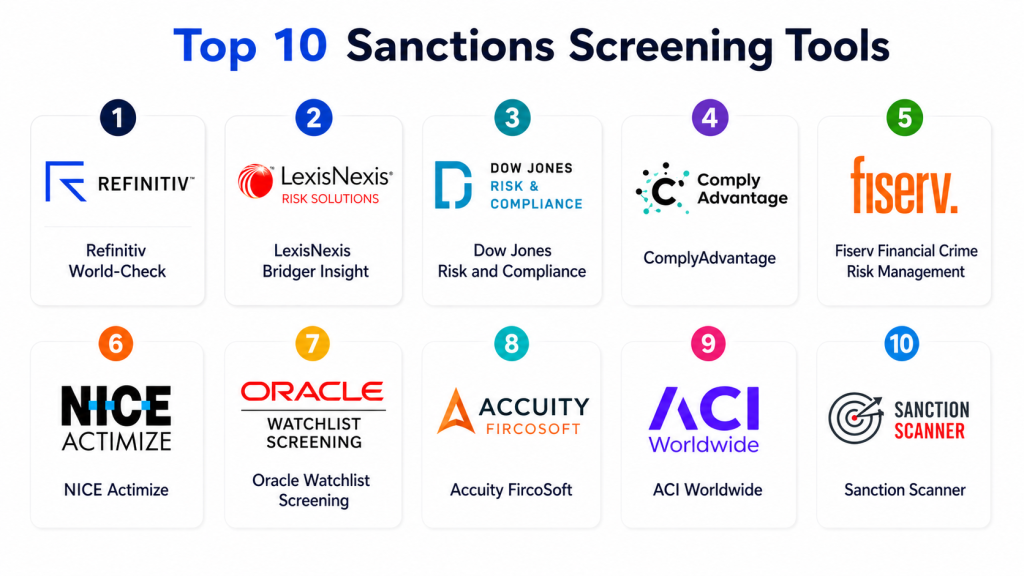
Top 10 Sanctions Screening Tools
#1 — LSEG World-Check
Short description: LSEG World-Check is one of the most widely used risk intelligence and sanctions screening platforms globally. It helps financial institutions screen customers, vendors, and counterparties against sanctions, PEP, and adverse media data.
Key Features
- Global sanctions screening
- PEP screening
- Adverse media intelligence
- Risk profiling
- Continuous monitoring
- API integrations
Pros
- Strong global intelligence coverage
- Trusted by large institutions
- Mature compliance workflows
Cons
- Premium enterprise pricing
- Complex deployment
- Best suited for regulated businesses
Platforms / Deployment
- Web
- Cloud
Security & Compliance
- RBAC
- MFA
- Audit logs
- Encryption
Integrations & Ecosystem
Deep integrations into compliance, onboarding, and monitoring workflows.
- APIs
- CRM integrations
- Banking systems
- Case management tools
Support & Community
Strong enterprise documentation, onboarding, and customer support ecosystem.
#2 — Dow Jones Risk & Compliance
Short description: Dow Jones offers sanctions screening and risk intelligence tools focused on regulatory compliance, due diligence, and continuous monitoring across global jurisdictions.
Key Features
- Sanctions screening
- PEP checks
- Watchlist intelligence
- Adverse media monitoring
- Ongoing monitoring
- Risk analytics
Pros
- Rich risk intelligence data
- Strong compliance usability
- Good enterprise fit
Cons
- Premium pricing
- Advanced configuration may be needed
- Best value for high-volume screening
Platforms / Deployment
- Web
- Cloud
Security & Compliance
- RBAC
- MFA
- Audit logs
Integrations & Ecosystem
- APIs
- Compliance platforms
- CRM systems
- Reporting tools
Support & Community
Strong enterprise implementation and advisory support.
#3 — Firco Continuity
Short description: Firco Continuity is widely recognized in transaction and sanctions screening, helping financial institutions monitor payments, customers, and entities against sanctions lists efficiently.
Key Features
- Real-time screening
- Payment screening
- Fuzzy name matching
- Alert management
- Workflow automation
- Audit reporting
Pros
- Strong banking adoption
- Good false-positive tuning
- Reliable transaction monitoring
Cons
- Enterprise-focused pricing
- Complex setup
- Requires tuning for optimization
Platforms / Deployment
- Web
- Cloud / Hybrid
Security & Compliance
- RBAC
- Audit logs
- Encryption
Integrations & Ecosystem
- Core banking systems
- Payment infrastructure
- APIs
- Compliance workflows
Support & Community
Strong institutional support network. Community feedback frequently cites Firco as effective at reducing false positives.
#4 — ComplyAdvantage
Short description: ComplyAdvantage is an AI-driven sanctions screening platform built for fintechs, digital banks, and modern regulated businesses that need fast onboarding and automated monitoring.
Key Features
- AI name matching
- Real-time sanctions checks
- PEP screening
- Adverse media screening
- Continuous monitoring
- API-first delivery
Pros
- Modern developer-friendly platform
- Fast implementation
- Strong automation capabilities
Cons
- Premium scaling cost
- Configuration required
- Enterprise workflows may need customization
Platforms / Deployment
- Web
- Cloud
Security & Compliance
- RBAC
- MFA
- Audit logs
Integrations & Ecosystem
- APIs
- Fintech platforms
- Payment systems
- CRM integrations
Support & Community
Strong onboarding and good developer documentation.
#5 — Oracle FCCM Screening
Short description: Oracle Financial Crime and Compliance Management offers sanctions screening for large enterprises needing integrated AML, monitoring, and regulatory workflows.
Key Features
- Customer screening
- Transaction screening
- Risk scoring
- Case workflows
- Watchlist monitoring
- Reporting automation
Pros
- Broad enterprise compliance suite
- Strong workflow depth
- Good scalability
Cons
- Complex deployment
- Premium cost
- Best suited for large organizations
Platforms / Deployment
- Web
- Cloud / Hybrid
Security & Compliance
- RBAC
- MFA
- Audit logs
Integrations & Ecosystem
- Oracle ecosystem
- APIs
- Banking systems
- Analytics tools
Support & Community
Strong enterprise customer support.
#6 — Sumsub
Short description: Sumsub combines sanctions screening, identity verification, and AML monitoring in one modern compliance platform built for digital businesses and global onboarding.
Key Features
- Real-time sanctions screening
- PEP monitoring
- Adverse media checks
- AI match filtering
- Workflow automation
- Continuous monitoring
Pros
- Strong automation stack
- Good onboarding fit
- Cloud-native platform
Cons
- Pricing varies by scale
- Advanced workflows may need configuration
- Better suited for digital-first businesses
Platforms / Deployment
- Web
- Cloud
Security & Compliance
- RBAC
- Audit logs
- Encryption
Integrations & Ecosystem
- APIs
- Onboarding platforms
- Payments systems
- Compliance tools
Support & Community
Good onboarding and scalable support model.
#7 — sanctions.io
Short description: sanctions.io offers API-driven sanctions and AML screening with batch processing, continuous monitoring, and CRM integrations designed for flexible compliance workflows.
Key Features
- Real-time API screening
- Batch screening
- Continuous monitoring
- CRM integrations
- Watchlist coverage
- Alert workflows
Pros
- Fast deployment
- Strong API capabilities
- Good workflow flexibility
Cons
- Smaller brand recognition than legacy leaders
- Enterprise features vary by plan
- Custom tuning may be needed
Platforms / Deployment
- Web
- Cloud
Security & Compliance
- RBAC
- Audit logs
- Encryption
Integrations & Ecosystem
- APIs
- CRM platforms
- SaaS systems
- Compliance workflows
Support & Community
Growing ecosystem with modern implementation focus.
#8 — AML Watcher
Short description: AML Watcher focuses on deep global sanctions intelligence, multilingual matching, and broad sanctions regime coverage for compliance-heavy organizations.
Key Features
- Global sanctions coverage
- Multilingual matching
- Continuous updates
- Ownership mapping
- Fuzzy matching
- Risk enrichment
Pros
- Strong international list depth
- Good multilingual capability
- Rich sanctions intelligence
Cons
- Enterprise positioning
- Pricing varies
- Advanced deployment for larger teams
Platforms / Deployment
- Web
- Cloud
Security & Compliance
- RBAC
- Audit logs
- Encryption
Integrations & Ecosystem
- APIs
- Monitoring systems
- Reporting tools
- Compliance workflows
Support & Community
Strong specialized compliance support.
#9 — LexisNexis Bridger Insight
Short description: Bridger Insight is a well-known screening platform used for sanctions, PEP, and AML checks across banking, insurance, and regulated enterprise workflows.
Key Features
- Sanctions screening
- PEP checks
- Adverse media
- Risk scoring
- Batch screening
- Continuous monitoring
Pros
- Broad enterprise adoption
- Mature workflows
- Strong regulatory fit
Cons
- Traditional interface in some deployments
- Premium pricing
- Complex implementation options
Platforms / Deployment
- Web
- Cloud / Hybrid
Security & Compliance
- RBAC
- MFA
- Audit logs
Integrations & Ecosystem
- APIs
- CRM tools
- Banking systems
- Compliance platforms
Support & Community
Strong enterprise support network.
#10 — Napier AI
Short description: Napier AI combines sanctions screening, AML monitoring, and AI-driven alert intelligence for organizations seeking modern compliance automation.
Key Features
- Sanctions checks
- AI alert scoring
- Monitoring workflows
- Risk analytics
- Continuous screening
- Case management
Pros
- Strong AI capabilities
- Good operational efficiency
- Scalable cloud delivery
Cons
- Enterprise pricing varies
- Setup customization may be needed
- Growing market presence
Platforms / Deployment
- Web
- Cloud
Security & Compliance
- RBAC
- Audit logs
- Encryption
Integrations & Ecosystem
- APIs
- AML systems
- Reporting tools
- Workflow platforms
Support & Community
Good enterprise onboarding and implementation support.
Comparison Table
| Tool Name | Best For | Platform Supported | Deployment | Standout Feature | Public Rating |
|---|---|---|---|---|---|
| LSEG World-Check | Enterprise compliance | Web | Cloud | Global risk intelligence | N/A |
| Dow Jones Risk & Compliance | Due diligence | Web | Cloud | Rich compliance data | N/A |
| Firco Continuity | Transaction screening | Web | Cloud / Hybrid | Fuzzy matching | N/A |
| ComplyAdvantage | Fintech AML | Web | Cloud | AI-driven screening | N/A |
| Oracle FCCM Screening | Large enterprises | Web | Cloud / Hybrid | Integrated compliance suite | N/A |
| Sumsub | Digital onboarding | Web | Cloud | Unified compliance stack | N/A |
| sanctions.io | API screening | Web | Cloud | Flexible integrations | N/A |
| AML Watcher | Global screening | Web | Cloud | Multilingual intelligence | N/A |
| LexisNexis Bridger Insight | Enterprise screening | Web | Cloud / Hybrid | Mature workflows | N/A |
| Napier AI | AI compliance | Web | Cloud | Smart alert scoring | N/A |
Frequently Asked Questions
1. What is sanctions screening
Sanctions screening is the process of checking customers, transactions, and counterparties against global sanctions lists and watchlists. It helps businesses avoid prohibited dealings. It is a core part of AML compliance.
2. Who needs sanctions screening tools
Banks, fintechs, payment processors, insurers, marketplaces, and global enterprises often require sanctions screening. Any regulated business handling financial flows benefits from automation. Compliance scale determines platform complexity.
3. Do sanctions tools use AI
Yes, many modern platforms use AI for fuzzy matching, alert prioritization, and entity resolution. This helps reduce false positives. It also improves screening efficiency.
4. Can these tools monitor customers continuously
Most modern tools support continuous monitoring that automatically alerts teams when sanctions status changes. This improves ongoing compliance visibility. It reduces manual re-screening work.
5. Are sanctions tools cloud-based
Most modern vendors offer cloud-native deployment, while some enterprise platforms also support hybrid models. Cloud delivery improves scalability. Deployment choice depends on regulatory and operational needs.
6. How do firms choose the right tool
Evaluate data coverage, matching quality, workflow automation, integrations, and scalability. Also review alert accuracy and audit readiness. Pilot testing is often the smartest approach.
Conclusion
Sanctions Screening Tools have become essential compliance infrastructure for regulated businesses operating in global markets.
The biggest advantage is automated, continuous screening that improves detection while reducing manual workload.
Modern platforms increasingly compete on AI matching quality, workflow automation, multilingual coverage, and integration flexibility.
Smaller digital businesses may prioritize API-first agility, while large institutions often need broad intelligence depth and enterprise-scale governance.
Security, auditability, scalability, and false-positive reduction should all be core buying priorities.

The article breaks down the key features and differences between sanctions screening tools, making the evaluation process much more straightforward for compliance teams.