Introduction
Trade Surveillance Systems are specialized compliance platforms designed to monitor trading activity, detect suspicious behavior, identify market abuse patterns, and help regulated financial institutions maintain strong compliance oversight. These systems continuously analyze large volumes of orders, executions, communications, and behavioral signals to uncover activities such as spoofing, layering, wash trading, insider dealing, front-running, and cross-market manipulation.
With financial markets becoming faster, more automated, and increasingly interconnected, manual surveillance is no longer practical. Modern trade surveillance platforms use AI-driven analytics, behavioral monitoring, automated alerting, and investigation workflows to help compliance teams reduce risk, improve oversight, and strengthen regulatory readiness.
Common use cases include:
- Market abuse detection
- Insider trading monitoring
- Spoofing and layering surveillance
- Cross-market behavior analysis
- Compliance investigations and reporting
Key evaluation criteria:
- Detection intelligence
- Real-time monitoring
- Alert accuracy
- Investigation workflow quality
- Cross-asset surveillance coverage
- Communication monitoring integration
- Scalability
- Security controls
- Compliance reporting readiness
Best for: Exchanges, broker-dealers, hedge funds, banks, asset managers, and regulated financial institutions handling large trading volumes.
Not ideal for: Retail investors, small advisory firms, or organizations without meaningful market-facing trading activity.
Key Trends in Trade Surveillance Systems
- AI-powered anomaly detection
- Behavioral surveillance models
- Cross-asset monitoring expansion
- Unified trade and communication surveillance
- Cloud-native compliance platforms
- Automated alert scoring and prioritization
- Lower false-positive detection rates
- API-first surveillance architecture
- Stronger governance workflows
- Real-time case investigation dashboards
How We Selected These Tools
- Institutional adoption and market credibility
- Breadth of surveillance capabilities
- Cross-asset coverage depth
- Alert intelligence and model sophistication
- Investigation workflow maturity
- Security and governance readiness
- Integration ecosystem quality
- Scalability across operational sizes
- Vendor support and implementation maturity
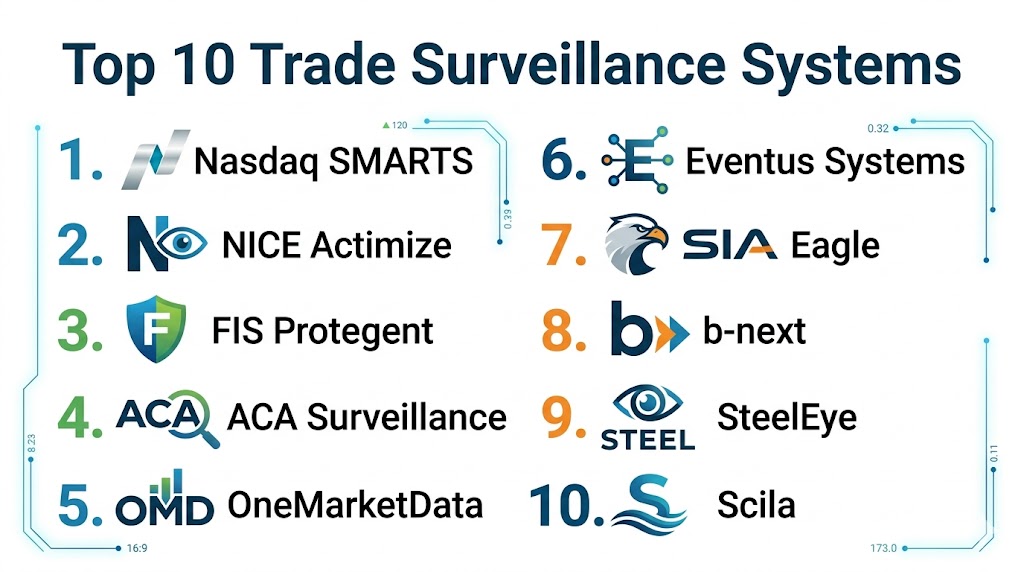
Top 10 Trade Surveillance Systems
#1 — Nasdaq Trade Surveillance
Short description: Nasdaq Trade Surveillance is one of the most established surveillance platforms globally, widely used by exchanges, regulators, and financial institutions to monitor market abuse and suspicious trading behavior across multiple asset classes.
Key Features
- Real-time surveillance
- Behavioral detection models
- Cross-market monitoring
- Advanced investigation tools
- Multi-asset support
- Automated case workflows
Pros
- Deep regulatory credibility
- Strong analytics engine
- Broad institutional adoption
Cons
- Premium enterprise pricing
- Complex deployment
- Best suited for mature compliance teams
Platforms / Deployment
- Web
- Cloud / Hybrid
Security & Compliance
- RBAC
- MFA
- Audit logs
- Encryption
Integrations & Ecosystem
Strong connectivity with trading infrastructure, reporting systems, and compliance operations.
- APIs
- Market feeds
- Investigation platforms
- Regulatory workflows
Support & Community
Excellent enterprise onboarding and strong regulatory support ecosystem.
#2 — NICE Actimize
Short description: NICE Actimize delivers enterprise-grade trade surveillance with behavioral analytics, machine learning, automated alert prioritization, and integrated investigation workflows.
Key Features
- Market abuse monitoring
- AI analytics
- Alert scoring
- Investigation case management
- Communication surveillance support
- Workflow automation
Pros
- Strong AI capabilities
- Broad compliance coverage
- Excellent workflow automation
Cons
- High implementation complexity
- Premium cost
- Requires configuration planning
Platforms / Deployment
- Web
- Cloud / Hybrid
Security & Compliance
- RBAC
- Audit logs
- Encryption
Integrations & Ecosystem
- APIs
- Compliance systems
- Reporting platforms
- Data analytics tools
Support & Community
Strong enterprise support and large financial services customer base.
#3 — Eventus Validus
Short description: Eventus Validus is a cloud-focused surveillance platform built for detecting market abuse, improving alert quality, and streamlining compliance operations.
Key Features
- Market abuse detection
- Alert prioritization
- Investigation workflows
- Cloud deployment
- Compliance dashboards
- Reporting automation
Pros
- Modern architecture
- Good operational scalability
- Efficient alert workflows
Cons
- Enterprise pricing varies
- Growing ecosystem
- Custom setup may be needed
Platforms / Deployment
- Web
- Cloud
Security & Compliance
- RBAC
- Audit logs
- Encryption
Integrations & Ecosystem
- APIs
- Trading platforms
- Data feeds
- Reporting systems
Support & Community
Strong institutional onboarding and modern support model.
#4 — OneTick Surveillance
Short description: OneTick Surveillance is designed for data-intensive monitoring environments requiring deep analytics, real-time detection, and historical trade reconstruction.
Key Features
- High-speed analytics
- Historical replay analysis
- Pattern recognition
- Cross-market surveillance
- Investigation dashboards
- Large-scale data processing
Pros
- Powerful analytical depth
- Excellent scalability
- Strong historical analysis tools
Cons
- Technical implementation complexity
- Premium enterprise pricing
- Best for sophisticated teams
Platforms / Deployment
- Web / Linux
- Cloud / Hybrid
Security & Compliance
- RBAC
- Audit logs
- Encryption
Integrations & Ecosystem
- APIs
- Market feeds
- Analytics systems
- Reporting platforms
Support & Community
Strong enterprise technical support.
#5 — SteelEye
Short description: SteelEye combines trade surveillance, communications monitoring, analytics, and regulatory recordkeeping in one integrated compliance platform.
Key Features
- Trade surveillance
- Communication monitoring
- Data consolidation
- Behavioral analytics
- Case management
- Reporting tools
Pros
- Holistic surveillance model
- Strong compliance visibility
- Cloud-native architecture
Cons
- Enterprise-focused pricing
- Broad platform may exceed simple needs
- Advanced onboarding for large teams
Platforms / Deployment
- Web
- Cloud
Security & Compliance
- RBAC
- Audit logs
- Encryption
Integrations & Ecosystem
- APIs
- Communication platforms
- Trading systems
- Reporting tools
Support & Community
Strong modern compliance support.
#6 — FIS Protegent
Short description: FIS Protegent provides surveillance and compliance monitoring tools designed for institutional trading environments and wealth management operations.
Key Features
- Trade monitoring
- Compliance alerts
- Investigation workflows
- Data aggregation
- Reporting automation
- Rule configuration
Pros
- Broad enterprise applicability
- Strong compliance workflows
- Reliable monitoring engine
Cons
- Pricing varies
- Enterprise deployment complexity
- Best suited for regulated firms
Platforms / Deployment
- Web
- Cloud / Hybrid
Security & Compliance
- RBAC
- MFA
- Audit logs
Integrations & Ecosystem
- APIs
- Core systems
- Reporting tools
- Analytics integrations
Support & Community
Strong enterprise support model.
#7 — Bloomberg Trade Surveillance
Short description: Bloomberg Trade Surveillance offers integrated market monitoring powered by Bloomberg market intelligence, analytics, and institutional data infrastructure.
Key Features
- Cross-asset surveillance
- Behavioral monitoring
- Market intelligence integration
- Investigation workflows
- AI-assisted analytics
- Alert automation
Pros
- Strong data ecosystem
- Deep institutional intelligence
- Broad asset coverage
Cons
- Premium pricing
- Best fit for large institutions
- Complex deployment
Platforms / Deployment
- Web
- Cloud
Security & Compliance
- RBAC
- MFA
- Audit logs
- Encryption
Integrations & Ecosystem
- APIs
- Bloomberg ecosystem
- Reporting systems
- Analytics platforms
Support & Community
Premium enterprise support network.
#8 — ACA ComplianceAlpha
Short description: ACA ComplianceAlpha focuses on surveillance workflows, regulatory investigations, and operational compliance efficiency for regulated firms.
Key Features
- Trade monitoring
- Alert workflows
- Investigation tools
- Reporting dashboards
- Rule automation
- Compliance case management
Pros
- Strong compliance focus
- Practical workflows
- Good advisory support
Cons
- Enterprise pricing
- Feature depth varies by deployment
- Configuration may be required
Platforms / Deployment
- Web
- Cloud
Security & Compliance
- RBAC
- MFA
- Audit logs
Integrations & Ecosystem
- APIs
- Reporting systems
- Trading data feeds
- Compliance tools
Support & Community
Strong regulatory advisory ecosystem.
#9 — Trading Technologies TT Surveillance
Short description: TT Surveillance is built for firms needing integrated trade monitoring within professional execution and derivatives trading environments.
Key Features
- Multi-asset monitoring
- Machine learning models
- Real-time alerts
- Trader behavior scoring
- Investigation visualization
- Custom surveillance models
Pros
- Strong derivatives coverage
- AI-assisted detection
- Fast deployment for TT users
Cons
- Best for TT ecosystem users
- Specialized market fit
- Enterprise pricing varies
Platforms / Deployment
- Web
- Cloud
Security & Compliance
- RBAC
- Audit logs
- Encryption
Integrations & Ecosystem
- APIs
- Trading systems
- Market feeds
- Compliance workflows
Support & Community
Strong professional trading support ecosystem.
#10 — Behavox
Short description: Behavox combines communication surveillance, behavioral analytics, and compliance intelligence to strengthen conduct monitoring alongside trading surveillance.
Key Features
- Communication monitoring
- Behavioral analytics
- Conduct risk detection
- AI alerting
- Investigation workflows
- Compliance dashboards
Pros
- Strong communication intelligence
- Good AI capabilities
- Holistic conduct monitoring
Cons
- Specialized monitoring focus
- Premium pricing
- Enterprise operational fit
Platforms / Deployment
- Web
- Cloud
Security & Compliance
- RBAC
- Audit logs
- Encryption
Integrations & Ecosystem
- APIs
- Communication platforms
- Analytics systems
- Reporting tools
Support & Community
Strong enterprise support structure.
Comparison Table
| Tool Name | Best For | Platform Supported | Deployment | Standout Feature | Public Rating |
|---|---|---|---|---|---|
| Nasdaq Trade Surveillance | Exchanges and institutions | Web | Cloud / Hybrid | Behavioral detection | N/A |
| NICE Actimize | Enterprise compliance | Web | Cloud / Hybrid | AI surveillance | N/A |
| Eventus Validus | Cloud monitoring | Web | Cloud | Modern workflows | N/A |
| OneTick Surveillance | Data-heavy firms | Web / Linux | Cloud / Hybrid | Historical replay | N/A |
| SteelEye | Integrated surveillance | Web | Cloud | Unified monitoring | N/A |
| FIS Protegent | Institutional compliance | Web | Cloud / Hybrid | Workflow depth | N/A |
| Bloomberg Trade Surveillance | Large institutions | Web | Cloud | Market intelligence | N/A |
| ACA ComplianceAlpha | Compliance teams | Web | Cloud | Investigation workflows | N/A |
| TT Surveillance | Derivatives firms | Web | Cloud | ML detection | N/A |
| Behavox | Conduct monitoring | Web | Cloud | Communication analytics | N/A |
Frequently Asked Questions
1. What is a trade surveillance system
A trade surveillance system monitors orders, executions, and related activity to detect suspicious patterns, compliance breaches, and market abuse. It helps firms investigate faster. It also strengthens regulatory readiness.
2. Who needs trade surveillance software
Banks, brokerages, hedge funds, exchanges, and regulated investment firms benefit most. These organizations handle high trading volume and face strict compliance obligations. Smaller firms may need lighter solutions.
3. Can these tools detect insider trading
Yes, modern surveillance systems analyze behavior, communication signals, and trading patterns to flag suspicious activity. Detection models vary by platform. Advanced analytics improve accuracy.
4. Do trade surveillance tools use AI
Many platforms use machine learning, anomaly detection, and predictive analytics. AI helps reduce false positives. It also improves alert prioritization and investigation speed.
5. Are these platforms cloud-based
Most modern solutions support cloud deployment, while some enterprise vendors also provide hybrid models. Cloud delivery improves scalability. It also speeds implementation.
6. Can they monitor communications too
Many platforms integrate emails, chats, and voice monitoring with trade data. This creates stronger compliance visibility. It also helps identify contextual misconduct signals.
7. Are trade surveillance platforms secure
Enterprise platforms typically include encryption, RBAC, MFA, and audit logs. Security maturity differs by vendor. Buyers should validate governance controls carefully.
8. Is implementation difficult
Implementation complexity depends on data integrations, regulatory scope, and operational size. Cloud-native tools often deploy faster. Enterprise rollouts may require deeper planning.
9. Can mid-sized firms use these systems
Yes, many vendors now offer scalable surveillance models suited for mid-market firms. The key is selecting a platform aligned with operational complexity and budget.
10. How should firms choose a platform
Evaluate detection intelligence, integrations, workflow usability, scalability, deployment fit, and compliance support. Shortlist a few strong options. Then validate through pilot testing.
Conclusion
Trade Surveillance Systems have become critical infrastructure for modern financial compliance operations.
They help organizations monitor market activity more effectively, detect suspicious behavior earlier, and automate complex investigation workflows.
The biggest value comes from stronger visibility, better detection accuracy, and faster compliance response times.
Smaller regulated firms may prioritize usability and efficient cloud deployment, while large institutions often require deep analytics, cross-market monitoring, and enterprise-scale governance.

The comparison provides a clear understanding of trade surveillance systems and helps readers quickly identify the strengths of each platform.