Introduction
Execution Management Systems EMS are advanced trading platforms designed to help investment firms manage trade execution across markets, brokers, and asset classes with greater speed, control, and intelligence. These systems focus on routing orders efficiently, optimizing execution quality, reducing trading costs, and improving visibility into market activity throughout the trade lifecycle.
For institutional investors, hedge funds, broker-dealers, and asset managers, manual execution workflows create delays, fragmented visibility, and inconsistent execution outcomes. Modern EMS platforms solve these challenges by combining smart order routing, algorithmic execution strategies, broker connectivity, analytics, and real-time monitoring into one centralized execution environment.
Common use cases include:
- Multi-broker order execution
- Smart order routing
- Algorithmic trading execution
- Execution analytics and transaction cost analysis
- Real-time market monitoring and decision support
Key evaluation criteria:
- Execution speed and low-latency performance
- Smart routing intelligence
- Multi-asset execution support
- Broker and venue connectivity
- Execution analytics depth
- Workflow customization
- Ease of trader adoption
- Scalability
- Security and operational controls
Best for: Hedge funds, institutional asset managers, broker-dealers, quantitative trading firms, and investment teams executing large or complex trading volumes.
Not ideal for: Retail investors, small advisory firms, or organizations whose broker-native execution tools already meet operational needs.
Key Trends in Execution Management Systems
- AI-driven execution optimization
- Predictive liquidity analytics
- Cloud-based execution infrastructure
- Integrated OMS and EMS workflows
- Real-time transaction cost analysis
- Expanded multi-asset and global venue connectivity
- API-first architecture for custom workflows
- Embedded compliance and audit controls
- Advanced automation in execution strategy selection
- Better visualization of market depth and liquidity conditions
How We Selected These Tools
- Institutional market adoption
- Breadth of execution capabilities
- Broker and exchange connectivity depth
- Reliability under high-volume execution conditions
- Analytics and transaction cost analysis capabilities
- Integration ecosystem maturity
- Security and operational governance readiness
- Scalability across firms of different sizes
- Vendor reputation and support quality
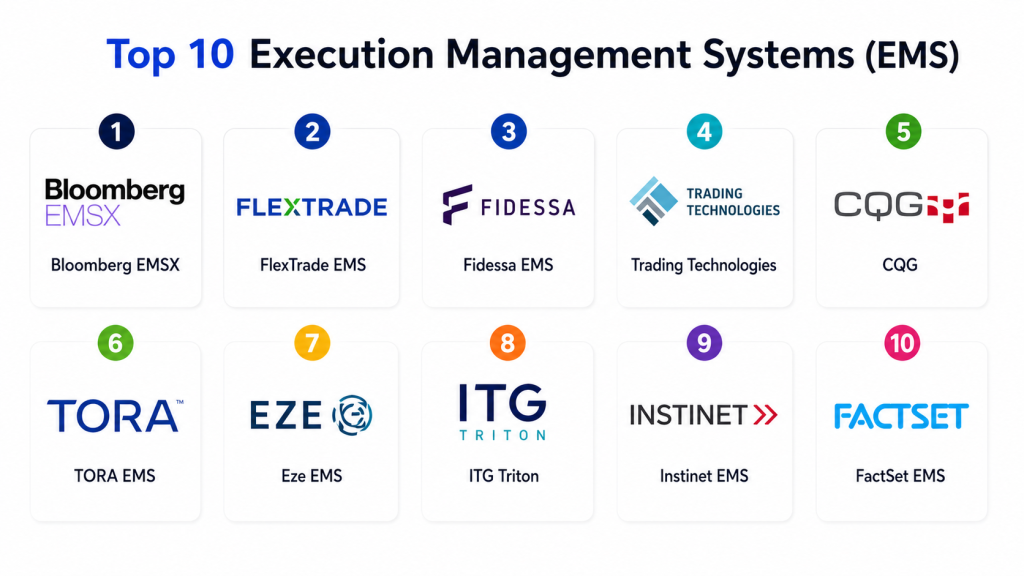
Top 10 Execution Management Systems
#1 — Bloomberg EMSX
Short description: Bloomberg EMSX is one of the most widely adopted institutional execution platforms, offering multi-broker connectivity, algorithmic routing, execution analytics, and deep integration with the broader Bloomberg ecosystem.
Key Features
- Multi-broker connectivity
- Smart order routing
- Algorithmic execution tools
- Execution analytics
- Real-time market visibility
- Workflow automation
Pros
- Massive broker network
- Strong analytics ecosystem
- Reliable institutional performance
Cons
- Premium pricing
- Learning curve for new traders
- Best suited for professional teams
Platforms / Deployment
- Web / Desktop
- Cloud
Security & Compliance
- RBAC
- MFA
- Audit logs
- Encryption
Integrations & Ecosystem
Bloomberg EMSX connects deeply with institutional trading, analytics, and workflow systems.
- APIs
- OMS integrations
- Market data platforms
- Broker connectivity
Support & Community
Strong enterprise onboarding, premium support, and a large professional trading ecosystem.
#2 — FlexTrade
Short description: FlexTrade delivers institutional-grade execution management with highly customizable workflows, strong multi-asset execution support, and advanced routing intelligence for sophisticated trading desks.
Key Features
- Smart routing engine
- Multi-asset execution
- Workflow customization
- Execution analytics
- Liquidity access
- Algorithmic strategies
Pros
- Highly flexible platform
- Broad market connectivity
- Strong execution intelligence
Cons
- Premium enterprise cost
- Advanced setup requirements
- Complexity for smaller teams
Platforms / Deployment
- Web / Desktop
- Cloud / Hybrid
Security & Compliance
- RBAC
- Encryption
- Audit logs
Integrations & Ecosystem
- APIs
- OMS connectivity
- Broker integrations
- Analytics systems
Support & Community
Strong institutional implementation and trading support model.
#3 — Fidessa
Short description: Fidessa is a long-established institutional EMS platform known for strong market connectivity, advanced execution workflows, and deep broker network access across global markets.
Key Features
- Global venue connectivity
- Smart execution routing
- Algorithmic tools
- Execution analytics
- Market access controls
Pros
- Proven institutional infrastructure
- Excellent connectivity depth
- Reliable execution environment
Cons
- Expensive deployment
- Complex onboarding
- Enterprise-heavy architecture
Platforms / Deployment
- Web / Desktop
- Cloud / Hybrid
Security & Compliance
- RBAC
- Audit logs
- Encryption
Integrations & Ecosystem
- APIs
- OMS systems
- Exchanges
- Broker networks
Support & Community
Strong enterprise customer support and implementation network.
#4 — Trading Technologies
Short description: Trading Technologies is a professional execution platform widely used in futures, options, and derivatives trading, offering advanced execution tools and low-latency infrastructure.
Key Features
- Low-latency execution
- Advanced order types
- Market depth tools
- Risk controls
- Algorithmic execution
- Real-time monitoring
Pros
- Strong derivatives execution
- High-speed infrastructure
- Advanced trader controls
Cons
- Specialized market focus
- Premium pricing
- Learning curve for new teams
Platforms / Deployment
- Web / Desktop / Mobile
- Cloud
Security & Compliance
- RBAC
- MFA
- Audit logs
Integrations & Ecosystem
- APIs
- Market connectivity
- Analytics tools
- Trading systems
Support & Community
Strong institutional support and active professional user base.
#5 — CQG
Short description: CQG provides execution, market connectivity, charting, and order management capabilities, particularly strong in futures and derivatives trading environments.
Key Features
- Execution tools
- Market connectivity
- Advanced charting
- Order routing
- Risk controls
Pros
- Reliable derivatives infrastructure
- Strong connectivity
- Good execution speed
Cons
- Niche market strength
- Limited broad asset coverage
- Interface may feel specialized
Platforms / Deployment
- Web / Desktop / Mobile
- Cloud
Security & Compliance
- MFA
- Audit logs
- Encryption
Integrations & Ecosystem
- APIs
- Broker connectivity
- Market feeds
- Analytics tools
Support & Community
Reliable support with strong professional trading adoption.
#6 — TORA
Short description: TORA offers cloud-native execution and portfolio trading workflows designed for institutional investors seeking modern architecture and scalable execution operations.
Key Features
- Cloud-native EMS
- Smart routing
- Portfolio trading tools
- Execution analytics
- Workflow automation
Pros
- Modern architecture
- Good usability
- Strong cloud scalability
Cons
- Smaller ecosystem than legacy leaders
- Enterprise pricing varies
- Growing adoption stage
Platforms / Deployment
- Web
- Cloud
Security & Compliance
- RBAC
- Audit logs
- Encryption
Integrations & Ecosystem
- APIs
- OMS systems
- Broker connectivity
- Reporting tools
Support & Community
Growing institutional support ecosystem.
#7 — Eze EMS
Short description: Eze EMS provides execution workflows, broker connectivity, analytics, and operational visibility for investment firms seeking integrated trading operations.
Key Features
- Broker routing
- Execution analytics
- Smart workflows
- Market monitoring
- Operational controls
Pros
- Strong institutional workflows
- Good analytics
- Broad investment firm fit
Cons
- Setup complexity
- Premium positioning
- Learning curve varies
Platforms / Deployment
- Web
- Cloud
Security & Compliance
- RBAC
- MFA
- Audit logs
Integrations & Ecosystem
- APIs
- OMS integrations
- Broker systems
- Analytics platforms
Support & Community
Strong onboarding and institutional support model.
#8 — ITG Triton
Short description: ITG Triton is an institutional EMS known for advanced execution workflows, analytics, and deep broker access designed for sophisticated trading operations.
Key Features
- Smart routing
- Execution dashboards
- Broker connectivity
- Workflow customization
- Analytics tools
Pros
- Institutional-grade execution quality
- Strong routing intelligence
- Good analytics depth
Cons
- Enterprise pricing
- Complex onboarding
- Best suited for experienced desks
Platforms / Deployment
- Web / Desktop
- Cloud
Security & Compliance
- RBAC
- Audit logs
- Encryption
Integrations & Ecosystem
- APIs
- OMS connectivity
- Broker networks
- Reporting systems
Support & Community
Strong professional services and institutional customer support.
#9 — Instinet EMS
Short description: Instinet EMS provides execution routing, analytics, broker connectivity, and algorithmic execution tools for sophisticated institutional traders.
Key Features
- Smart execution
- Broker connectivity
- Algo strategies
- Execution analytics
- Market monitoring
Pros
- Strong institutional routing
- Reliable execution infrastructure
- Good analytics suite
Cons
- Premium platform positioning
- Complex deployment
- Best for advanced trading teams
Platforms / Deployment
- Web / Desktop
- Cloud
Security & Compliance
- RBAC
- Encryption
- Audit logs
Integrations & Ecosystem
- APIs
- Broker systems
- OMS platforms
- Analytics integrations
Support & Community
Strong institutional support and onboarding.
#10 — FactSet EMS
Short description: FactSet EMS combines execution workflows, analytics, broker connectivity, and portfolio-aware trading capabilities in a modern institutional trading platform.
Key Features
- Execution routing
- Trading analytics
- Broker connectivity
- Portfolio-aware execution
- Workflow automation
Pros
- Strong analytics foundation
- Good integration flexibility
- Portfolio context in execution
Cons
- Enterprise pricing
- Implementation complexity varies
- Growing EMS market share compared to legacy leaders
Platforms / Deployment
- Web
- Cloud
Security & Compliance
- RBAC
- MFA
- Audit logs
Integrations & Ecosystem
- APIs
- OMS systems
- Broker integrations
- Analytics platforms
Support & Community
Strong enterprise support with a broad financial technology ecosystem.
Comparison Table
| Tool Name | Best For | Platform Supported | Deployment | Standout Feature | Public Rating |
|---|---|---|---|---|---|
| Bloomberg EMSX | Institutional execution | Web / Desktop | Cloud | Massive broker network | N/A |
| FlexTrade | Custom execution workflows | Web / Desktop | Cloud / Hybrid | Flexible routing intelligence | N/A |
| Fidessa | Global institutional trading | Web / Desktop | Cloud / Hybrid | Market connectivity depth | N/A |
| Trading Technologies | Derivatives execution | Web / Desktop / Mobile | Cloud | Low-latency infrastructure | N/A |
| CQG | Futures execution | Web / Desktop / Mobile | Cloud | Strong derivatives connectivity | N/A |
| TORA | Modern cloud execution | Web | Cloud | Cloud-native EMS | N/A |
| Eze EMS | Investment workflow execution | Web | Cloud | Integrated institutional workflows | N/A |
| ITG Triton | Sophisticated trading desks | Web / Desktop | Cloud | Execution analytics | N/A |
| Instinet EMS | Institutional routing | Web / Desktop | Cloud | Algorithmic execution tools | N/A |
| FactSet EMS | Portfolio-aware execution | Web | Cloud | Analytics-led execution | N/A |
Evaluation & Scoring of Execution Management Systems
| Tool Name | Core 25% | Ease 15% | Integrations 15% | Security 10% | Performance 10% | Support 10% | Value 15% | Weighted Total |
|---|---|---|---|---|---|---|---|---|
| Bloomberg EMSX | 10 | 7 | 10 | 9 | 10 | 9 | 6 | 8.6 |
| FlexTrade | 9 | 6 | 10 | 8 | 10 | 8 | 6 | 8.1 |
| Fidessa | 9 | 6 | 9 | 8 | 9 | 8 | 6 | 7.9 |
| Trading Technologies | 9 | 7 | 8 | 8 | 10 | 8 | 7 | 8.1 |
| CQG | 8 | 7 | 7 | 8 | 9 | 7 | 7 | 7.6 |
| TORA | 8 | 8 | 8 | 8 | 8 | 7 | 7 | 7.7 |
| Eze EMS | 8 | 7 | 8 | 8 | 8 | 8 | 7 | 7.8 |
| ITG Triton | 9 | 6 | 9 | 8 | 9 | 8 | 6 | 7.8 |
| Instinet EMS | 8 | 6 | 8 | 8 | 9 | 8 | 6 | 7.5 |
| FactSet EMS | 8 | 7 | 8 | 8 | 8 | 8 | 7 | 7.7 |
How to interpret scores:
- Higher scores reflect broader institutional execution capability and stronger market connectivity.
- Specialized derivatives platforms often score higher in execution speed but narrower in asset coverage.
- Cloud-native tools may score higher in usability and deployment flexibility.
- Premium institutional platforms prioritize performance and connectivity over simplicity.
- The best choice depends on trading style, asset class focus, and operational scale.
Which Execution Management System Is Right for You
Solo / Freelancer
Institutional EMS platforms are generally excessive for independent traders. Broker-native execution tools or advanced retail platforms are often sufficient.
SMB
Emerging investment firms may prefer cloud-native execution tools like TORA or flexible platforms with simpler onboarding and scalable workflows.
Mid-Market
Mid-sized hedge funds and asset managers should prioritize broker connectivity, analytics depth, and execution flexibility.
Enterprise
Large institutions should consider Bloomberg EMSX, FlexTrade, Fidessa, or Trading Technologies for deep execution infrastructure and broad market access.
Budget vs Premium
Budget-conscious firms should focus on operational fit and execution essentials, while premium platforms justify cost through analytics, routing intelligence, and institutional connectivity.
Feature Depth vs Ease of Use
Legacy institutional EMS platforms offer unmatched functionality, while newer platforms often provide better usability and faster deployment.
Integrations & Scalability
Choose platforms with strong APIs, OMS connectivity, broker integrations, and analytics extensibility to support long-term trading operations.
Security & Compliance Needs
Auditability, access controls, governance workflows, and compliance automation are essential for institutional execution environments.
Frequently Asked Questions
1. What is an execution management system
An execution management system is trading software focused on routing, managing, and optimizing trade execution across brokers and markets. It helps traders improve execution quality. It also centralizes execution workflows and analytics.
2. How is EMS different from OMS
An OMS focuses on the broader order lifecycle, allocations, and compliance workflows, while an EMS focuses specifically on trade execution and routing optimization. Many firms use integrated OMS and EMS workflows. Together they improve operational control.
3. Who uses EMS platforms
Hedge funds, institutional asset managers, broker-dealers, and quantitative trading firms commonly use EMS platforms. These firms need better execution quality and connectivity. EMS adoption increases with trading complexity and scale.
4. Can EMS platforms support multiple asset classes
Yes, many institutional EMS platforms support equities, fixed income, derivatives, FX, and more. Coverage varies by vendor and market specialization. Multi-asset support is important for diversified trading desks.
5. Do EMS platforms include analytics
Most modern EMS platforms include execution analytics, transaction cost analysis, and market visibility tools. These features help traders optimize strategy selection. Better analytics often lead to better execution outcomes.
6. Are EMS platforms cloud-based
Many newer EMS platforms are cloud-native, while established vendors may support hybrid or hosted deployment models. Cloud delivery improves scalability and accessibility. Deployment depends on operational and compliance needs.
7. Can EMS connect with brokers and exchanges
Yes, broker and venue connectivity is a core feature of EMS platforms. Strong connectivity expands liquidity access and execution options. It also improves routing intelligence and operational flexibility.
8. Are EMS platforms secure
Enterprise EMS platforms generally include encryption, role-based access, MFA, and audit logs. Security maturity varies by vendor. Institutional firms should validate governance controls carefully.
9. Can smaller firms benefit from EMS
Yes, if execution quality materially impacts investment performance, even smaller firms can benefit. However, complexity and cost should be weighed carefully. Simpler platforms may be the better operational fit.
10. How should firms choose an EMS
Evaluate asset coverage, broker connectivity, analytics depth, workflow flexibility, deployment model, and operational fit. Shortlist a few vendors and validate execution workflows through pilot testing. Choose based on real trading needs.
Conclusion
Execution Management Systems have become essential infrastructure for modern institutional trading operations. They help firms execute faster, improve routing intelligence, and gain deeper visibility into trading performance.
The biggest advantage is execution quality. Better routing, smarter analytics, and stronger connectivity can directly improve trading outcomes over time.
The right EMS depends on trading volume, asset coverage, workflow complexity, and operational maturity.
Smaller firms may prioritize usability and cloud-native deployment, while large institutions need enterprise-
