Introduction
B2B E-Commerce Platforms are digital commerce systems designed specifically for business-to-business transactions, enabling companies to sell products or services to other businesses through online portals. Unlike B2C platforms, B2B systems support complex pricing, bulk ordering, contract-based catalogs, approval workflows, and ERP-integrated purchasing processes.
In today’s global supply chain environment, B2B commerce has become essential for manufacturers, wholesalers, distributors, and industrial suppliers. Modern platforms now include AI-driven personalization, real-time inventory sync, and deep ERP integration to support high-volume, multi-tier transactions.
Real-world use cases include:
- Wholesale and distributor ordering portals
- Customer-specific pricing catalogs
- Bulk purchasing with tiered discounts
- Dealer and partner commerce networks
- Enterprise procurement and reordering systems
- Multi-company and multi-warehouse selling
Key evaluation criteria for buyers:
- Custom pricing and catalog management
- ERP/CRM integration depth
- Quote-to-order (Q2O) workflows
- Bulk ordering and repeat purchase support
- Multi-storefront and multi-region scalability
- Payment terms and credit management
- API flexibility and extensibility
- Workflow automation (approvals, approvals chains)
- Performance at high transaction volume
- Ease of deployment and administration
Best for: Manufacturers, wholesalers, distributors, industrial suppliers, and enterprises managing complex buyer relationships and pricing models.
Not ideal for: Small retail businesses with simple fixed pricing or companies focused only on B2C storefronts.
Key Trends in B2B E-Commerce Platforms
- AI-driven personalized catalogs and pricing
- Headless commerce for flexible frontend experiences
- Deep ERP-first integration (SAP, Oracle, Microsoft Dynamics)
- Self-service buyer portals replacing manual sales orders
- Real-time inventory and supply chain synchronization
- Quote-to-order automation becoming standard
- Multi-tenant and multi-storefront architecture
- API-first commerce ecosystems
- Mobile-first procurement and ordering workflows
- Embedded analytics for buyer behavior and sales optimization
How We Selected These Tools
The platforms listed below were chosen based on:
- Market adoption in global B2B commerce
- Depth of B2B-specific capabilities (pricing, catalogs, workflows)
- ERP and CRM integration strength
- Scalability for enterprise transactions
- Support for complex procurement workflows
- Performance under high-order volumes
- API maturity and extensibility
- Multi-channel commerce capabilities
- Vendor maturity and ecosystem strength
- Flexibility for manufacturing and distribution models
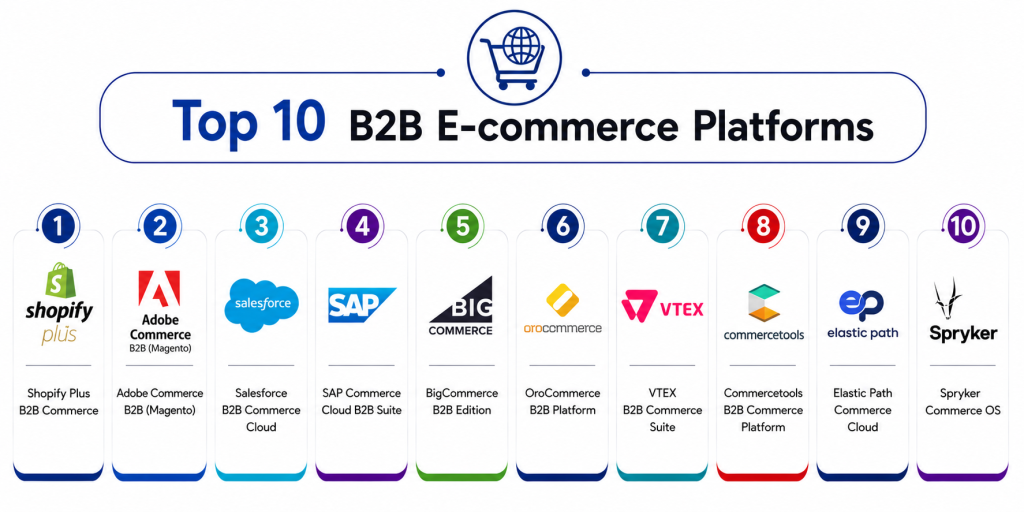
Top 10 B2B E-Commerce Platforms
1 — Adobe Commerce (Magento)
Short description: Adobe Commerce is one of the most powerful and flexible B2B e-commerce platforms, widely used by large enterprises for complex catalogs, advanced pricing rules, and highly customizable storefront experiences. It supports both B2B and B2C models at scale.
Key Features
- Advanced customer-specific pricing catalogs
- Quote management and negotiation tools
- Bulk ordering and reorder automation
- Multi-store and multi-warehouse management
- ERP integration support
- Role-based account hierarchies
- Product personalization and segmentation
Pros
- Extremely flexible and customizable
- Strong enterprise scalability
- Rich B2B feature set
- Large ecosystem and extensions
Cons
- Complex implementation
- High development cost
- Requires technical expertise
- Maintenance-heavy
Platforms / Deployment
- Web / Cloud / On-premises
Security & Compliance
- RBAC
- Encryption
- Audit logs
- Enterprise security controls
Integrations & Ecosystem
Adobe Commerce integrates widely across enterprise systems.
- SAP ERP
- Oracle ERP
- CRM systems
- Payment gateways
- APIs
Support & Community
Large global developer and enterprise support ecosystem.
2 — SAP Commerce Cloud
Short description: SAP Commerce Cloud is a highly scalable enterprise platform designed for complex global B2B operations, especially for companies already within the SAP ecosystem.
Key Features
- Customer-specific pricing and catalogs
- Advanced order management workflows
- ERP-native integration
- Quote-to-order automation
- Multi-country and multi-currency support
- Product configuration support
- B2B account hierarchies
Pros
- Deep SAP ecosystem integration
- Strong enterprise scalability
- Reliable performance at scale
- Strong data consistency
Cons
- High cost of ownership
- Complex implementation cycle
- Requires SAP expertise
- Less flexible outside SAP stack
Platforms / Deployment
- Web / Cloud / Hybrid
Security & Compliance
- RBAC
- Encryption
- Audit logs
- Enterprise governance support
Integrations & Ecosystem
- SAP S/4HANA
- SAP ERP modules
- Finance systems
- APIs
- Middleware tools
Support & Community
Enterprise SAP support ecosystem.
3 — Salesforce Commerce Cloud B2B
Short description: Salesforce Commerce Cloud is a CRM-native B2B commerce platform that connects sales, customer data, and ordering workflows into a unified ecosystem.
Key Features
- CRM-integrated B2B storefronts
- Account-based pricing models
- Contract and quote management
- Guided buying experience
- Multi-channel selling support
- Customer segmentation tools
- AI-powered recommendations
Pros
- Deep Salesforce CRM integration
- Strong personalization capabilities
- Unified sales and commerce view
- Scalable enterprise architecture
Cons
- High cost
- Salesforce dependency
- Complex setup
- Requires ecosystem alignment
Platforms / Deployment
- Web / Cloud
Security & Compliance
- RBAC
- Encryption
- Audit logs
- Enterprise compliance standards
Integrations & Ecosystem
- Salesforce CRM
- ERP systems
- Marketing tools
- Payment systems
- APIs
Support & Community
Large Salesforce enterprise ecosystem.
4 — BigCommerce B2B Edition
Short description: BigCommerce is a SaaS-based platform offering strong B2B features such as custom pricing, bulk ordering, and account-based management with faster deployment.
Key Features
- Customer group pricing
- Bulk ordering and quick reorder
- Quote request workflows
- Multi-storefront support
- ERP integrations
- API-first architecture
- Catalog management tools
Pros
- Easy to deploy
- Strong SaaS scalability
- Lower complexity than enterprise tools
- Good performance
Cons
- Limited deep customization
- Fewer advanced B2B workflows
- Dependency on apps for advanced features
- Not ideal for complex manufacturing
Platforms / Deployment
- Web / Cloud
Security & Compliance
- RBAC
- Encryption
- PCI compliance support
- Audit logs
Integrations & Ecosystem
- ERP systems
- CRM tools
- Payment gateways
- APIs
Support & Community
Strong SaaS support and partner ecosystem.
5 — Shopify Plus (B2B)
Short description: Shopify Plus provides a growing set of B2B commerce capabilities designed for hybrid B2B + D2C businesses needing speed and simplicity.
Key Features
- Company-specific pricing catalogs
- Self-serve wholesale portals
- Net payment terms support
- Bulk ordering tools
- Unified B2B + D2C storefront
- Automation workflows
- App ecosystem extensibility
Pros
- Easy to use
- Fast deployment
- Strong ecosystem
- Unified B2B and B2C platform
Cons
- Limited native B2B depth
- Requires apps for advanced workflows
- Less suited for complex manufacturing
- Customization constraints
Platforms / Deployment
- Web / Cloud
Security & Compliance
- RBAC
- Encryption
- PCI compliance
- Audit logs
Integrations & Ecosystem
- ERP systems
- CRM platforms
- Shopify apps
- Payment systems
- APIs
Support & Community
Very strong global SaaS ecosystem.
6 — OroCommerce
Short description: OroCommerce is a dedicated B2B e-commerce platform designed specifically for manufacturers, wholesalers, and distributors.
Key Features
- Built-in B2B workflow engine
- Quote management system
- Customer-specific pricing
- Account-based purchasing
- Advanced permission structures
- Multi-organization support
- ERP integration
Pros
- Built specifically for B2B
- Strong workflow customization
- Good for manufacturers
- Flexible architecture
Cons
- Smaller ecosystem
- Requires technical expertise
- UI less modern
- Implementation complexity
Platforms / Deployment
- Web / Cloud / On-premises
Security & Compliance
- RBAC
- Encryption
- Audit logs
Integrations & Ecosystem
- ERP systems
- CRM tools
- APIs
- Middleware
Support & Community
Mid-sized enterprise support ecosystem.
7 — commercetools
Short description: commercetools is a headless commerce platform designed for flexible, API-first B2B commerce implementations.
Key Features
- Headless commerce architecture
- API-first product catalog
- Custom pricing logic
- Multi-channel commerce support
- Scalable microservices architecture
- Flexible checkout flows
- Integration-friendly design
Pros
- Extremely flexible architecture
- Highly scalable
- Modern API-first design
- Ideal for custom builds
Cons
- Requires strong development team
- No out-of-the-box UI
- Complex setup
- Higher implementation effort
Platforms / Deployment
- Cloud
Security & Compliance
- RBAC
- Encryption
- Audit logs
Integrations & Ecosystem
- ERP systems
- Frontend frameworks
- Payment systems
- APIs
Support & Community
Strong developer-first ecosystem.
8 — Spryker Commerce OS
Short description: Spryker is a modular commerce platform designed for complex B2B and marketplace models.
Key Features
- Modular commerce architecture
- B2B marketplace support
- Advanced pricing engine
- Order management tools
- Multi-channel support
- Custom workflow engine
- API-driven architecture
Pros
- Highly modular
- Strong scalability
- Flexible architecture
- Good for complex ecosystems
Cons
- Requires technical expertise
- Longer implementation time
- Smaller community
- Higher cost
Platforms / Deployment
- Cloud / On-premises
Security & Compliance
- RBAC
- Encryption
- Audit logs
Integrations & Ecosystem
- ERP systems
- CRM platforms
- APIs
- Middleware
Support & Community
Enterprise-focused support model.
9 — Intershop Commerce Platform
Short description: Intershop provides enterprise-grade B2B commerce solutions with strong product catalog and order management capabilities.
Key Features
- Advanced catalog management
- Complex pricing rules
- Order management system
- Multi-channel commerce
- ERP integration
- Workflow automation
- Customer segmentation
Pros
- Strong enterprise capability
- Reliable performance
- Good B2B feature depth
- Scalable architecture
Cons
- Complex setup
- UI less modern
- Higher cost
- Requires training
Platforms / Deployment
- Cloud / On-premises
Security & Compliance
- RBAC
- Encryption
- Audit logs
Integrations & Ecosystem
- ERP systems
- CRM tools
- APIs
- Enterprise middleware
Support & Community
Enterprise-grade support.
10 — VTEX B2B Commerce Platform
Short description: VTEX is a composable commerce platform that supports B2B and B2C hybrid models with strong marketplace and order management capabilities.
Key Features
- B2B marketplace functionality
- Custom pricing and catalogs
- Order management system
- Multi-storefront support
- API-first architecture
- Workflow automation
- Omnichannel commerce
Pros
- Strong hybrid B2B + B2C support
- Fast deployment
- Flexible architecture
- Good marketplace capabilities
Cons
- Smaller enterprise footprint vs SAP
- Requires configuration effort
- Advanced features need setup
- Limited legacy integration depth
Platforms / Deployment
- Cloud
Security & Compliance
- RBAC
- Encryption
- Audit logs
Integrations & Ecosystem
- ERP systems
- CRM tools
- Payment gateways
- APIs
Support & Community
Growing global enterprise support.
Comparison Table
| Platform | Best For | Deployment | Architecture | Standout Feature | Public Rating |
|---|---|---|---|---|---|
| Adobe Commerce | Enterprise B2B | Cloud/On-prem | Monolithic | Deep customization | N/A |
| SAP Commerce Cloud | SAP enterprises | Cloud/Hybrid | Enterprise suite | ERP integration | N/A |
| Salesforce Commerce | CRM-driven B2B | Cloud | SaaS | CRM-native commerce | N/A |
| BigCommerce | Mid-market SaaS | Cloud | SaaS | Fast deployment | N/A |
| Shopify Plus | Hybrid B2B/B2C | Cloud | SaaS | Ease of use | N/A |
| OroCommerce | Pure B2B | Cloud/On-prem | B2B-focused | Workflow engine | N/A |
| commercetools | Developers | Cloud | Headless | API-first design | N/A |
| Spryker | Complex ecosystems | Cloud | Modular | Microservices architecture | N/A |
| Intershop | Enterprises | Cloud/On-prem | Monolithic | Catalog depth | N/A |
| VTEX | Composable commerce | Cloud | SaaS | Marketplace model | N/A |
Evaluation & Scoring of B2B E-Commerce Platforms
| Platform | Core | Ease | Integrations | Security | Performance | Support | Value | Weighted Total |
|---|---|---|---|---|---|---|---|---|
| Adobe Commerce | 9.5 | 7.6 | 9.3 | 9.2 | 9.2 | 9.1 | 7.8 | 8.82 |
| SAP Commerce | 9.6 | 7.3 | 9.5 | 9.4 | 9.3 | 9.2 | 7.5 | 8.83 |
| Salesforce Commerce | 9.4 | 8.0 | 9.4 | 9.3 | 9.2 | 9.1 | 8.0 | 8.90 |
| BigCommerce | 8.8 | 9.0 | 8.8 | 9.0 | 9.0 | 8.8 | 8.6 | 8.86 |
| Shopify Plus | 8.7 | 9.2 | 8.7 | 9.0 | 9.1 | 8.9 | 8.8 | 8.88 |
| OroCommerce | 9.0 | 7.8 | 8.9 | 9.1 | 9.0 | 8.8 | 8.2 | 8.66 |
| commercetools | 9.2 | 7.9 | 9.4 | 9.2 | 9.3 | 8.9 | 8.1 | 8.77 |
| Spryker | 9.1 | 7.6 | 9.3 | 9.2 | 9.2 | 8.8 | 8.0 | 8.70 |
| Intershop | 9.0 | 7.5 | 9.1 | 9.1 | 9.0 | 8.8 | 7.9 | 8.60 |
| VTEX | 8.9 | 8.4 | 9.0 | 9.0 | 9.1 | 8.9 | 8.3 | 8.73 |
Which B2B E-Commerce Platform Is Right for You?
SMB / Small Distributors
Best options: Shopify Plus, BigCommerce
- Fast setup, low complexity, SaaS convenience
Mid-Market Manufacturers
Best options: OroCommerce, VTEX, Spryker
- Strong B2B workflows with flexibility
Large Enterprises
Best options: SAP Commerce, Adobe Commerce, Salesforce Commerce
- Deep ERP/CRM integration and scalability
Developer-First Organizations
Best options: commercetools, Spryker
- API-first composable commerce architecture
Hybrid B2B + B2C Businesses
Best options: Shopify Plus, VTEX
- Unified multi-channel commerce
Budget vs Premium
- Budget: Shopify Plus, BigCommerce
- Premium: SAP Commerce, Adobe Commerce, Salesforce Commerce
Feature Depth vs Ease of Use
- Easy: Shopify Plus, BigCommerce
- Advanced: SAP Commerce, commercetools
Integrations & Scalability
Enterprise platforms dominate ERP, CRM, and supply chain integration ecosystems.
Security & Compliance
All platforms support RBAC, encryption, audit logs, and enterprise governance standards.
Frequently Asked Questions
1. What is a B2B e-commerce platform?
It is a digital system that enables businesses to sell products or services to other businesses online.
2. How is B2B different from B2C e-commerce?
B2B supports bulk orders, custom pricing, and account-based purchasing instead of individual retail sales.
3. What features are important in B2B platforms?
Custom pricing, ERP integration, quote management, and bulk ordering are key features.
4. Do B2B platforms integrate with ERP systems?
Yes, most enterprise platforms integrate with SAP, Oracle, Microsoft Dynamics, and others.
5. What is headless commerce?
It is an architecture where frontend and backend are separated for flexibility.
6. Can B2B platforms handle complex pricing?
Yes, they support tiered pricing, contract pricing, and customer-specific catalogs.
7. Are B2B platforms cloud-based?
Most modern solutions are cloud-native or hybrid deployments.
8. Who uses B2B commerce platforms?
Manufacturers, wholesalers, distributors, and enterprise procurement teams.
9. What is a quote-to-order process?
It is the workflow of generating a quote and converting it into a purchase order.
10. What is ROI of B2B commerce platforms?
ROI comes from automation, faster sales cycles, reduced errors, and improved customer experience.
Conclusion
B2B E-Commerce Platforms are the backbone of modern digital wholesale and manufacturing commerce. Platforms like SAP Commerce Cloud, Adobe Commerce, and Salesforce Commerce Cloud dominate enterprise ecosystems, while BigCommerce and Shopify Plus provide faster deployment for mid-market and hybrid businesses. Emerging composable solutions like commercetools and Spryker enable highly flexible architectures for digital-first enterprises. The right choice depends on complexity, integration needs, and scalability requirements. Businesses should prioritize ERP integration, pricing flexibility, and workflow automation to maximize long-term growth in B2B commerce.

This article gives a well-structured overview of leading B2B e-commerce platforms and clearly explains how they support complex business buying needs like bulk orders, custom pricing, and system integrations. It also helps understand how different platforms suit different business sizes and requirements.
Enterprise B2B commerce platforms are often evaluated for their catalog and ordering capabilities, but resilience under changing business conditions is equally important. Sudden inventory fluctuations, supplier disruptions, or regional pricing updates can expose weaknesses in synchronization across commerce, ERP, and fulfillment systems. Covering event-driven integration patterns, inventory consistency, and failure recovery strategies would provide readers with a more realistic view of operating B2B commerce at scale.
One factor that often determines the success of a B2B e-commerce platform is how well it supports evolving buyer behavior. Business customers increasingly expect personalized product recommendations, self-service procurement, and seamless purchasing across desktop and mobile devices. Exploring strategies for improving buyer adoption, reducing purchase friction, and using behavioral insights to optimize the customer journey would make the comparison even more practical for organizations planning long-term digital commerce initiatives.