Introduction
Procure-to-Pay (P2P) Suites are end-to-end procurement platforms that manage the entire purchasing lifecycle—from requesting goods and services to final invoice payment and reconciliation. These systems unify procurement, finance, accounts payable, and supplier management into a single digital workflow, helping organizations improve spend control, compliance, visibility, and automation.
In modern enterprises, P2P suites are critical because they eliminate manual procurement bottlenecks, reduce maverick spending, and enable real-time financial insights. With increasing global supply chain complexity and stricter financial governance requirements, P2P platforms are becoming AI-driven, cloud-native, and deeply integrated with ERP ecosystems.
Real-world use cases include:
- Automated purchase requisitions and approvals
- Purchase order creation and supplier management
- Invoice matching and accounts payable automation
- Spend analytics and budget control
- Supplier onboarding and contract compliance tracking
Key evaluation criteria for buyers:
- End-to-end workflow automation (requisition → pay)
- ERP integration depth (SAP, Oracle, etc.)
- Invoice matching and AP automation accuracy
- Supplier management capabilities
- AI-driven spend analytics and forecasting
- Compliance and audit readiness
- User experience and mobile support
- Global scalability and multi-entity support
- API flexibility and ecosystem integration
- Deployment model (cloud vs hybrid vs on-prem)
Best for: Large enterprises, procurement-heavy organizations, global finance teams, manufacturing, retail, healthcare, and public sector enterprises.
Not ideal for: Very small businesses with low procurement volume or companies that only need basic expense tracking tools.
Key Trends in Procure-to-Pay (P2P) Suites
- AI-driven invoice matching and fraud detection
- Guided buying experiences (consumer-like procurement UX)
- Touchless AP automation and autonomous invoice processing
- Real-time spend visibility dashboards
- Supplier risk scoring and ESG tracking
- Integration with ERP-first architectures (SAP, Oracle, Microsoft)
- Embedded analytics and predictive procurement insights
- Mobile-first procurement approvals and workflows
- API-first and composable procurement ecosystems
- Expansion of source-to-pay convergence (P2P + sourcing + contracts)
How We Selected These Tools
The tools in this list were selected based on:
- Market leadership and enterprise adoption
- Depth of P2P workflow coverage (requisition → payment)
- Invoice automation and matching capabilities
- ERP integration strength
- Supplier management and procurement intelligence
- AI and analytics maturity
- Compliance, audit, and governance capabilities
- Scalability across global enterprises
- API ecosystem and extensibility
- Customer fit across mid-market and enterprise segments
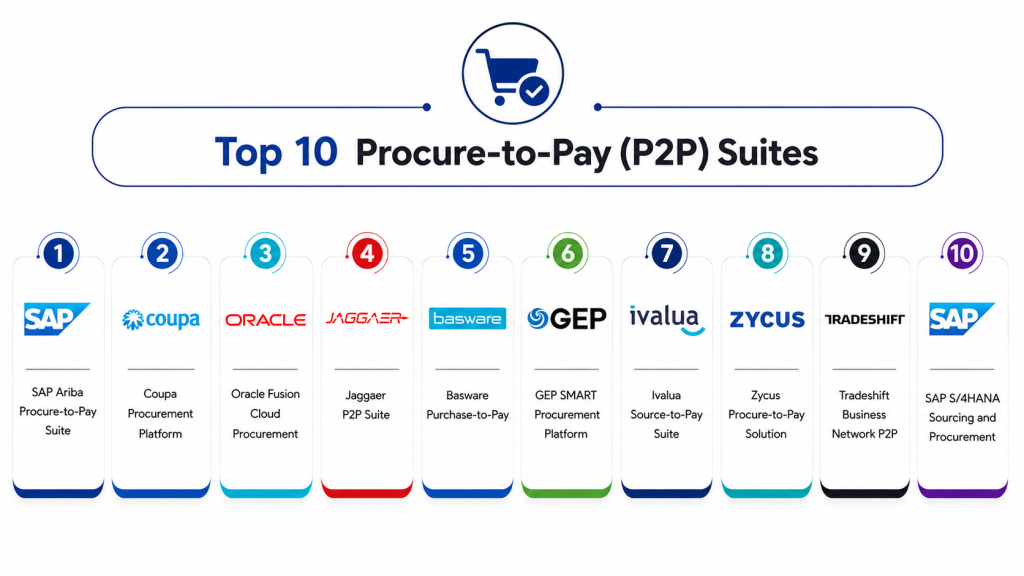
Top 10 Procure-to-Pay (P2P) Suites
1 — SAP Ariba Procure-to-Pay Suite
Short description: SAP Ariba is one of the most widely adopted global P2P suites, offering end-to-end procurement, supplier management, and invoice automation deeply integrated with SAP ERP systems.
Key Features
- End-to-end procurement workflow automation
- Supplier lifecycle management
- Invoice reconciliation and AP automation
- Guided buying and catalog management
- Contract compliance tracking
- Spend visibility dashboards
- Global supplier network integration
Pros
- Strong SAP ecosystem integration
- Massive global supplier network
- Highly scalable enterprise solution
- Advanced compliance and controls
Cons
- Complex implementation
- High cost for smaller organizations
- Requires SAP expertise
- Customization can be heavy
Platforms / Deployment
- Web / Cloud / Hybrid
Security & Compliance
- RBAC
- Encryption
- Audit logs
- Enterprise-grade compliance controls
Integrations & Ecosystem
Deep integration with SAP and enterprise ERP ecosystems.
- SAP S/4HANA
- SAP Fieldglass
- ERP systems
- Finance tools
- APIs
Support & Community
Strong global enterprise support and consulting ecosystem.
2 — Coupa Business Spend Management (P2P Suite)
Short description: Coupa provides a leading AI-driven P2P and spend management platform designed to unify procurement, invoicing, and expense control into one intelligent system.
Key Features
- AI-powered spend analytics
- Procurement-to-payment automation
- Invoice matching and AP automation
- Supplier management tools
- Guided buying experience
- Budget controls and forecasting
- Real-time dashboards
Pros
- Strong AI-driven insights
- Excellent UX and usability
- Unified spend management approach
- Fast innovation cycles
Cons
- Premium pricing model
- Enterprise focus
- Requires change management
- Complex backend configuration
Platforms / Deployment
- Web / Cloud
Security & Compliance
- RBAC
- Encryption
- Audit logs
- Compliance-ready workflows
Integrations & Ecosystem
Integrates widely across ERP and financial systems.
- SAP
- Oracle
- Workday
- APIs
- Payment systems
Support & Community
Strong enterprise support and active user community.
3 — Oracle Fusion Cloud Procurement
Short description: Oracle Fusion Procurement is a comprehensive P2P suite designed for enterprises already using Oracle Cloud ERP, offering procurement automation and financial integration.
Key Features
- End-to-end procurement lifecycle
- Supplier qualification and onboarding
- Invoice processing and AP automation
- Procurement analytics dashboards
- Contract lifecycle integration
- Spend classification and reporting
- Policy enforcement automation
Pros
- Deep Oracle ERP integration
- Strong financial governance features
- Scalable enterprise architecture
- Good compliance controls
Cons
- Oracle ecosystem dependency
- Complex implementation
- High cost
- Requires training
Platforms / Deployment
- Web / Cloud
Security & Compliance
- RBAC
- Encryption
- Audit logs
- Enterprise governance controls
Integrations & Ecosystem
- Oracle ERP Cloud
- Oracle Financials
- BI tools
- APIs
Support & Community
Strong enterprise Oracle support ecosystem.
4 — Jaggaer ONE Procure-to-Pay
Short description: Jaggaer ONE is a procurement-focused P2P suite offering spend management, sourcing, and supplier collaboration tools for enterprises and public sector organizations.
Key Features
- Procure-to-pay automation
- Supplier management portal
- Invoice and PO matching
- Spend analytics
- Contract lifecycle management
- Guided procurement workflows
- Risk and compliance tracking
Pros
- Strong procurement specialization
- Good public sector adoption
- Flexible workflows
- Strong supplier collaboration tools
Cons
- UI complexity
- Implementation effort required
- Integration planning needed
- Not lightweight
Platforms / Deployment
- Web / Cloud
Security & Compliance
- RBAC
- Encryption
- Audit logs
Integrations & Ecosystem
- ERP systems
- Finance platforms
- Supplier networks
- APIs
Support & Community
Strong procurement-focused enterprise support.
5 — Basware P2P Suite
Short description: Basware offers a highly automated P2P platform focused on invoice automation, AP efficiency, and procurement optimization.
Key Features
- Touchless invoice processing
- Purchase order automation
- Supplier onboarding tools
- Spend analytics
- e-invoicing compliance
- Workflow automation
- Financial reporting
Pros
- Strong invoice automation
- High AP efficiency
- Good global e-invoicing support
- Reliable enterprise platform
Cons
- Limited sourcing depth
- Integration complexity
- Enterprise pricing
- Learning curve
Platforms / Deployment
- Web / Cloud
Security & Compliance
- RBAC
- Encryption
- Audit logs
Integrations & Ecosystem
- ERP systems
- Accounting platforms
- Tax compliance systems
- APIs
Support & Community
Strong global enterprise support.
6 — Ivalua Procure-to-Pay Suite
Short description: Ivalua provides a highly configurable P2P suite that supports procurement, supplier management, and spend analytics in a unified platform.
Key Features
- End-to-end P2P workflow
- Supplier lifecycle management
- Contract management
- Invoice automation
- Spend analytics dashboards
- Risk and compliance tracking
- Procurement orchestration
Pros
- Highly configurable platform
- Strong supplier management
- Unified procurement suite
- Good analytics capability
Cons
- Complex configuration
- Requires implementation expertise
- Higher cost tier
- UI learning curve
Platforms / Deployment
- Web / Cloud
Security & Compliance
- RBAC
- Encryption
- Audit logs
Integrations & Ecosystem
- ERP systems
- Finance tools
- Procurement apps
- APIs
Support & Community
Strong enterprise implementation support.
7 — GEP SMART P2P Platform
Short description: GEP SMART is a unified procurement platform that integrates sourcing, procurement, and P2P into a single AI-driven system.
Key Features
- AI-driven procurement automation
- Invoice and PO management
- Supplier collaboration tools
- Spend analysis dashboards
- Contract lifecycle integration
- Guided buying workflows
- Procurement intelligence
Pros
- Unified source-to-pay capability
- Strong AI features
- Modern UX
- Scalable enterprise platform
Cons
- Complex onboarding
- Premium pricing
- Requires structured data
- Enterprise-focused
Platforms / Deployment
- Web / Cloud
Security & Compliance
- RBAC
- Encryption
- Audit logs
Integrations & Ecosystem
- ERP systems
- Finance platforms
- APIs
- Analytics tools
Support & Community
Strong global enterprise procurement support.
8 — Zycus Procure-to-Pay Suite
Short description: Zycus provides an AI-powered procurement suite that includes P2P automation, AP processing, and spend analytics for mid-to-large enterprises.
Key Features
- Procure-to-pay automation
- AP invoice processing
- Spend analytics
- Supplier management
- Contract integration
- Workflow automation
- Compliance tracking
Pros
- Strong AI procurement features
- Good mid-market fit
- Easy analytics dashboards
- Strong automation capabilities
Cons
- Integration effort needed
- UI modernization still evolving
- Limited ecosystem vs SAP/Oracle
- Customization required
Platforms / Deployment
- Web / Cloud
Security & Compliance
- RBAC
- Encryption
- Audit logs
Integrations & Ecosystem
- ERP systems
- Finance tools
- APIs
- Procurement systems
Support & Community
Strong enterprise support and implementation services.
9 — Proactis P2P Suite
Short description: Proactis offers a flexible P2P suite focused on procurement control, spend visibility, and invoice automation for mid-market organizations.
Key Features
- Purchase requisition automation
- Invoice matching
- Spend control dashboards
- Supplier management
- Budget tracking
- Approval workflows
- Reporting tools
Pros
- Strong mid-market focus
- Easy to deploy
- Good cost control features
- Flexible workflows
Cons
- Limited enterprise depth
- Smaller ecosystem
- Basic AI capabilities
- Reporting limitations
Platforms / Deployment
- Web / Cloud
Security & Compliance
- RBAC
- Encryption
- Audit logs
Integrations & Ecosystem
- ERP systems
- Accounting tools
- APIs
Support & Community
Mid-market focused support structure.
10 — Precoro Procure-to-Pay Platform
Short description: Precoro is a user-friendly P2P solution designed for SMB and mid-market organizations needing procurement automation and spend control.
Key Features
- Purchase requisitions and approvals
- Invoice management
- Budget tracking
- Supplier database
- Spend analytics
- Workflow automation
- Reporting dashboards
Pros
- Easy to use
- Fast implementation
- Affordable for SMBs
- Clean UI
Cons
- Limited enterprise capabilities
- Smaller integration ecosystem
- Basic advanced analytics
- Not suited for large global enterprises
Platforms / Deployment
- Web / Cloud
Security & Compliance
- RBAC
- Encryption
- Audit logs
Integrations & Ecosystem
- ERP systems
- Accounting tools
- APIs
Support & Community
Good SMB-focused support and onboarding.
Comparison Table
| Tool | Best For | Platform | Deployment | Standout Feature | Public Rating |
|---|---|---|---|---|---|
| SAP Ariba | Enterprise procurement | Web | Cloud/Hybrid | Global supplier network | N/A |
| Coupa | AI spend management | Web | Cloud | AI-driven insights | N/A |
| Oracle Fusion | ERP-integrated procurement | Web | Cloud | Oracle ecosystem integration | N/A |
| Jaggaer ONE | Procurement-heavy orgs | Web | Cloud | Supplier collaboration | N/A |
| Basware | AP automation | Web | Cloud | Invoice automation | N/A |
| Ivalua | Configurable enterprise P2P | Web | Cloud | Flexible workflows | N/A |
| GEP SMART | Unified source-to-pay | Web | Cloud | AI procurement suite | N/A |
| Zycus | Mid-large enterprises | Web | Cloud | AI automation | N/A |
| Proactis | Mid-market control | Web | Cloud | Spend visibility | N/A |
| Precoro | SMB procurement | Web | Cloud | Ease of use | N/A |
Evaluation & Scoring of P2P Suites
| Tool | Core | Ease | Integrations | Security | Performance | Support | Value | Weighted Total |
|---|---|---|---|---|---|---|---|---|
| SAP Ariba | 9.6 | 7.4 | 9.5 | 9.4 | 9.3 | 9.2 | 7.6 | 8.85 |
| Coupa | 9.5 | 8.2 | 9.4 | 9.3 | 9.2 | 9.1 | 8.0 | 8.96 |
| Oracle Fusion | 9.4 | 7.5 | 9.3 | 9.3 | 9.2 | 9.0 | 7.7 | 8.77 |
| Jaggaer | 9.1 | 7.8 | 9.1 | 9.0 | 9.0 | 8.9 | 8.0 | 8.72 |
| Basware | 9.0 | 8.0 | 9.0 | 9.1 | 9.0 | 8.9 | 8.2 | 8.78 |
| Ivalua | 9.2 | 7.7 | 9.2 | 9.1 | 9.1 | 8.9 | 7.9 | 8.74 |
| GEP SMART | 9.3 | 7.8 | 9.2 | 9.2 | 9.2 | 9.0 | 7.8 | 8.78 |
| Zycus | 8.9 | 8.2 | 8.8 | 8.9 | 8.8 | 8.7 | 8.3 | 8.61 |
| Proactis | 8.4 | 8.6 | 8.5 | 8.7 | 8.5 | 8.6 | 8.4 | 8.51 |
| Precoro | 8.2 | 9.0 | 8.3 | 8.6 | 8.3 | 8.4 | 8.8 | 8.49 |
Which Procure-to-Pay Suite Is Right for You?
SMB / Small Teams
Best options: Precoro, Proactis
- Easy setup, low complexity, cost-effective
Mid-Market Enterprises
Best options: Zycus, Ivalua, Basware
- Balanced automation and scalability
Large Enterprises
Best options: SAP Ariba, Coupa, Oracle Fusion
- Deep ERP integration and global scale
Procurement-Heavy Organizations
Best options: Jaggaer, GEP SMART
- Strong sourcing + procurement orchestration
Budget vs Premium
- Budget: Precoro, Proactis
- Premium: SAP Ariba, Coupa, Oracle Fusion
Feature Depth vs Ease of Use
- Easy: Precoro, Proactis
- Advanced: SAP Ariba, Ivalua, Coupa
Integrations & Scalability
Enterprise suites dominate ERP, finance, and supplier ecosystem integration.
Security & Compliance
All platforms support RBAC, encryption, audit logs, and enterprise procurement governance.
Frequently Asked Questions
1. What is a Procure-to-Pay (P2P) suite?
It is a software platform that manages procurement from purchase request to invoice payment in a unified system.
2. Why are P2P suites important?
They improve efficiency, reduce manual errors, ensure compliance, and provide real-time spend visibility.
3. What is included in P2P?
Requisitioning, purchase orders, supplier management, invoicing, and payment processing.
4. Who uses P2P systems?
Finance teams, procurement departments, AP teams, and enterprise operations leaders.
5. Do P2P tools integrate with ERP systems?
Yes, most platforms integrate deeply with SAP, Oracle, Microsoft, and other ERP systems.
6. What is invoice matching?
It is the process of matching invoices with purchase orders and receipts for accuracy.
7. Are P2P systems cloud-based?
Most modern solutions are cloud-native or hybrid deployments.
8. What is guided buying?
It is a user-friendly procurement interface that helps employees purchase from approved vendors.
9. What is ROI of P2P suites?
ROI comes from cost savings, reduced errors, faster processing, and improved compliance.
10. What is the difference between P2P and S2P?
P2P focuses on procurement to payment, while S2P includes sourcing before procurement.
Conclusion
Procure-to-Pay (P2P) Suites are essential for organizations seeking end-to-end visibility and control over procurement and financial workflows. Platforms like SAP Ariba, Coupa, and Oracle Fusion dominate enterprise environments with deep integration and automation, while tools like Precoro, Proactis, and Zycus provide accessible solutions for mid-market and SMB segments. The right choice depends on organizational scale, ERP ecosystem, automation needs, and procurement complexity. Companies should prioritize integration capability, user experience, and scalability to maximize long-term procurement efficiency.

This article gives a detailed explanation of source-to-pay suites and how they simplify procurement, sourcing, and payment workflows in one platform. It also helps readers understand how these tools improve efficiency, supplier collaboration, and overall spend management.
Procure-to-pay platforms are often assessed on workflow automation and invoice handling, but the real operational complexity appears when policy enforcement has to stay consistent across fast-changing business units. In many organizations, “policy drift” between procurement rules and actual execution creates maverick spend and approval delays that no tool can fix on its own. Strengthening real-time governance enforcement, exception visibility, and cross-system synchronization with ERP and finance tools is what ultimately determines whether a P2P suite improves control or just digitizes existing inefficiencies.
Procure-to-Pay initiatives often emphasize automation, but user adoption across the organization is equally critical to achieving lasting results. If requesters, approvers, and finance teams find the purchasing process too complex, they may bypass it altogether, leading to off-contract purchases and reduced compliance. Including best practices for intuitive user experiences, guided buying, and change management would give readers a more complete understanding of how P2P suites drive both operational efficiency and organization-wide adoption.