Introduction
Quote‑to‑Cash (QTC) platforms are end‑to‑end revenue systems that support a company’s entire commercial lifecycle — from configuring products and pricing (Configure), creating quotes (Quote), generating contracts (Contract), capturing orders (Order), managing revenue (Revenue), and billing customers (Cash). In plain English: QTC is the digital engine that takes a sales opportunity all the way through to recognized revenue and payment collection.
In the digital economy, QTC platforms matter because they eliminate manual handoffs, reduce revenue leakage, enforce governance controls, and accelerate deal cycles. Modern sales models — subscription‑based pricing, usage/consumption billing, renewals, and multi‑entity contracting — require intelligent, automated systems to handle complexity with accuracy.
Real‑world use cases include:
- Configuring complex product bundles with dynamic pricing
- Automating quote generation with discounting rules
- Generating legally compliant contracts and approvals
- Tracking renewals and amendments
- Supporting subscription, usage, and hybrid billing models
- Ensuring accurate revenue recognition and compliance
- Reducing days‑sales‑outstanding (DSO) by automating invoicing
Key evaluation criteria:
- Product configuration and dynamic pricing support
- Quote accuracy and approval workflows
- Contract generation and digital signatures
- Order management and fulfillment linkage
- Billing and payment automation
- Revenue recognition and compliance (ASC 606 / IFRS 15)
- Integration with CRM, ERP, billing, and finance systems
- Reporting, analytics, and pipeline forecasting
- Multi‑entity and multi‑currency support
- Security, governance controls, and auditability
Best for: SaaS companies, subscription businesses, enterprises with complex pricing, finance and revenue operations teams, and organizations scaling digital revenue.
Not ideal for: small/vintage businesses with only fixed one‑time pricing or no recurring revenue.
Key Trends in Quote‑to‑Cash Platforms
- Unification of CPQ + CLM + Billing + Revenue Recognition
- AI‑driven pricing optimization and deal guidance
- Support for hybrid (subscription + usage + one‑time) models
- Real‑time revenue visibility and forecasting dashboards
- Integration of digital contracting and e‑signature flows
- Automation of renewals, amendments, and upsell motions
- API‑first platforms supporting extensibility
- Increased adoption of cloud and microservices architecture
- Embedded analytics for revenue leakage detection
- Intelligent approval workflows with risk scoring
How We Selected These Tools (Methodology)
- Comprehensiveness of commercial lifecycle coverage
- Support for subscription, usage, and hybrid models
- Integration maturity with CRM and ERP systems
- Revenue recognition and financial compliance support
- Automation of workflows across quote, contract, and cash stages
- Analytics strength and forecasting capabilities
- Scalability for enterprise revenue operations
- Customization and governance controls
- API and extensibility features
- Vendor market adoption and roadmap commitment
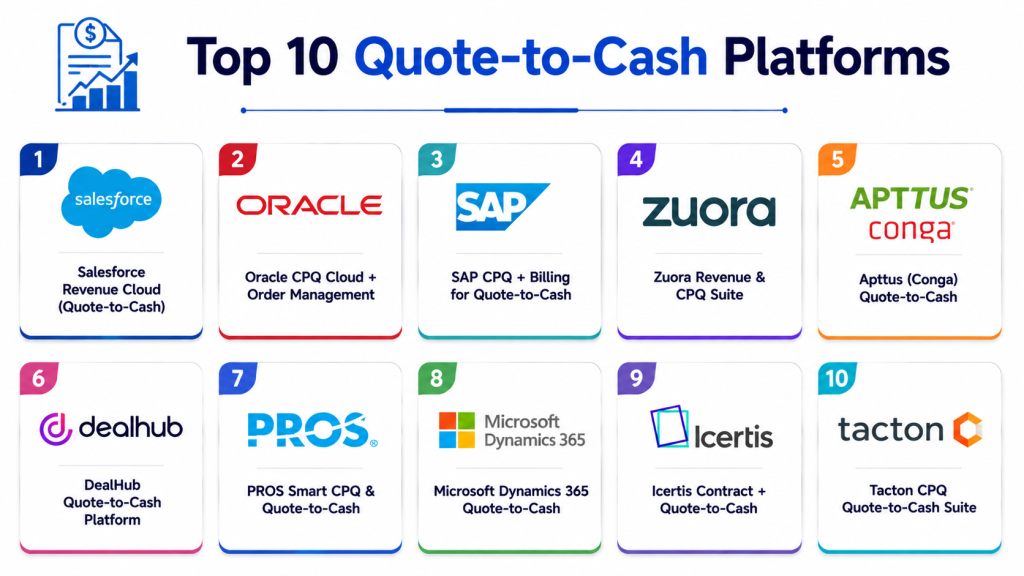
Top 10 Quote‑to‑Cash Platforms
#1 — Salesforce Revenue Cloud (CPQ + Billing)
Short description: Salesforce Revenue Cloud combines Salesforce CPQ, Billing, and Revenue Recognition to deliver a unified quote‑to‑cash automation platform fully integrated with Salesforce CRM and ecosystem.
Key Features
- Product configuration and pricing rules
- Contract and quote generation
- Automated billing and invoicing
- Subscription billing and renewals
- Revenue recognition automation
- Approval workflows
- Salesforce CRM native reporting
Pros
- Deep Salesforce ecosystem integration
- End‑to‑end QTC automation
- Excellent automation and governance
- Strong analytics and pipeline visibility
Cons
- High enterprise cost
- Requires Salesforce ecosystem expertise
- Complex implementation for large deals
- Admin overhead
Platforms / Deployment
- Web
- Cloud
Security & Compliance
- SSO
- MFA
- RBAC
- Encryption
- Audit logs
Integrations & Ecosystem
- Salesforce CRM
- ERP systems
- Billing systems
- Finance platforms
- APIs
Support & Community
Strong global enterprise support ecosystem.
#2 — Oracle NetSuite SuiteBilling + CPQ
Short description: Oracle NetSuite offers a unified QTC suite combining NetSuite CPQ, SuiteBilling, and revenue recognition modules within a single cloud ERP ecosystem.
Key Features
- Configurable product catalog
- Pricing rules and quotes
- Subscription and recurring billing
- Invoice automation
- Revenue recognition
- Multi‑currency support
- Order management
Pros
- ERP‑native QTC platform
- Strong financial controls
- Good mid‑market scalability
- No middleware required
Cons
- Less powerful CPQ than specialized systems
- Implementation expertise required
- Customization can be complex
- UI can feel dated
Platforms / Deployment
- Web
- Cloud
Security & Compliance
- SSO
- MFA
- RBAC
- Encryption
- Audit trails
Integrations & Ecosystem
- NetSuite ERP
- CRM systems
- Finance tools
- APIs
Support & Community
Large mid‑market ERP support ecosystem.
#3 — SAP Sales Cloud + SAP Billing
Short description: SAP’s QTC suite (Sales Cloud, CPQ, Billing, Revenue Recognition) provides enterprise support for quote‑to‑cash processes within the SAP ecosystem.
Key Features
- Product and pricing configuration
- Quote and order management
- Subscription and contract billing
- Revenue accounting
- Analytics dashboards
- Approval workflows
- ERP linkage
Pros
- Strong integration with SAP S/4HANA
- Enterprise scalability
- Global compliance support
- Rich finance reporting
Cons
- High implementation cost
- Requires SAP expertise
- Customization complexity
- Longer deployment cycles
Platforms / Deployment
- Web
- Cloud / Hybrid
Security & Compliance
- SSO
- MFA
- RBAC
- Encryption
- Enterprise governance
Integrations & Ecosystem
- SAP ERP
- CRM systems
- Finance and BI tools
- APIs
Support & Community
Robust global enterprise SAP ecosystem.
#4 — Zuora Platform
Short description: Zuora is a subscription‑centric QTC platform designed to manage complex recurring billing, invoicing, and revenue operations at scale.
Key Features
- Usage and subscription billing
- Product catalog and pricing engine
- Quote and order automation
- Revenue recognition integration
- Subscription lifecycle management
- Analytics and forecasting
- API‑first extensibility
Pros
- Best‑in‑class subscription billing
- Strong usage model support
- Flexible API‑driven architecture
- Scalable for global SaaS
Cons
- Requires integration with CRM/ERP
- Premium pricing for scale
- Implementation expertise required
- Focused primarily on subscription models
Platforms / Deployment
- Web
- Cloud
Security & Compliance
- SSO
- MFA
- RBAC
- Encryption
- Audit logging
Integrations & Ecosystem
- CRM systems
- ERP tools
- Billing partners
- Finance platforms
- APIs
Support & Community
Large subscription billing community.
#5 — Apttus Quote‑to‑Cash (now part of Conga)
Short description: Apttus (Conga) delivers a robust enterprise QTC platform with strong CPQ, contract management, and billing components.
Key Features
- Product configuration and pricing
- Contract lifecycle automation
- Quote generation
- Billing orchestration
- Revenue operations
- Approval workflows
- Analytics
Pros
- Deep enterprise feature set
- Strong AI pricing assist
- Contract automation
- Good governance controls
Cons
- Complex implementation
- Higher enterprise cost
- ERP integration required
- UI complexity
Platforms / Deployment
- Web
- Cloud
Security & Compliance
- SSO
- MFA
- RBAC
- Encryption
- Audit logs
Integrations & Ecosystem
- ERP systems
- CRM tools
- Finance platforms
- APIs
Support & Community
Enterprise customer support.
#6 — Chargebee Billing & Revenue Operations
Short description: Chargebee focuses on subscription QTC with billing, invoicing, revenue recognition, and lifecycle automation for SaaS and digital businesses.
Key Features
- Subscription billing
- Quote and checkout flows
- Revenue recognition
- Usage‑based pricing
- Renewals and amendments
- Portal support
- API extensibility
Pros
- Strong SaaS subscription focus
- Fast deployment
- Flexible pricing models
- Good developer support
Cons
- Not full CPQ native
- ERP integration needed for finance teams
- Limited enterprise CRM linkage
- Smaller ecosystem
Platforms / Deployment
- Web
- Cloud
Security & Compliance
- SSO
- MFA
- RBAC
- Encryption
Integrations & Ecosystem
- CRM tools
- ERP systems
- Payment gateways
- APIs
Support & Community
Growing global mid‑market support.
#7 — Odoo Sales + Invoicing + Accounting
Short description: Odoo provides a modular open‑source ERP that includes QTC capabilities with sales quoting, invoicing, subscription billing, and revenue tracking.
Key Features
- Sales quote generation
- Invoicing and billing
- Subscription module
- Product catalog
- Revenue reports
- Workflow automation
- API integration
Pros
- Open‑source flexibility
- Affordable entry point
- Unified platform modules
- Fast setup
Cons
- Less enterprise feature depth
- Customization needed for large orgs
- Not specialized QTC module
- Smaller global support
Platforms / Deployment
- Web
- Cloud / On‑prem
Security & Compliance
- RBAC
- MFA
- Encryption
Integrations & Ecosystem
- CRM systems
- ERP modules
- Billing tools
- APIs
Support & Community
Strong open‑source community and partner network.
#8 — RevOps Platform (Model N)
Short description: Model N provides enterprise revenue management and Quote‑to‑Cash capabilities tailored for life sciences, high tech, and complex pricing industries.
Key Features
- CPQ and contract management
- Billing orchestration
- Revenue management
- Rebate and incentive modules
- Analytics and compliance
- Order management
- Pricing governance
Pros
- Industry‑specific depth
- Strong revenue compliance
- Good analytics
- Enterprise scalability
Cons
- High implementation cost
- Requires industry expertise
- Integration planning needed
- Complex workflow setup
Platforms / Deployment
- Web
- Cloud
Security & Compliance
- SSO
- MFA
- RBAC
- Encryption
- Audit logs
Integrations & Ecosystem
- ERP tools
- CRM systems
- Finance platforms
- APIs
Support & Community
Industry‑specific support programs.
#9 — Aria Systems
Short description: Aria provides QTC capabilities focused on subscription and usage monetization with strong rating and billing engines.
Key Features
- Usage and subscription billing
- Rating and charge modeling
- Quote generation
- Revenue lifecycle workflows
- API ecosystem
- Reconciliation tools
- Forecasting dashboards
Pros
- Powerful rating engine
- Scalable for high usage industries
- Good API support
- Flexible pricing models
Cons
- Not full CPQ suite
- Integration effort required
- Smaller ecosystem
- Requires expertise
Platforms / Deployment
- Web
- Cloud
Security & Compliance
- SSO
- MFA
- RBAC
- Encryption
Integrations & Ecosystem
- CRM systems
- ERP tools
- Billing partners
- APIs
Support & Community
Growing enterprise support.
#10 — Zuora CPQ (Zuora CPQ + Billing)
Short description: Zuora CPQ extends core Zuora billing into the quote space to provide a more complete QTC experience focused on subscription sales.
Key Features
- Product catalog management
- Quote generation
- Pricing rules
- Subscription billing
- Renewals automation
- Revenue recognition
- Analytics dashboards
Pros
- Subscription‑first CPQ
- Tight billing linkage
- Flexible pricing
- Scalable SaaS model
Cons
- Best with Zuora billing
- Not standalone enterprise CPQ
- Requires CRM integration
- Smaller ecosystem than leaders
Platforms / Deployment
- Web
- Cloud
Security & Compliance
- SSO
- MFA
- RBAC
- Encryption
Integrations & Ecosystem
- CRM systems
- ERP partners
- Billing tools
- APIs
Support & Community
Zuora customer success support.
Comparison Table
| Tool Name | Best For | Platform(s) Supported | Deployment | Standout Feature | Public Rating |
|---|---|---|---|---|---|
| Salesforce Revenue Cloud | Enterprise revenue ops | Web | Cloud | CRM‑native QTC | N/A |
| Oracle NetSuite SuiteBilling | Mid‑market ERP‑centric | Web | Cloud | ERP‑native QTC | N/A |
| SAP Sales + Billing | Enterprise | Web | Cloud/Hybrid | Global compliance | N/A |
| Zuora Platform | Subscription monetization | Web | Cloud | Subscription billing | N/A |
| Apttus/Conga QTC | Enterprise CPQ focus | Web | Cloud | CPQ + contract depth | N/A |
| Chargebee | SaaS revenue ops | Web | Cloud | Subscription billing | N/A |
| Odoo ERP | SMB modular QTC | Web | Cloud/On‑prem | Open‑source flexibility | N/A |
| Model N RevOps | Complex industries | Web | Cloud | Industry pricing depth | N/A |
| Aria Systems | Usage monetization | Web | Cloud | Rating engine | N/A |
| Zuora CPQ | SaaS quoting | Web | Cloud | Subscription CPQ | N/A |
Evaluation & Scoring of Quote‑to‑Cash Platforms
| Tool Name | Core (25%) | Ease (15%) | Integrations (15%) | Security (10%) | Performance (10%) | Support (10%) | Value (15%) | Weighted Total |
|---|---|---|---|---|---|---|---|---|
| Salesforce Revenue Cloud | 10 | 7 | 10 | 10 | 9 | 9 | 7 | 8.6 |
| Oracle NetSuite | 9 | 8 | 9 | 9 | 9 | 9 | 8 | 8.6 |
| SAP Sales + Billing | 9 | 7 | 10 | 10 | 10 | 9 | 7 | 8.5 |
| Zuora Platform | 9 | 8 | 9 | 9 | 9 | 9 | 8 | 8.6 |
| Apttus/Conga | 9 | 7 | 10 | 10 | 9 | 9 | 7 | 8.5 |
| Chargebee | 8 | 9 | 8 | 9 | 8 | 8 | 9 | 8.2 |
| Odoo ERP | 6 | 9 | 7 | 8 | 7 | 8 | 9 | 7.9 |
| Model N | 9 | 7 | 9 | 10 | 9 | 9 | 7 | 8.3 |
| Aria Systems | 8 | 8 | 8 | 9 | 8 | 8 | 8 | 8.1 |
| Zuora CPQ | 8 | 8 | 8 | 9 | 8 | 8 | 8 | 8.1 |
Which Quote‑to‑Cash Platform Is Right for You?
Mid‑Market Subscription Businesses
Best choices:
- Zuora Platform
- Oracle NetSuite SuiteBilling
- Chargebee
Focus: subscription billing and revenue lifecycle.
Enterprise Revenue Operations
Best choices:
- Salesforce Revenue Cloud
- SAP Sales + Billing
- Apttus/Conga QTC
Focus: deep commercial lifecycle and governance.
Subscription‑Centric SaaS
Best choices:
- Zuora Platform
- Zuora CPQ
- Chargebee
Focus: subscription and usage models.
Complex Pricing Industries
Best choices:
- Model N RevOps
- Apttus/Conga QTC
Focus: rebates, incentives, and industry pricing logic.
SMB and Modular Needs
Best choices:
- Odoo ERP
- Chargebee
Focus: low entry costs and modular approach.
Budget vs Premium Platforms
- Budget/mid: Odoo, Chargebee
- Premium/enterprise: Salesforce, SAP, Oracle, Apttus/Conga
Integration & Scalability
Best ecosystems:
- Salesforce ecosystem
- ERP ecosystems (NetSuite, SAP)
- API‑first platforms (Zuora, Aria)
Security & Compliance Needs
All enterprise QTC platforms must support:
- SSO
- MFA
- RBAC
- Encryption
- Audit logs
Frequently Asked Questions
1‑ What is a quote‑to‑cash platform?
It is software that automates the entire revenue lifecycle from pricing to cash collection.
2‑ Do QTC systems include billing?
Yes, they include billing and revenue recognition functions.
3‑ Are QTC platforms cloud‑based?
Most modern systems are cloud‑native.
4‑ Do they support subscriptions?
Yes, subscription models are a core use case.
5‑ Can QTC systems integrate with CRM?
Yes — CRM integration is essential for sales workflows.
6‑ What is revenue recognition?
It’s the accounting process that matches revenue with delivery obligations (ASC606/IFRS15).
7‑ Do they automate renewals?
Yes, many include automated renewal and amendment workflows.
8‑ Are quoting and contracts included?
Yes, QTC systems generate quotes and contracts.
9‑ What is the biggest benefit?
Faster deal cycles and reduced revenue leakage.
10‑ Who uses QTC platforms?
SaaS, subscription businesses, enterprises, finance teams, and revenue operations.
Conclusion
Quote‑to‑Cash platforms are critical infrastructure for any organization that sells complex products, subscriptions, or services at scale. They streamline sales cycles, improve revenue governance, and automate billing and revenue recognition. Platforms like Salesforce Revenue Cloud, Oracle NetSuite, and Zuora provide enterprise‑scale capabilities, while Chargebee and Odoo offer flexible options for mid‑market or modular needs. The right QTC platform depends on pricing complexity, revenue model, and integration needs. Starting with a pilot ensures effective adoption and measurable revenue acceleration.

This article explains the quote-to-cash process in a very clear and practical way, especially how it connects sales, contracts, and billing into one smooth flow. It makes the concept easy to understand for business and finance readers.
This article provides a very clear and practical overview of quote-to-cash platforms with useful comparisons and easy explanations. The structured format made it simple to understand the strengths of each solution.
Quote-to-cash transformations often encounter resistance not because of technology limitations, but because pricing rules, approval processes, and contract terms vary across business units. Standardizing these workflows without disrupting revenue operations can be a significant challenge. Adding insights on change management, process harmonization, and governance models would help readers understand what is required to achieve sustainable Q2C adoption beyond the initial implementation phase.
Many Quote-to-Cash initiatives focus on automating individual stages, but end-to-end process visibility is often what determines long-term success. Bottlenecks can develop where quoting, contracting, billing, and revenue recognition intersect, making them difficult to detect until they affect cash flow. Adding guidance on process mining, cross-system observability, and KPI-driven optimization would help organizations continuously improve their Q2C operations instead of simply digitizing existing workflows.