Introduction
Order‑to‑Cash (O2C) Platforms are end‑to‑end systems that manage the lifecycle of revenue from order creation through fulfillment, invoicing, accounts receivable, and cash collection. These platforms centralize and automate processes that historically span multiple disparate systems—including CRM, ERP, billing, warehouse, and finance—into cohesive, auditable workflows.
In today’s digital economy, O2C platforms are essential for organizations that sell subscription services, complex products, or multi‑channel offerings. They ensure order accuracy, revenue recognition compliance, fast cash conversion, and operational visibility, while reducing errors, billing disputes, and days‑sales‑outstanding (DSO).
Real‑world use cases include:
- Automated sales order entry and pricing validation
- Integration across CRM → fulfillment → billing → collections
- Contract‑linked invoicing and compliance
- Revenue recognition automation for subscription billing
- Credit, dispute, and collections workflows
- Operational dashboards for cash conversion metrics
Key evaluation criteria for buyers:
- Order management and pricing accuracy
- Integration with CRM and ERP systems
- Invoicing and billing capability
- Accounts receivable and collections workflows
- Revenue recognition and compliance
- Automation and exception handling
- Analytics and reporting
- Multi‑currency and global compliance
- Scalability for enterprise volumes
- Ease of deployment and extensibility
Best for: Mid‑market to large enterprises with complex revenue models, multi‑product offerings, subscription billing, and global sales operations.
Not ideal for: Small businesses with simple invoicing and manual accounting workflows.
Key Trends in Order‑to‑Cash Platforms
- AI‑driven credit risk scoring and collections prioritization
- Revenue recognition automation for subscription businesses
- API‑first O2C stacks that plug into CRM and ERP
- Embedded e‑invoicing and digital payment options
- Predictive analytics for cash flow and DSO optimization
- Workflow automation for dispute resolution
- Global compliance support for tax, invoicing, reporting
- Integration with CPQ and contract systems
- Real‑time dashboards for operational metrics
- Mobile access for collections and approvals
How We Selected These Tools
The tools below were chosen based on:
- Completeness of the O2C feature set
- Integration depth with CRM, ERP, billing, and revenue
- Automation of manual and exception‑heavy tasks
- Revenue recognition and compliance support
- Analytics and end‑to‑end visibility
- Scalability for enterprise transaction volumes
- API/extensibility and composable architecture
- Global tax, compliance, and multi‑currency support
- Support for subscription/cycle‑based billing
- Customer fit across finance, sales, and operations
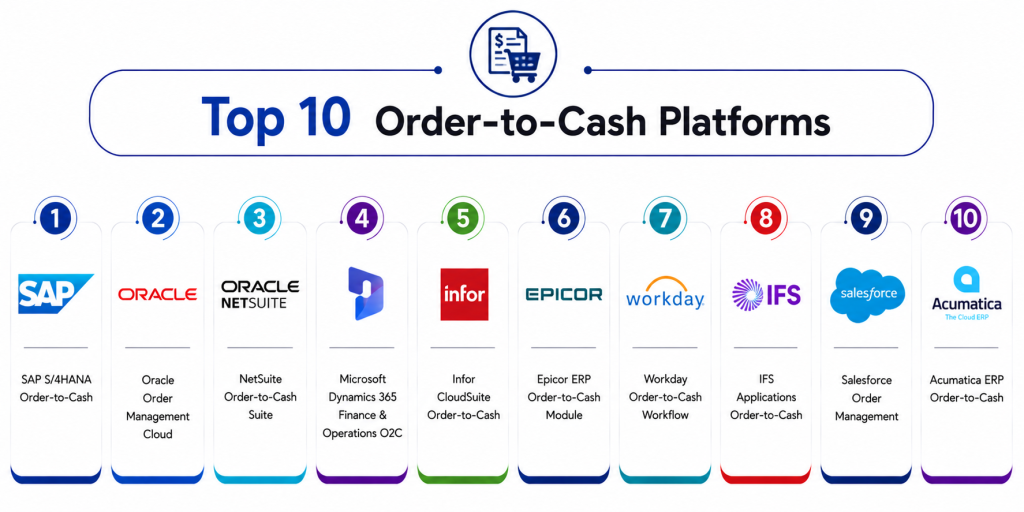
Top 10 Order‑to‑Cash (O2C) Platforms
1 — SAP S/4HANA Order‑to‑Cash
Short description: SAP S/4HANA delivers a comprehensive O2C suite as part of its enterprise ERP, offering deep order management, billing, revenue recognition, and finance automation for global enterprises.
Key Features
- End‑to‑end order orchestration
- Pricing and discount rules
- Billing and invoicing automation
- Accounts receivable workflows
- Revenue recognition compliance
- Credit and dispute management
- Operational dashboards
Pros
- Deep ERP/O2C integration
- Enterprise scalability
- Strong compliance controls
- Global tax and multi‑currency support
Cons
- Complex implementation
- High ownership cost
- Requires SAP expertise
- Architecture can be heavy
Platforms / Deployment
- Web / Cloud / On‑Premises
Security & Compliance
- RBAC
- Encryption
- Audit trails
- Regulatory compliance frameworks
Integrations & Ecosystem
- SAP ecosystem
- CRM systems
- Billing engines
- Analytics tools
- APIs
Support & Community
Large global enterprise support footprint.
2 — Oracle Fusion Order‑to‑Cash
Short description: Oracle Fusion provides a unified O2C solution embedded in its Cloud ERP suite, enabling automated order management, revenue processes, invoicing, and cash‑to‑ledger closed loops.
Key Features
- Order management and fulfillment
- Credit and collections workflows
- Billing and receivables automation
- Revenue management and compliance
- Pricing and discounts
- Dispute resolution workflows
- Operational reporting
Pros
- Unified cloud ERP stack
- Strong finance‑to‑revenue continuity
- Scalable global architecture
- Automated compliance
Cons
- Oracle ecosystem dependency
- Complex configuration
- Enterprise pricing
- Training required
Platforms / Deployment
- Web / Cloud
Security & Compliance
- RBAC
- Encryption
- Audit logs
- Compliance adherence
Integrations & Ecosystem
- Oracle ERP modules
- CRM systems
- Billing/payment systems
- APIs
Support & Community
Comprehensive enterprise support.
3 — Salesforce Revenue Cloud (Order Management + Billing)
Short description: Salesforce Revenue Cloud (Order Management + Billing) provides O2C capabilities tightly integrated with Salesforce CRM, ideal for subscription and usage‑based revenue models.
Key Features
- Order management integrated with CRM
- CPQ + pricing validation
- Subscription billing
- Invoicing and payment reconciliation
- Revenue recognition automation
- Customer lifecycle management
- Analytics dashboards
Pros
- Native CRM integration
- Flexible revenue models
- Strong analytics and dashboards
- Great for subscription businesses
Cons
- Requires Salesforce stack
- Limited deep ERP financials
- Billing complexity for heavy invoicing
- Platform dependency
Platforms / Deployment
- Web / Cloud
Security & Compliance
- RBAC
- Encryption
- Audit trails
- Compliance workflows
Integrations & Ecosystem
- Salesforce CRM
- CPQ systems
- Payment gateways
- ERP connectors
- APIs
Support & Community
Salesforce ecosystem support.
4 — Microsoft Dynamics 365 Finance & O2C
Short description: Microsoft Dynamics 365 delivers order management, fulfillment, billing, and receivables within its unified finance and operations suite.
Key Features
- Sales order orchestration
- Pricing and discount rules
- Billing automation
- Accounts receivable and collections
- Credit management
- Reporting and dashboards
- Revenue compliance workflows
Pros
- Unified finance & O2C stack
- Strong ERP integration
- Familiar Microsoft ecosystem
- Scalable mid‑enterprise offering
Cons
- Complexity in configuration
- Mid‑market pricing
- Training needed
- May require add‑ons for advanced revenue models
Platforms / Deployment
- Web / Cloud / On‑Premises
Security & Compliance
- RBAC
- Encryption
- Audit logs
- Enterprise compliance
Integrations & Ecosystem
- Dynamics CRM
- Billing systems
- Analytics and Power Platform
- APIs
Support & Community
Microsoft enterprise support network.
5 — Zuora Order‑to‑Cash Suite
Short description: Zuora specializes in subscription billing and revenue operations, automating subscription order management, billing, collections, and revenue recognition.
Key Features
- Subscription order workflows
- Usage‑based billing
- Multi‑currency invoicing
- Revenue recognition automation
- Collections and dispute management
- Payment methods and gateways
- Subscription analytics
Pros
- Subscription specialization
- Strong revenue compliance
- Flexible billing models
- Analytics on churn and cash flow
Cons
- Mid‑market focus
- Requires CRM/ERP integration
- Not full ERP replacement
- Customization required
Platforms / Deployment
- Web / Cloud
Security & Compliance
- RBAC
- Encryption
- Audit logs
- Revenue compliance
Integrations & Ecosystem
- CRM systems
- ERP platforms
- Payment processors
- APIs
Support & Community
Zuora subscription billing support.
6 — Infor CloudSuite O2C
Short description: Infor CloudSuite Order‑to‑Cash is part of Infor’s larger ERP and commerce ecosystem focused on industrial, manufacturing, and distribution O2C processes.
Key Features
- Order entry and fulfillment
- Pricing and discounting
- Billing and invoicing
- Credit and collections workflows
- Revenue reporting
- Warehouse and fulfillment integration
- Operational dashboards
Pros
- Strong manufacturing domain fit
- Integrated fulfillment workflows
- Mid‑enterprise scalability
- ERP alignment
Cons
- UI complexity
- Integration planning needed
- Mid‑market cost
- Requires ERP expertise
Platforms / Deployment
- Web / Cloud
Security & Compliance
- RBAC
- Encryption
- Audit logs
Integrations & Ecosystem
- Infor ERP
- CRM tools
- Finance systems
- APIs
Support & Community
Infor enterprise support.
7 — Oracle NetSuite Order‑to‑Cash
Short description: NetSuite provides a unified cloud ERP with O2C workflows, automating sales orders, fulfillment, billing, revenue recognition, and receivables in a single platform.
Key Features
- Sales order management
- Billing and invoicing
- Revenue recognition
- Accounts receivable workflows
- Credit and collections
- Pricing rules and approvals
- Dashboards and reporting
Pros
- Unified cloud ERP
- Fast deployment relative to legacy ERP
- Strong mid‑enterprise fit
- Multi‑currency and tax support
Cons
- ERP dependency
- Complex configuration
- Add‑on costs
- Subscriptions billing limitations
Platforms / Deployment
- Web / Cloud
Security & Compliance
- RBAC
- Encryption
- Audit logs
- Compliance standards
Integrations & Ecosystem
- CRM systems
- Billing/payment gateways
- Analytics tools
- APIs
Support & Community
NetSuite cloud ERP support.
8 — BillingPlatform O2C Suite
Short description: BillingPlatform runs subscription and usage‑based billing with integrated order, invoicing, and revenue recognition workflows.
Key Features
- Subscription order management
- Dynamic billing and pricing
- Revenue recognition compliance
- Accounts receivable tools
- Collections workflows
- Analytics dashboards
- Payment integrations
Pros
- Flexible billing engine
- Good for usage‑based models
- Strong revenue compliance
- Analytics focus
Cons
- Requires ERP/CRM integration
- Not full ERP replacement
- Mid‑market focus
- Configuration expertise needed
Platforms / Deployment
- Web / Cloud
Security & Compliance
- RBAC
- Encryption
- Audit logs
Integrations & Ecosystem
- CRM platforms
- ERP systems
- Payment gateways
- APIs
Support & Community
BillingPlatform support network.
9 — HighRadius Order‑to‑Cash (O2C)
Short description: HighRadius focuses on AI‑driven receivables, collections, cash forecasting, and dispute automation within O2C workflows.
Key Features
- AI‑driven collections prioritization
- Cash forecasting
- Dispute and deduction automation
- Credit risk scoring
- Order to cash visibility
- AR workflows integration
- Analytics dashboards
Pros
- AI‑based cash and credit insights
- Strong receivables focus
- Reduced DSO
- Automation of manual tasks
Cons
- Not a full O2C stack
- Requires upstream system integration
- Pricing complexity
- Enterprise focus
Platforms / Deployment
- Web / Cloud
Security & Compliance
- RBAC
- Encryption
- Audit logs
Integrations & Ecosystem
- ERP systems
- CRM platforms
- Payment systems
- APIs
Support & Community
HighRadius enterprise support.
10 — Coupa O2C (Procure‑to‑Pay + Receivables)
Short description: Coupa combines O2C touchpoints with procurement workflows, offering visibility into cash flow, order trends, and invoicing performance.
Key Features
- Order and invoice dashboarding
- Receivable analytics
- Workflow alerts
- Cash position visibility
- Compliance reporting
- Collaboration workflows
- Spend and order correlation
Pros
- Unified cash and procurement view
- Strong analytics
- Good visibility into financial cycle
- Workflow rules
Cons
- Not a full billing suite
- Integration effort required
- Procurement focus more than O2C automation
- Requires configuration
Platforms / Deployment
- Web / Cloud
Security & Compliance
- RBAC
- Encryption
- Audit logs
Integrations & Ecosystem
- ERP systems
- CRM tools
- Payment gateways
- APIs
Support & Community
Coupa enterprise support.
Comparison Table
| Platform | Best For | Deployment | Architecture | Standout Feature | Public Rating |
|---|---|---|---|---|---|
| SAP S/4HANA | Large enterprises | Cloud/On‑Prem | ERP suite | Deep O2C integration | N/A |
| Oracle Fusion | Global enterprises | Cloud | ERP suite | Finance‑to‑O2C continuity | N/A |
| Salesforce Revenue Cloud | Subscription businesses | Cloud | SaaS | CRM‑native O2C | N/A |
| Microsoft Dynamics 365 | Mid‑enterprise | Cloud/On‑Prem | ERP suite | Unified finance | N/A |
| Zuora | Subscription revenue | Cloud | SaaS | Subscription billing | N/A |
| Infor CloudSuite | Manufacturing & distribution | Cloud | ERP suite | ERP alignment | N/A |
| Oracle NetSuite | Mid‑enterprise | Cloud | ERP suite | Unified cloud ERP | N/A |
| BillingPlatform | Usage‑based billing | Cloud | SaaS | Flexible billing engine | N/A |
| HighRadius | Receivables optimization | Cloud | SaaS | AI receivables insights | N/A |
| Coupa | O2C + procurement | Cloud | SaaS | Cash flow visibility | N/A |
Evaluation & Scoring of Order‑to‑Cash Platforms
| Platform | Core | Ease | Integrations | Security | Performance | Support | Value | Weighted Total |
|---|---|---|---|---|---|---|---|---|
| SAP S/4HANA | 9.6 | 7.3 | 9.5 | 9.4 | 9.4 | 9.3 | 7.6 | 8.83 |
| Oracle Fusion | 9.5 | 7.4 | 9.4 | 9.3 | 9.3 | 9.2 | 7.7 | 8.82 |
| Salesforce Revenue Cloud | 9.3 | 8.2 | 9.3 | 9.2 | 9.2 | 9.1 | 7.9 | 8.90 |
| Microsoft Dynamics 365 | 9.1 | 7.9 | 9.2 | 9.1 | 9.1 | 9.0 | 7.8 | 8.76 |
| Zuora | 9.0 | 8.0 | 9.0 | 9.1 | 9.0 | 8.9 | 8.0 | 8.74 |
| Infor CloudSuite | 8.8 | 7.7 | 8.9 | 9.0 | 8.9 | 8.8 | 8.0 | 8.63 |
| Oracle NetSuite | 9.1 | 7.8 | 9.1 | 9.1 | 9.1 | 8.9 | 7.9 | 8.75 |
| BillingPlatform | 8.7 | 8.3 | 8.8 | 9.0 | 8.8 | 8.7 | 8.1 | 8.58 |
| HighRadius | 8.5 | 8.6 | 8.7 | 9.0 | 8.8 | 8.6 | 8.2 | 8.58 |
| Coupa | 8.6 | 8.1 | 8.9 | 9.0 | 8.7 | 8.9 | 8.1 | 8.64 |
Which Order‑to‑Cash Platform Is Right for You?
Mid‑Market Growth Companies
Best options: Salesforce Revenue Cloud, Zuora, NetSuite
- Fast deployment with strong revenue models
Large Global Enterprises
Best options: SAP S/4HANA, Oracle Fusion, Microsoft Dynamics 365
- Deep finance and O2C workflows
Subscription‑Driven Businesses
Best options: Zuora, Salesforce Revenue Cloud
- Specialized subscription billing and usage
Manufacturing & Distribution
Best options: Infor CloudSuite, SAP S/4HANA
- ERP‑centric O2C
Receivables & Cash Optimization
Best options: HighRadius, Coupa
- Analytics and automation
Budget vs Premium
- Budget: BillingPlatform, HighRadius
- Premium: SAP, Oracle suite
Feature Depth vs Ease of Use
- Easy: Salesforce Revenue Cloud, Zuora
- Advanced: SAP, Oracle
Frequently Asked Questions
1. What is an Order‑to‑Cash platform?
It is a system that manages the full revenue lifecycle from sales order through invoicing and cash collection.
2. Why is O2C important?
It improves accuracy, compliance, cash conversion, and operational visibility.
3. How does O2C integrate with CRM?
Platforms like Salesforce Revenue Cloud link sales orders directly to billing workflows.
4. What is revenue recognition automation?
It ensures revenue is recognized per accounting standards, especially for subscription billing.
5. Can O2C handle global compliance?
Yes, enterprise platforms support multi‑currency, tax, and regulatory compliance.
6. What is collections automation?
Systems like HighRadius automate prioritization and follow‑up workflows.
7. Do O2C platforms require ERP systems?
Many integrate with ERP—for accounting, inventory, fulfillment and finance.
8. Are O2C tools cloud‑native?
Most modern platforms are cloud‑based or hybrid.
9. What metrics do O2C platforms improve?
DSO, cash flow, order accuracy, revenue recognition timing.
10. What is the ROI of O2C automation?
Faster invoice cycles, fewer errors, better compliance, and improved cash conversion.
Conclusion
Order‑to‑Cash Platforms streamline the critical revenue lifecycle from sales orders through invoicing and cash collection, improving accuracy, governance, compliance, and operational visibility. Enterprise‑grade tools like SAP S/4HANA, Oracle Fusion, and Microsoft Dynamics 365 are best for large global operations, while cloud‑native solutions like Salesforce Revenue Cloud, Zuora, and NetSuite offer strong O2C workflows for subscription and mid‑enterprise contexts. Analytics‑focused tools like HighRadius help optimize receivables and collections workflows. The right platform depends on revenue complexity, integration needs, and global compliance requirements.

This article presents a clear breakdown of order-to-cash platforms and how they streamline the complete sales-to-payment cycle. It also explains how automation improves accuracy, speed, and overall financial control in business operations.
This article gives a very clear and practical overview of quote-to-cash platforms with useful comparisons and easy explanations. The structured format made it simple to understand each option.
Revenue leakage in Order-to-Cash processes often occurs in the gaps between systems rather than within individual workflows. Order changes, pricing exceptions, fulfillment delays, and disputed invoices can create downstream impacts that are difficult to trace without end-to-end visibility. Exploring process observability, exception analytics, and cross-functional accountability would provide valuable insight into how organizations can improve cash flow predictability while reducing operational friction.
Order-to-Cash performance is influenced as much by exception handling as by automation. Credit holds, fulfillment delays, pricing discrepancies, and customer disputes can quickly disrupt cash flow if they are managed in isolation. A deeper discussion on end-to-end process visibility, AI-driven exception prioritization, and cross-functional collaboration between sales, finance, and operations would provide valuable insight into building a more resilient O2C process that scales with business growth.