Introduction
Problem Management Tools are software solutions designed to help organizations identify, track, and resolve the root causes of recurring incidents and operational issues. These tools provide structured workflows to analyze incidents, perform root cause analysis, and implement corrective actions, reducing downtime and improving service reliability. By centralizing problem data, organizations can proactively prevent issues, improve operational efficiency, and enhance service delivery.
Real-world use cases include identifying recurring IT outages, analyzing software bug patterns, preventing failures in network operations, managing incidents in enterprise applications, and coordinating cross-departmental resolution workflows. Modern problem management tools integrate with ITSM platforms, analytics engines, and collaboration systems, often leveraging AI to prioritize problems and suggest root causes.
Evaluation Criteria for Buyers:
- Root cause analysis capabilities
- Integration with ITSM and incident management systems
- Workflow automation for problem resolution
- Reporting and analytics on recurring issues
- Ease of use and user interface
- AI and machine learning assistance for prioritization
- SLA tracking and escalation management
- Security and compliance (SSO, MFA, audit logs)
- Scalability and performance
- Vendor support and community resources
Best for: IT operations teams, service managers, enterprise IT departments, and organizations looking to reduce recurring incidents and improve system reliability.
Not ideal for: Small teams with minimal incidents, companies that rely solely on reactive incident resolution, or organizations with low-complexity IT environments where formal problem management is unnecessary.
Key Trends in Problem Management Tools
- AI-assisted root cause analysis and incident correlation
- Integration with ITSM platforms and CMDBs for contextual problem tracking
- Automation of problem prioritization and resolution workflows
- Analytics dashboards for recurring incidents and SLA compliance
- Cloud-first and hybrid deployment options
- Self-service portals and collaborative problem investigation
- Security and compliance for audit trails and sensitive data
- Mobile access for remote IT teams
- Low-code workflow customization for internal processes
- Subscription-based and modular pricing for scalable adoption
How We Selected These Tools (Methodology)
- Reviewed market adoption across enterprises and SMBs
- Evaluated feature completeness for root cause analysis and workflow automation
- Assessed reliability, performance, and uptime signals
- Analyzed security and compliance certifications
- Checked integration capability with ITSM, CMDB, and collaboration platforms
- Reviewed AI and automation for problem detection and prioritization
- Examined multi-department suitability and scalability
- Considered vendor support quality and community engagement
- Compared deployment flexibility (cloud, on-prem, hybrid)
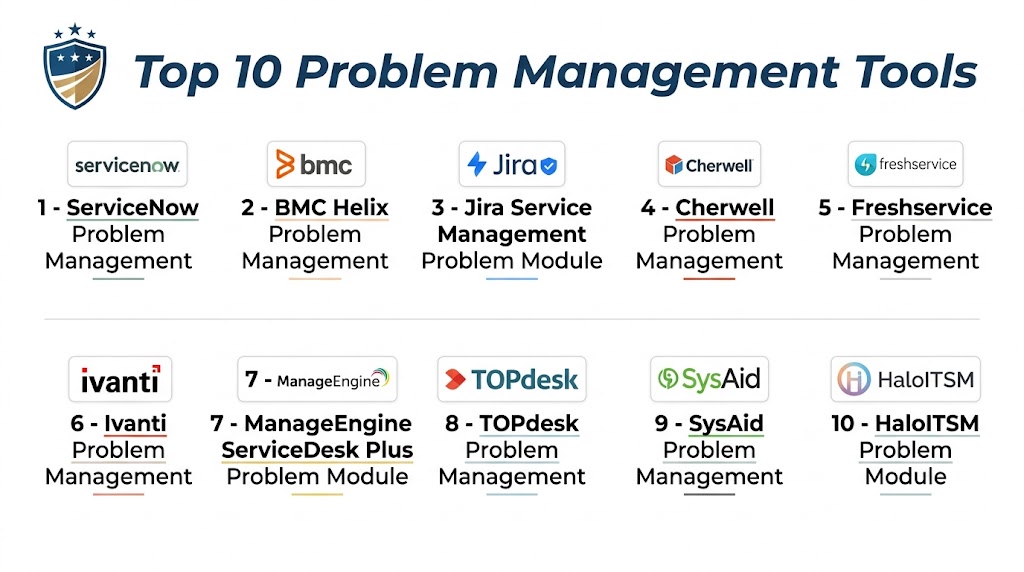
Top 10 Problem Management Tools
1 — ServiceNow Problem Management
Short description: ServiceNow Problem Management provides enterprise-level problem detection, root cause analysis, and workflow automation to prevent recurring incidents across IT environments.
Key Features
- AI-driven root cause analysis
- Automated problem identification from incident patterns
- SLA tracking and escalation workflows
- Integration with ITSM and CMDB
- Analytics dashboards for recurring issues
- Knowledge base for problem resolution
- Workflow automation for corrective actions
Pros
- Enterprise-grade scalability
- Advanced AI for problem prioritization
- Multi-department support
Cons
- High implementation cost
- Complex configuration and setup
- Training required for full utilization
Platforms / Deployment
- Web / iOS / Android
- Cloud
Security & Compliance
- SOC 2, ISO 27001, GDPR
- SSO/SAML, MFA, encryption, audit logs
Integrations & Ecosystem
Connects with ITSM, ERP, CMDB, and collaboration platforms.
- Jira, Slack, Microsoft Teams
- CMDB integration
- API access for custom workflows
Support & Community
Enterprise support, extensive documentation, knowledge base, and active community forums.
2 — BMC Helix Problem Management
Short description: BMC Helix offers proactive problem management with AI-driven insights and automated workflows to reduce recurring IT incidents.
Key Features
- AI-assisted problem detection
- Root cause analysis automation
- SLA and escalation management
- Self-service portal for problem reporting
- Analytics and reporting dashboards
- Integration with ITSM and ITOM tools
Pros
- Proactive incident prevention
- AI-powered insights for faster resolution
- Scalable for large IT environments
Cons
- High complexity for small teams
- Cost-intensive for SMBs
- Some advanced features require technical configuration
Platforms / Deployment
- Web / iOS / Android
- Cloud
Security & Compliance
- SOC 2, ISO 27001 Not publicly stated
- SSO/SAML, encryption
Integrations & Ecosystem
Integrates with ITSM, ERP, and collaboration tools.
- ServiceNow, Jira, Slack
- CMDB and monitoring tools
- API support for automation
Support & Community
Comprehensive documentation, enterprise support plans, and community forums.
3 — Cherwell Problem Management
Short description: Cherwell enables low-code problem management with automated workflows, root cause tracking, and analytics for IT and business teams.
Key Features
- Low-code workflow automation
- Root cause analysis and incident correlation
- SLA management and escalation workflows
- Knowledge base integration
- Reporting dashboards
- AI-assisted problem prioritization
Pros
- Highly customizable workflows
- Multi-department support
- Advanced analytics for recurring problems
Cons
- Complexity may require administrator training
- Advanced AI requires configuration
- Pricing may be higher for smaller teams
Platforms / Deployment
- Web / iOS / Android
- Cloud / On-prem
Security & Compliance
- SOC 2, GDPR Not publicly stated
- SSO/SAML, encryption
Integrations & Ecosystem
Integrates with ITSM, CMDB, collaboration, and ERP platforms.
- Jira, Workday, Slack
- Microsoft Teams
- API and marketplace extensions
Support & Community
Documentation, online tutorials, and active user forums.
4 — Ivanti Problem Management
Short description: Ivanti Problem Management provides enterprise problem tracking with AI-assisted detection, automated workflows, and SLA management.
Key Features
- AI-assisted root cause analysis
- Automated problem resolution workflows
- SLA tracking and reporting
- Integration with ITSM, ERP, and monitoring tools
- Knowledge base integration
- Analytics dashboards
Pros
- Scalable for enterprise IT
- AI and automation improve efficiency
- Multi-department support
Cons
- Setup and configuration require time
- Advanced analytics need premium plans
- Some integrations require technical expertise
Platforms / Deployment
- Web / iOS / Android
- Cloud / On-prem
Security & Compliance
- SOC 2, GDPR Not publicly stated
- SSO/SAML, encryption
Integrations & Ecosystem
Supports ITSM, ERP, collaboration, and monitoring integrations.
- Jira, Slack, Microsoft Teams
- CMDB connections
- API access
Support & Community
Documentation, onboarding, and enterprise support plans.
5 — Freshservice
Short description: Freshservice combines ITSM and problem management with self-service, AI-assisted prioritization, and workflow automation for mid-market and enterprise IT teams.
Key Features
- Centralized problem tracking
- AI-assisted root cause analysis
- SLA and escalation management
- Workflow automation
- Knowledge base integration
- Reporting dashboards
Pros
- Easy to deploy and use
- AI-powered insights
- Scalable for growing IT teams
Cons
- IT-focused features may not suit non-IT departments
- Some features require premium plans
- Reporting customization is limited
Platforms / Deployment
- Web / iOS / Android
- Cloud
Security & Compliance
- SOC 2, GDPR Not publicly stated
Integrations & Ecosystem
Integrates with ITSM, CMDB, and collaboration platforms.
- Slack, Jira, Microsoft Teams
- API support
Support & Community
Documentation, enterprise support, and active community.
6 — Jira Service Management
Short description: Jira Service Management offers problem management capabilities for IT teams with strong DevOps integration, workflow automation, and root cause analysis.
Key Features
- ITSM-focused problem tracking
- Incident correlation and root cause analysis
- SLA management and escalations
- Automation for recurring issues
- Reporting and dashboards
- Knowledge base linking
Pros
- Developer-friendly and customizable
- Integrates with DevOps tools
- Flexible workflows
Cons
- Learning curve for non-technical users
- Setup complexity
- Premium features may be costly
Platforms / Deployment
- Web / iOS / Android
- Cloud / Self-hosted
Security & Compliance
- SOC 2, GDPR Not publicly stated
- SSO/SAML, MFA
Integrations & Ecosystem
Integrates with Jira suite, collaboration, and monitoring tools.
- Confluence, Slack, Microsoft Teams
- API and marketplace apps
Support & Community
Documentation, support plans, and active forums.
7 — SolarWinds Service Desk
Short description: SolarWinds Service Desk provides problem management with automated workflows, SLA tracking, and root cause analysis for enterprise IT teams.
Key Features
- Automated problem identification
- Root cause analysis workflows
- SLA tracking and reporting
- Integration with ITSM and monitoring tools
- Knowledge base and self-service
Pros
- Scalable for enterprises
- Automation reduces manual effort
- AI-assisted insights
Cons
- Limited AI features compared to enterprise platforms
- Customization requires technical setup
- Some integrations require configuration
Platforms / Deployment
- Web / iOS / Android
- Cloud
Security & Compliance
- SOC 2, GDPR Not publicly stated
Integrations & Ecosystem
Integrates with monitoring tools, ITSM, ERP, and collaboration platforms.
- Slack, Jira, Microsoft Teams
- API support
Support & Community
Documentation, onboarding, and support plans available.
8 — Remedy Problem Management (BMC)
Short description: BMC Remedy focuses on IT problem management with workflow automation, root cause analysis, and SLA tracking for enterprise IT operations.
Key Features
- Automated problem detection and routing
- Root cause analysis
- SLA tracking and escalation
- Integration with ITSM and monitoring
- Knowledge base support
- Reporting and dashboards
Pros
- Enterprise-grade workflows
- AI-assisted prioritization
- Multi-department IT support
Cons
- Complex setup
- Premium cost
- Requires training
Platforms / Deployment
- Web / iOS / Android
- Cloud / On-prem
Security & Compliance
- SOC 2, ISO 27001, GDPR
- SSO/SAML, MFA
Integrations & Ecosystem
Supports ITSM, monitoring, and collaboration integrations.
- Slack, Jira, ServiceNow
- API access
Support & Community
Enterprise documentation and support plans, community forums.
9 — ManageEngine ServiceDesk Plus
Short description: ManageEngine provides problem management with ITIL-aligned workflows, root cause analysis, and automation for IT teams.
Key Features
- ITIL-compliant problem management
- Root cause tracking and correlation
- SLA and escalation management
- Knowledge base integration
- Reporting dashboards
- Automation for recurring incidents
Pros
- Cost-effective for SMB and enterprise
- Easy ITIL implementation
- Customizable workflows
Cons
- UI may feel dated
- Limited AI features
- Some integrations require configuration
Platforms / Deployment
- Web / Windows / Mac / iOS / Android
- Cloud / On-prem
Security & Compliance
- GDPR Not publicly stated
- SSO/SAML, encryption
Integrations & Ecosystem
ITSM, monitoring, ERP, and collaboration tool integrations.
- Slack, Jira, Microsoft Teams
- API support
Support & Community
Documentation, knowledge base, and support channels.
10 — SysAid Problem Management
Short description: SysAid offers IT-focused problem management with workflow automation, SLA tracking, and analytics dashboards for recurring incidents.
Key Features
- Centralized problem tracking
- SLA and workflow management
- Root cause analysis
- Reporting dashboards
- Knowledge base integration
- Automation for recurring issues
Pros
- Automation reduces manual effort
- Multi-department IT support
- Reporting dashboards
Cons
- Limited AI capabilities
- Customization requires technical knowledge
- Smaller integration ecosystem
Platforms / Deployment
- Web / iOS / Android
- Cloud / On-prem
Security & Compliance
- SOC 2, GDPR Not publicly stated
Integrations & Ecosystem
ITSM, monitoring, and collaboration tool integrations.
- Slack, Jira, Microsoft Teams
- API support
Support & Community
Documentation, online tutorials, and support plans.
Comparison Table (Top 10)
| Tool Name | Best For | Platform(s) Supported | Deployment | Standout Feature | Public Rating |
|---|---|---|---|---|---|
| ServiceNow | Enterprises | Web, iOS, Android | Cloud | AI-driven root cause | N/A |
| BMC Helix | Enterprise IT | Web, iOS, Android | Cloud | Automated problem detection | N/A |
| Cherwell | IT/HR | Web, iOS, Android | Cloud / On-prem | Low-code workflow | N/A |
| Ivanti | Enterprise IT | Web, iOS, Android | Cloud / On-prem | AI-assisted problem prioritization | N/A |
| Freshservice | IT Teams | Web, iOS, Android | Cloud | AI-assisted routing | N/A |
| Jira Service Management | IT Teams | Web, iOS, Android | Cloud / Self-hosted | DevOps integration | N/A |
| SolarWinds Service Desk | Enterprise IT | Web, iOS, Android | Cloud | Automation & SLA | N/A |
| Remedy (BMC) | Enterprise IT | Web, iOS, Android | Cloud / On-prem | Workflow automation | N/A |
| ManageEngine | SMB/Enterprise | Web, Windows, Mac, iOS, Android | Cloud / On-prem | ITIL-aligned workflows | N/A |
| SysAid | IT Teams | Web, iOS, Android | Cloud / On-prem | Recurring incident automation | N/A |
Evaluation & Scoring
| Tool Name | Core (25%) | Ease (15%) | Integrations (15%) | Security (10%) | Performance (10%) | Support (10%) | Value (15%) | Weighted Total (0–10) |
|---|---|---|---|---|---|---|---|---|
| ServiceNow | 10 | 8 | 9 | 9 | 9 | 8 | 7 | 8.8 |
| BMC Helix | 9 | 8 | 8 | 8 | 8 | 7 | 7 | 8.0 |
| Cherwell | 8 | 8 | 8 | 8 | 8 | 7 | 8 | 8.0 |
| Ivanti | 9 | 7 | 8 | 8 | 9 | 8 | 7 | 8.2 |
| Freshservice | 8 | 8 | 7 | 8 | 8 | 7 | 8 | 7.9 |
| Jira Service Management | 9 | 7 | 8 | 8 | 9 | 7 | 7 | 8.0 |
| SolarWinds | 8 | 8 | 7 | 8 | 8 | 7 | 8 | 7.9 |
| Remedy (BMC) | 9 | 7 | 8 | 8 | 9 | 8 | 7 | 8.1 |
| ManageEngine | 8 | 8 | 7 | 8 | 8 | 7 | 8 | 7.9 |
| SysAid | 8 | 7 | 7 | 8 | 8 | 7 | 8 | 7.8 |
Which Problem Management Tool Is Right for You?
Solo / Freelancer
Freshservice or ManageEngine for easy deployment and simplified problem tracking.
SMB
Cherwell, ManageEngine, or SysAid provide automation and reporting without enterprise complexity.
Mid-Market
Ivanti, SolarWinds, or Jira Service Management offer scalable workflows and AI assistance.
Enterprise
ServiceNow, BMC Helix, and Remedy provide AI-driven root cause analysis, enterprise automation, and multi-department coverage.
Budget vs Premium
Budget-friendly: Freshservice, SysAid, Cherwell.
Premium: ServiceNow, BMC Helix, Ivanti. ROI depends on workflow complexity and automation needs.
Feature Depth vs Ease of Use
Cherwell and Jira Service Management offer depth and customization; Freshservice and SysAid prioritize usability.
Integrations & Scalability
Enterprise tools provide extensive integrations with ITSM, ERP, HRIS, and collaboration platforms; SMB tools focus on essential integrations.
Security & Compliance Needs
Enterprise platforms provide SOC 2, ISO, GDPR, and audit capabilities; SMB platforms provide encryption and basic access control.
Frequently Asked Questions
1. What pricing models are common?
Most platforms offer subscription pricing per agent or department with tiered features. Free trials may exist for SMBs.
2. How long does implementation take?
Small teams can deploy in days; enterprise-scale implementations may require weeks of configuration and workflow setup.
3. Can these tools integrate with ITSM or ERP?
Yes, most provide native or API integrations with ITSM, ERP, HRIS, and collaboration platforms.
4. Are AI features included?
Many platforms use AI for root cause analysis, problem prioritization, and workflow automation.
5. Which departments can benefit?
IT, HR, Finance, and operations teams commonly use these tools for proactive problem management.
6. Are these tools secure?
Enterprise-grade solutions offer SSO/SAML, MFA, encryption, and compliance with GDPR, SOC 2, and ISO certifications.
7. Can small teams use these platforms?
Yes, SMB-focused tools like Freshservice, SysAid, or Cherwell provide simplified interfaces and automation.
8. How customizable are workflows?
Open-source or low-code platforms allow high customization; enterprise systems support department-specific workflows.
9. Is reporting included?
Yes, dashboards, analytics on recurring issues, SLA compliance, and performance metrics are standard.
10. Can data be migrated later?
Most platforms provide export via APIs or CSV. Proper planning ensures smooth transitions.
Conclusion
Problem Management Tools help organizations reduce recurring incidents, improve root cause identification, and streamline workflows across IT and business teams. SMBs can leverage Freshservice, Cherwell, or SysAid for cost-effective and simple implementations, while mid-market and enterprise teams benefit from Ivanti, ServiceNow, BMC Helix, and Remedy for AI-assisted problem management and workflow automation. The right platform depends on team size, complexity of incidents, automation requirements, integrations, and compliance needs. Organizations should shortlist 2–3 tools, run a pilot to evaluate workflows and AI capabilities, validate integrations and security, and then scale across departments to improve operational efficiency and service reliability.

This article explains problem management tools in a very clear and practical way with well-structured comparisons. The pros and cons section made it much easier to understand the strengths of each platform.
Recurring incidents are often treated as isolated operational issues, even when they originate from the same underlying weakness. The real value of problem management emerges when platforms can connect incident patterns, change history, and infrastructure signals to reveal systemic risks before they escalate. Exploring how these tools support knowledge retention and cross-team collaboration would provide a stronger perspective on reducing long-term operational instability.
Effective problem management depends on learning from every major incident, yet many organizations struggle to convert post-incident findings into lasting operational improvements. Root causes may be identified, but corrective actions often lose momentum without clear ownership and progress tracking. A deeper discussion on integrating problem management with postmortem processes, technical debt planning, and preventive engineering initiatives would add valuable real-world perspective.