Introduction
Endpoint Telemetry Platforms are tools that collect, analyze, and visualize data from laptops, desktops, servers, mobile devices, and other endpoints to help organizations monitor performance, detect anomalies, and respond to security threats. By continuously gathering telemetry — such as application behavior, system events, network activity, and performance metrics — these platforms provide visibility into endpoint health and help teams make data‑driven decisions. Telemetry is foundational for modern operations, security analytics, compliance monitoring, and IT management.
Real-world use cases include detecting emerging malware or unauthorized software, analyzing performance degradations on employee devices, identifying unusual network behavior that could signal breaches, monitoring patch compliance across devices, and feeding telemetry into broader security analytics and SOAR systems. As hybrid work and distributed environments grow, endpoint telemetry platforms provide centralized insight across thousands of devices.
Evaluation Criteria for Buyers:
- Data collection breadth and granularity
- Real‑time processing and alerting
- Security analytics and anomaly detection
- Integration with SIEM, SOAR, ITSM, and observability tools
- Scalability and performance across large fleets
- Ease of deployment and management
- AI/ML‑assisted detection capabilities
- Reporting and visualization dashboards
- Compliance and audit support
- Vendor support and community engagement
Best for: Security operations teams, IT administrators, SOC analysts, observability teams, and enterprises needing real‑time endpoint insights.
Not ideal for: Very small organizations with limited devices or minimal security oversight, companies relying solely on basic antivirus or local logging without central analysis, and teams without structured incident response processes.
Key Trends in Endpoint Telemetry Platforms
- AI/ML‑assisted anomaly detection and threat scoring
- Unified telemetry for security, performance, and compliance
- Real‑time telemetry ingestion with alerting and correlation
- Integration into SIEM and SOAR systems for automated response
- Cloud‑native telemetry pipelines and scalability
- Standardization of telemetry schemas across device types
- Endpoint risk scoring and prioritization
- Privacy‑aware telemetry collection for regulatory compliance
- Mobile endpoint telemetry as part of enterprise visibility
- Low‑maintenance deployment with endpoint agents or API capture
How We Selected These Tools (Methodology)
- Reviewed market adoption and enterprise reference signals
- Assessed breadth and depth of telemetry collection capabilities
- Evaluated real‑time analytics, anomaly detection, and alerting
- Considered integrations with SIEM, observability, and IT operations systems
- Analyzed scalability for large distributed fleets
- Checked security posture, data protection, and compliance features
- Reviewed AI/ML capabilities for advanced detection and prioritization
- Examined user experience, ease of deployment, and management overhead
- Considered vendor support, product roadmap, and ecosystem strength
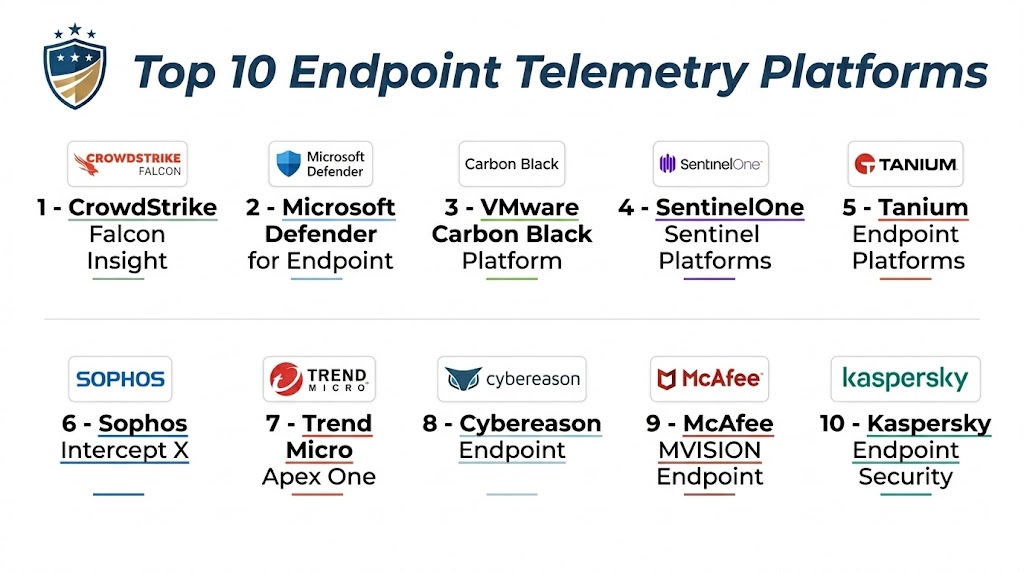
Top 10 Endpoint Telemetry Platforms
1 — Datadog Real User Monitoring & Endpoint Insights
Short description: Datadog’s telemetry platform collects detailed endpoint metrics and logs, correlating them with application performance and user experience for security and operations teams.
Key Features
- Unified endpoint telemetry and application metrics
- Real‑time log aggregation and alerting
- Anomaly detection with AI/ML
- Correlation across systems and endpoints
- Dashboards for performance and security insights
- Integration with SIEM and observability stacks
Pros
- Unified visibility across endpoints and applications
- Scalable for large environments
- Strong analytics and correlation
Cons
- Pricing can grow with volume
- Setup complexity for deep visibility
- May require configuration for advanced alerts
Platforms / Deployment
- Web / Cloud
- Endpoint agents for Windows, macOS, Linux
Security & Compliance
- SOC 2, GDPR compliance
- Encryption in transit and at rest
- RBAC and audit logs
Integrations & Ecosystem
Integrates with SIEM, ITSM, cloud platforms, and observability tools.
- Security analytics platforms
- SIEM and SOAR systems
- APIs for custom integrations
Support & Community
Documentation, onboarding support, community forums, and enterprise support options.
2 — CrowdStrike Falcon Insight
Short description: CrowdStrike Falcon Insight is an endpoint telemetry and detection platform focused on security analytics, threat detection, and behavioral monitoring across devices.
Key Features
- Real‑time endpoint telemetry collection
- Behavioral analysis and threat detection
- Incident detection and response workflows
- AI/ML‑based anomaly scoring
- Endpoint process and network telemetry
- Threat hunting dashboards
Pros
- Strong security telemetry and detection
- Lightweight agent footprint
- Integrated threat intelligence
Cons
- Higher cost for full feature sets
- Focused primarily on security telemetry
- Learning curve for advanced analytics
Platforms / Deployment
- Cloud
- Agents for Windows, macOS, Linux
Security & Compliance
- SOC 2, ISO standards compliance
- Encryption and secure data handling
- Audit trails and access control
Integrations & Ecosystem
Connects with SIEM, SOAR, threat feeds, and security operations systems.
- Security analytics platforms
- Incident response tools
- API availability
Support & Community
24/7 support, detailed documentation, and security community resources.
3 — Microsoft Defender for Endpoint
Short description: Microsoft Defender for Endpoint offers native telemetry collection across Windows and cross‑platform endpoints, focusing on security threats, endpoint behavior, and remediation insights.
Key Features
- Native endpoint event telemetry
- Threat and vulnerability analytics
- Automated remediation actions
- Integration with Microsoft security stack
- Incident investigation and timeline views
- Threat intelligence correlation
Pros
- Deep integration with Windows ecosystem
- Strong threat detection and response
- Automated remediation capabilities
Cons
- Best experience within Microsoft ecosystem
- Licensing complexity
- May require tuning for noisy telemetry
Platforms / Deployment
- Windows, macOS, Linux, mobile endpoint support
- Cloud management
Security & Compliance
- SOC 2, GDPR, regulatory controls within Microsoft
- SSO/MFA, encryption, audit logs
Integrations & Ecosystem
Integrates tightly with Microsoft security tools, SIEM, and IT operations systems.
- SIEM and SOAR integration
- Microsoft threat intelligence
- APIs for extended telemetry use
Support & Community
Comprehensive documentation, official community forums, and enterprise support.
4 — Elastic Endpoint Security & Observability
Short description: Elastic combines telemetry from endpoints with observability and security analytics, enabling real‑time detection, investigation, and visualization.
Key Features
- Endpoint log and event collection
- SIEM integration and threat detection
- Pattern analytics and dashboards
- Correlation across telemetry types
- Alerting and visualization tools
- Searchable telemetry index
Pros
- Unified search and analytics
- Highly customizable queries
- Strong observability integration
Cons
- Requires expertise for custom searches
- Deployment complexity at scale
- Storage can grow with telemetry volume
Platforms / Deployment
- Web / Cloud / Self‑hosted
- Agents for major OS platforms
Security & Compliance
- GDPR, encryption, access control
- RBAC and audit logs
Integrations & Ecosystem
Works with SIEM, observability apps, dashboards, and automation tools.
- SIEM and observability stacks
- ITSM and alerting tools
- APIs for custom plugins
Support & Community
Documentation, community forums, enterprise support plans.
5 — Sumo Logic Continuous Intelligence
Short description: Sumo Logic collects and analyzes endpoint telemetry alongside logs and metrics for security monitoring, compliance reporting, and operational insights.
Key Features
- Unified logging and endpoint telemetry ingestion
- Real‑time alerting and correlation
- Compliance dashboards
- Machine learning analytics
- Dashboards and visualization
- Multi‑tenant telemetry support
Pros
- Strong compliance and audit functionality
- Real‑time analytics workflows
- Federated telemetry views
Cons
- Requires configuration for advanced use cases
- Pricing scales with data volume
- Learning curve for analytics workflows
Platforms / Deployment
- Cloud
- Agents for endpoint telemetry
Security & Compliance
- SOC 2, GDPR
- Encryption and access controls
Integrations & Ecosystem
Integrates with SIEM, observability tools, and IT workflows.
- Security analytics systems
- Alerting and collaboration tools
- API for ingestion streams
Support & Community
Documentation, customer support, and online community.
6 — Cisco Secure Endpoint
Short description: Cisco Secure Endpoint focuses on threat telemetry and endpoint behavior analytics to detect advanced threats and anomalous activity.
Key Features
- Threat and behavior telemetry
- Integration with broader Cisco security stack
- Automated containment actions
- Malware and anomaly detection
- Dashboards and reporting
- Endpoint risk scoring
Pros
- Strong security analytics
- Automated threat containment
- Integration with Cisco network telemetry
Cons
- Best fit for Cisco ecosystems
- Cost at enterprise scale
- May require tuning
Platforms / Deployment
- Cloud
- Agents for Windows, macOS, Linux
Security & Compliance
- SOC 2, regulatory controls
- SSO/MFA, encryption
Integrations & Ecosystem
Integrates with Cisco security tools, SIEM, SOAR, and analytics platforms.
Support & Community
Cisco support, documentation, and knowledge base.
7 — Splunk Enterprise Security
Short description: Splunk Enterprise Security ingests endpoint telemetry alongside logs and network data for advanced correlation, threat detection, and security analytics.
Key Features
- Endpoint telemetry ingestion
- Correlation across security data sources
- Real‑time threat analytics
- Incident investigation workflows
- Dashboards and alerting
- Machine learning frameworks
Pros
- Powerful analytics at scale
- Correlation across telemetry types
- Enterprise SIEM capabilities
Cons
- Costly at scale
- Requires expertise to optimize queries
- Deployment complexity
Platforms / Deployment
- Cloud / Self‑hosted
- Endpoint forwarding and ingestion
Security & Compliance
- SOC 2, regulatory controls integrated
- Encryption and access control
Integrations & Ecosystem
Integrates with SIEM, SOAR, threat feeds, and automation tools.
Support & Community
Extensive documentation, marketplace apps, and large community.
8 — IBM QRadar Endpoint Insights
Short description: IBM QRadar Endpoint Insights extends QRadar SIEM with endpoint telemetry collection and correlation for security and operational visibility.
Key Features
- Endpoint telemetry ingestion
- Correlation with network and event data
- Anomaly detection and risk scoring
- Dashboards for investigation
- Integration with QRadar SIEM
- Alerting and response workflows
Pros
- Tight integration with enterprise SIEM
- Scalable analytics
- Contextual correlation
Cons
- Enterprise focus may overwhelm small teams
- Pricing and licensing complexity
- Deployment requires planning
Platforms / Deployment
- Cloud / Self‑hosted
- Endpoint agents
Security & Compliance
- SOC 2, ISO frameworks
- Encryption and audit logs
Integrations & Ecosystem
Deep SIEM integration and automation.
Support & Community
IBM support, documentation, community forums.
9 — CrowdStrike Falcon LogScale
Short description: Falcon LogScale (formerly Humio) combines endpoint telemetry with high‑speed log ingestion and real‑time queries for investigation and analytics.
Key Features
- High‑speed log and telemetry ingestion
- Real‑time search and correlation
- Dashboards and alerting
- Scalable indexing
- Integration with security tools
- Machine learning analytics
Pros
- Fast telemetry query performance
- Scales for large datasets
- Flexible dashboards
Cons
- Focused on logs; telemetry requires tuning
- Cost at large scale
- Requires expertise for complex queries
Platforms / Deployment
- Cloud
- Endpoint telemetry ingestion
Security & Compliance
- SOC 2, encryption
- Access controls and audit logs
Integrations & Ecosystem
Integrates with SIEM, SOAR, and alerting tools.
Support & Community
Documentation, support options, and community resources.
10 — Elastic Endpoint Telemetry
Short description: Elastic Endpoint Telemetry (part of Elastic Stack) focuses on high‑volume telemetry ingestion, correlation, and detection for security, compliance, and observability.
Key Features
- Telemetry ingestion at scale
- Correlation across endpoints and logs
- Dashboards and alerting
- Searchable index and analytics
- Integration with Elastic SIEM
- Rule‑based detection
Pros
- Flexible search and analytics
- Scalable indexing
- Strong observability link
Cons
- Setup complexity
- Storage grows with volume
- Requires expertise
Platforms / Deployment
- Cloud / Self‑hosted
- Agents for telemetry collection
Security & Compliance
- Encryption, role‑based access
- GDPR, compliance controls
Integrations & Ecosystem
SIEM, alerting, and observability tools.
Support & Community
Documentation, enterprise support, and Elastic community.
Comparison Table (Top 10)
| Tool Name | Best For | Platform(s) Supported | Deployment | Standout Feature | Public Rating |
|---|---|---|---|---|---|
| Datadog | Unified visibility | Web, agents | Cloud | Correlation analytics | N/A |
| CrowdStrike Falcon | Security telemetry | Cloud, agents | Cloud | Behavioral detection | N/A |
| Microsoft Defender | Windows‑centric | Windows, cross‑OS | Cloud | Deep OS integration | N/A |
| Elastic Endpoint | Custom analytics | Cloud/Self‑host | Cloud/Self‑host | Search & telemetry | N/A |
| Sumo Logic | Compliance & logs | Cloud | Cloud | Machine analytics | N/A |
| Cisco Secure Endpoint | Threat detection | Cloud/agents | Cloud | Risk scoring | N/A |
| Splunk ES | Enterprise analytics | Cloud/Self‑host | Both | SIEM correlation | N/A |
| QRadar Endpoint | Enterprise SIEM | Cloud/Self‑host | Both | SIEM integration | N/A |
| Falcon LogScale | High‑speed queries | Cloud | Cloud | High‑speed ingestion | N/A |
| Elastic Endpoint Telemetry | Observability | Cloud/Self‑host | Both | Scalable telemetry | N/A |
Evaluation & Scoring
| Tool Name | Core (25%) | Ease (15%) | Integrations (15%) | Security (10%) | Performance (10%) | Support (10%) | Value (15%) | Weighted Total (0–10) |
|---|---|---|---|---|---|---|---|---|
| Datadog | 9 | 8 | 9 | 9 | 9 | 8 | 7 | 8.8 |
| CrowdStrike | 9 | 8 | 9 | 9 | 9 | 8 | 7 | 8.8 |
| Defender | 8 | 8 | 8 | 9 | 8 | 8 | 8 | 8.3 |
| Elastic Endpoint | 8 | 7 | 8 | 8 | 8 | 7 | 8 | 8.0 |
| Sumo Logic | 8 | 7 | 8 | 8 | 8 | 7 | 7 | 7.8 |
| Cisco Secure Endpoint | 8 | 8 | 7 | 9 | 8 | 8 | 7 | 8.1 |
| Splunk ES | 9 | 7 | 9 | 9 | 9 | 8 | 6 | 8.4 |
| QRadar Endpoint | 8 | 7 | 8 | 9 | 8 | 8 | 6 | 8.0 |
| Falcon LogScale | 8 | 7 | 8 | 8 | 9 | 8 | 7 | 8.1 |
| Elastic Endpoint Telemetry | 8 | 7 | 8 | 8 | 8 | 7 | 8 | 8.0 |
Which Endpoint Telemetry Platform Is Right for You?
Solo / Freelancer
Datadog or Elastic Endpoint for unified telemetry with strong dashboards and scalability.
SMB
Sumo Logic or Elastic Endpoint Telemetry offer cost‑effective but powerful telemetry and logging.
Mid‑Market
Datadog or CrowdStrike for security and performance telemetry workflows.
Enterprise
Splunk, Microsoft Defender, or QRadar for deep analytics, SIEM correlation, and large‑scale ingestion.
Budget vs Premium
Budget‑friendly: Sumo Logic, Elastic Endpoint Telemetry.
Premium: Splunk ES, CrowdStrike, Datadog with advanced analytics.
Feature Depth vs Ease of Use
Splunk and QRadar deliver depth but need expertise; Datadog and Defender focus on usability.
Integrations & Scalability
Enterprise tools integrate with SIEM, SOAR, ITSM, and observability; lightweight options provide basic integrations.
Security & Compliance Needs
CrowdStrike, Defender, and Cisco Secure Endpoint excel in security analytics and compliance frameworks.
Frequently Asked Questions
1. What is endpoint telemetry?
Endpoint telemetry refers to the automated collection of data from endpoint devices — system events, performance metrics, network activity, and application behavior — for analysis and monitoring.
2. Why is endpoint telemetry important?
It provides visibility into device health, performance, security threats, compliance status, and anomalous behavior, enabling proactive IT operations and security incident response.
3. How does telemetry integrate with security operations?
Telemetry feeds into SIEM and SOAR systems for correlation, alerting, and automated response workflows, improving threat detection and incident response times.
4. What types of data do these platforms collect?
They collect system logs, process and application events, performance metrics, network traffic summaries, security alerts, and behavioral indicators from endpoints.
5. Do these platforms support hybrid environments?
Yes. Most modern endpoint telemetry platforms support cloud, on‑premises, and hybrid deployments, with agents or API‑based data collection.
6. What role does AI play in endpoint telemetry?
AI and ML help detect anomalies, prioritize alerts, correlate events, and reduce noise, making telemetry actionable and improving detection accuracy.
7. Can small teams adopt endpoint telemetry platforms?
Yes. SMB‑friendly platforms offer simplified dashboards and pre‑configured alerts without heavy infrastructure requirements.
8. How does telemetry help compliance?
Telemetry platforms provide audit trails, security event records, and reporting needed for regulatory compliance tracking and evidence.
9. Do these platforms integrate with existing tools?
Most integrate with SIEM, SOAR, ITSM, observability, and alerting tools via native connectors or APIs.
10. What are common deployment challenges?
Challenges include agent rollout, data volume management, alert tuning, and correlating telemetry from diverse device types.
Conclusion
Endpoint Telemetry Platforms are essential for modern security operations and IT teams seeking comprehensive visibility across distributed devices. SMBs can leverage platforms like Sumo Logic or Elastic Endpoint Telemetry for cost‑effective insights, while mid‑market teams benefit from Datadog and CrowdStrike for combined performance and security monitoring. Enterprises often choose robust analytics platforms like Splunk ES or Microsoft Defender tied into broader SIEM ecosystems for deep correlation and threat detection. The right selection depends on scale, security requirements, integration needs, and analytics sophistication. To make an informed choice, organizations should shortlist a few tools, run pilot evaluations focused on real‑world telemetry scenarios, validate AI and analytics capabilities, and ensure seamless integration with existing systems before scaling across their environments.

This post provides a very clear explanation of endpoint telemetry platforms with well-structured comparisons and useful insights. The simple presentation made the technical details much easier to understand.
One aspect that is often overlooked in endpoint telemetry discussions is telemetry quality management rather than telemetry volume. Most platforms emphasize collecting more endpoint data, but at enterprise scale the challenge becomes distinguishing high-value signals from overwhelming noise. Excessive telemetry can increase storage costs, investigation fatigue, and SIEM ingestion expenses without improving detection outcomes. A mature endpoint telemetry strategy should include data governance policies, dynamic event filtering, telemetry tiering, and continuous measurement of detection efficacy versus collection cost. Additionally, organizations should evaluate how easily telemetry can be normalized and correlated with cloud, identity, and network signals, since isolated endpoint visibility rarely provides sufficient context for modern threat investigations. The long-term success of these platforms depends not only on what data they collect, but on how effectively they transform that data into actionable intelligence while keeping operational and licensing costs under control.
Collecting endpoint telemetry at enterprise scale introduces a tradeoff that is often underestimated: the balance between visibility and operational overhead. High-frequency data collection can improve troubleshooting and security investigations, but it may also increase storage costs, network utilization, and data retention complexity. Evaluating how platforms handle telemetry filtering, intelligent sampling, and long-term data governance would help organizations avoid unexpected scaling challenges as endpoint counts grow.
Endpoint telemetry becomes significantly more valuable when it is correlated with changes happening elsewhere in the IT environment. A spike in device issues may actually be triggered by a recent software rollout, policy update, or network change rather than an endpoint fault. Exploring event correlation, change intelligence, and integration with ITSM and observability platforms would provide a more practical perspective on how telemetry can accelerate root cause analysis in enterprise operations.