Introduction
Loan Servicing Platforms are software systems that help lenders manage loans after they are disbursed. These platforms handle repayment tracking, interest calculations, collections, borrower communication, compliance reporting, and portfolio management.
In simple terms, once a loan is approved and funded, servicing platforms take over to ensure repayments are collected accurately and on time. They automate repetitive processes, reduce manual errors, and provide visibility into loan performance.
These platforms are critical because modern lenders must manage high loan volumes, reduce delinquency risks, and deliver smooth borrower experiences. Loan servicing software automates repayment processes, tracks balances, manages borrower communication, and ensures compliance with regulations.
Common use cases include:
- Managing loan repayments and schedules
- Automating collections and delinquency workflows
- Handling escrow and interest calculations
- Providing borrower portals and communication tools
- Tracking portfolio performance and compliance
Key evaluation criteria:
- Automation of payment processing and collections
- Portfolio tracking and reporting capabilities
- Integration with LOS, CRM, and accounting systems
- Scalability for growing loan volumes
- Security and compliance features
- Ease of use for servicing teams
- Borrower experience and self-service portals
- Analytics and real-time dashboards
- Deployment flexibility
Best for: Banks, NBFCs, fintech lenders, credit unions, and loan servicers managing active loan portfolios.
Not ideal for: Businesses that only originate loans or manage very small portfolios manually.
Key Trends in Loan Servicing Platforms
- AI-driven automation for collections and risk monitoring
- Cloud-native servicing platforms replacing legacy systems
- Real-time portfolio analytics and dashboards
- API-first systems enabling integrations with fintech ecosystems
- Self-service borrower portals improving customer experience
- Automated compliance tracking and reporting
- Embedded payment processing and digital wallets
- Predictive analytics for delinquency and default prevention
- Mobile-first servicing interfaces
- End-to-end platforms combining origination and servicing
How We Selected These Tools
- Strong adoption across lending and servicing markets
- End-to-end loan servicing capabilities
- Proven scalability and reliability
- Modern cloud-native architecture
- Security and compliance readiness
- Integration ecosystem and API support
- Automation and analytics capabilities
- Flexibility across loan products
- Vendor reputation and innovation
- Usability for operations teams
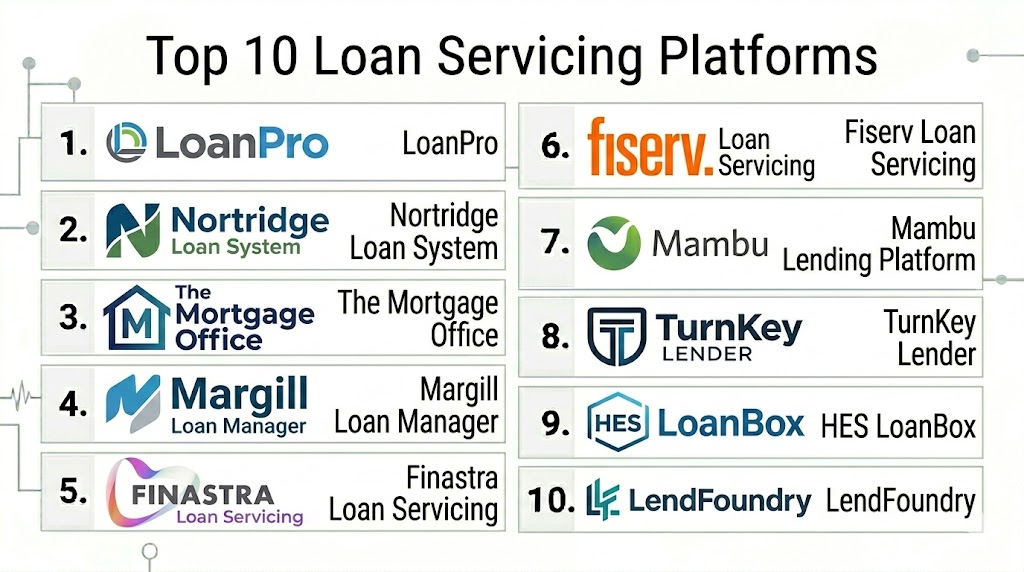
Top 10 Loan Servicing Platforms Tools
#1 — LoanPro
Short description:
A modern API-first loan servicing platform designed for high-growth lenders. It supports full lifecycle servicing, automation, and integration with fintech ecosystems. Known for scalability and flexibility.
Key Features
- Automated payment processing
- Loan lifecycle management
- API-first architecture
- Real-time analytics
- Collections management
- Compliance tracking
Pros
- Highly scalable
- Strong automation
- Flexible configuration
- Modern architecture
Cons
- Requires technical setup
- Pricing not transparent
- Learning curve
- Integration effort
Platforms / Deployment
Cloud
Security & Compliance
Encryption, RBAC. Compliance not publicly stated.
Integrations & Ecosystem
Strong API ecosystem enabling integrations with fintech platforms.
- Payment gateways
- CRM systems
- Data platforms
- Core banking systems
Support & Community
Strong documentation and developer support.
#2 — Nortridge Loan System
Short description:
A flexible loan servicing platform designed for lenders needing customizable workflows. It supports multiple loan types and provides strong reporting capabilities.
Key Features
- Loan tracking and servicing
- Custom workflows
- Reporting tools
- Collections management
- Integration capabilities
Pros
- Highly customizable
- Supports multiple loan types
- Reliable
- Good reporting
Cons
- Outdated interface
- Learning curve
- Integration effort
- Pricing not transparent
Platforms / Deployment
Cloud / On-premise
Security & Compliance
Encryption, RBAC. Compliance not publicly stated.
Integrations & Ecosystem
Supports integrations with financial systems.
- CRM tools
- Accounting systems
- Data platforms
- APIs
Support & Community
Vendor support available.
#3 — The Mortgage Office
Short description:
A user-friendly loan servicing platform designed for private lenders and smaller institutions. It focuses on simplicity and efficiency.
Key Features
- Payment tracking
- Loan accounting
- Reporting tools
- Borrower management
- Compliance tracking
Pros
- Easy to use
- Cost-effective
- Reliable
- Good for small lenders
Cons
- Limited enterprise features
- Scalability constraints
- Basic integrations
- Outdated UI
Platforms / Deployment
Desktop / Cloud
Security & Compliance
Encryption, RBAC. Compliance not publicly stated.
Integrations & Ecosystem
Supports basic integrations.
- Accounting tools
- CRM systems
- Reporting tools
- APIs
Support & Community
Good support for SMB users.
#4 — Margill Loan Manager
Short description:
A financial modeling and loan servicing platform designed for flexibility. It supports complex interest calculations and repayment structures.
Key Features
- Loan servicing
- Interest calculations
- Financial modeling
- Reporting tools
- Data management
Pros
- Strong financial calculations
- Flexible
- Reliable
- Good reporting
Cons
- Limited automation
- Learning curve
- Integration effort
- Pricing not transparent
Platforms / Deployment
Desktop / Cloud
Security & Compliance
Encryption, RBAC. Compliance not publicly stated.
Integrations & Ecosystem
Supports integrations with financial tools.
- Accounting systems
- Data platforms
- CRM tools
- APIs
Support & Community
Vendor support available.
#5 — Finastra Loan Servicing
Short description:
An enterprise-grade platform designed for large financial institutions. It offers comprehensive loan servicing, compliance, and reporting capabilities.
Key Features
- Loan lifecycle management
- Compliance tracking
- Workflow automation
- Reporting and analytics
- Integration capabilities
Pros
- Enterprise-ready
- Strong compliance features
- Scalable
- Reliable
Cons
- Complex implementation
- High cost
- Requires expertise
- Customization effort
Platforms / Deployment
Cloud / Hybrid
Security & Compliance
Encryption, RBAC, audit logs. Compliance not publicly stated.
Integrations & Ecosystem
Supports enterprise integrations.
- Core banking systems
- CRM tools
- Data platforms
- APIs
Support & Community
Strong enterprise support.
#6 — Fiserv Loan Servicing
Short description:
A widely used servicing platform for banks and financial institutions. It offers automation, compliance, and scalability.
Key Features
- Loan servicing workflows
- Payment processing
- Compliance management
- Reporting tools
- Integration capabilities
Pros
- Reliable platform
- Strong compliance
- Scalable
- Good analytics
Cons
- Complex setup
- Customization effort
- Learning curve
- Pricing not transparent
Platforms / Deployment
Cloud / Hybrid
Security & Compliance
Encryption, RBAC. Compliance not publicly stated.
Integrations & Ecosystem
Integrates with banking systems.
- CRM tools
- Financial systems
- Data platforms
- APIs
Support & Community
Enterprise-level support.
#7 — Mambu Lending Platform
Short description:
A cloud-native platform supporting both loan origination and servicing. It offers flexibility and API-driven architecture for fintech companies.
Key Features
- Loan servicing
- Workflow automation
- API integrations
- Analytics
- Multi-product support
Pros
- Flexible platform
- Scalable
- Strong API support
- Modern design
Cons
- Requires configuration
- Customization effort
- Learning curve
- Pricing not transparent
Platforms / Deployment
Cloud
Security & Compliance
Encryption, RBAC. Compliance not publicly stated.
Integrations & Ecosystem
Supports API integrations.
- Payment systems
- CRM tools
- Data platforms
- External services
Support & Community
Growing ecosystem with strong support.
#8 — TurnKey Lender
Short description:
An AI-driven lending platform that includes servicing capabilities. It automates repayments, collections, and reporting.
Key Features
- AI-based servicing
- Payment automation
- Risk monitoring
- Reporting tools
- Integration capabilities
Pros
- Strong automation
- Scalable
- Flexible workflows
- Good analytics
Cons
- Customization complexity
- Integration effort
- Learning curve
- Pricing not transparent
Platforms / Deployment
Cloud
Security & Compliance
Encryption, RBAC. Compliance not publicly stated.
Integrations & Ecosystem
Supports integrations with financial systems.
- CRM tools
- Payment systems
- Data platforms
- APIs
Support & Community
Reliable vendor support.
#9 — HES LoanBox
Short description:
A modern lending platform offering servicing features with automation and analytics. It supports multiple loan products and workflows.
Key Features
- Loan servicing
- Workflow automation
- Risk assessment
- Analytics
- API integrations
Pros
- Flexible platform
- Strong automation
- Scalable
- Modern design
Cons
- Requires configuration
- Integration effort
- Learning curve
- Pricing not transparent
Platforms / Deployment
Cloud
Security & Compliance
Encryption, RBAC. Compliance not publicly stated.
Integrations & Ecosystem
Supports API integrations.
- CRM systems
- Data platforms
- Financial tools
- APIs
Support & Community
Vendor support available.
#10 — LendFoundry
Short description:
A cloud-based loan servicing platform focused on automation and compliance. It supports end-to-end loan management and collections.
Key Features
- Loan servicing automation
- Collections management
- Compliance tools
- Reporting and analytics
- Integration capabilities
Pros
- Strong automation
- Scalable
- Good compliance support
- Flexible
Cons
- Implementation effort
- Customization complexity
- Learning curve
- Pricing not transparent
Platforms / Deployment
Cloud
Security & Compliance
Encryption, RBAC. Compliance not publicly stated.
Integrations & Ecosystem
Supports integrations with enterprise systems.
- CRM tools
- Payment systems
- Data platforms
- APIs
Support & Community
Reliable vendor support.
Comparison Table
| Tool Name | Best For | Platforms | Deployment | Standout Feature | Public Rating |
|---|---|---|---|---|---|
| LoanPro | Modern lenders | Web | Cloud | API-first servicing | N/A |
| Nortridge | Custom workflows | Web | Cloud Hybrid | Customization | N/A |
| Mortgage Office | Small lenders | Desktop | Cloud Desktop | Simplicity | N/A |
| Margill | Financial modeling | Desktop | Cloud Desktop | Interest calculations | N/A |
| Finastra | Enterprise | Web | Cloud Hybrid | Compliance | N/A |
| Fiserv | Banks | Web | Cloud Hybrid | Reliability | N/A |
| Mambu | Fintech | Web | Cloud | API-first | N/A |
| TurnKey | AI servicing | Web | Cloud | Automation | N/A |
| HES | Digital lending | Web | Cloud | Flexibility | N/A |
| LendFoundry | Automation | Web | Cloud | Collections | N/A |
Evaluation and Scoring
| Tool Name | Core | Ease | Integrations | Security | Performance | Support | Value | Weighted Total |
|---|---|---|---|---|---|---|---|---|
| LoanPro | 9 | 7 | 9 | 8 | 9 | 8 | 7 | 8.2 |
| Nortridge | 8 | 7 | 8 | 8 | 8 | 8 | 7 | 7.8 |
| Mortgage Office | 6 | 9 | 6 | 7 | 7 | 7 | 8 | 7.2 |
| Margill | 7 | 7 | 7 | 7 | 7 | 7 | 7 | 7.0 |
| Finastra | 9 | 6 | 9 | 9 | 9 | 9 | 6 | 8.3 |
| Fiserv | 9 | 6 | 9 | 9 | 9 | 9 | 6 | 8.3 |
| Mambu | 8 | 7 | 9 | 8 | 8 | 8 | 7 | 7.9 |
| TurnKey | 8 | 7 | 8 | 8 | 8 | 8 | 7 | 7.8 |
| HES | 8 | 7 | 8 | 8 | 8 | 8 | 7 | 7.8 |
| LendFoundry | 8 | 7 | 8 | 8 | 8 | 8 | 7 | 7.8 |
These scores are comparative and help highlight strengths across platforms. The best tool depends on business scale, automation needs, and integration requirements.
Which Loan Servicing Platform Is Right for You
Solo / Freelancer
Not required. Basic tools or spreadsheets are sufficient.
SMB
The Mortgage Office and Margill are good for simplicity and ease of use.
Mid-Market
LoanPro, Nortridge, and TurnKey offer flexibility and scalability.
Enterprise
Finastra, Fiserv, and Mambu are best suited for large operations.
Budget vs Premium
Budget tools focus on ease of use, while premium tools provide advanced automation and compliance.
Feature Depth vs Ease of Use
Enterprise tools offer deeper features, while SMB tools are easier to adopt.
Integrations and Scalability
API-first platforms offer better scalability and integration capabilities.
Security and Compliance Needs
Enterprise platforms provide stronger compliance and audit capabilities.
Frequently Asked Questions
1. What is a loan servicing platform
A loan servicing platform manages loans after disbursement, including repayment tracking and collections.
It automates processes like payment posting, interest calculation, and reporting.
This helps lenders manage portfolios efficiently.
2. What does loan servicing software do
It automates repayment processes, tracks balances, and manages borrower communication.
It also ensures compliance and reporting.
This reduces manual work and errors.
3. What features should a servicing platform have
Key features include automated payments, borrower portals, analytics, and compliance tools.
Centralized data storage and risk monitoring are also important.
These features improve efficiency and accuracy.
4. Are these platforms cloud-based
Most modern platforms are cloud-based.
Cloud systems offer scalability and flexibility.
They also reduce infrastructure costs.
5. Are loan servicing platforms secure
Most platforms include encryption and access controls.
Some offer advanced security features.
Security varies by vendor.
6. Can small lenders use these platforms
Yes, some platforms are designed for SMB lenders.
They offer simpler features and faster setup.
Enterprise platforms may be too complex.
7. How long does implementation take
Implementation depends on complexity.
Cloud platforms are faster to deploy.
Enterprise systems take longer.
8. Do these platforms support integrations
Yes, they integrate with CRM, payment systems, and data tools.
API support is essential.
Integrations improve efficiency.
9. What are common mistakes when choosing a platform
Ignoring scalability and integration needs is common.
Underestimating implementation effort is another issue.
Proper planning is important.
10. What are alternatives to loan servicing platforms
Alternatives include manual processes or spreadsheets.
However, they lack automation and scalability.
Dedicated platforms provide better efficiency.
Conclusion
Loan Servicing Platforms are essential for lenders looking to manage repayments, reduce risk, and improve operational efficiency. These platforms automate critical processes such as payment tracking, collections, and borrower communication while providing real-time insights into portfolio performance. From modern API-driven platforms like LoanPro and Mambu to enterprise solutions like Finastra and Fiserv, there are tools available for every type of lender. The right choice depends on factors such as scale, automation needs, and integration requirements. Organizations should focus on long-term scalability, compliance, and user experience when selecting a platform. A practical approach is to shortlist a few tools, test them in real scenarios, and validate integrations and performance before making a final decision.
