Introduction
Domain registration platforms help individuals and businesses secure, manage, and control domain names for websites, applications, and online brands. A domain name is the starting point of any online presence, and the right platform ensures reliability, security, and long-term cost control. These platforms offer services like domain search, purchase, renewal, transfer, DNS management, and sometimes bundled services such as hosting and email.
This category matters because your domain represents your brand identity, credibility, and accessibility on the internet. Whether you are launching a startup, running a blog, or managing enterprise infrastructure, domain management plays a critical role. Common use cases include website creation, email setup, domain portfolio management, and marketing campaigns.
Real-world use cases
- Registering domains for startups and new businesses
- Managing multiple domains for agencies and enterprises
- Creating branded email addresses
- Running marketing campaigns with custom domains
- Buying and selling domains for investment
Evaluation Criteria for Buyers
- Pricing transparency and renewal costs
- Availability of domain extensions
- DNS management features
- Security features like domain lock and privacy protection
- Ease of domain transfers
- User interface and usability
- Bulk domain management tools
- Integration with hosting and email services
Best for: startups, developers, marketers, SMBs, enterprises, and domain investors.
Not ideal for: users who only need a simple website builder without direct domain control.
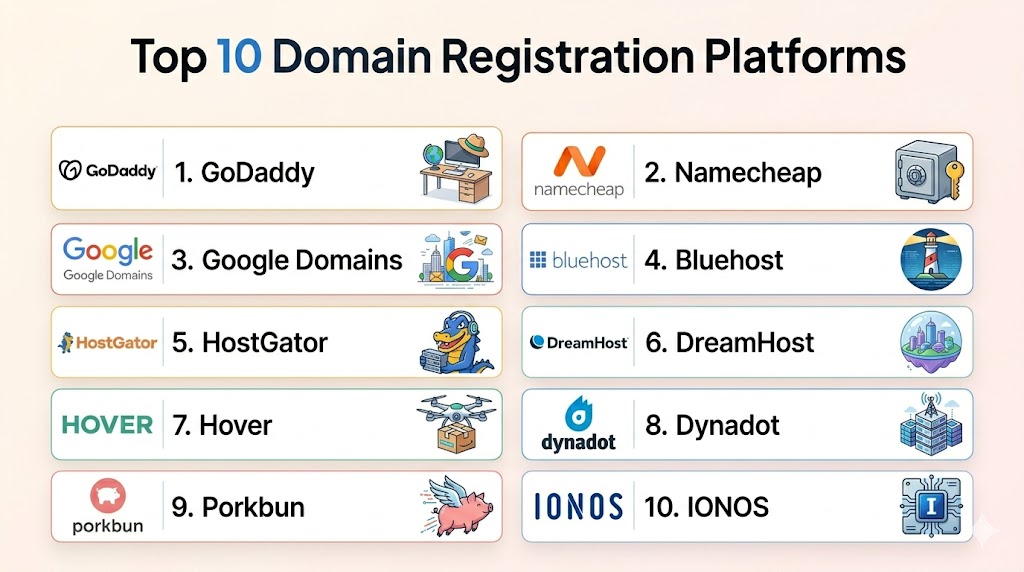
Top 10 Domain Registration Platforms
#1 — GoDaddy
Short description: GoDaddy is one of the most widely used domain registration platforms offering a large inventory of domain names along with tools for domain management, hosting, and business services. It is suitable for beginners and enterprises looking for an all-in-one solution to manage their online presence efficiently.
Key Features
- Wide range of domain extensions
- Domain marketplace and auctions
- DNS management tools
- Website builder integration
- Domain forwarding
- Bulk domain management
- Email and hosting services
Pros
- Large domain inventory
- Beginner-friendly interface
- Strong global reputation
Cons
- Higher renewal pricing
- Upselling during checkout
- Interface can feel complex
Support & Community
Provides 24/7 support and extensive documentation with a large user base.
#2 — Namecheap
Short description: Namecheap is known for affordable pricing and strong privacy features, making it a popular choice for developers, startups, and small businesses. It offers essential domain services with a simple interface and transparent pricing structure.
Key Features
- Affordable domain pricing
- Free domain privacy protection
- DNS management tools
- Domain transfer support
- Hosting and email services
- API access
- Wide TLD support
Pros
- Cost-effective pricing
- Free privacy protection
- Easy-to-use interface
Cons
- Limited enterprise features
- Smaller ecosystem
- Support quality can vary
Support & Community
Offers live chat, ticket support, and strong community presence.
#3 — Google Domains
Short description: Google Domains provides a clean and simple domain registration experience with seamless integration into Google services. It is ideal for users who prefer simplicity and are already using Google Workspace or cloud tools.
Key Features
- Simple domain registration
- Integration with Google Workspace
- DNS management
- Domain forwarding
- Transparent pricing
- Easy domain transfers
Pros
- Clean and simple interface
- Reliable infrastructure
- Strong integration with Google services
Cons
- Limited advanced features
- Smaller marketplace
- Not ideal for domain investors
Support & Community
Backed by Google documentation and support systems.
#4 — Bluehost
Short description: Bluehost combines domain registration with hosting services, making it suitable for users who want an all-in-one solution to launch and manage websites quickly without technical complexity.
Key Features
- Domain registration with hosting
- DNS management
- Website builder integration
- Email hosting
- SSL support
- Domain transfers
Pros
- Beginner-friendly
- Integrated hosting solution
- Easy onboarding
Cons
- Renewal costs can increase
- Limited domain-only features
- Upselling practices
Support & Community
Provides tutorials, onboarding help, and customer support.
#5 — HostGator
Short description: HostGator offers domain registration alongside hosting and website tools, making it a practical choice for small businesses and individuals starting online projects.
Key Features
- Domain registration
- DNS tools
- Hosting integration
- Email services
- Website builder
- Domain forwarding
Pros
- Easy setup
- Affordable starting plans
- Good for beginners
Cons
- Higher renewal costs
- Limited advanced features
- Interface may feel outdated
Support & Community
Offers support and documentation for small business users.
#6 — DreamHost
Short description: DreamHost is a domain registrar focused on simplicity and transparent pricing, often preferred by developers and small businesses who want reliable domain and hosting services.
Key Features
- Domain registration
- DNS management
- Transparent pricing
- Hosting integration
- Email services
- Privacy protection
Pros
- Simple pricing structure
- Developer-friendly
- Clean interface
Cons
- Limited advanced tools
- Smaller ecosystem
- Not ideal for large domain portfolios
Support & Community
Provides documentation and developer-focused support.
#7 — Hover
Short description: Hover focuses on simplicity and user-friendly design, making it a great option for individuals and small businesses that want easy domain management without unnecessary complexity.
Key Features
- Domain registration
- Simple dashboard
- DNS configuration
- Domain forwarding
- Email services
- Privacy protection
Pros
- Clean interface
- Easy to use
- No aggressive upselling
Cons
- Limited advanced features
- Smaller ecosystem
- Not ideal for bulk management
Support & Community
Offers support with focus on simplicity and user experience.
#8 — Dynadot
Short description: Dynadot is designed for users managing multiple domains, offering strong bulk management tools and a marketplace for buying and selling domains.
Key Features
- Bulk domain management
- Domain marketplace
- DNS tools
- API access
- Domain transfers
- Privacy protection
Pros
- Strong bulk management
- Affordable pricing
- Good for domain investors
Cons
- Interface not beginner-friendly
- Limited hosting features
- Smaller ecosystem
Support & Community
Provides support for advanced users and domain investors.
#9 — Porkbun
Short description: Porkbun is known for affordable pricing and included features, making it a strong option for budget-conscious users who want essential domain services without extra costs.
Key Features
- Low-cost domains
- Free privacy protection
- DNS tools
- SSL included
- Email forwarding
- Simple dashboard
Pros
- Competitive pricing
- Free add-ons
- Easy interface
Cons
- Smaller brand presence
- Limited enterprise features
- Fewer integrations
Support & Community
Offers support and growing community adoption.
#10 — IONOS
Short description: IONOS provides domain registration along with hosting and business tools, making it suitable for companies looking for a complete online solution.
Key Features
- Domain registration
- DNS management
- Hosting services
- Email tools
- Website builder
- Business integrations
Pros
- All-in-one platform
- Strong business tools
- Reliable infrastructure
Cons
- Complex interface
- Pricing may vary
- Upselling practices
Support & Community
Provides business-focused support and onboarding.
Comparison Table
| Tool Name | Best For | Ease of Use | Pricing | Standout Feature |
|---|---|---|---|---|
| GoDaddy | All users | High | Medium | Large domain ecosystem |
| Namecheap | Budget users | High | Low | Free privacy |
| Google Domains | Simplicity | Very High | Medium | Google integration |
| Bluehost | Beginners | High | Medium | Hosting bundle |
| HostGator | Small sites | High | Low | Easy setup |
| DreamHost | Developers | Medium | Medium | Transparent pricing |
| Hover | Beginners | Very High | Medium | Clean interface |
| Dynadot | Investors | Medium | Low | Bulk management |
| Porkbun | Budget users | High | Low | Free add-ons |
| IONOS | Businesses | Medium | Medium | Business ecosystem |
Scoring Table
| Tool Name | Core | Ease | Integrations | Security | Performance | Support | Value | Total |
|---|---|---|---|---|---|---|---|---|
| GoDaddy | 9 | 8 | 9 | 8 | 9 | 9 | 7 | 8.4 |
| Namecheap | 8 | 9 | 7 | 8 | 8 | 8 | 9 | 8.2 |
| Google Domains | 8 | 9 | 8 | 8 | 9 | 8 | 8 | 8.3 |
| Bluehost | 7 | 8 | 8 | 7 | 8 | 8 | 7 | 7.6 |
| HostGator | 7 | 8 | 7 | 7 | 8 | 7 | 7 | 7.3 |
| DreamHost | 7 | 8 | 7 | 7 | 8 | 8 | 8 | 7.6 |
| Hover | 7 | 9 | 6 | 7 | 8 | 7 | 7 | 7.4 |
| Dynadot | 8 | 7 | 7 | 7 | 8 | 7 | 8 | 7.6 |
| Porkbun | 7 | 9 | 6 | 7 | 8 | 7 | 9 | 7.7 |
| IONOS | 8 | 7 | 8 | 8 | 8 | 8 | 7 | 7.9 |
These scores help compare platforms across key areas like features, usability, integrations, and value. They are relative comparisons and should be used to shortlist options rather than make a final decision without testing.
Which Platform Is Right for You?
Solo / Freelancer
Namecheap, Porkbun, and Hover are best for affordability and simplicity.
SMB
GoDaddy, Google Domains, and Bluehost offer balanced features.
Mid-Market
Dynadot and IONOS provide better scalability.
Enterprise
GoDaddy and IONOS are suitable for business needs.
Frequently Asked Questions
1. What is a domain registration platform?
A domain registration platform allows users to purchase and manage domain names for websites and online services. It acts as an intermediary between the user and domain registries, providing tools for DNS management, renewals, and transfers. These platforms also often include additional services like email and hosting to simplify online setup.
2. How much does a domain cost?
The cost of a domain depends on the extension, provider, and pricing structure. Some domains are inexpensive initially but have higher renewal fees later. It is important to review both registration and renewal pricing to understand long-term costs before purchasing.
3. What is domain privacy protection?
Domain privacy protection hides your personal information from public WHOIS databases. Without it, your contact details can be visible to anyone, which may lead to spam or unwanted contact. Many platforms offer this feature either free or as a paid add-on.
4. Can I transfer my domain to another provider?
Yes, most domain registrars allow domain transfers, although there may be restrictions such as lock periods after registration. The transfer process usually involves authorization codes and verification steps to ensure security and ownership.
5. Do I need hosting with domain registration?
No, domain registration and hosting are separate services. However, many providers bundle them together for convenience. You can register a domain with one provider and host your website with another if needed.
6. What is DNS management?
DNS management allows you to control how your domain connects to websites, email servers, and other services. It is an essential feature for configuring your domain properly and ensuring your website and applications work correctly.
7. Are cheap domain registrars reliable?
Yes, many affordable registrars are reliable, but you should evaluate features, support, and renewal pricing. Low upfront cost does not always mean the best long-term value, so it is important to compare options carefully.
8. What happens if I don’t renew my domain?
If you fail to renew your domain, it will expire and may eventually become available for others to purchase. Some registrars offer grace periods, but losing a domain can impact your brand and website availability.
9. Can I manage multiple domains in one account?
Yes, most platforms provide bulk domain management tools that allow you to manage multiple domains efficiently. This is especially useful for businesses, agencies, and domain investors.
10. Which domain platform is best for beginners?
Platforms like Hover, Namecheap, and Google Domains are generally easier for beginners due to their simple interfaces and straightforward workflows. They reduce complexity and make domain management more accessible.
Conclusion
Domain registration platforms are a critical part of building and managing an online presence, and choosing the right one depends on your budget, technical needs, and long-term goals. Some platforms focus on affordability and simplicity, while others offer advanced features and integrations for businesses. The best approach is to shortlist a few platforms, compare pricing and features, and test their usability. Once selected, secure your domain early and ensure proper management of DNS, security, and renewals to maintain control and avoid future issues.

Great comparison and easy to read. The article clearly highlights the strengths and limitations of each domain registration platform, making it much simpler to evaluate the available options.