Introduction
Clinical Data Management Systems CDMS are specialized software platforms used in clinical research to collect, validate, clean, store, and manage data generated during clinical trials. These systems ensure that clinical data is accurate, consistent, traceable, and compliant with strict regulatory requirements such as FDA and global clinical research standards.
In modern clinical research, data comes from multiple sources such as hospitals, labs, wearable devices, and electronic case report forms. Without structured systems, this data becomes difficult to manage and validate. CDMS platforms solve this problem by centralizing all clinical trial data into a secure environment where it can be monitored, cleaned, and analyzed efficiently.
A CDMS typically works alongside Electronic Data Capture systems and other clinical tools to support end-to-end trial management, from data entry to statistical reporting and regulatory submission.
Common use cases include:
- Clinical trial data collection and storage
- Data validation and error checking
- Case report form management
- Regulatory reporting and compliance
- Data cleaning and query management
Key evaluation criteria:
- Data accuracy and validation capabilities
- Regulatory compliance support
- Integration with EDC and CTMS systems
- Workflow automation and query handling
- Security and audit trail features
- Scalability for global trials
- Reporting and analytics capabilities
- Ease of use for clinical teams
Best for: Pharmaceutical companies, biotech firms, CROs, hospitals, and academic research organizations.
Not ideal for: Small research teams with no structured clinical trial operations or regulatory requirements.
Key Trends in Clinical Data Management Systems CDMS
- Shift toward fully cloud-based CDMS platforms
- Tight integration with Electronic Data Capture systems
- AI-powered data cleaning and anomaly detection
- Real-time clinical data validation and monitoring
- Strong focus on regulatory compliance automation
- Increased use of standardized data models like CDISC
- Integration with wearable and remote patient data sources
- Automation of query management and discrepancy resolution
- Growing adoption of decentralized clinical trials
- Enhanced interoperability across clinical research systems
How We Selected These Tools Methodology
- Evaluated global adoption in pharmaceutical and biotech industries
- Assessed data integrity and validation capabilities
- Reviewed compliance with regulatory standards
- Considered integration with EDC, CTMS, and LIMS systems
- Analyzed scalability for multi-site global trials
- Included enterprise and mid-market platforms
- Focused on automation and workflow efficiency
- Balanced usability with advanced clinical features
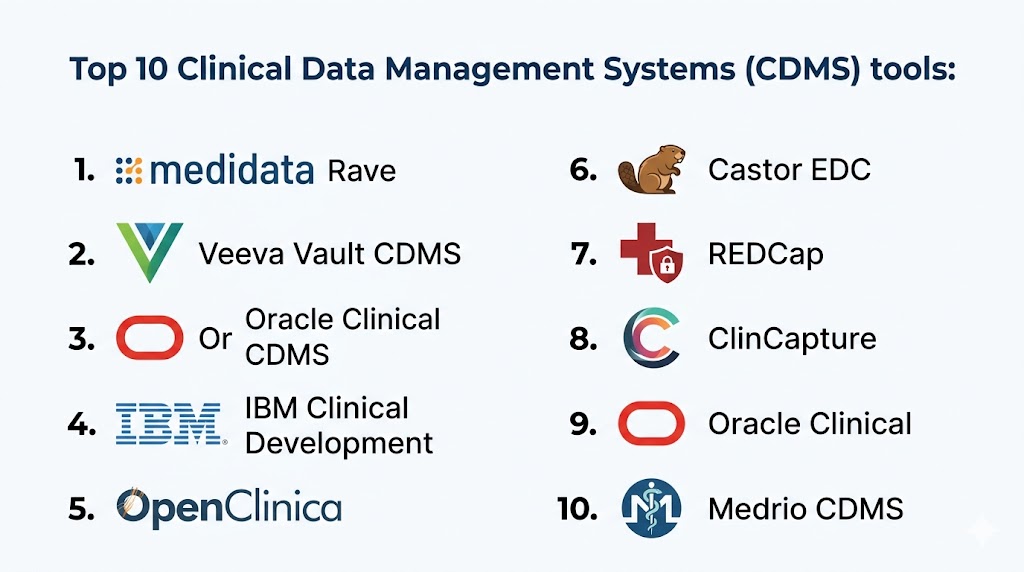
Top 10 Clinical Data Management Systems CDMS
#1 — Medidata Rave
Short description:
Medidata Rave is one of the most widely used clinical data management platforms globally. It provides end-to-end data capture, validation, and management for clinical trials. The system integrates seamlessly with EDC and analytics tools. It is ideal for large pharmaceutical studies.
Key Features
- Clinical data capture and management
- Real-time data validation
- Query and discrepancy management
- Integration with EDC systems
- Advanced analytics and reporting
- Regulatory compliance tools
Pros
- Industry-leading platform
- Highly scalable
- Strong regulatory compliance
Cons
- Expensive
- Complex setup
- Requires training
Platforms / Deployment
Cloud
Security & Compliance
Audit trails, role-based access, encryption
Integrations & Ecosystem
Integrates with Medidata ecosystem and external clinical tools
- EDC systems
- CTMS platforms
- APIs
Support & Community
Enterprise-level global support
#2 — Veeva Vault CDMS
Short description:
Veeva Vault CDMS is a modern cloud-based clinical data management system designed for life sciences companies. It provides unified data management, validation, and study oversight. The platform is widely used in pharma research.
Key Features
- Clinical data capture
- Real-time validation
- Study management
- Workflow automation
- Regulatory compliance tools
- Data integration
Pros
- Cloud-native
- Strong compliance
- Unified platform
Cons
- High cost
- Complex implementation
- Requires training
Platforms / Deployment
Cloud
Security & Compliance
Strong audit logs and compliance controls
Integrations & Ecosystem
Integrates with Veeva clinical suite
- CTMS tools
- EDC systems
Support & Community
Enterprise support
#3 — Oracle Clinical One CDMS
Short description:
Oracle Clinical One is a unified clinical data platform that combines data capture, management, and analytics. It is designed for global clinical trials. The system improves speed and efficiency in trial execution.
Key Features
- Unified data management
- Clinical data capture
- Real-time analytics
- Study configuration tools
- Workflow automation
- Cloud-based architecture
Pros
- Highly scalable
- Unified system
- Strong analytics
Cons
- Expensive
- Complex setup
- Requires expertise
Platforms / Deployment
Cloud
Security & Compliance
Enterprise-grade security and compliance
Integrations & Ecosystem
Integrates with Oracle clinical systems
- EDC platforms
- Analytics tools
Support & Community
Enterprise support
#4 — IBM Clinical Development
Short description:
IBM Clinical Development is a clinical data platform designed for trial management and data collection. It supports electronic data capture and real-time validation. The platform is suitable for mid to large clinical studies.
Key Features
- Clinical data capture
- Data validation
- Study management
- Reporting tools
- Workflow automation
- Compliance support
Pros
- Reliable platform
- Strong analytics
- Scalable
Cons
- Limited modern UI
- Pricing varies
- Requires setup
Platforms / Deployment
Cloud
Security & Compliance
Audit trails and compliance controls
Integrations & Ecosystem
Integrates with IBM and third-party tools
- APIs
- Clinical systems
Support & Community
Enterprise support
#5 — OpenClinica
Short description:
OpenClinica is an open-source clinical data management system widely used in academic and research settings. It supports electronic data capture and clinical trial workflows. The platform is flexible and cost-effective.
Key Features
- Electronic data capture
- Clinical data management
- Study configuration
- Data validation
- Reporting tools
- Open-source flexibility
Pros
- Free and open-source
- Flexible
- Strong academic adoption
Cons
- Requires technical setup
- Limited enterprise features
- Smaller ecosystem
Platforms / Deployment
Web / Self-hosted
Security & Compliance
Role-based access control
Integrations & Ecosystem
Supports integration with clinical systems
- APIs
- Research tools
Support & Community
Community-driven support
#6 — Castor EDC
Short description:
Castor EDC is a cloud-based clinical data management platform designed for researchers and clinical teams. It provides easy data collection and management. The platform is user-friendly and scalable.
Key Features
- Electronic data capture
- Clinical data management
- Study design tools
- Data validation
- Reporting dashboards
- Collaboration tools
Pros
- Easy to use
- Cloud-based
- Fast setup
Cons
- Limited advanced customization
- Pricing varies
- Smaller enterprise features
Platforms / Deployment
Cloud
Security & Compliance
GDPR compliant, encrypted storage
Integrations & Ecosystem
Integrates with research systems
- APIs
- EHR systems
Support & Community
Good support
#7 — REDCap
Short description:
REDCap is a widely used research data capture system designed for academic and clinical research. It supports secure data collection and management. The platform is highly trusted in healthcare research.
Key Features
- Data collection forms
- Clinical data management
- Survey tools
- Audit trails
- Reporting features
- Secure data storage
Pros
- Highly secure
- Widely adopted
- Free for institutions
Cons
- Limited flexibility
- Institutional dependency
- Basic UI
Platforms / Deployment
Web / On-premise
Security & Compliance
HIPAA compliant, audit logging
Integrations & Ecosystem
Integrates with healthcare systems
- APIs
- Research tools
Support & Community
Strong institutional support
#8 — ClinCapture
Short description:
ClinCapture is a cloud-based clinical data management platform designed for clinical trials. It provides electronic data capture and validation tools. The platform is suitable for small to mid-sized trials.
Key Features
- Clinical data capture
- Data validation
- Study management
- Workflow tools
- Reporting features
- Compliance support
Pros
- Affordable
- Easy to deploy
- User-friendly
Cons
- Limited scalability
- Basic analytics
- Smaller ecosystem
Platforms / Deployment
Cloud
Security & Compliance
Access control and audit trails
Integrations & Ecosystem
Supports clinical system integrations
- APIs
- EDC tools
Support & Community
Standard support
#9 — Oracle Clinical
Short description:
Oracle Clinical is a traditional clinical data management system used for large-scale clinical trials. It supports structured data capture and validation. The platform is widely used in enterprise environments.
Key Features
- Data capture and validation
- Study management
- Reporting tools
- Compliance features
- Workflow automation
- Data tracking
Pros
- Reliable
- Enterprise-ready
- Strong validation
Cons
- Outdated interface
- Complex setup
- High cost
Platforms / Deployment
On-premise / Cloud
Security & Compliance
Regulatory compliance support
Integrations & Ecosystem
Integrates with Oracle clinical suite
- ERP systems
- Clinical tools
Support & Community
Enterprise support
#10 — Medrio CDMS
Short description:
Medrio CDMS is a cloud-based clinical data management system designed for fast and flexible clinical trials. It provides easy setup and strong data capture capabilities. The platform is widely used in mid-sized research organizations.
Key Features
- Clinical data capture
- Study management
- Real-time validation
- Reporting tools
- Workflow automation
- Compliance support
Pros
- Fast deployment
- Easy to use
- Flexible
Cons
- Limited advanced features
- Pricing varies
- Smaller ecosystem
Platforms / Deployment
Cloud
Security & Compliance
Audit trails and compliance support
Integrations & Ecosystem
Integrates with clinical research systems
- APIs
- EDC systems
Support & Community
Good support
Comparison Table
| Tool Name | Best For | Platform Supported | Deployment | Standout Feature | Public Rating |
|---|---|---|---|---|---|
| Medidata Rave | Global pharma trials | Web | Cloud | Advanced analytics | N/A |
| Veeva Vault CDMS | Pharma companies | Web | Cloud | Unified platform | N/A |
| Oracle Clinical One | Large enterprises | Web | Cloud | Unified architecture | N/A |
| IBM Clinical Dev | Mid-large trials | Web | Cloud | Study management | N/A |
| OpenClinica | Academic research | Web | Self-hosted | Open-source flexibility | N/A |
| Castor EDC | Small-mid trials | Web | Cloud | Ease of use | N/A |
| REDCap | Healthcare research | Web | On-premise | Secure data capture | N/A |
| ClinCapture | Small studies | Web | Cloud | Simple setup | N/A |
| Oracle Clinical | Enterprise legacy | Web | Hybrid | Data validation | N/A |
| Medrio CDMS | Mid-size trials | Web | Cloud | Fast deployment | N/A |
Evaluation & Scoring
| Tool Name | Core | Ease | Integrations | Security | Performance | Support | Value | Weighted Total |
|---|---|---|---|---|---|---|---|---|
| Medidata | 10 | 7 | 9 | 10 | 10 | 9 | 6 | 8.8 |
| Veeva Vault | 10 | 7 | 9 | 10 | 9 | 9 | 6 | 8.7 |
| Oracle Clinical One | 9 | 7 | 9 | 9 | 9 | 9 | 6 | 8.4 |
| IBM Clinical Dev | 8 | 8 | 8 | 8 | 8 | 8 | 7 | 8.0 |
| OpenClinica | 8 | 7 | 7 | 8 | 8 | 7 | 9 | 7.9 |
| Castor EDC | 8 | 9 | 8 | 8 | 8 | 8 | 8 | 8.1 |
| REDCap | 9 | 8 | 8 | 10 | 9 | 9 | 8 | 8.6 |
| ClinCapture | 7 | 9 | 7 | 8 | 7 | 7 | 9 | 7.8 |
| Oracle Clinical | 9 | 6 | 8 | 9 | 9 | 9 | 6 | 8.2 |
| Medrio | 8 | 9 | 8 | 8 | 8 | 8 | 8 | 8.1 |
Which CDMS Is Right for You
Solo / Academic Research
Use REDCap or OpenClinica for affordability and flexibility.
SMB Clinical Teams
Castor EDC or Medrio for balanced usability.
Mid Market Organizations
IBM Clinical Development or Oracle Clinical One for scalability.
Enterprise Pharma
Medidata Rave and Veeva Vault for global trials.
Budget vs Premium
Open-source tools reduce cost, enterprise tools provide full compliance.
Feature Depth vs Ease of Use
Advanced systems offer deeper control, simple tools improve usability.
Integrations & Scalability
API-driven CDMS scale better across global trials.
Security & Compliance Needs
Regulated trials require strong audit and compliance systems.
Frequently Asked Questions
1 What is a CDMS
A CDMS is a system used to manage clinical trial data. It ensures data accuracy and compliance. It centralizes trial information. It improves efficiency.
2 Why is CDMS important
It ensures clinical data integrity and reduces errors. It supports regulatory compliance. It improves trial efficiency. It enhances data quality.
3 Who uses CDMS
Pharmaceutical companies, biotech firms, CROs, and research institutions use CDMS. It supports clinical trials. It is widely adopted globally. It is essential for research.
4 Is CDMS cloud-based
Most modern CDMS platforms are cloud-based. Some support hybrid or on-premise setups. Cloud systems improve accessibility. Deployment varies.
5 Does CDMS integrate with other systems
Yes, CDMS integrates with EDC, CTMS, and LIMS systems. This improves workflows. It ensures data consistency. Integration is essential.
6 Is CDMS secure
Yes, most systems include encryption and audit logs. Compliance is critical. Enterprise tools offer strong protection. Security depends on configuration.
7 How expensive is CDMS
Pricing varies from free open-source tools to expensive enterprise systems. Cost depends on features and scale. Enterprise tools are more expensive. Budget options exist.
8 What features should CDMS have
Key features include data validation, reporting, and workflow management. Advanced systems include analytics. Integration is important. Compliance is essential.
9 Can CDMS handle global trials
Yes, CDMS is designed for multi-site global trials. It supports distributed teams. It ensures standardized data. It improves coordination.
10 How do I choose the right CDMS
Evaluate features, scalability, compliance, and integration needs. Consider trial complexity. Test multiple systems. Choose based on long-term goals.
Conclusion
Clinical Data Management Systems CDMS are a core foundation of modern clinical research because they ensure accurate, secure, and compliant handling of clinical trial data while enabling real-time validation, efficient workflows, and seamless integration across global research ecosystems. These platforms help pharmaceutical companies, biotech firms, CROs, and academic institutions manage increasingly complex datasets while maintaining regulatory compliance and improving decision-making speed. While enterprise CDMS solutions provide advanced analytics, automation, and scalability for large clinical trials, open-source and lightweight systems offer flexibility and cost efficiency for smaller research environments. The best choice ultimately depends on trial complexity, regulatory requirements, and organizational scale. A practical approach is to evaluate a shortlist of platforms in real-world trial scenarios and select the one that best aligns with long-term clinical research and compliance goals.

A helpful comparison that breaks down clinical data management systems in a simple and organized way, making it easier to evaluate the strengths of different platforms.