Introduction
Transactional Email APIs help developers and businesses send automated, real-time emails triggered by user actions such as sign-ups, password resets, order confirmations, OTPs, and notifications. Unlike marketing emails, transactional emails are critical system communications that must be delivered instantly, reliably, and securely. These APIs integrate directly into applications, enabling teams to send, track, and manage emails at scale without building their own email infrastructure.
This category matters because email delivery reliability directly impacts user experience, security, and business operations. Poor delivery can lead to lost customers, failed logins, or missed transactions. Modern platforms also provide analytics, deliverability tools, and compliance features.
Real-world use cases
- Sending OTPs and authentication emails
- Order confirmations and receipts
- Password reset emails
- System alerts and notifications
- Account verification workflows
Evaluation Criteria for Buyers
- Email deliverability and inbox placement
- API performance and reliability
- Ease of integration and documentation
- Pricing and scalability
- Analytics and reporting features
- Security and compliance features
- Template and email management tools
- Support and developer community
Best for: developers, SaaS companies, startups, eCommerce platforms, and enterprises.
Not ideal for: users only needing bulk marketing emails without API integration.
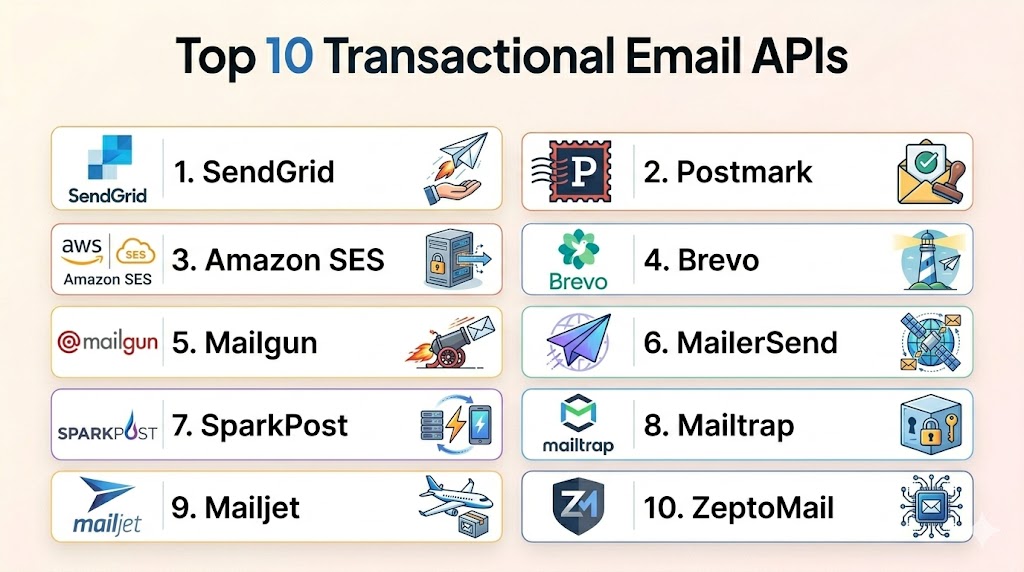
Top 10 Transactional Email APIs
#1 — SendGrid
Short description: SendGrid is a widely used transactional email API platform that provides scalable email delivery, analytics, and developer-friendly integration tools. It is suitable for startups, SaaS platforms, and enterprises that require reliable email delivery at scale.
Key Features
- RESTful email API
- High deliverability infrastructure
- Email templates and dynamic content
- Real-time analytics and tracking
- SMTP relay support
- Webhooks for event tracking
- Scalable email sending
Pros
- Strong deliverability performance
- Easy integration
- Scalable infrastructure
Cons
- Pricing can increase with scale
- Interface complexity for beginners
- Advanced features require learning
Support & Community
Large developer community with documentation and support resources.
#2 — Mailgun
Short description: Mailgun is a developer-focused transactional email API platform designed for sending, receiving, and tracking emails with strong automation and analytics capabilities.
Key Features
- Email sending and receiving APIs
- Advanced analytics and logs
- SMTP integration
- Email validation tools
- Routing and automation
- Webhooks
- High deliverability tools
Pros
- Developer-friendly
- Strong analytics
- Flexible routing options
Cons
- Learning curve for beginners
- Pricing complexity
- Requires configuration
Support & Community
Good documentation and developer-focused support.
#3 — Amazon SES
Short description: Amazon SES is a cost-effective transactional email service designed for high-volume email sending with deep integration into cloud infrastructure.
Key Features
- Scalable email sending
- SMTP and API access
- Integration with cloud services
- High deliverability
- Email authentication
- Dedicated IP options
- Monitoring tools
Pros
- Very cost-effective
- Highly scalable
- Strong infrastructure
Cons
- Complex setup
- Requires technical expertise
- Limited UI tools
Support & Community
Backed by cloud support and large developer ecosystem.
#4 — Postmark
Short description: Postmark focuses on fast and reliable transactional email delivery, making it ideal for time-sensitive messages like password resets and notifications.
Key Features
- Fast email delivery
- Dedicated transactional email focus
- Message streams
- Detailed logs
- Templates
- API and SMTP
- Delivery tracking
Pros
- High reliability
- Fast delivery speed
- Simple interface
Cons
- Limited marketing features
- Higher cost for volume
- Smaller ecosystem
Support & Community
Responsive support with strong documentation.
#5 — SparkPost
Short description: SparkPost is an enterprise-grade email API platform known for its analytics, deliverability tools, and large-scale email sending capabilities.
Key Features
- High-volume email delivery
- Advanced analytics
- Template management
- Real-time tracking
- Webhooks
- API integrations
- Deliverability tools
Pros
- Strong analytics
- Scalable for enterprises
- Good performance
Cons
- Complex setup
- Pricing can vary
- Not beginner-friendly
Support & Community
Enterprise support and technical documentation.
#6 — Mailjet
Short description: Mailjet offers both transactional and marketing email capabilities with a focus on collaboration and ease of use.
Key Features
- Email API
- Template builder
- Real-time monitoring
- SMTP relay
- Collaboration tools
- Email personalization
- Analytics
Pros
- Easy to use
- Good UI
- Team collaboration features
Cons
- Limited advanced features
- Deliverability varies
- Smaller developer ecosystem
Support & Community
Provides support and documentation for teams.
#7 — Brevo
Short description: Brevo provides transactional email APIs along with marketing automation features, making it suitable for growing businesses.
Key Features
- Transactional email API
- Automation workflows
- Email templates
- Analytics dashboard
- SMTP relay
- SMS integration
- Contact management
Pros
- Multi-channel features
- Easy to use
- Affordable pricing
Cons
- Limited advanced API features
- Smaller infrastructure
- UI limitations
Support & Community
Offers support and growing community resources.
#8 — MailerSend
Short description: MailerSend is a developer-friendly transactional email platform designed for modern applications and startups.
Key Features
- Email API
- Template management
- Real-time analytics
- Webhooks
- Email logs
- SMTP support
- User-friendly dashboard
Pros
- Clean interface
- Easy onboarding
- Developer-focused
Cons
- Limited enterprise features
- Smaller ecosystem
- Scaling limits
Support & Community
Provides documentation and developer support.
#9 — Mailtrap
Short description: Mailtrap is a testing-focused email platform that allows developers to test transactional emails safely before sending them to users.
Key Features
- Email sandbox testing
- Fake SMTP server
- Email preview tools
- Debugging tools
- API integration
- Email logs
- Collaboration tools
Pros
- Great for testing
- Developer-friendly
- Safe environment
Cons
- Not for production sending
- Limited scalability
- Focused use case
Support & Community
Strong developer documentation and support.
#10 — ZeptoMail
Short description: ZeptoMail is designed for sending transactional emails quickly and reliably, especially for businesses needing fast delivery at scale.
Key Features
- Transactional email API
- SMTP support
- High delivery speed
- Email templates
- Tracking tools
- Webhooks
- Scalable sending
Pros
- Fast delivery
- Affordable pricing
- Easy setup
Cons
- Limited ecosystem
- Fewer advanced tools
- Smaller community
Support & Community
Provides documentation and support for users.
Comparison Table
| Tool | Best For | Ease of Use | Pricing | Standout Feature |
|---|---|---|---|---|
| SendGrid | All users | High | Medium | High scalability |
| Mailgun | Developers | Medium | Medium | Advanced analytics |
| Amazon SES | Enterprises | Low | Low | Cost efficiency |
| Postmark | Reliability | High | Medium | Fast delivery |
| SparkPost | Enterprise | Medium | Medium | Deep analytics |
| Mailjet | Teams | High | Medium | Collaboration tools |
| Brevo | SMBs | High | Low | Multi-channel features |
| MailerSend | Startups | High | Low | Developer-friendly |
| Mailtrap | Testing | High | Low | Email sandbox |
| ZeptoMail | SMBs | High | Low | Fast delivery |
Scoring Table
| Tool | Core | Ease | Integrations | Security | Performance | Support | Value | Total |
|---|---|---|---|---|---|---|---|---|
| SendGrid | 9 | 8 | 9 | 8 | 9 | 9 | 8 | 8.6 |
| Mailgun | 8 | 7 | 9 | 8 | 8 | 8 | 8 | 8.0 |
| Amazon SES | 9 | 6 | 9 | 9 | 9 | 8 | 9 | 8.5 |
| Postmark | 8 | 9 | 7 | 8 | 9 | 8 | 7 | 8.0 |
| SparkPost | 9 | 7 | 8 | 8 | 9 | 8 | 7 | 8.1 |
| Mailjet | 7 | 9 | 7 | 7 | 8 | 7 | 8 | 7.8 |
| Brevo | 7 | 9 | 7 | 7 | 8 | 7 | 9 | 7.9 |
| MailerSend | 7 | 9 | 7 | 7 | 8 | 7 | 8 | 7.8 |
| Mailtrap | 6 | 9 | 6 | 7 | 7 | 7 | 8 | 7.2 |
| ZeptoMail | 7 | 8 | 6 | 7 | 8 | 7 | 9 | 7.7 |
These scores help compare platforms based on performance, usability, and value. Higher scores indicate better overall balance, but the best choice depends on your specific use case and requirements.
Which Tool Is Right for You?
Solo / Freelancer
MailerSend, Brevo, and ZeptoMail are affordable and easy to use.
SMB
SendGrid, Mailjet, and Brevo offer balanced features.
Mid-Market
Mailgun and Postmark provide better control and analytics.
Enterprise
Amazon SES, SparkPost, and SendGrid are ideal for large-scale needs.
Frequently Asked Questions
1. What is a transactional email API?
A transactional email API allows applications to send automated emails triggered by user actions such as sign-ups or password resets. It ensures emails are delivered quickly and reliably.
2. How is it different from marketing email?
Transactional emails are triggered by actions, while marketing emails are sent in bulk for promotions. Transactional emails require higher reliability.
3. Is deliverability important?
Yes, high deliverability ensures emails reach inboxes instead of spam folders, which is critical for user experience.
4. Can I scale email sending?
Yes, most platforms support scaling from small to high-volume email sending.
5. Do I need coding knowledge?
Basic API integration knowledge is helpful, but many platforms offer simple tools.
6. Are these APIs secure?
Most platforms include authentication, encryption, and monitoring features.
7. Can I test emails before sending?
Yes, tools like Mailtrap allow safe testing before production.
8. What is SMTP vs API?
SMTP is a traditional method, while APIs offer better performance and control.
9. Which is best for startups?
MailerSend, Brevo, and SendGrid are good options.
10. What should I consider before choosing?
Focus on deliverability, pricing, integration, and scalability.
Conclusion
Transactional Email APIs are essential for modern applications where timely and reliable communication is critical. The right platform depends on your scale, technical expertise, and business needs. Some tools focus on simplicity and affordability, while others offer enterprise-level performance and analytics. The best approach is to shortlist a few options, test integration and deliverability, and evaluate costs before making a final decision.
