Introduction
Web Application Firewall (WAF) Platforms are security solutions designed to protect web applications, APIs, and digital services from cyberattacks such as SQL injection, cross-site scripting (XSS), bot abuse, and zero-day vulnerabilities. They act as a protective layer between users and web applications by filtering, monitoring, and blocking malicious traffic in real time.
In today’s cloud-first and API-driven world, applications are constantly exposed to the internet, making WAF platforms a critical part of modern cybersecurity architecture. These tools are no longer optional—they are a core defense layer in Zero Trust security strategies.
WAF platforms are widely used to:
- Protect web apps and APIs from OWASP Top 10 threats
- Block automated bots and DDoS traffic
- Enforce security policies at the application layer
- Monitor and analyze HTTP/HTTPS traffic
- Ensure compliance with security standards
- Secure cloud-native and hybrid applications
Key evaluation criteria
When selecting a WAF platform, organizations typically evaluate:
- Rule customization and flexibility
- Real-time threat detection accuracy
- API security capabilities
- Bot mitigation and DDoS protection
- Cloud vs on-prem deployment support
- Ease of integration with DevOps pipelines
- Logging, monitoring, and analytics depth
- Performance impact on application latency
- Compliance support (PCI, ISO, GDPR, etc.)
- Scalability across distributed systems
Best for:
WAF platforms are best for enterprises, SaaS companies, fintech platforms, e-commerce businesses, and API-driven applications that require strong protection against web-based attacks.
Not ideal for:
They are less necessary for small static websites or internal-only applications with no external exposure.
Key Trends in Web Application Firewall Platforms
- Increased adoption of AI-based threat detection and anomaly scoring
- Shift toward cloud-native and edge-based WAF architectures
- Strong focus on API security and microservices protection
- Integration with DevSecOps pipelines (security-as-code)
- Real-time bot detection and behavioral analysis
- Unified protection for web apps + APIs + serverless functions
- Zero Trust alignment and identity-aware policies
- Automated rule tuning to reduce false positives
- Deep integration with SIEM and SOAR platforms
- Lightweight deployment with minimal latency impact
How We Selected These Tools (Methodology)
The selection of these WAF platforms is based on:
- Global adoption and enterprise usage
- Strength of application-layer security coverage
- Effectiveness against OWASP Top 10 threats
- Bot and DDoS mitigation capabilities
- Cloud-native readiness and scalability
- Multi-cloud and hybrid support
- Integration with DevOps and security ecosystems
- Policy customization flexibility
- Vendor maturity and reliability
- Real-world performance in production environments
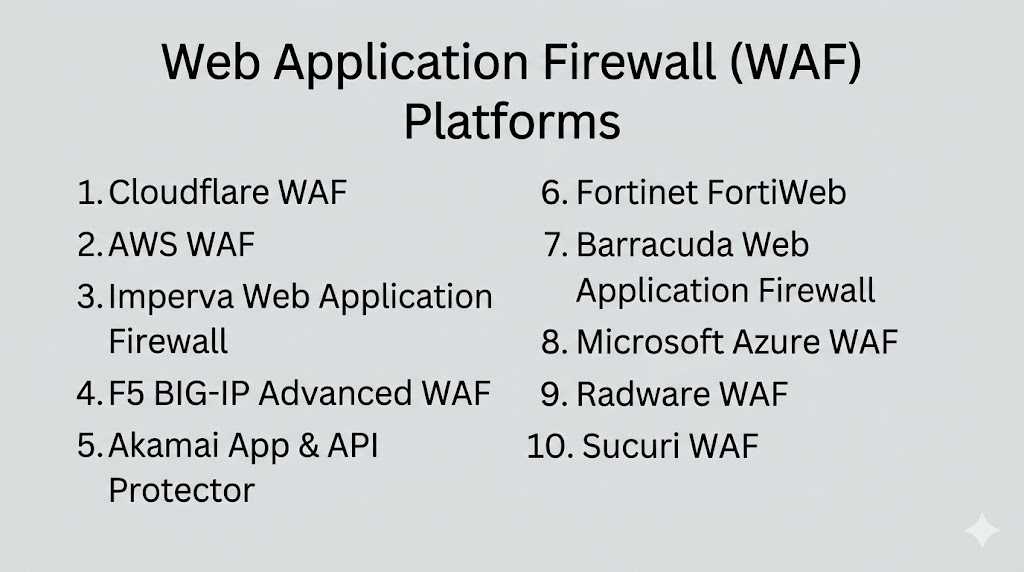
Top 10 Web Application Firewall (WAF) Platforms
1 — Cloudflare WAF
Short description:
Cloudflare WAF is a globally distributed, cloud-native firewall that protects web applications from a wide range of threats while improving performance through its edge network.
Key Features
- Edge-based traffic filtering
- OWASP Top 10 protection rules
- Real-time threat intelligence updates
- Bot management and rate limiting
- DDoS mitigation at application layer
- API security controls
- Global CDN integration
- Custom firewall rules engine
Pros
- Extremely fast deployment via DNS integration
- Strong global edge performance
- Excellent DDoS and bot protection
Cons
- Advanced features require higher-tier plans
- Limited deep customization in lower tiers
Platforms / Deployment
- Cloud / Edge-based
Security & Compliance
- PCI DSS support
- Encryption in transit
- Security analytics dashboards
- RBAC and audit logs (varies by plan)
Integrations & Ecosystem
- DevOps tools via APIs
- SIEM platforms
- Cloud providers
- CDN and performance tools
Support & Community
Strong global community and enterprise support options available.
2 — AWS WAF
Short description:
AWS WAF is a cloud-native firewall designed to protect applications running on AWS infrastructure such as CloudFront, API Gateway, and Load Balancers.
Key Features
- Rule-based traffic filtering
- Managed rule sets
- IP reputation filtering
- Bot control integration
- API protection
- Real-time metrics and logging
- Scalable cloud deployment
Pros
- Seamless AWS ecosystem integration
- Highly scalable and flexible
- Pay-as-you-go model
Cons
- AWS-specific dependency
- Requires configuration expertise
Platforms / Deployment
- Cloud (AWS only)
Security & Compliance
- IAM-based access control
- Encryption support
- Logging via CloudWatch
Integrations & Ecosystem
- AWS services (CloudFront, ALB, API Gateway)
- SIEM tools
- DevOps pipelines
- Monitoring platforms
Support & Community
Strong AWS documentation and enterprise support plans.
3 — Imperva WAF
Short description:
Imperva WAF provides enterprise-grade application security with strong threat intelligence and global protection coverage.
Key Features
- Application-layer protection
- Advanced bot mitigation
- API security controls
- Real-time attack blocking
- Global threat intelligence network
- DDoS protection integration
- Security analytics dashboards
Pros
- Strong enterprise security posture
- Excellent bot and API protection
- Large global security network
Cons
- Higher cost structure
- Requires vendor onboarding
Platforms / Deployment
- Cloud / On-prem / Hybrid
Security & Compliance
- PCI DSS support
- Advanced audit logging
- Encryption and RBAC
Integrations & Ecosystem
- SIEM platforms
- Cloud environments
- API gateways
- Security orchestration tools
Support & Community
Enterprise-focused support with dedicated security teams.
4 — F5 BIG-IP Advanced WAF
Short description:
F5 BIG-IP Advanced WAF provides deep application security with behavioral analytics and threat intelligence.
Key Features
- Behavioral threat detection
- Advanced bot defense
- Layer 7 security controls
- API protection
- Application vulnerability shielding
- SSL/TLS inspection
- Security automation policies
Pros
- Very strong enterprise capabilities
- Deep customization options
- Excellent performance at scale
Cons
- Complex configuration
- Higher operational overhead
Platforms / Deployment
- On-prem / Cloud / Hybrid
Security & Compliance
- Strong compliance support
- RBAC and audit logging
- Encryption at multiple layers
Integrations & Ecosystem
- SIEM platforms
- DevSecOps tools
- Cloud services
- API-based automation
Support & Community
Strong enterprise support ecosystem.
5 — Akamai App & API Protector
Short description:
Akamai provides edge-based WAF protection designed for high-traffic applications and global enterprises.
Key Features
- Edge security enforcement
- API protection and discovery
- Bot detection system
- DDoS mitigation
- Adaptive security policies
- Real-time traffic monitoring
- Threat intelligence integration
Pros
- Massive global edge network
- Strong DDoS protection
- High-performance security delivery
Cons
- Premium pricing model
- Complex configuration
Platforms / Deployment
- Cloud / Edge
Security & Compliance
- Enterprise-grade compliance support
- Encryption and access controls
- Audit logging
Integrations & Ecosystem
- CDN services
- SIEM platforms
- Cloud providers
- API gateways
Support & Community
Strong enterprise-level support infrastructure.
6 — Fortinet FortiWeb
Short description:
FortiWeb is a WAF solution combining AI-based threat detection with application-layer security.
Key Features
- AI-based attack detection
- Application-layer filtering
- Bot mitigation
- API security
- SSL inspection
- Virtual patching
- Security analytics dashboard
Pros
- Strong Fortinet ecosystem integration
- Good performance efficiency
- Flexible deployment options
Cons
- Best within Fortinet environments
- Configuration complexity for beginners
Platforms / Deployment
- Cloud / On-prem / Hybrid
Security & Compliance
- Compliance reporting support
- RBAC controls
- Encryption support
Integrations & Ecosystem
- Fortinet security products
- SIEM systems
- Cloud environments
- APIs
Support & Community
Strong enterprise vendor support.
7 — Barracuda WAF
Short description:
Barracuda WAF provides easy-to-use application security for SMBs and mid-sized enterprises.
Key Features
- Application-layer protection
- Automated security updates
- DDoS mitigation
- API security support
- SSL offloading
- Traffic inspection
- Reporting dashboards
Pros
- Simple deployment
- Good SMB focus
- Strong web protection
Cons
- Limited advanced enterprise analytics
- Less customization depth
Platforms / Deployment
- Cloud / On-prem / Virtual
Security & Compliance
- Compliance reporting tools
- Encryption support
- Access controls
Integrations & Ecosystem
- Cloud platforms
- SIEM tools
- Web servers
- APIs
Support & Community
Good mid-market support coverage.
8 — Microsoft Azure WAF
Short description:
Azure WAF protects applications hosted on Microsoft Azure with integrated cloud security policies.
Key Features
- OWASP rule sets
- Application Gateway integration
- Bot protection
- Centralized security policies
- DDoS protection integration
- Logging and analytics
- Custom rule configuration
Pros
- Strong Azure ecosystem integration
- Easy deployment for Azure apps
- Scalable cloud security
Cons
- Azure-dependent
- Limited cross-cloud flexibility
Platforms / Deployment
- Cloud (Azure)
Security & Compliance
- Microsoft security standards
- RBAC and IAM integration
- Encryption support
Integrations & Ecosystem
- Azure services
- SIEM tools
- DevOps pipelines
- Monitoring systems
Support & Community
Strong Microsoft enterprise support.
9 — Radware WAF
Short description:
Radware WAF focuses on advanced bot management and application security for enterprise environments.
Key Features
- Bot detection and mitigation
- Application protection policies
- API security
- Behavioral analytics
- DDoS mitigation
- Threat intelligence
- Traffic monitoring dashboards
Pros
- Strong bot mitigation capabilities
- High-performance security
- Good enterprise focus
Cons
- Complex setup
- Premium pricing
Platforms / Deployment
- Cloud / On-prem / Hybrid
Security & Compliance
- Compliance reporting
- RBAC support
- Encryption
Integrations & Ecosystem
- SIEM systems
- Cloud platforms
- API tools
- Security orchestration
Support & Community
Enterprise-grade support services.
10 — Sucuri WAF
Short description:
Sucuri WAF is a cloud-based security solution widely used for website protection and malware prevention.
Key Features
- Website firewall protection
- Malware detection and cleanup
- DDoS mitigation
- CDN integration
- Security monitoring
- SSL support
- Performance optimization
Pros
- Easy to use for non-technical users
- Strong website protection focus
- Good for small businesses
Cons
- Limited enterprise-grade controls
- Less API-focused security depth
Platforms / Deployment
- Cloud
Security & Compliance
- Basic compliance support
- Encryption support
- Monitoring tools
Integrations & Ecosystem
- CMS platforms
- Hosting providers
- CDN systems
- Security plugins
Support & Community
Strong SMB-focused support system.
Comparison Table (Top 10)
| Tool | Best For | Platform(s) Supported | Deployment | Standout Feature | Public Rating |
|---|---|---|---|---|---|
| Cloudflare WAF | SMB–Enterprise | Cloud | Edge | Global CDN + WAF | N/A |
| AWS WAF | AWS workloads | AWS Cloud | Cloud | Native AWS integration | N/A |
| Imperva WAF | Enterprises | Cloud/On-prem | Hybrid | Advanced threat intelligence | N/A |
| F5 WAF | Large enterprises | Multi-platform | Hybrid | Behavioral security | N/A |
| Akamai | High-traffic apps | Cloud/Edge | Cloud | Global edge protection | N/A |
| Fortinet FortiWeb | Security ecosystems | Multi | Hybrid | AI-based detection | N/A |
| Barracuda WAF | SMBs | Multi | Cloud/On-prem | Simple deployment | N/A |
| Azure WAF | Azure apps | Azure | Cloud | Native Azure integration | N/A |
| Radware | Enterprises | Multi | Hybrid | Bot mitigation | N/A |
| Sucuri | Websites/SMBs | Cloud | Cloud | Malware cleanup + WAF | N/A |
Evaluation & Scoring of WAF Platforms
| Tool | Core (25%) | Ease (15%) | Integrations (15%) | Security (10%) | Performance (10%) | Support (10%) | Value (15%) | Total |
|---|---|---|---|---|---|---|---|---|
| Cloudflare | 9 | 9 | 9 | 9 | 10 | 9 | 9 | 9.2 |
| AWS WAF | 8 | 7 | 9 | 9 | 9 | 8 | 8 | 8.3 |
| Imperva | 9 | 7 | 8 | 10 | 9 | 9 | 7 | 8.6 |
| F5 WAF | 9 | 6 | 9 | 10 | 9 | 9 | 7 | 8.5 |
| Akamai | 9 | 7 | 9 | 10 | 10 | 9 | 6 | 8.6 |
| Fortinet | 8 | 7 | 8 | 9 | 8 | 8 | 8 | 8.0 |
| Barracuda | 7 | 9 | 7 | 8 | 8 | 7 | 9 | 7.8 |
| Azure WAF | 8 | 8 | 9 | 9 | 9 | 8 | 8 | 8.5 |
| Radware | 8 | 7 | 8 | 9 | 9 | 8 | 7 | 8.1 |
| Sucuri | 7 | 9 | 7 | 8 | 8 | 7 | 9 | 7.8 |
Which WAF Platform Is Right for You?
SMB / Startups
- Cloudflare WAF
- Sucuri
- Barracuda
Mid-Market
- Fortinet FortiWeb
- Radware
- AWS WAF
Enterprise
- Imperva
- F5 BIG-IP WAF
- Akamai
- Azure WAF
Frequently Asked Questions (FAQs)
1. What is a Web Application Firewall?
A WAF protects web applications by filtering and blocking malicious HTTP traffic. It helps prevent attacks like SQL injection and XSS. It acts as a security layer between users and applications.
2. Why is a WAF important?
It protects applications from internet-based attacks. It reduces security risks in APIs and web apps. It is essential for modern cloud environments.
3. Does every website need a WAF?
Not every site needs it. Simple static websites may not require advanced protection. However, any application handling user data should use a WAF.
4. What threats do WAFs protect against?
They protect against SQL injection, XSS, bot attacks, and zero-day vulnerabilities. They also mitigate DDoS attacks at the application layer.
5. Are WAFs cloud-based?
Many modern WAFs are cloud-based. Some also support on-prem and hybrid models. Cloud WAFs are more scalable and easier to deploy.
6. Can WAFs slow down websites?
Most modern WAFs are optimized for low latency. Some edge-based WAFs can even improve performance using CDNs.
7. Do WAFs replace firewalls?
No, they complement traditional firewalls. WAFs operate at the application layer. Firewalls handle network-level security.
8. Are WAFs hard to configure?
Some enterprise WAFs require technical expertise. Cloud-based WAFs are easier to configure. Complexity depends on features used.
9. Do WAFs protect APIs?
Yes, modern WAFs provide API security features. They help prevent abuse and unauthorized access. API protection is now a core capability.
10. What is the biggest WAF implementation mistake?
Poor rule configuration is the biggest issue. It can lead to false positives or security gaps. Continuous tuning is essential.
Conclusion
Web Application Firewall platforms are essential for securing modern digital applications against evolving cyber threats. As applications become more distributed across cloud, edge, and API-driven architectures, WAFs play a critical role in ensuring security, availability, and compliance.
Choosing the right platform depends on your infrastructure, scalability needs, and ecosystem alignment. Cloud-native solutions like Cloudflare and AWS WAF are ideal for agility, while enterprise platforms like Imperva, F5, and Akamai offer deeper security capabilities.
