Introduction
Modern marketing is faster, louder, and more fragmented than ever before. To reach a distracted audience, brands can no longer rely on a single channel; a typical campaign must deploy paid search ads, social media, email sequences, and localized SEO content simultaneously.
However, managing this multi-channel ecosystem introduces immense operational complexity. Marketing teams routinely find themselves drowning in a sea of disconnected spreadsheets, chat threads, and native ad dashboards. This structural fragmentation leads to misaligned messaging, missed deadlines, wasted ad spend, and critical blind spots in reporting.
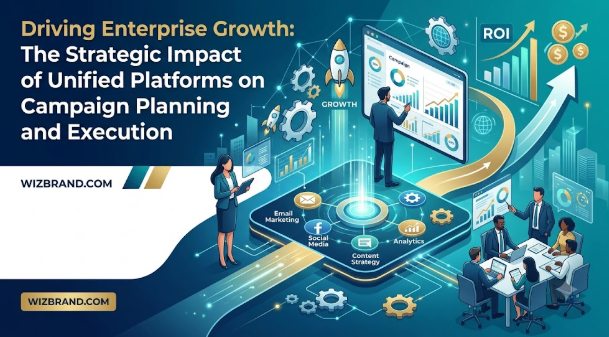
To break free from this friction, scaling businesses are replacing ad-hoc tools with integrated digital marketing platforms. By consolidating strategic planning, content creation, and real-time performance tracking into a single ecosystem, these platforms serve as a single source of truth—helping organizations streamline execution, maximize team productivity, and drive higher ROI.
What Are Digital Marketing Platforms?
A digital marketing platform is a centralized software ecosystem that unifies the core pillars of modern marketing operations: strategic planning, resource allocation, content creation, cross-channel execution, and real-time performance tracking.
Unlike single-point solutions—such as an isolated email tool or a standalone social scheduler—a true platform acts as a centralized operational hub. It integrates multiple utilities into a single interface, serving as an enterprise-wide “single source of truth.”
By connecting operational data (who is doing what) with performance data (how those actions affect customer behavior), these platforms function as comprehensive marketing operations software. They give leadership complete visibility into the marketing pipeline while giving execution teams the clarity and context needed to launch campaigns quickly and accurately.
The Evolution of Campaign Planning and Execution
Marketing operations have evolved through three distinct eras:
[Traditional Era]           [Fragmented Digital Era]       [Centralized Platform Era]
• Print, TV, Radio          • Proliferation of SaaS tools  • Unified Marketing Ecosystem
• Long planning cycles      • Disconnected data silos      • Integrated Workflows & Analytics
• Siloed media buying       • High operational friction    • Real-time data-driven agility
- The Traditional Era: Historically, campaign management was linear and slow. Campaigns were built around fixed creative assets designed for print, television, or radio. Feedback loops took months, and audience insights were largely retrospective.
- The Fragmented Digital Era: The explosion of web channels introduced specialized SaaS tools for search engine optimization (SEO), social media, and programmatic advertising. However, because these systems operated independently, marketing teams spent more time moving data between software tools than optimizing creative assets.
- The Centralized Platform Era: Today’s standard demands a unified approach. Modern platforms consolidate these disparate systems into an agile workspace. This shifts marketing operations from reactive execution to predictive orchestration, helping organizations adapt campaigns based on real-time data.
The High Cost of Fragmentation: Why Traditional Methods Fail
Many marketing teams still rely on a mix of legacy software, spreadsheets, and manual tracking to run their campaigns. This siloed approach creates operational friction that directly hurts the bottom line.
Manual Campaign Planning vs. Platform-Based Planning
| Operational Vector | Manual / Spreadsheets & Disconnected Tools | Integrated Digital Marketing Platform |
| Data Visibility | Siloed. Metrics must be manually extracted from individual platforms. | Centralized. Real-time dashboards combine multiple channel metrics. |
| Workflow & Hand-offs | Manual notifications via email or chat; prone to human error. | Automated task flows trigger notifications based on project status. |
| Version Control | Chaotic. Multiple asset files saved across local drives and cloud links. | Asset tracking linked directly to campaign tasks. |
| Resource Allocation | Opaque. Difficult to assess real-time bandwidth or individual workloads. | Transparent. Interactive resource boards show team availability instantly. |
| Time-to-Market | Slow. Extended cycles required for alignment, reviews, and sign-offs. | Fast. Templated workflows speed up cross-channel production. |
The Core Challenges of Fragmented Execution
- Communication Gaps: When designers, copywriters, and media buyers use separate tools, strategic details get lost in transit. Assets are built using outdated creative briefs, and time is wasted on unnecessary revisions.
- Wasted Marketing Spend: Without a clear view across channels, teams can overspend on low-performing networks while starving high-performing campaigns of needed budget.
- Data Blind Spots: Manually pulling metrics from multiple dashboards delays reporting. By the time a report is compiled, the insight is often outdated, leading to reactive rather than proactive decisions.
Key Features That Improve Campaign Planning and Execution
To scale marketing output without a linear increase in headcount, organizations need core functional features working together under one roof.
1. Campaign Planning & Scheduling Tools
- Purpose: To outline target personas, budget boundaries, key performance indicators (KPIs), and messaging pillars in a single collaborative space.
- Benefits: Connects high-level strategy directly to daily execution tasks.
- Business Impact: Helps ensure every piece of content aligned with your corporate goals.
2. Marketing Calendar & Visual Timelines
- Purpose: Provides an interactive, bird’s-eye view of all active, upcoming, and past marketing initiatives across channels.
- Benefits: Eliminates overlapping campaigns and helps teams maintain a consistent publishing schedule.
- Business Impact: Enhenses multi-channel alignment, preventing audience fatigue from over-communication.
3. Integrated Task Management & Workflow Automation
- Purpose: Breaks campaigns down into specific tasks, assigns owners, sets dependencies, and automates status updates.
- Benefits: Reduces manual check-ins and keeps production moving forward efficiently.
- Business Impact: Boosts operational throughput, allowing lean teams to handle complex campaigns with fewer delays.
4. Cross-Channel Performance Dashboards
- Purpose: Consolidates live metrics from search, social, paid media, and content channels into a single reporting view.
- Benefits: Provides a clear look at top-of-funnel activity alongside down-funnel conversions.
- Business Impact: Enables faster campaign optimization, helping teams shift budgets to high-return channels immediately.
Operational Insight: Studies show marketing teams using integrated campaign management software spend up to 30% less time on manual administrative tasks. This allows them to shift their focus from basic maintenance to high-impact strategic optimization.
Step-by-Step Campaign Planning Process Using a Digital Platform
[1. Strategy & KPIs] -> [2. Resource Blueprint] -> [3. Creative Sprint] -> [4. Launch & Track] -> [5. Optimize & ROI]
Phase 1: Strategic Alignment and KPI Setting
Define your primary goals within the platform, such as pipeline generation, brand awareness, or user retention. Establish specific metrics, allocate budgets, and input your target audience parameters directly into the campaign workspace.
Phase 2: Resource Mapping and Scheduling
Use the platform’s marketing calendar to build your content map. Assign tasks to copywriters, designers, and SEO specialists. Set clear dependencies so your design tasks automatically trigger as soon as copy is approved.
Phase 3: Creative Production and Compliance
Develop all creative assets within the platform’s collaborative environment. Use built-in review steps to manage feedback, track version changes, and ensure brand guidelines are met before publication.
Phase 4: Automated Launch and Tracking
Deploy your assets across channels automatically using scheduled workflows. Once live, the platform’s campaign tracking software begins collecting real-time interaction data across all networks.
Phase 5: Continuous Optimization and Reporting
Monitor your performance dashboard to see which variations perform best. Adjust live budgets, update creative elements, and generate clear ROI reports for stakeholders with a few clicks.
Real-World Frameworks: Multi-Channel Execution Examples
Example 1: B2B SaaS Product Launch
A SaaS company launching a new product needs to coordinate social teasers, targeted search ads, and educational blog posts simultaneously.
- The Old Way: The team tracks social posts on one spreadsheet, SEO content on another, and manages ad assets via email. This leads to broken links, mixed messaging, and delayed launches.
- The Platform Approach: The team builds a unified product launch master project. The product marketing manager reviews the core messaging guide, which automatically updates the task views for the copywriting and design teams. Ad assets, landing page copy, and email announcements go live in sync, keeping the messaging consistent across every touchpoint.
Example 2: E-Commerce Holiday Campaign
E-commerce brands face fast-moving timelines and tight margins during seasonal holiday rushes.
- The Old Way: Teams manually adjust ad creative and update promotional codes across different storefronts and networks, increasing the risk of mismatched pricing or broken promotions.
- The Platform Approach: The holiday campaign is pre-scheduled with automated launch triggers. Live performance data highlights which ad creative drives the lowest Customer Acquisition Cost (CAC), allowing the team to scale budget to the winning variation automatically.
How Different Businesses Benefit from Modern Platforms
┌─────────────────────────────────────────────────────────────┐
│               UNIFIED DIGITAL MARKETING PLATFORM            │
├───────────────┬──────────────────────────────┬──────────────┤
│   STARTUPS    │       AGENCIES & SMEs        │ ENTERPRISES  │
│ • Lean Teams  │ • Client Accountability     │ • Governance │
│ • Fast Scale  │ • Margin Optimization        │ • Data Silos │
└───────────────┴──────────────────────────────┴──────────────┘
- Startups: Lean teams need to make every dollar count. Platforms give founders and early marketers the visibility to track what works without manual overhead, helping them scale fast and pivot when needed.
- Small Businesses (SMEs): Local and growing businesses often don’t have dedicated specialists for every channel. Simplified workflows let a single marketer or small team manage local SEO, social media, and email campaigns from one screen.
- Marketing Agencies: Agencies manage multiple clients with unique brand guidelines and goals. Centralized tools make it easier to manage client accounts, review work, and generate white-labeled performance reports to prove value.
- SaaS and E-Commerce Brands: These data-driven companies rely on rapid iteration. Integrated platforms connect user actions to specific marketing touches, making it easier to optimize campaigns for high customer lifetime value (LTV).
- Large Enterprises: Large organizations need strong brand governance, clear approval structures, and secure data handling. Enterprise platforms break down departmental silos while maintaining strict brand consistency across regional teams.
How WizBrand Helps Businesses Optimize Campaign Management
WizBrand provides an integrated digital marketing platform built to eliminate operational friction and help teams focus on high-impact growth.
┌─────────────────────────────────────────────────────────────────┐
│                    THE WIZBRAND ADVANTAGE                      │
├────────────────────────────────┬────────────────────────────────┤
│    OPERATIONAL EFFICIENCY      │       STRATEGIC VISIBILITY     │
│  • Automated task assignments  │  • Centralized KPI dashboards   │
│  • Cross-team asset sharing    │  • Multi-channel performance   │
│  • Standardized workflows      │  • Clear attribution insight   │
└────────────────────────────────┴────────────────────────────────┘
- Centralized Workspaces: Get rid of fragmented tools. WizBrand brings your strategy, planning, asset coordination, and analytics together into a single intuitive view.
- Streamlined Team Collaboration: Connect your content writers, SEO experts, and managers. In-platform assignments and notifications keep your production pipeline moving forward smoothly.
- Improved Project Visibility: Give leadership and clients a clear look at upcoming schedules and active campaigns via clear visual timelines.
- Data-Driven Performance Management: Skip manual data aggregation. WizBrand’s reporting tools compile your performance metrics automatically, giving you the insights needed to maximize campaign ROI.
Campaign Planning and Execution Checklist
Use this practical checklist before launching your next multi-channel marketing campaign:
1. Strategic Foundation
- [ ] Objectives: Are your campaign targets specific, measurable, attainable, relevant, and time-bound (SMART)?
- [ ] KPIs Identified: Have you set clear primary metrics (e.g., pipeline generated) and secondary metrics (e.g., click-through rate)?
- [ ] Audience Definition: Are your target personas clearly mapped within your campaign workspace?
2. Operational Readiness
- [ ] Resource Allocation: Are tasks assigned to specific team members with clear deadlines?
- [ ] Asset Completion: Are all creative variations approved and ready inside your workspace?
- [ ] Tracking Protocols: Are tracking codes, UTM parameters, and analytics workflows set up correctly?
3. Execution & Optimization Plan
- [ ] Schedule Automation: Are your launch times and dates set in your marketing calendar?
- [ ] Review Windows: Have you scheduled check-ins at day 3, day 7, and day 30 to review performance data and adjust budgets?
- [ ] Post-Mortem Framework: Is a collaborative space ready to document takeaways for your next campaign?
Frequently Asked Questions (FAQs)
What is the core difference between campaign planning and campaign execution?
Campaign planning covers the strategic work done before a campaign goes live, including setting goals, identifying audiences, managing budgets, and mapping content schedules. Campaign execution is the tactical roll-out, including asset publication, live budget management, A/B testing, and ongoing performance optimization.
Why should our company replace specialized single-point tools with an all-in-one marketing platform?
While single-point tools often work well for individual tasks, they create disconnected data silos. This forces teams to manually move data between systems, increasing administrative overhead and the risk of tracking errors. An all-in-one platform unifies your data, improves team collaboration, and gives you a single clear source for performance reporting.
How do digital marketing platforms help remote or hybrid marketing teams work together?
These platforms replace scattered update emails and ad-hoc chat threads with a single centralized system. Team members can view real-time task statuses, share feedback on assets, and track approvals in one shared workspace, keeping everyone aligned regardless of time zone or location.
Can small marketing teams with limited budgets benefit from platforms like WizBrand?
Yes. Small teams often benefit the most because they have less time to waste on manual administrative work. By automating repetitive tasks, standardizing workflows, and keeping performance metrics in one place, a lean team can run complex campaigns without needing to hire extra operational staff.
How does automated workflow management prevent project delays?
Automated workflows use clear task dependencies. For example, when a copywriter completes an ad script, the platform automatically updates the task and notifies the graphic designer to start the layout. This eliminates manual hand-offs and keeps projects moving forward efficiently.
What metrics should we look at to measure the success of our campaign planning workflows?
Keep an eye on internal operational metrics like internal turn-around time, asset approval speed, and percentage of assets completed on schedule. Track these alongside traditional performance metrics like Cost Per Lead (CPL) and Return on Ad Spend (ROAS) to evaluate overall efficiency.
How do integrated platforms help ensure consistent messaging across different channels?
Platforms allow teams to store core brand guides, target audience personas, and approved copy assets inside the main campaign workspace. This gives creators, media buyers, and external partners access to the same foundational resources, preventing mixed or inconsistent brand messaging.
What is the role of automated data collection in campaign optimization?
Manual data extraction is time-consuming and prone to human error, which delays optimization decisions. Automated platforms track live engagement data across channels, giving teams the up-to-date insight needed to confidently shift budgets away from underperforming assets and toward high-yield variations.
How does WizBrand make client reporting simpler for digital marketing agencies?
WizBrand unifies client data streams into clear, centralized dashboards. This allows agencies to quickly share real-time progress and performance reports with clients, replacing manual spreadsheet tracking with professional, transparent reporting.
What trends are shaping the future of campaign management technology?
The future focuses heavily on automated data organization, predictive analytics, and conversational insight tools. Modern platforms are evolving to help teams interpret complex, cross-channel customer journeys instantly, making it easier to build and scale high-performing campaigns.
Conclusion: Take Control of Your Marketing Operations
Running successful marketing campaigns doesn’t have to mean managing chaotic spreadsheets and disconnected tools. True operational efficiency comes from unifying your team, your processes, and your performance data in one central place.
By adopting a comprehensive digital marketing platform, you eliminate data silos, reduce manual administrative work, and give your team the clarity needed to do their best work. This operational alignment leads directly to faster campaign launches, sharper optimizations, and a higher return on investment.

Unified marketing platforms can significantly improve campaign coordination, but their long-term value depends on how effectively they support organizational adaptability. As new marketing channels, AI-powered content workflows, and evolving privacy regulations emerge, rigid processes can quickly become operational bottlenecks. Including guidance on modular workflow design, governance for AI-assisted campaign creation, and continuous process optimization would provide valuable insight for enterprises looking to build marketing operations that remain effective as technology and business requirements evolve.