Introduction
Rising clinical expenses and prolonged waiting lists in many Western nations have prompted a shift in how individuals manage their health. Today, thousands of people look beyond their domestic borders for timely, high-quality medical care. Global healthcare travel has transformed from an alternative choice into a structured, highly reliable option for essential and elective operations.
Navigating medical care outside your home country requires access to transparent resources and verified data. This comprehensive guide outlines the fundamentals of planning treatment overseas, comparing regional options, and managing financial expectations. Armed with the right information, you can make healthcare decisions that protect both your physical well-being and your personal finances.
Understanding the Topic
The concept of medical tourism refers to individuals traveling across international borders specifically to receive medical, dental, or surgical treatments. While historically associated with elective cosmetic procedures, modern healthcare travel addresses complex tertiary care, including major joint reconstructions and cardiovascular interventions.
The modern international care system relies on a network of international hospitals, dedicated coordination agencies, and specialized healthcare travel infrastructure. This structured network supports patients through every stage of their journey. Comprehensive services span from initial remote consultations to long-distance recovery monitoring, ensuring an administrative flow comparable to domestic private care.
Why It Matters for International Patients
For many individuals, seeking surgery abroad is a matter of practical necessity. High out-of-pocket costs for uninsured or underinsured therapies often force families to delay necessary treatments, which can lead to a worsening of chronic medical conditions.
In addition, public healthcare systems in countries like Canada or the United Kingdom frequently struggle with significant backlogs for non-emergency treatments. Opting for affordable surgery overseas allows individuals to bypass these delays and secure prompt care. This timely access helps prevent prolonged physical discomfort and stops preventable conditions from worsening.
Types of Treatments or Procedures
Global medical facilities offer a broad spectrum of clinical specialties, operating with advanced technologies and highly trained surgical teams.
Orthopedic Care
Chronic joint pain and mobility limitations drive high demand for orthopedic hospitals worldwide. Individuals frequently seek knee replacement surgery abroad to access high-quality joint components and advanced rehabilitation protocols at manageable price points. These specialized centers focus on restoring mobility through minimally invasive approaches.
Cardiovascular Interventions
Complex heart surgeries demand highly controlled clinical settings and experienced operating teams. International cardiac hospitals routinely perform advanced procedures, such as valve repairs and coronary artery bypass grafting. These institutions maintain dedicated cardiac care units to manage patient safety through recovery.
Reproductive Medicine
Varying regional regulations and high domestic pricing make reproductive assistance a primary reason for healthcare travel. Couples frequently research the best country for IVF treatment abroad to find locations that offer high success rates, advanced lab technologies, and clear legal frameworks for family planning.
Restorative Dentistry
Extensive dental care can be financially out of reach in many developed countries. The growing popularity of dental tourism addresses this gap by offering comprehensive restorative treatments, such as full-mouth reconstructions, crowns, and bridges, at a fraction of standard domestic costs.
Estimated Cost Factors
The overall cost of an overseas medical procedure is not a single fixed rate, but rather a combination of several independent variables.
- Pre-Operative Evaluations: Essential laboratory tests, advanced diagnostic imaging (such as MRIs or CT scans), and baseline evaluations by specialists.
- Surgeon and Clinical Staff Fees: Professional fees determined by the specialist’s training, years of experience, and international credentials.
- Medical Devices and Consumables: The specific brands and materials selected for the procedure, such as specialized joint prosthetics or specialized dental implants.
- Hospitalization Expenses: The length of your stay in the hospital and the category of room chosen, ranging from standard shared wards to private suites.
- Anesthesia and Operating Theatre Use: Operational fees linked to the time spent in surgery and the specific medications required for anesthesia.
Important Safety Note: Treatment costs vary depending on country, hospital, surgeon experience, patient condition, implant or device selection, room category, and additional medical requirements. Patients should consult qualified healthcare professionals before making treatment decisions.
Country Comparison
Different nations have developed distinct clinical strengths, supported by focused government initiatives and specialized medical training systems.
India
India stands out as a major hub for complex tertiary medical care, particularly in orthopedics, oncology, and open-heart surgeries. The country provides competitive pricing structures driven by lower local operational costs and a high volume of procedures. For instance, the knee replacement surgery cost in India is significantly lower than in Western nations, even when utilizing identical, internationally approved joint implants.
Turkey
Turkey has positioned itself as a primary destination for cardiovascular surgery, advanced dental treatments, and reproductive therapies. Its modern medical infrastructure serves patients from Europe, Asia, and the Middle East. The competitive heart bypass surgery cost in Turkey makes it a popular option for individuals seeking exceptional clinical care close to major travel hubs.
Thailand and Mexico
Thailand is well-regarded for its service-oriented healthcare sector, particularly in cosmetic surgeries, wellness therapies, and complex dental procedures. Meanwhile, Mexico remains a preferred destination for North American patients seeking bariatric procedures, orthopedic care, and extensive dental treatments, largely due to its convenient geographic proximity and easy travel options.
Hospital Accreditation and Patient Safety
Patient safety must always be the top priority when planning any overseas medical procedure. Evaluating international medical centers requires objective, globally recognized benchmarks rather than relying on promotional brochures.
The gold standard for international healthcare quality is accreditation by independent bodies, such as Joint Commission International (JCI). When a facility achieves this status, it proves adherence to strict standards regarding surgical safety, infection prevention, medication safety, and patient care protocols.
Focusing your research on JCI accredited hospitals for surgery abroad helps manage clinical risks. It ensures the facility operates under the same safety guidelines as top-tier medical centers in the West. For an in-depth breakdown of these safety benchmarks, see our comprehensive Hospital Accreditation Guide.
How to Choose the Right Hospital and Surgeon
Selecting an international medical provider requires a systematic review of clinical credentials and institutional track records.
- Examine Professional Board Certifications: Verify that your chosen specialist holds valid national or international certifications relevant to their surgical discipline.
- Evaluate the Surgeon’s Case Volume: Ask how often the specialist performs your specific procedure, as higher volumes generally correlate with more consistent patient outcomes.
- Assess Intensive Care Infrastructure: Confirm the hospital features a fully equipped, 24/7 Intensive Care Unit (ICU) and emergency response teams to manage any unexpected complications.
- Confirm Language Support Services: Ensure the facility provides fluent language coordination to facilitate clear communication regarding your treatment plan and recovery instructions.
Benefits of Medical Tourism
When planned carefully with verified professionals, traveling for medical treatment offers clear advantages.
- Substantial Financial Savings: Patients regularly realize savings of 40% to 80% compared to domestic prices, making essential healthcare accessible without financial strain.
- Elimination of Waiting Times: International providers typically offer prompt scheduling for elective and major surgeries, preventing the physical decline associated with long public waitlists.
- Access to Globally Trained Experts: Many overseas surgeons have completed advanced fellowships or practiced in major Western health systems before returning to lead clinical departments in their home countries.
- All-Inclusive Coordination: Many international hospitals provide coordinated Medical Tourism Packages that combine local transit, hospital stays, recovery accommodations, and translation services into a clear, upfront cost structure.
Risks and Considerations
While cross-border medicine offers major benefits, traveling for surgery introduces specific risks that require careful planning.
- Travel-Related Circulatory Risks: Long-distance travel shortly after a major surgical procedure can increase the risk of deep vein thrombosis (DVT). Post-operative travel plans must be cleared by your attending physician.
- Continuity of Follow-Up Care: Patients must arrange for a local doctor in their home country to manage long-term recovery monitoring and address any routine follow-up needs.
- Varying Legal Frameworks: Medical malpractice laws vary significantly by country, meaning patients should understand their destination’s legal guidelines before confirming admission.
- Exposure to Different Environments: Traveling exposes patients to different regional microorganisms, requiring strict adherence to post-operative hygiene and wound care instructions.
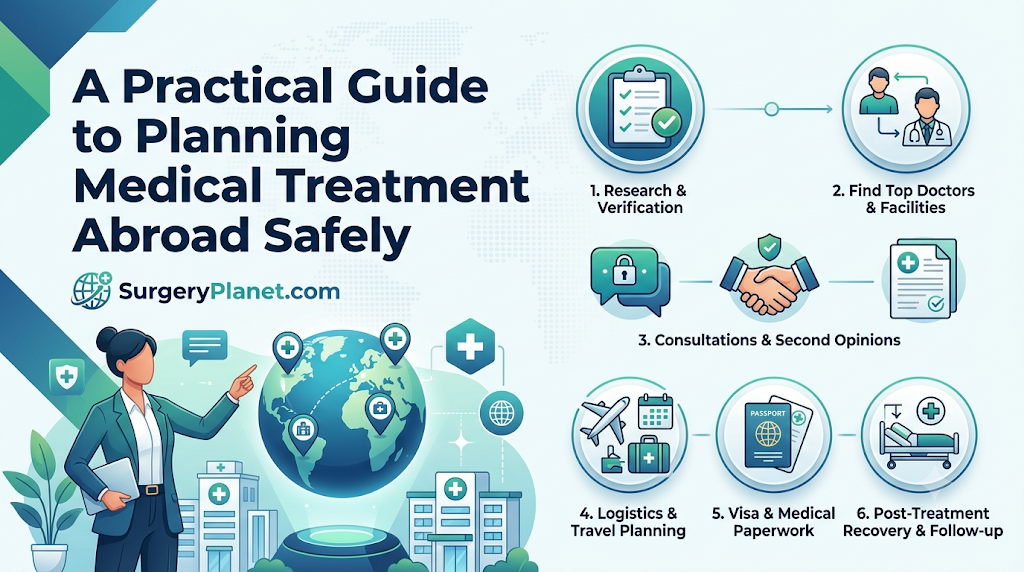
Treatment Planning Checklist
Use this organized step-by-step framework to manage your international medical travel logistics.
- [ ] Initial Medical Evaluation: Secure a clear, updated diagnosis from your local physician and obtain digital copies of all recent X-rays, MRIs, or lab reports.
- [ ] Documentation Organization: Gather your complete medical history, an accurate list of allergies, and details on all current prescription medications.
- [ ] Provider Verification: Research accredited international hospitals and cross-reference the specific qualifications of your selected surgeon.
- [ ] Comprehensive Financial Review: Request a detailed surgery cost guide and an itemized quote detailing everything included in your care package.
- [ ] Travel Document Preparation: Check that your passport is valid for at least six months past your travel dates and secure a dedicated medical visa if required.
- [ ] Post-Surgical Travel Clearance: Consult with your surgeon to set a safe timeline for your return flight based on your healing progress.
- [ ] Local Recovery Arrangements: Book appropriate local accommodations for your mandatory outpatient recovery period prior to flying home.
Real-World Patient Scenarios
Scenario 1: Managing Orthopedic Costs Without Insurance
A 62-year-old independent contractor required a total knee replacement but faced a domestic quote of $38,000 without insurance coverage. By utilizing a comprehensive surgery cost guide to evaluate global options, they chose a JCI-accredited orthopedic facility in India. They received high-quality care with an FDA-approved joint implant, including two weeks of supervised physical therapy, for a total expense under $9,000.
Scenario 2: Extensive Dental Restorations
An administrative professional required multiple implants and structural bone grafts that exceeded their dental insurance limits. Through a careful dental implants abroad cost comparison, they organized a two-visit trip to a specialized clinic in Turkey. They successfully completed their restorative dental work using premium materials, saving over 60% compared to local treatment options.
Comparison Table
The values presented below represent estimated average cost ranges for procedures at accredited international medical centers. Final costs are determined by individual patient health profiles, hospital choice, and specific device selections.
| Procedure | Western Baseline Cost (US / UK) | Estimated Cost in India | Estimated Cost in Turkey | Estimated Cost in Thailand / Mexico |
| Total Knee Replacement | $32,000 – $46,000 | $5,500 – $8,500 | $7,500 – $10,000 | $8,800 – $12,500 |
| Coronary Bypass (CABG) | $85,000 – $130,000 | $7,200 – $11,000 | $12,500 – $17,000 | $14,500 – $21,000 |
| Single Implant + Crown | $3,800 – $5,500 | $850 – $1,300 | $650 – $1,200 | $950 – $1,500 |
| Standard IVF Cycle | $12,500 – $17,500 | $3,600 – $5,200 | $4,200 – $5,800 | $5,200 – $7,500 |
| Spine Fusion (1 Level) | $42,000 – $65,000 | $6,800 – $9,500 | $9,500 – $14,000 | $11,500 – $16,000 |
Frequently Asked Questions
Is it safe to undergo a major surgical procedure overseas?
Yes, provided you choose an international hospital that follows strict global safety guidelines. Facilities accredited by international bodies like the JCI operate under strict protocols for infection control, surgical safety, and patient care that match top Western hospitals.
Why are medical costs significantly lower in certain countries?
The lower pricing reflects reduced local operational overhead, more affordable malpractice insurance, lower costs for local goods, and different national healthcare structures. These regional economic differences allow facilities to offer lower rates without compromising care quality or equipment standards.
How do international patients communicate effectively with hospital staff?
Most recognized international medical centers maintain dedicated international patient service departments. These specialized coordinators, along with the physicians and nursing staff, are typically fluent in English and can arrange translation support for other languages as needed.
Should I travel alone or with a companion for an overseas procedure?
While international hospitals provide comprehensive bedside care and support, traveling with a family member or caregiver is highly recommended. A companion provides personal comfort, assists with administrative details during discharge, and helps manage daily tasks during early outpatient recovery.
What steps should I take if I experience post-operative issues after returning home?
Before discharging from your international hospital, secure a complete copy of your medical files, operative notes, and medication records. Your primary care physician at home can review these documents to guide any necessary follow-up care or address unexpected symptoms.
How long am I required to stay in the destination country after my surgery?
Your required stay depends entirely on the complexity of your procedure. Minor dental or elective cosmetic treatments may only require a 3 to 5-day stay, whereas major orthopedic or cardiac procedures usually require 10 to 21 days to ensure you can travel safely on a commercial flight.
Do international medical centers use reliable, high-quality joint and dental implants?
Yes. Reputable international clinics utilize standard medical devices and implants produced by major global medical manufacturers. Patients can request details regarding the exact manufacturer, model, and serial numbers of their implants during pre-operative consultations.
Will standard travel insurance cover medical tourism procedures?
Standard travel insurance policies generally exclude coverage for pre-planned medical care abroad. To protect your trip, you will need to look into specialized medical travel insurance policies that provide coverage for travel changes, extended stays, or clinical complications related to medical travel.
Conclusion
Seeking medical care abroad provides a practical option for individuals facing high domestic healthcare costs or long waitlists for essential procedures. By prioritizing accredited institutions, thoroughly evaluating specialist credentials, and planning your travel and recovery timelines carefully, you can navigate your international treatment options safely and effectively.
Explore Your Global Healthcare Options: If you are ready to research safe, affordable medical treatment, use our platform to compare verified international hospitals, review up-to-date Country Comparison Pages, and find customized Surgery Cost Guide resources tailored to your personal health needs.

A well-planned medical journey doesn’t end when the patient is discharged—it depends heavily on how smoothly care transitions back to the home healthcare provider. Many patients underestimate the importance of structured handover documents, medication reconciliation, and coordinated follow-up after returning home. Expanding the discussion around continuity of care, secure medical record sharing, and post-treatment communication between overseas specialists and local physicians would make this guide even more practical for international patients planning treatment abroad.