Introduction
Firewall Management Tools are centralized security platforms used to configure, monitor, audit, and optimize firewall policies across networks and environments. In simple terms, they help organizations control who can access what, from where, and under what conditions, without manually managing every firewall device individually.
As modern IT environments become more distributed across cloud, on-premises, and hybrid infrastructures, firewall rules grow rapidly in complexity. Every new application, user group, or cloud service adds additional policies. Without centralized management, this quickly leads to configuration errors, security gaps, and compliance risks.
Firewall management platforms solve this challenge by offering centralized visibility, automated policy control, risk analysis, and compliance reporting across multiple firewall systems.
Why firewall management matters today
- Increasing complexity of hybrid and multi-cloud environments
- Rising cybersecurity threats and ransomware attacks
- Expansion of remote and distributed workforces
- Strict compliance and audit requirements
- Rapid growth of firewall rules across organizations
Common use cases
- Centralized firewall rule management across multiple vendors
- Automating firewall policy cleanup and optimization
- Monitoring risky or unused firewall rules
- Enforcing security compliance policies
- Managing change approval workflows
- Improving visibility across distributed networks
What buyers should evaluate
- Multi-vendor firewall support
- Automation and policy orchestration capabilities
- Risk analysis and rule optimization features
- Compliance reporting and audit readiness
- Integration with SIEM, SOAR, and ITSM tools
- Scalability across hybrid environments
- Ease of deployment and usability
- Role-based access control (RBAC)
- API and automation support
- Real-time monitoring and logging capabilities
Best for:
Firewall Management Tools are best for IT security teams, network engineers, DevSecOps teams, and enterprises managing complex or distributed network infrastructures.
Not ideal for:
They may not be necessary for very small businesses with simple network setups and a single firewall, where native firewall interfaces are sufficient.
Key Trends in Firewall Management Tools
- Increased use of AI-driven policy optimization and anomaly detection
- Automation of firewall rule cleanup and lifecycle management
- Growing adoption of Zero Trust security models
- Stronger integration with cloud-native environments
- Unified dashboards for multi-vendor firewall ecosystems
- Deeper integration with SIEM and SOAR platforms
- Policy-as-code approaches for DevSecOps workflows
- Real-time firewall risk scoring and recommendations
- API-first architectures for automation and scalability
- Enhanced compliance automation and audit readiness
How We Selected These Tools (Methodology)
The tools in this list were selected based on:
- Global adoption and enterprise usage
- Support for multi-vendor firewall environments
- Depth of automation and policy management features
- Security analytics and risk visibility capabilities
- Integration with modern security ecosystems
- Scalability for hybrid and cloud infrastructures
- Compliance and governance support
- Vendor maturity and reliability
- Operational efficiency and usability
- Flexibility across SMB, mid-market, and enterprise needs
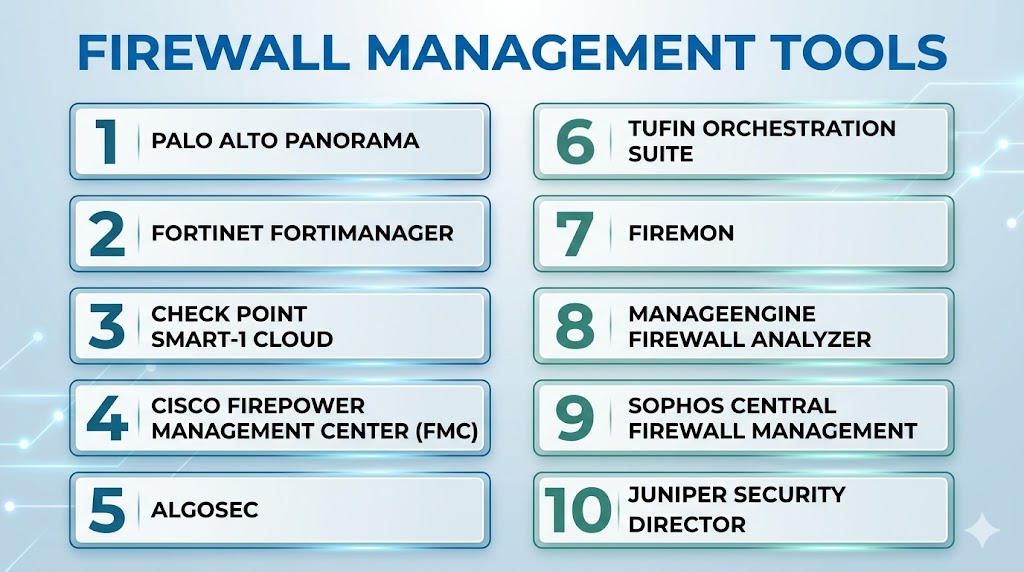
Top 10 Firewall Management Tools
1 — Palo Alto Panorama
Short description:
Palo Alto Panorama is a centralized firewall management platform designed for organizations using Palo Alto firewalls. It enables unified policy control, logging, and monitoring across distributed environments.
Key Features
- Centralized firewall policy management
- Template-based configuration deployment
- Application-aware security policies
- Global and device-level rule control
- Centralized logging and reporting
- Threat intelligence integration
- Scalable multi-device management
Pros
- Strong enterprise scalability
- Deep integration with Palo Alto ecosystem
- Advanced threat visibility
Cons
- Best suited for Palo Alto environments
- Steeper learning curve for beginners
Platforms / Deployment
- Cloud / On-prem / Hybrid
Security & Compliance
- RBAC-based access control
- Audit logging
- Encryption in transit and at rest
Integrations & Ecosystem
- Security orchestration platforms
- SIEM tools
- Cloud environments
- API-based automation support
Support & Community
Strong enterprise-grade documentation and support ecosystem.
2 — Fortinet FortiManager
Short description:
FortiManager is a centralized management platform for Fortinet firewalls, enabling policy orchestration and device management across distributed networks.
Key Features
- Centralized firewall policy control
- Device configuration templates
- Security automation workflows
- Firmware and lifecycle management
- Change tracking and approvals
- Multi-tenant management
- Reporting dashboards
Pros
- Strong Fortinet ecosystem integration
- Efficient large-scale management
- Good automation capabilities
Cons
- Best within Fortinet environments
- Interface complexity for new users
Platforms / Deployment
- Cloud / On-prem / Hybrid
Security & Compliance
- RBAC and audit logs
- Encryption support
- Compliance reporting features
Integrations & Ecosystem
- FortiGate firewalls
- SIEM systems
- Cloud platforms
- REST APIs
Support & Community
Strong enterprise vendor support and documentation.
3 — Check Point Smart-1 Cloud
Short description:
Check Point Smart-1 Cloud provides centralized firewall management and security policy control for Check Point environments.
Key Features
- Centralized security policy management
- Automated policy deployment
- Threat prevention integration
- Multi-domain management
- Cloud-based administration
- Compliance reporting tools
- Security event correlation
Pros
- Strong enterprise security capabilities
- Cloud-native flexibility
- Advanced threat prevention
Cons
- Optimized mainly for Check Point products
- Requires learning policy structure
Platforms / Deployment
- Cloud / Hybrid
Security & Compliance
- RBAC and MFA support
- Audit logs
- Compliance reporting tools
Integrations & Ecosystem
- Security platform ecosystem
- SIEM tools
- Cloud providers
- API integrations
Support & Community
Enterprise-level support and documentation.
4 — Cisco Firepower Management Center (FMC)
Short description:
Cisco FMC provides centralized firewall and security management for Cisco Firepower devices with advanced threat visibility.
Key Features
- Centralized firewall policy control
- Intrusion prevention system integration
- Application visibility control
- Malware protection integration
- Event correlation dashboards
- Policy automation tools
- Multi-device management
Pros
- Strong Cisco ecosystem integration
- Advanced security analytics
- High scalability
Cons
- Complex for small teams
- Cisco ecosystem dependency
Platforms / Deployment
- On-prem / Hybrid
Security & Compliance
- Enterprise security controls
- RBAC and audit logging
Integrations & Ecosystem
- Cisco security ecosystem
- SIEM platforms
- Cloud services
- API-based automation
Support & Community
Large enterprise support network.
5 — AlgoSec
Short description:
AlgoSec is a multi-vendor firewall management platform focused on automation, risk analysis, and compliance.
Key Features
- Multi-vendor firewall support
- Security policy automation
- Risk analysis and optimization
- Application connectivity mapping
- Compliance reporting dashboards
- Policy lifecycle management
- Hybrid environment support
Pros
- Strong multi-vendor capability
- Excellent automation features
- Deep security analytics
Cons
- Higher cost structure
- Requires onboarding effort
Platforms / Deployment
- Cloud / On-prem / Hybrid
Security & Compliance
- Compliance automation
- RBAC and audit logs
- Risk scoring tools
Integrations & Ecosystem
- Firewall vendors
- SIEM and SOAR tools
- Cloud environments
- APIs
Support & Community
Strong enterprise support and training programs.
6 — Tufin Orchestration Suite
Short description:
Tufin provides firewall policy orchestration and security policy management across multi-vendor environments.
Key Features
- Firewall policy automation
- Multi-vendor support
- Security visualization tools
- Compliance reporting
- Risk analysis dashboards
- Application connectivity mapping
- Change approval workflows
Pros
- Strong enterprise scalability
- Advanced compliance tools
- Policy visualization strength
Cons
- Complex implementation
- Resource-intensive setup
Platforms / Deployment
- On-prem / Cloud / Hybrid
Security & Compliance
- Compliance automation
- Audit logging
- RBAC support
Integrations & Ecosystem
- Firewall vendors
- SIEM platforms
- ITSM systems
- Cloud infrastructure
Support & Community
Strong global enterprise support network.
7 — FireMon
Short description:
FireMon focuses on firewall security policy monitoring, optimization, and continuous compliance.
Key Features
- Real-time policy monitoring
- Rule optimization insights
- Risk scoring for firewall rules
- Compliance reporting
- Multi-vendor support
- Change tracking
- Security dashboards
Pros
- Strong analytics capabilities
- Continuous compliance monitoring
- Multi-vendor flexibility
Cons
- UI complexity for beginners
- Requires tuning for accuracy
Platforms / Deployment
- Cloud / On-prem / Hybrid
Security & Compliance
- Compliance reporting tools
- RBAC and audit logs
Integrations & Ecosystem
- Firewall platforms
- SIEM tools
- Cloud systems
- APIs
Support & Community
Strong enterprise customer support.
8 — ManageEngine Firewall Analyzer
Short description:
ManageEngine Firewall Analyzer provides firewall log analysis, reporting, and monitoring across multiple vendors.
Key Features
- Firewall log analysis
- Policy compliance tracking
- Bandwidth usage monitoring
- Security event reporting
- Multi-vendor support
- Alerting system
- Traffic analytics
Pros
- Cost-effective solution
- Easy deployment
- Strong reporting features
Cons
- Limited advanced automation
- Less enterprise depth
Platforms / Deployment
- Cloud / On-prem
Security & Compliance
- Audit reporting
- Basic RBAC support
Integrations & Ecosystem
- SIEM tools
- Firewall devices
- IT monitoring systems
Support & Community
Good SMB and mid-market support.
9 — Sophos Central Firewall Management
Short description:
Sophos Central provides cloud-based firewall management for Sophos firewall environments.
Key Features
- Centralized firewall control
- Cloud-based dashboard
- Real-time threat monitoring
- Security reporting
- User-based policies
- Endpoint integration
- Automated updates
Pros
- Very easy to use
- Strong endpoint integration
- Good SMB fit
Cons
- Limited multi-vendor support
- Best within Sophos ecosystem
Platforms / Deployment
- Cloud
Security & Compliance
- Encryption support
- RBAC controls
Integrations & Ecosystem
- Sophos endpoint tools
- Cloud platforms
- APIs
Support & Community
Strong SMB-focused support ecosystem.
10 — Juniper Security Director
Short description:
Juniper Security Director provides centralized management for Juniper firewall and security infrastructure.
Key Features
- Centralized policy management
- Threat intelligence integration
- Security automation workflows
- Policy visualization
- Compliance reporting
- Multi-device management
- Event correlation
Pros
- Strong Juniper ecosystem integration
- Good scalability
- Solid policy control features
Cons
- Limited multi-vendor support
- UI complexity
Platforms / Deployment
- On-prem / Cloud / Hybrid
Security & Compliance
- RBAC and audit logs
- Compliance reporting
Integrations & Ecosystem
- Juniper ecosystem
- SIEM tools
- Cloud systems
- APIs
Support & Community
Enterprise-level support structure.
Comparison Table (Top 10)
| Tool | Best For | Platform(s) Supported | Deployment | Standout Feature | Public Rating |
|---|---|---|---|---|---|
| Palo Alto Panorama | Enterprise firewall control | Web / Linux | Hybrid | Deep Palo Alto integration | N/A |
| FortiManager | Fortinet environments | Web | Hybrid | Policy automation | N/A |
| Check Point Smart-1 | Enterprise security | Web | Cloud/Hybrid | Threat prevention | N/A |
| Cisco FMC | Cisco networks | Web | Hybrid | IPS integration | N/A |
| AlgoSec | Multi-vendor enterprises | Web | Hybrid | Risk-based automation | N/A |
| Tufin | Large enterprises | Web | Hybrid | Policy orchestration | N/A |
| FireMon | Security analytics | Web | Hybrid | Rule optimization | N/A |
| ManageEngine Analyzer | SMB & mid-market | Web/Desktop | Cloud/On-prem | Log analysis | N/A |
| Sophos Central | SMB | Web | Cloud | Unified firewall control | N/A |
| Juniper Security Director | Juniper users | Web | Hybrid | Policy visualization | N/A |
Evaluation & Scoring of Firewall Management Tools
| Tool | Core (25%) | Ease (15%) | Integrations (15%) | Security (10%) | Performance (10%) | Support (10%) | Value (15%) | Total |
|---|---|---|---|---|---|---|---|---|
| Palo Alto Panorama | 9 | 7 | 9 | 9 | 9 | 8 | 7 | 8.4 |
| FortiManager | 8 | 7 | 8 | 8 | 8 | 8 | 8 | 8.0 |
| Check Point Smart-1 | 8 | 7 | 8 | 9 | 8 | 8 | 7 | 8.0 |
| Cisco FMC | 9 | 6 | 9 | 9 | 9 | 8 | 7 | 8.3 |
| AlgoSec | 9 | 7 | 9 | 9 | 8 | 8 | 7 | 8.3 |
| Tufin | 9 | 6 | 8 | 9 | 8 | 8 | 6 | 8.0 |
| FireMon | 8 | 7 | 8 | 8 | 8 | 8 | 7 | 7.9 |
| ManageEngine | 7 | 8 | 7 | 7 | 7 | 7 | 9 | 7.5 |
| Sophos Central | 7 | 9 | 7 | 8 | 8 | 8 | 8 | 7.9 |
| Juniper Security Director | 8 | 6 | 8 | 8 | 8 | 7 | 7 | 7.7 |
How to interpret scores
- Higher scores indicate stronger enterprise-grade capabilities
- Mid-range tools prioritize simplicity and cost efficiency
- Multi-vendor support boosts integration and scalability scores
- Security scores reflect governance and compliance readiness
- Value scores balance cost vs capability trade-offs
Which Firewall Management Tool Is Right for You?
Solo / Freelancer
- ManageEngine Firewall Analyzer
- Sophos Central
SMB
- Sophos Central
- ManageEngine Firewall Analyzer
- FortiManager (light use cases)
Mid-Market
- FireMon
- AlgoSec
- FortiManager
Enterprise
- Palo Alto Panorama
- Cisco FMC
- Tufin
- Check Point Smart-1
Budget vs Premium
- Budget-friendly: ManageEngine, Sophos
- Premium enterprise: Palo Alto, Cisco, AlgoSec, Tufin
Feature Depth vs Ease of Use
- Advanced depth: AlgoSec, Tufin, FireMon
- Easy usability: Sophos Central, ManageEngine
Integrations & Scalability
- Strongest ecosystems: Palo Alto, Cisco, AlgoSec
- SMB-friendly integrations: Sophos, ManageEngine
Security & Compliance Needs
- Strong governance: AlgoSec, FireMon, Tufin
- Ecosystem-driven compliance: Palo Alto, Cisco, Check Point
Frequently Asked Questions (FAQs)
1. What is a Firewall Management Tool?
It is a platform used to centrally manage firewall policies, monitor security rules, and automate configuration tasks. It improves visibility across networks. It also reduces manual errors in firewall rule management.
2. Why are firewall management tools important?
They help reduce security risks caused by misconfigurations. They also simplify management in complex IT environments. Without them, firewall rules become difficult to track and control.
3. Do small businesses need firewall management tools?
Not always. Small setups with a single firewall may not require them. However, growing businesses benefit from early adoption. It improves scalability.
4. Can these tools manage multiple firewall vendors?
Yes, many enterprise tools support multi-vendor environments. This is useful in hybrid IT infrastructures. It ensures unified policy control.
5. Are firewall management tools cloud-based?
Many tools now support cloud and hybrid deployment models. Some are fully cloud-native. Others remain on-prem or hybrid.
6. Do they improve cybersecurity?
Yes, they help detect risky rules and improve configuration hygiene. They also enhance visibility and monitoring. This reduces attack surfaces.
7. Are these tools hard to implement?
Enterprise solutions can require setup effort. SMB tools are easier to deploy. Complexity depends on infrastructure size.
8. Do they support automation?
Yes, many support automated policy workflows and rule updates. This reduces manual workload. It improves consistency.
9. Can they integrate with SIEM tools?
Yes, most enterprise tools integrate with SIEM systems. This enhances threat detection. It enables centralized security monitoring.
10. What is the biggest mistake users make?
The biggest mistake is not cleaning up outdated firewall rules. Another is failing to use automation features effectively. Poor integration planning also reduces effectiveness.
Conclusion
Firewall Management Tools are essential in modern cybersecurity environments where networks are distributed, complex, and constantly changing. They provide centralized control, automation, and deep visibility into firewall policies, helping organizations reduce risk and improve operational efficiency.
The right solution depends on your environment. Large enterprises benefit from platforms like Palo Alto Panorama, Cisco FMC, and AlgoSec, while SMBs often find value in tools like ManageEngine and Sophos Central.
