Introduction
Endpoint Protection Platforms (EPP) are security solutions designed to protect endpoint devices—such as laptops, desktops, servers, and mobile devices—against malware, ransomware, fileless attacks, and other threats. An EPP acts as a central defense layer on every endpoint, preventing attacks, detecting suspicious activity, and responding to breaches.
In modern distributed IT environments, endpoints are among the most vulnerable attack surfaces. Remote work, Bring Your Own Device (BYOD) policies, and cloud application usage have increased exposure significantly. Traditional antivirus tools alone are no longer sufficient; modern EPP solutions combine advanced detection, behavioral analytics, and threat intelligence to stay ahead of sophisticated threats.
Why EPP matters now
- Proliferation of ransomware and zero-day attacks
- Remote and hybrid workforce expansion
- Devices outside traditional corporate networks
- Sophisticated fileless and polymorphic malware
- Need for automation and response capabilities
Common use cases
- Enterprise endpoint protection
- Server and cloud workload defense
- Ransomware prevention and rollback protection
- Behavioral threat detection
- Real-time endpoint monitoring
- Automated response and remediation
Key evaluation criteria
- Malware and ransomware prevention effectiveness
- Behavioral and anomaly detection
- Performance impact on devices
- Centralized management and reporting
- Integration with SIEM and XDR systems
- Threat intelligence and cloud analytics
- Scalability for enterprise environments
- Remote deployment and policy enforcement
- Automated incident response
- Cross-platform support (Windows, macOS, Linux, mobile)
Best for:
EPP tools are best for enterprises, managed security service providers (MSSPs), IT security teams, and organizations with distributed endpoints.
Not ideal for:
They may not be necessary for very small businesses with limited endpoint counts and minimal security risk.
Key Trends in Endpoint Protection Platforms
- Rapid adoption of cloud-native agents and management consoles
- Integration with Extended Detection and Response (XDR)
- AI/ML-powered behavioral threat detection
- Endpoint threat hunting and automated response
- Zero Trust endpoint policies
- Application control and exploit mitigation
- Ransomware rollback and backup protection
- API integration with SIEM/SOAR systems
- Cross-platform and mobile endpoint support
- Continuous risk scoring and analytics
How We Selected These Tools (Methodology)
- Global enterprise adoption and usage presence
- Malware and ransomware prevention effectiveness
- Behavioral and anomaly detection capabilities
- Integration with threat intelligence and XDR
- Centralized management and reporting strength
- Scalability across large endpoint fleets
- Performance impact on endpoints
- Cloud and hybrid deployment support
- Vendor reliability and MAS (Managed Analytics Support)
- Real-world protection effectiveness
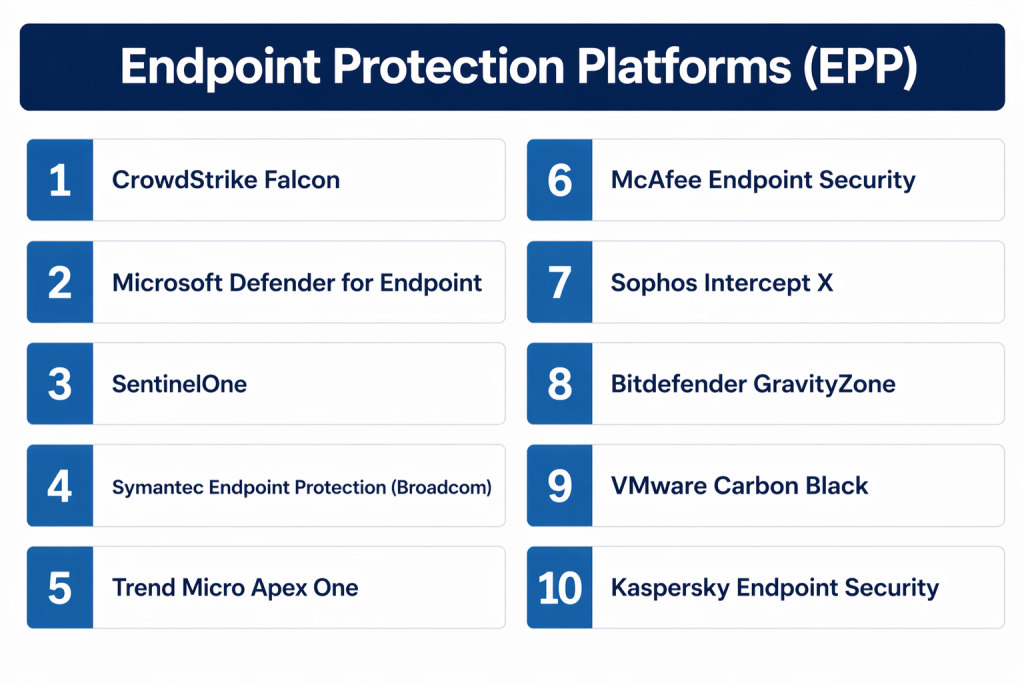
Top 10 Endpoint Protection Platforms (EPP)
1 — CrowdStrike Falcon
Short description:
CrowdStrike Falcon is a cloud-native EPP solution known for strong threat detection, behavioral analytics, and rapid incident response.
Key Features
- Cloud-native agent architecture
- Behavioral threat detection
- Ransomware protection
- Real-time threat intelligence
- Endpoint detection and response (EDR)
- Automated remediation
- Lightweight agent
Pros
- Highly effective threat hunting
- Minimal performance impact
- Scalable for large enterprises
Cons
- Premium pricing
- Cloud dependency
Platforms / Deployment
- Windows / macOS / Linux
- Cloud-managed
Security & Compliance
- MFA for console access
- Audit logs
- Integration with compliance & reporting
Integrations & Ecosystem
- SIEM platforms
- SOAR tools
- Cloud infrastructure
- Threat intel feeds
Support & Community
Strong enterprise support and active threat research community.
2 — Microsoft Defender for Endpoint
Short description:
Microsoft Defender for Endpoint provides integrated endpoint protection for Windows environments and cross-platform support for macOS, Linux, and mobile devices.
Key Features
- AI-driven threat detection
- Behavioral analytics
- Automated remediation
- EDR capabilities
- Exploit protection
- Integration with Microsoft security ecosystem
- Centralized dashboard
Pros
- Deep Microsoft ecosystem integration
- Good value for Windows-first environments
- Built-in EDR features
Cons
- Feature differences across platforms
- Licensing complexity
Platforms / Deployment
- Windows / macOS / Linux / Mobile
- Cloud-managed
Security & Compliance
- Azure AD integration
- Audit logs
- Secure configuration policies
Integrations & Ecosystem
- Microsoft 365 Defender
- Azure Sentinel
- SIEM tools
- Cloud services
Support & Community
Microsoft enterprise support and broad documentation.
3 — SentinelOne
Short description:
SentinelOne is an AI-driven EPP solution that emphasizes autonomous detection and response across endpoints.
Key Features
- AI/ML threat detection
- Autonomous remediation
- Ransomware rollback
- EDR and XDR capabilities
- Behavioral analytics
- Threat hunting tools
- Cloud management
Pros
- Strong autonomous response
- Effective ransomware defense
- Minimal management overhead
Cons
- Premium pricing
- Complex advanced features
Platforms / Deployment
- Windows / macOS / Linux
- Cloud-managed
Security & Compliance
- RBAC and audit logs
- Encryption
- Integration with compliance reporting
Integrations & Ecosystem
- SIEM and SOAR
- Cloud providers
- Enterprise security tools
- APIs
Support & Community
Strong enterprise support.
4 — Symantec Endpoint Protection (Broadcom)
Short description:
Symantec Endpoint Protection provides industry-proven malware and threat prevention with centralized management.
Key Features
- Malware and exploit prevention
- Behavioral analysis
- Application control
- Firewall and network protection
- Centralized management console
- EDR integration
- Threat intelligence
Pros
- Strong legacy protection capabilities
- Broad platform support
- Enterprise features
Cons
- Legacy architecture complexity
- Performance overhead
Platforms / Deployment
- Windows / macOS / Linux
- Cloud/On-prem
Security & Compliance
- RBAC and audit logging
- Encryption
- Compliance reporting
Integrations & Ecosystem
- SIEM systems
- Cloud tools
- Enterprise security platforms
- APIs
Support & Community
Broad global enterprise support.
5 — Trend Micro Apex One
Short description:
Trend Micro Apex One provides endpoint protection with advanced threat detection, ransomware defense, and machine learning.
Key Features
- Machine learning detection
- Behavioral analytics
- Ransomware protection
- EDR features
- Vulnerability protection
- Centralized management
- Cloud and on-prem deployment
Pros
- Strong detection capabilities
- Flexible deployment options
- Good ransomware protection
Cons
- Console can be complex
- Licensing tiers vary in features
Platforms / Deployment
- Windows / macOS / Linux
- Cloud/On-prem
Security & Compliance
- RBAC and audit logs
- Encryption
- Compliance reporting
Integrations & Ecosystem
- SIEM
- Cloud platforms
- ITSM systems
- APIs
Support & Community
Strong enterprise support.
6 — McAfee Endpoint Security
Short description:
McAfee Endpoint Security provides comprehensive protection with threat intelligence, behavioral defenses, and centralized policy controls.
Key Features
- Real-time threat detection
- Behavioral analytics
- Application control
- Firewall and network protection
- Centralized management
- EDR features
- Threat intelligence
Pros
- Broad threat coverage
- Integrates with McAfee security suite
- Centralized administration
Cons
- Performance impact on some devices
- Interface complexity
Platforms / Deployment
- Windows / macOS / Linux
- Cloud-managed
Security & Compliance
- RBAC and audit logs
- Encryption
- Compliance reporting
Integrations & Ecosystem
- SIEM
- Cloud tools
- Security platforms
- APIs
Support & Community
Enterprise-level support.
7 — Sophos Intercept X
Short description:
Sophos Intercept X combines traditional antivirus with modern AI detection, anti-ransomware, and EDR features.
Key Features
- Deep learning malware detection
- Crypto-ransomware rollback
- Active adversary mitigations
- Exploit prevention
- EDR integration
- Centralized cloud management
- Threat intelligence
Pros
- Strong ransomware defense
- Easy management console
- Lightweight agent
Cons
- Advanced features require higher plans
- Less mature analytics
Platforms / Deployment
- Windows / macOS / Linux
- Cloud-managed
Security & Compliance
- Encryption
- MFA support
- Compliance reporting
Integrations & Ecosystem
- SIEM
- Cloud platforms
- ITSM systems
- APIs
Support & Community
Good global support.
8 — Bitdefender GravityZone
Short description:
Bitdefender GravityZone provides comprehensive endpoint protection with layered security and advanced threat analytics.
Key Features
- Multi-layered malware protection
- Behavioral threat detection
- EDR capabilities
- Network attack defense
- Centralized management
- Cloud or on-prem deployment
- Threat intelligence
Pros
- Strong malware detection
- Lower performance overhead
- Flexible deployment
Cons
- UI can be complex
- Advanced features behind higher tiers
Platforms / Deployment
- Windows / macOS / Linux
- Cloud/On-prem
Security & Compliance
- Encryption
- Audit logs
- Compliance reporting
Integrations & Ecosystem
- SIEM
- Cloud tools
- Security platforms
- APIs
Support & Community
Enterprise support.
9 — VMware Carbon Black
Short description:
VMware Carbon Black offers endpoint protection with advanced behavioral analytics, threat detection, and EDR capabilities.
Key Features
- Behavioral monitoring
- Threat hunting tools
- EDR and automated response
- Cloud-native management
- Ransomware mitigation
- Threat intelligence
- Centralized dashboard
Pros
- Good threat visibility
- Behavioral analytics strength
- Scalable platform
Cons
- Pricing tiers can be complex
- Requires tuning for best results
Platforms / Deployment
- Windows / macOS / Linux
- Cloud-managed
Security & Compliance
- Encryption
- Audit logs
- Compliance reporting
Integrations & Ecosystem
- SIEM
- SOAR
- Security ecosystems
- APIs
Support & Community
Strong enterprise support.
10 — Kaspersky Endpoint Security
Short description:
Kaspersky Endpoint Security provides endpoint protection with strong malware detection, anti-ransomware, and centralized controls.
Key Features
- Multi-layered protection
- Anti-exploit and anti-ransomware
- Device control
- Web and network protection
- Centralized management
- Behavioral analytics
- Threat intelligence
Pros
- Excellent malware detection
- Strong ransomware protection
- Good performance footprint
Cons
- Regional compliance considerations
- Limited advanced EDR in lower tiers
Platforms / Deployment
- Windows / macOS / Linux
- Cloud/On-prem
Security & Compliance
- Encryption
- Audit logs
- Compliance features
Integrations & Ecosystem
- SIEM
- Cloud platforms
- Security tools
- APIs
Support & Community
Global support available.
Comparison Table (Top 10)
| Tool | Best For | Platform(s) Supported | Deployment | Standout Feature | Public Rating |
|---|---|---|---|---|---|
| CrowdStrike Falcon | Enterprise threat hunting | Multi | Cloud | Cloud-native threat analytics | N/A |
| Microsoft Defender Endpoint | Microsoft environments | Multi | Cloud | Native Microsoft integration | N/A |
| SentinelOne | Automated response | Multi | Cloud | Autonomous remediation | N/A |
| Symantec Endpoint | Broad enterprise protection | Multi | Cloud/On-prem | Legacy threat coverage | N/A |
| Trend Micro Apex One | Flexible deployments | Multi | Cloud/On-prem | Machine learning detection | N/A |
| McAfee Endpoint | Suite integration | Multi | Cloud | Broad threat coverage | N/A |
| Sophos Intercept X | Ransomware focus | Multi | Cloud | Ransomware rollback | N/A |
| Bitdefender GravityZone | Malware detection | Multi | Cloud/On-prem | Low performance impact | N/A |
| VMware Carbon Black | Behavioral analytics | Multi | Cloud | Threat hunting tools | N/A |
| Kaspersky Endpoint | Core malware defense | Multi | Cloud/On-prem | Strong malware detection | N/A |
Evaluation & Scoring of EPP Tools
| Tool | Core (25%) | Ease (15%) | Integrations (15%) | Security (10%) | Performance (10%) | Support (10%) | Value (15%) | Total |
|---|---|---|---|---|---|---|---|---|
| CrowdStrike | 10 | 9 | 9 | 10 | 9 | 9 | 8 | 9.1 |
| Microsoft Defender | 9 | 8 | 10 | 9 | 9 | 8 | 9 | 8.8 |
| SentinelOne | 10 | 8 | 9 | 10 | 9 | 9 | 8 | 9.0 |
| Symantec | 8 | 7 | 8 | 9 | 8 | 8 | 7 | 8.0 |
| Trend Micro | 9 | 7 | 8 | 9 | 9 | 8 | 8 | 8.4 |
| McAfee | 8 | 7 | 8 | 9 | 8 | 8 | 7 | 7.9 |
| Sophos | 9 | 8 | 8 | 9 | 9 | 8 | 8 | 8.6 |
| Bitdefender | 9 | 8 | 8 | 9 | 9 | 8 | 8 | 8.7 |
| VMware CB | 9 | 7 | 9 | 9 | 8 | 8 | 8 | 8.6 |
| Kaspersky | 9 | 7 | 8 | 9 | 9 | 8 | 8 | 8.7 |
Which EPP Tool Is Right for You?
SMB / Startups
- Bitdefender GravityZone
- Sophos Intercept X
- Microsoft Defender for Endpoint (starter tiers)
Mid-Market
- Trend Micro Apex One
- Microsoft Defender for Endpoint
- VMware Carbon Black
Enterprise
- CrowdStrike Falcon
- SentinelOne
- Sophos Intercept X (advanced tiers)
Frequently Asked Questions (FAQs)
1. What is an Endpoint Protection Platform?
An EPP is a security solution that protects endpoint devices from malware, ransomware, and other threats. It monitors, detects, and blocks attacks.
2. Why do endpoints need special protection?
Endpoints are exposed to the internet and user-driven activity. Without EPP, malware and attacks can compromise systems easily.
3. What is the difference between EPP and EDR?
EPP focuses on prevention, while EDR focuses on detection and response. Modern tools often combine both.
4. Do EPP tools impact device performance?
Top EPP tools are optimized for minimal performance impact. Lighter agents help reduce slowdowns.
5. Can EPP protect against ransomware?
Yes, most modern EPP tools include ransomware defense features and rollback protections.
6. Are cloud-native EPP solutions better?
Cloud-native solutions offer centralized management and scalability. They are ideal for distributed environments.
7. Can EPP tools integrate with SIEM?
Yes, many integrate with SIEM and SOAR platforms for comprehensive security monitoring.
8. Are mobile endpoints supported?
Leading EPP platforms support mobile (iOS/Android) protection and policy enforcement.
9. Is EPP hard to deploy?
Cloud-managed EPPs are typically straightforward. On-prem options require more setup.
10. What industries benefit from EPP most?
Finance, healthcare, education, government, and enterprises with distributed endpoints.
Conclusion
Endpoint Protection Platforms (EPP) are crucial for securing devices and stopping sophisticated cyber threats at their entry points. As endpoints become more varied and distributed, advanced EPP solutions with behavioral analytics, AI detection, and automated response are essential.
From cloud-native leaders like CrowdStrike and SentinelOne to flexible platforms like Microsoft Defender and Bitdefender, each tool offers different strengths depending on organizational needs.
Choosing the right EPP depends on your security posture, scale, and infrastructure complexity. A strong EPP strategy ensures real-time threat detection, reliable protection, and resilience across all endpoint devices.
