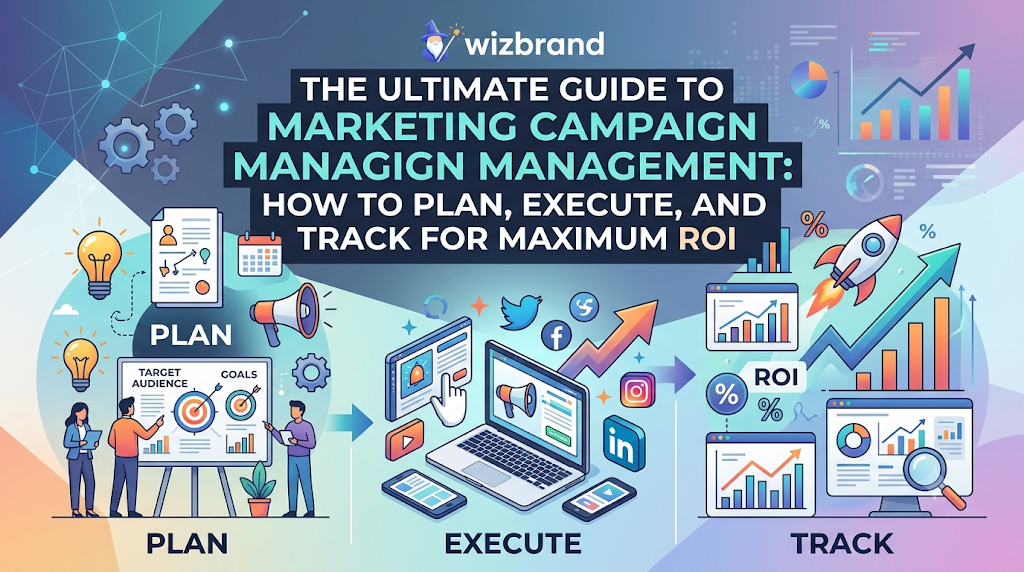
In today’s hyper-competitive digital landscape, running ad-hoc marketing tactics without a unified strategy is a direct path to drained budgets and missed opportunities. Modern marketing demands precision. To cut through the noise, capture shifting consumer attention, and drive predictable revenue growth, businesses must treat marketing not as a series of isolated creative tasks, but as an engineered, structured process.
Yet, executing a flawless multi-channel strategy is easier said than done. Marketing teams frequently grapple with siloed data, disconnected communication tools, ambiguous goals, and fragmented workflows that stall campaign velocity. Without structured planning, robust cross-functional collaboration, and real-time performance tracking, even the most creative concepts fall flat.
This comprehensive, data-driven guide breaks down the science of marketing campaign management. You will learn how to design data-backed strategies, coordinate cross-functional teams, execute seamless multi-channel launches, and track the exact metrics that validate your return on investment (ROI).
What Is a Marketing Campaign?
A digital marketing campaign is a planned, strategic sequence of activities designed to promote a specific business goal, product, or service. Unlike ongoing daily marketing operations, a campaign is distinct: it has a defined start and end date, a clear target audience, a fixed budget, and measurable key performance indicators (KPIs).
Campaigns leverage a variety of interconnected digital channels—including search engine optimization (SEO), pay-per-click (PPC) advertising, social media, email marketing, and content syndication—to deliver a unified value proposition. At its core, an effective campaign guides a prospect seamlessly through the buyer’s journey, transforming passive awareness into active conversion.
Why Marketing Campaign Planning Matters
Launching an unplanned initiative wastes time, money, and creative energy. According to industry benchmarks, marketers who proactively document their campaign strategies are over 300% more likely to report success than those who do not.
Structured marketing campaign planning offers crucial strategic benefits:
- Optimal Resource Allocation: Ensures budgets and human capital are deployed against high-impact initiatives, eliminating waste.
- Message Consistency: Guarantees that your brand voice, visual identity, and core value propositions remain identical across every touchpoint.
- Predictable Execution: Mitigates operational bottlenecks by mapping out clear dependencies, milestones, and timelines in advance.
- Data-Driven Agility: Establishes clear baselines, allowing teams to quickly identify underperforming assets and optimize them mid-campaign.
Types of Marketing Campaigns with Practical Examples
To build a balanced marketing engine, growth leaders deploy various campaign structures depending on the business objective and target audience lifecycle.
1. Product Launch Campaign
- Objective: Introduce a new software feature or product line to the market and accelerate initial user adoption.
- Practical Example: A SaaS enterprise creates an omni-channel push featuring interactive LinkedIn product teasers, targeted product demo webinars, early-access email sequences, and high-intent Google Search Ads targeting competitors.
2. Brand Awareness Campaign
- Objective: Educate the broader market on your brand’s core values, mission, and unique positioning.
- Practical Example: An eco-friendly consumer goods brand runs a top-of-funnel storytelling campaign utilizing programmatic video ads, influencer partnerships, and educational blog posts detailing sustainable supply chains.
3. Lead Generation Campaign
- Objective: Populate the sales pipeline by capturing validated contact information from qualified prospects.
- Practical Example: A B2B consultancy develops a high-value industry whitepaper, gating it behind a conversion-optimized landing page supported by LinkedIn Lead Gen Forms and retargeting ads.
4. Seasonal Marketing Campaign
- Objective: Capitalize on specific holidays, shopping seasons, or industry quarters to drive short-term revenue spikes.
- Practical Example: An e-commerce retailer builds an end-of-year holiday promotional event, coordinating flash-sale email blasts, SMS alerts, and targeted Instagram shopping carousels.
5. Event Promotion Campaign
- Objective: Maximize registrations and active attendee engagement for a virtual summit or physical conference.
- Practical Example: A tech company orchestrates a 6-week multi-channel push using early-bird speaker video reveals, automated calendar reminders, and organic social countdowns.
6. B2B Account-Based Marketing (ABM) Campaign
- Objective: Win highly specific, high-value enterprise accounts with hyper-personalized messaging.
- Practical Example: A cybersecurity firm targets 50 select enterprise target accounts with personalized video pitches, customized landing pages, and direct-mail physical gift drops paired with targeted IP-based display ads.
Common Campaign Management Challenges
Modern marketing leaders face complex operational realities. Understanding these common pain points helps teams proactively build resilient strategies.
- Siloed Team Communication: Copywriters, designers, media buyers, and SEO specialists often operate on separate communications platforms, leading to mismatched asset deliveries and fragmented messaging.
- Data Fragmentation and Poor Tracking: Tracking performance across multiple separate ad managers, email platforms, and analytics dashboards makes true cross-channel performance analysis incredibly difficult.
- Scope Creep and Missed Deadlines: Lacking a single source of truth for marketing project management causes task dependencies to break down, asset deliveries to delay, and launch timelines to slip.
- Inefficient Content Lifecycles: Reviewing creative assets across disjointed email threads and chat messages slows production down, delaying market launch.
The Lifecycle of a Marketing Campaign
Every high-performing campaign moves systematically through four distinct phases:
[ Phase 1: Ideation & Strategy ] ➔ [ Phase 2: Creation & Setup ] ➔ [ Phase 3: Execution & Optimization ] ➔ [ Phase 4: Analysis & Reporting ]
- Ideation & Strategy: Defining the core business objectives, budgeting resources, researching target personas, establishing KPIs, and mapping out the cross-channel ecosystem.
- Creation & Setup: Drafting copy, designing creative assets, coding landing pages, configuring tracking parameters (UTMs), and building out automated email workflows.
- Execution & Optimization: Deploying the campaign live to the market, monitoring real-time delivery metrics, and conducting iterative A/B testing on creatives, hooks, and landing page layouts.
- Analysis & Reporting: Extracting final performance data, attributing conversions to correct channels, calculating definitive ROI, and documenting strategic takeaways for future initiatives.
Core Pillars of Campaign Strategy Development
Setting SMART Marketing Objectives
Vague aspirations lead to vague results. Campaigns must be anchored by SMART objectives:
- Specific: Increase qualified B2B inbound leads.
- Measurable: Grow leads by 25%.
- Achievable: Backed by historical performance data and proportional ad spend adjustments.
- Relevant: Aligns directly with the executive goal of expanding enterprise market share.
- Time-bound: To be fully achieved within Q3 (90 days).
Identifying Target Audience and Buyer Personas
A message tailored for everyone resonates with no one. Deeply segment your audience based on firmographics (industry, company revenue, employee headcount), demographics (job title, geographic location), psychographics (professional pain points, career goals), and behavioral patterns (preferred consumption channels, past content interactions).
Budget Planning and Resource Allocation
Break down your gross campaign budget into transparent operational buckets:
- Paid Media Spend: Paid search, paid social, programmatic programmatic networks.
- Creative Asset Production: Copywriting fees, graphic design, video production.
- Technology & Infrastructure: Tool licensing, landing page builders, automation systems.
- Contingency Reserves: Retaining 5–10% of the total budget for mid-campaign scaling or unexpected optimizations.
Choosing the Right Marketing Channels
Do not dilute your presence by trying to appear on every platform. Align your distribution architecture strictly with target audience behavior:
- B2B Enterprise: Prioritize LinkedIn, Google Search, industry-specific newsletters, and programmatic ABM ad networks.
- B2C Consumer Goods: Focus on Instagram, TikTok, YouTube Shorts, and conversion-focused Email Marketing.
Comprehensive Comparison Frameworks
To help make informed operational decisions, use these strategic comparison matrices:
1. Strategic Planning & Infrastructure Comparisons
| Feature / Metric | Planned Campaign | Unplanned Campaign |
| Goal Alignment | Mapped directly to specific corporate KPIs | Reactive, loosely defined objectives |
| Resource Efficiency | Optimized spend with minimal waste | High ad-hoc expenses, rushed pricing |
| Team Coordination | Documented asset ownership and clear deadlines | Ambiguous roles, chaotic communication |
| Performance Agility | Mid-campaign pivots based on clear KPI data | Reactionary changes based on gut feelings |
| Historical ROI Data | Structured data available for future scaling | Segmented, non-attributable performance metrics |
2. Operational Execution Methods
| Metric | Manual Campaign Management | Marketing Management Platform (e.g., WizBrand) |
| Task Allocation | Disjointed spreadsheets and chat messages | Centralized Kanban boards and Gantt charts |
| Asset Approvals | Long, slow email validation threads | Unified workflows with instantly tracked feedback |
| Data Aggregation | Hours spent pulling metrics from separate platforms | Consolidated dashboards showing data in real-time |
| Automation Levels | Highly repetitive manual administrative work | Automated tasks, status updates, and reports |
| Error Vulnerability | High risk of broken links and incorrect tags | Systematized quality assurance checklists |
3. Tactical Approach and Distribution Methods
| Core Metric | Organic Campaign | Paid Campaign |
| Time to Results | Requires sustained long-term efforts | Near-instant traffic and visibility |
| Upfront Cost | Primarily human capital and time investment | Direct monetary cost per click or impression |
| Sustainability | Delivers compounding value over time | Traffic stops as soon as ad spend ceases |
| Audience Intent | Exceptionally high educational/informational intent | Targeted transactional and commercial intent |
| Primary Channels | SEO, organic social, content syndication | Google Ads, Meta Ads, LinkedIn Ads, Display |
4. Channel Architecture Performance
| Strategic Metric | Single-Channel Campaign | Multi-Channel Campaign |
| Audience Touchpoints | Limited to one specific medium | Covers diverse points across the funnel |
| Message Reinforcement | Lower frequency of top-of-mind recall | High impact due to omnipresent visibility |
| Management Complexity | Low; minimal asset variation needed | High; requires meticulous cross-channel alignment |
| Risk Distribution | High vulnerability if that channel underperforms | Resilient; budget can shift to winning channels |
| Average Engagement | Moderate, bounded by platform caps | Higher overall conversion lift |
5. Media Paradigms
| Feature | Traditional Marketing Campaigns | Digital Marketing Campaigns |
| Audience Precision | Broad, demographic-based estimates | Hyper-targeted by intent and behaviors |
| Data Timeliness | Post-campaign delays, often taking weeks | Real-time, instant performance feedback |
| Cost Entry Point | High initial capital requirements | Flexible; accessible for small testing budgets |
| Two-Way Interaction | Completely unidirectional broadcasting | Bi-directional engagement and conversational |
| Attribution Clarity | Directional modeling based on surveys | Exact tracking using UTMs, pixels, and server tags |
6. KPI Architecture by Business Goal
| Core Corporate Goal | Primary Metric Focus | Secondary Diagnostic Metric |
| Brand Awareness Expansion | Share of Voice (SOV), Impressions, Reach | Video Completion Rate, Social Shares |
| Pipeline Acceleration | Lead Conversion Rate, Marketing Qualified Leads | Cost Per Lead (CPL), Content Downloads |
| Direct E-Commerce Sales | Return on Ad Spend (ROAS), Gross Revenue | Average Order Value (AOV), Cart Abandonment |
| Customer Retention | Customer Lifetime Value (CLV), Churn Rate | Repeat Purchase Rate, Net Promoter Score (NPS) |
Step-by-Step Guide to Planning, Executing, and Tracking Marketing Campaigns
1. Define Goals ➔ 2. Set Objectives ➔ 3. Research Audience ➔ 4. Choose Channels ➔ 5. Map Strategy
                                                                              │
10. Optimize 🗘 9. Track KPIs 🗙 8. Go Live 🗙 7. Assign Roles 🗙 6. Build Assets ↵
Step 1: Define Business Goals
- Objective: Align the campaign’s baseline focus with high-level corporate revenue objectives.
- Key Activities: Host executive alignment sessions to determine whether the company needs quick top-line revenue, long-term brand equity, or rapid user growth.
- Best Practices: Ground your target numbers in historical performance, seasonality trends, and available pipeline capacity.
- Common Mistakes to Avoid: Launching tactical creative concepts without ensuring they support core business milestones.
- Expected Outcomes: A formally signed-off strategic charter defining the overarching business focus.
Step 2: Set Campaign Objectives
- Objective: Translate high-level business goals into specific, time-bound SMART marketing targets.
- Key Activities: Define exact target metrics for traffic volume, lead quality scores, acquisition costs, and total attributed revenue.
- Best Practices: Establish realistic minimum, target, and stretch goals for every primary metric.
- Common Mistakes to Avoid: Selecting vanity metrics (like raw page views) that do not correlate directly with revenue.
- Expected Outcomes: A comprehensive KPI framework that guides the entire marketing team.
Step 3: Research the Target Audience
- Objective: Uncover clear demographic, firmographic, and psychographic insights that define your target buyers.
- Key Activities: Conduct deep interviews with current customers, analyze historical CRM data, study competitor messaging, and document clear buyer personas.
- Best Practices: Focus heavily on identifying your prospects’ primary professional frustrations and daily workflows.
- Common Mistakes to Avoid: Relying on generic, surface-level assumptions rather than verified qualitative and quantitative data.
- Expected Outcomes: Actionable buyer personas complete with targeted messaging guidelines.
Step 4: Choose Marketing Channels
- Objective: Select the optimal distribution mix to reach your target audience efficiently.
- Key Activities: Audit past performance data across channels, map out where your personas spend their professional time, and allocate budget percentages accordingly.
- Best Practices: Implement a balanced multi-channel approach where organic content and paid campaigns support one another.
- Common Mistakes to Avoid: Spreading resources too thin across too many platforms, rather than mastering a few high-value channels.
- Expected Outcomes: A finalized media distribution framework with clear budget allocations per channel.
Step 5: Create Campaign Strategy
- Objective: Develop the core creative theme, overarching messaging framework, and direct offers.
- Key Activities: Draft your central value proposition, map content assets to each stage of the buyer’s journey, and sketch out the conversion path.
- Best Practices: Ensure your core message is highly compelling and addresses a real pain point for the target persona.
- Common Mistakes to Avoid: Developing messaging focused on product features rather than the actual business value delivered to the buyer.
- Expected Outcomes: A strategic campaign blueprint containing core copy hooks and conversion path architectures.
Step 6: Develop Marketing Content
- Objective: Produce high-quality, high-converting creative assets across every chosen distribution channel.
- Key Activities: Write copy for ads, emails, and landing pages; design visual creative assets; build conversion forms; and set up tracking links (UTMs).
- Best Practices: Maintain clear visual and copy consistency across every touchpoint to build immediate brand trust.
- Common Mistakes to Avoid: Rushing the creative production phase, which often leads to broken tracking links, poor design, or typos.
- Expected Outcomes: A fully organized library of approved, launch-ready creative assets and landing pages.
Step 7: Assign Roles and Responsibilities
- Objective: Establish accountability and build clear project workflows across the entire marketing team.
- Key Activities: Assign clear asset owners within your marketing project management system, map out task dependencies, and schedule production deadlines.
- Best Practices: Use the RACI matrix framework to clearly define who is Responsible, Accountable, Consulted, and Informed for every deliverable.
- Common Mistakes to Avoid: Leaving task ownership ambiguous, which inevitably leads to missed deadlines and disjointed implementation.
- Expected Outcomes: A fully built-out marketing calendar detailing exact project owners, deliverables, and timelines.
Step 8: Launch the Campaign
- Objective: Go live with all creative assets, ad placements, and distribution workflows across channels.
- Key Activities: Activate your paid media budgets, publish search-optimized content, launch outbound email sequences, and run final end-to-end conversion checks.
- Best Practices: Plan your rollout during peak audience engagement hours and double-check data capture forms.
- Common Mistakes to Avoid: Launching without testing tracking parameters, which leads to immediate data gaps.
- Expected Outcomes: A live campaign actively gathering customer engagement data in the market.
Step 9: Track Campaign Performance
- Objective: Monitor real-time audience interaction metrics to ensure the campaign runs smoothly.
- Key Activities: Review performance dashboards daily, track daily ad spend velocity, and ensure lead routing systems are working perfectly.
- Best Practices: Rely on clean, automated tracking reports to maintain a single source of truth for all operational data.
- Common Mistakes to Avoid: Over-reacting to minor performance swings within the first 48 hours before statistical significance is reached.
- Expected Outcomes: Clean, accessible performance dashboards providing visibility into active campaigns.
Step 10: Analyze Results and Optimize
- Objective: Iteratively test creative variations and document key strategic insights to maximize ROI.
- Key Activities: Run systematic A/B tests on creative variations, shift budget allocations toward winning platforms, and present performance reviews to leadership.
- Best Practices: Document all testing insights to continuously improve future campaign planning cycles.
- Common Mistakes to Avoid: Failing to implement optimization changes mid-campaign, which allows underperforming assets to drain ad spend.
- Expected Outcomes: An optimized campaign delivering strong performance, paired with a documented post-campaign analytics report.
Key Marketing Metrics Every Business Should Track
To move away from vanity metrics and demonstrate true business impact, teams must track these eleven essential marketing metrics:
1. Impressions
- Definition: The total number of times your content or advertisement is displayed on a user’s screen.
- Why It Matters: Serves as the baseline measurement for top-of-funnel brand visibility and reach.
- How to Improve: Optimize bid strategies on ad platforms, enhance organic content visibility, and expand target audience parameters.
2. Reach
- Definition: The unique number of individual users who see your campaign content.
- Why It Matters: Helps calculate true brand penetration and alerts you to potential ad fatigue within a target audience.
- How to Improve: Diversify your media distribution channels and expand targeted audience parameters.
3. Click-Through Rate (CTR)
- Definition: The percentage of users who clicked on a specific link after viewing it:$$\text{CTR} = \left( \frac{\text{Total Clicks}}{\text{Total Impressions}} \right) \times 100$$
- Why It Matters: Measures how engaging and relevant your ad copy and creative are to the target audience.
- How to Improve: Write highly compelling calls-to-action (CTAs), run A/B tests on primary hooks, and ensure tight alignment between keywords and ad copy.
4. Conversion Rate
- Definition: The percentage of website visitors who complete a desired target action (such as filling out a form or making a purchase).
- Why It Matters: Directly measures the performance of your landing page experience and user journey design.
- How to Improve: Simplify forms, remove distracting design elements, add clear social proof, and speed up landing page load times.
5. Cost Per Lead (CPL)
- Definition: The net marketing spend required to acquire a single prospective customer lead:$$\text{CPL} = \frac{\text{Total Campaign Spend}}{\text{Total Leads Generated}}$$
- Why It Matters: Measures the cost-efficiency of your lead generation and inbound funnel strategies.
- How to Improve: Optimize ad targeting parameters, improve landing page conversion rates, and stop spend on underperforming creative assets.
6. Customer Acquisition Cost (CAC)
- Definition: The total sales and marketing spend required to acquire a single new paying customer:$$\text{CAC} = \frac{\text{Total Sales + Marketing Expenses}}{\text{Number of New Customers Acquired}}$$
- Why It Matters: The baseline metric used to evaluate long-term business model viability and profitability.
- How to Improve: Implement automated lead nurturing workflows, improve lead qualification processes, and increase organic inbound traffic.
7. Return on Investment (ROI)
- Definition: The overall financial return generated by your marketing campaigns relative to total spend:$$\text{ROI} = \left( \frac{\text{Net Profit Generated} – \text{Total Marketing Investment}}{\text{Total Marketing Investment}} \right) \times 100$$
- Why It Matters: The most important metric to justify marketing budgets to executive leadership and board members.
- How to Improve: Scale up resources on high-converting distribution channels and eliminate low-performing tactics.
8. Engagement Rate
- Definition: The percentage of an audience that actively interacts with your content via likes, shares, comments, or clicks.
- Why It Matters: Indicates how interesting, valuable, and relevant your organic and paid social media content is to your audience.
- How to Improve: Publish more interactive formats (like polls and video content) and respond directly to user conversations.
9. Website Traffic
- Definition: The total volume of unique user sessions and page views driven to your digital properties.
- Why It Matters: Measures the top-of-funnel traffic engines that feed your conversion pipelines.
- How to Improve: Enhance on-page SEO targeting strategy, scale high-intent search ads, and build consistent content publication schedules.
10. Lead Quality Score
- Definition: A metric assessing how likely a lead is to convert into a paying customer based on demographic fit and behavioral activity.
- Why It Matters: Prevents your sales team from wasting time on cold or unqualified prospects.
- How to Improve: Add qualifying questions to lead capture forms and design intentional content journeys.
11. Revenue Attribution
- Definition: The framework that determines exactly which touchpoint or combination of marketing channels gets credit for a sale.
- Why It Matters: Clarifies the exact buyer journey, revealing which channels drive initial interest versus final conversion.
- How to Improve: Deploy clean multi-touch tracking models and consistently tag all URLs with precise tracking parameters.
Common Marketing Campaign Mistakes and How to Avoid Them
- Launching with Ill-Defined Goals: Avoid running campaigns without clear goals. Always tie your metrics to distinct corporate KPIs before building any creative assets.
- Poor Audience Targeting: Don’t blast broad audiences. Base your messaging on actual customer data and validated buyer personas.
- Fragmented Multi-Channel Messaging: Avoid confusing prospects with inconsistent brand voices across channels. Ensure your design assets and messaging align perfectly across every touchpoint.
- Working in Siloed Communications: Don’t rely on messy email threads and scattered chat messages. Centralize all asset creation, feedback loops, and deadlines within a single marketing workflow platform.
- Failing to Monitor Real-Time Analytics: Don’t wait until a campaign ends to check performance data. Review dashboards daily to catch broken links and optimize underperforming ad spends early.
Marketing Campaign Success Checklist
Before launching your next initiative, ensure your team checks off every item on this operational readiness list:
- [ ] Goal Validation: Are all primary campaign KPIs clearly defined and documented?
- [ ] Audience Alignment: Is every creative asset explicitly tailored to a validated buyer persona?
- [ ] Budget Allocation: Are platform ad spends, creative production fees, and emergency reserves clearly itemized?
- [ ] Technical Auditing: Are all analytics pixels, tracking codes, and custom UTM links tested and working perfectly?
- [ ] Landing Page Optimization: Are all submission forms routing data smoothly to your CRM?
- [ ] Workflow Assignment: Are task owners, design dependencies, and review timelines set within your project system?
- [ ] Automated Nurturing: Are post-conversion auto-responders and email onboarding flows live?
- [ ] Reporting Framework: Is there a centralized dashboard built to pull cross-channel data daily?
- [ ] Creative Quality Assurance: Have copy assets been proofread and checked across mobile and desktop layouts?
- [ ] Asset Scaling Framework: Are clear alternative ad variations pre-approved and ready if ad fatigue hits?
Future Trends in Marketing Campaign Management
The marketing landscape continues to evolve rapidly. Staying ahead requires keeping an eye on these emerging operational shifts:
- Integrated Marketing Automation: Modern marketing engines are shifting away from fragmented point solutions. Teams increasingly use unified platforms that connect strategy, task workflows, calendars, and performance data within a single dashboard.
- Privacy-First First-Party Data Systems: As traditional third-party cookies phase out, high-performing marketing operations rely heavily on first-party data capture built through content marketing and direct opt-in funnels.
- Dynamic Predictive Analytics: Campaign tracking tools are evolving from historical reporting toward predictive intelligence, helping teams optimize ad spend and forecast conversion numbers before campaigns launch.
How WizBrand Simplifies Your Marketing Operations
Executing a multi-channel campaign requires keeping a lot of moving parts in sync. WizBrand provides a comprehensive marketing operations and campaign management platform built to centralize your strategy, streamline creative production, and optimize campaign performance.
                  ┌────────────────────────────────────────┐
                  │          WIZBRAND PLATFORM             │
                  └───────────────────┬────────────────────┘
                                      │
         ┌────────────────────────────┼────────────────────────────┐
         ▼                            ▼                            ▼
[ Unified Workspace ]        [ Content Workflows ]        [ Advanced Analytics ]
 • Task Management            • Content Calendar           • Real-time Tracking
 • RACI Accountability        • Asset Approvals            • Cross-channel Reports
1. Centralized Campaign Planning & Project Management
Ditch disconnected spreadsheets. WizBrand gives teams a single source of truth for all campaign tasks. Project leaders can build clear timelines, map asset dependencies, and assign clear ownership using flexible Kanban and Gantt chart views, keeping launches moving on schedule.
2. Streamlined Collaboration & Content Workflows
WizBrand removes communication bottlenecks by bringing creative feedback loops directly into the platform. Content writers, graphic designers, and managers can collaborate, review, and approve ad copy and design assets in one place, speeding up your time-to-market.
3. Integrated Marketing Calendars
Maintain complete visibility over your multi-channel execution schedule. WizBrand’s interactive marketing calendar allows teams to easily manage organic blog schedules, social media pushes, email drops, and paid ad launches, ensuring brand messaging stays consistent across channels.
4. Real-Time Tracking & Consolidated Reporting
Stop losing hours manually building cross-platform performance reports. WizBrand connects your execution workflows with actionable performance tracking. The platform provides a clear view of your metrics, making it easy to see exactly which channels are driving ROI and where to optimize spend mid-campaign.
Frequently Asked Questions (FAQs)
Q1: What is the primary difference between marketing project management and campaign management?
Marketing project management focuses on the internal processes, operational workflows, deadlines, and task logistics required to produce creative deliverables. Campaign management encompasses this structural foundation but also includes the external strategy, audience targeting, distribution channels, and post-launch optimization needed to hit specific business goals.
Q2: How long should a typical digital marketing campaign run?
While timelines vary based on your business model, most digital campaigns run for 45 to 90 days. This timeline gives ad platform algorithms enough time to optimize, generates stable data trends, and allows you to test creative variations without risking audience ad fatigue.
Q3: How many distribution channels should we prioritize for a new campaign?
For best results, focus on 2 to 4 core distribution channels where your data shows your target audience is most active. Spreading your budget across too many platforms right away can dilute your budget and make tracking performance unnecessarily complicated.
Q4: What is a healthy click-through rate (CTR) benchmark for paid search ads?
Across most standard B2B and B2C industries, an average click-through rate between 3% and 5% is considered a healthy baseline for paid search campaigns. High-intent brand terms often achieve much higher CTRs.
Q5: How often should our marketing team optimize active ad creatives?
Let your campaigns gather enough data before making major changes. Allow new ads to run for 72 hours or accumulate at least 1,000 impressions before adjusting hooks, imagery, or targeting parameters based on performance.
Q6: Why is multi-touch attribution important for campaign reporting?
Most buyers interact with a brand multiple times before making a purchase. Multi-touch attribution gives you a clearer look at the full customer journey by giving fair credit to the top-of-funnel content that drove discovery, as well as the bottom-of-funnel retargeting ads that closed the sale.
Q7: Can small businesses with limited budgets run effective multi-channel campaigns?
Absolutely. Small teams can maximize their budgets by pairing targeted paid ads with search-optimized organic content. Using a centralized platform like WizBrand helps lean teams keep workflows efficient and avoid wasting resources.
Q8: How does WizBrand keep distributed or remote marketing teams aligned?
WizBrand provides a centralized workspace that gives every team member real-time visibility into task ownership, project stages, asset feedback, and deadlines, keeping everyone on the same page regardless of location.
Q9: Does WizBrand replace our current CRM platform?
No, WizBrand works alongside your CRM. It handles the operational side of things—centralizing campaign planning, task workflows, creative collaboration, and multi-channel performance tracking—while your CRM manages direct customer profiles.
Q10: How do I get started with WizBrand?
Visit WizBrand.com to request a customized platform demo, explore the platform’s features, and set up a centralized workspace tailored to your marketing team’s workflow.
Conclusion
Successfully scaling a modern business requires moving past unstructured, ad-hoc marketing tactics. True growth comes down to disciplined marketing campaign management—setting clear SMART goals, understanding your target personas, building smooth internal workflows, and keeping a close eye on your ROI data.
By setting up structured lifecycles and tracking the metrics that actually drive business value, you protect your budget and set your team up for predictable, repeatable growth.
