Introduction
Language Learning Apps are mobile and web-based platforms designed to help users acquire new languages efficiently. These apps combine gamification, AI-driven personalized lessons, speech recognition, and interactive exercises to create engaging learning experiences. They are widely used by students, professionals, travelers, and organizations looking to scale language skills globally.
Real-world use cases include improving English proficiency for non-native speakers, preparing employees for international assignments, enhancing school and university language curricula, learning languages for travel or business, and supporting self-paced lifelong learning programs. Key evaluation criteria include language coverage, learning methodology, AI and speech recognition capabilities, content quality, gamification features, progress tracking, offline availability, pricing, and customer support.
Best for: individual learners, students, professionals, and organizations seeking scalable language training solutions.
Not ideal for: those requiring in-person instruction, niche dialects not supported by apps, or fully offline intensive study programs.
Key Trends in Language Learning Apps
- AI-driven personalized learning paths for adaptive lesson delivery.
- Integration with speech recognition and pronunciation feedback.
- Gamification and rewards systems to enhance user engagement.
- Multi-device support with offline learning options.
- Expansion into business and enterprise language training.
- Incorporation of cultural and conversational context in lessons.
- Hybrid models combining human tutors with AI-assisted learning.
- Voice and video chat features for practical conversation practice.
- Increasing coverage of regional and niche languages.
- Subscription-based and freemium pricing models for flexible access.
How We Selected These Tools
- Reviewed user adoption and global reach.
- Evaluated content quality, lesson structure, and gamification features.
- Assessed AI personalization and speech recognition accuracy.
- Considered platform availability and offline functionality.
- Checked integration with educational institutions or corporate systems.
- Measured ease of use for beginners and advanced learners.
- Reviewed support, tutorials, and community engagement.
- Compared pricing models and value for features offered.
- Examined progress tracking and performance reporting features.
- Prioritized apps with consistent updates and user feedback incorporation.
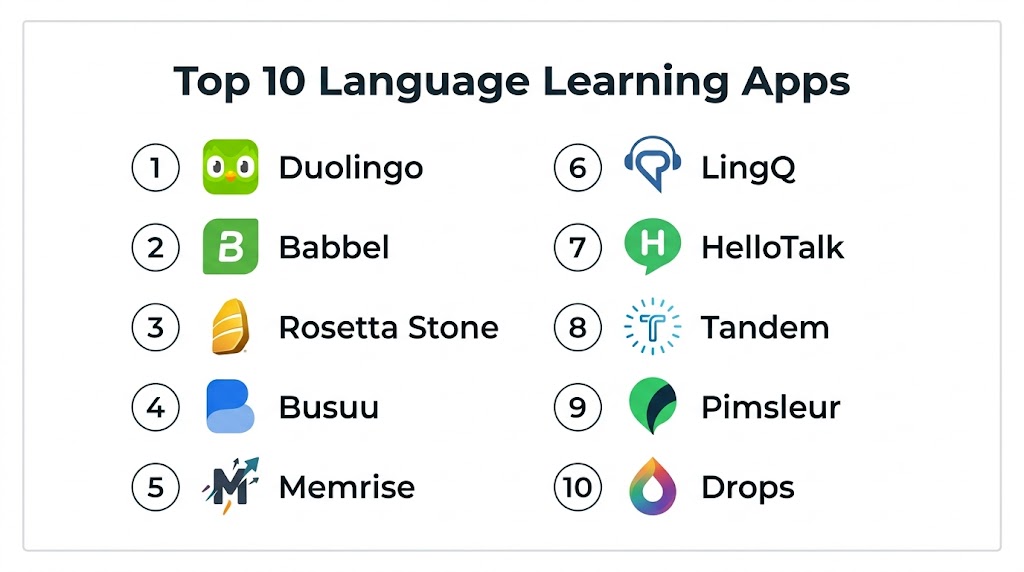
Top 10 Language Learning Apps
#1 — Duolingo
Short description: Duolingo offers gamified language lessons with bite-sized exercises for over 40 languages. It targets casual learners, students, and professionals seeking flexible study options.
Key Features
- Gamified lessons and daily streaks
- Multi-language support
- AI-driven personalized exercises
- Offline learning capability
- Progress tracking and reports
Pros
- Engaging, easy-to-use interface
- Free tier available
- Tracks progress and learning streaks
Cons
- Limited conversational practice
- Some lessons may feel repetitive
- Less suitable for advanced learners
Platforms / Deployment
- Web, iOS, Android
- Cloud
Security & Compliance
- Not publicly stated
Integrations & Ecosystem
- School and classroom integration
- API access for education platforms
- Exportable progress reports
Support & Community
- Tutorials and FAQ
- Email support
- Large online user community
#2 — Rosetta Stone
Short description: Rosetta Stone delivers immersive language learning with speech recognition technology. It is suitable for serious learners and corporate training programs.
Key Features
- Immersive audio-visual lessons
- TruAccent speech recognition
- Mobile and desktop access
- Progress tracking dashboards
- Corporate and enterprise packages
Pros
- High-quality instructional design
- Effective for pronunciation and listening
- Wide range of languages
Cons
- Premium pricing
- Less gamification
- Requires consistent practice for best results
Platforms / Deployment
- Web, iOS, Android
- Cloud
Security & Compliance
- Not publicly stated
Integrations & Ecosystem
- LMS integration
- Enterprise admin tools
- Progress reporting
Support & Community
- Email and chat support
- Tutorials
- Community forums
#3 — Babbel
Short description: Babbel offers language lessons designed for practical conversation skills. It is focused on adult learners, travelers, and professionals.
Key Features
- Interactive dialogues
- Grammar and vocabulary exercises
- Real-life conversation practice
- Speech recognition feedback
- Personalized lesson paths
Pros
- Effective for practical communication
- Structured lessons
- Mobile and desktop accessibility
Cons
- Subscription-based
- Limited free access
- Some language depth may be limited
Platforms / Deployment
- Web, iOS, Android
- Cloud
Security & Compliance
- Not publicly stated
Integrations & Ecosystem
- Mobile and desktop apps
- Enterprise training integration
- Lesson progress export
Support & Community
- Documentation and FAQ
- Email support
- Online user community
#4 — Memrise
Short description: Memrise combines gamified learning with real-world video clips to teach over 20 languages. It suits learners looking for fun, context-rich lessons.
Key Features
- Gamified vocabulary exercises
- Real-life video examples
- AI-powered spaced repetition
- Offline learning capability
- Community-created content
Pros
- Engaging and interactive
- Supports self-paced learning
- Offers multiple languages
Cons
- Less comprehensive grammar coverage
- Premium subscription required for full access
- Limited structured course progression
Platforms / Deployment
- Web, iOS, Android
- Cloud
Security & Compliance
- Not publicly stated
Integrations & Ecosystem
- Mobile and web apps
- Integration with classroom tools
- API for enterprise learning
Support & Community
- Tutorials
- Email support
- User forums
#5 — Busuu
Short description: Busuu provides interactive lessons with AI feedback and a community for practice. It targets students and adult learners seeking structured and social language learning.
Key Features
- AI-powered grammar and vocabulary corrections
- Peer-to-peer practice
- Multi-language support
- Offline mode
- Progress tracking
Pros
- Community-driven feedback
- AI-based corrections
- Mobile-friendly interface
Cons
- Limited free tier
- Social features may be inconsistent
- Less suited for advanced learners
Platforms / Deployment
- Web, iOS, Android
- Cloud
Security & Compliance
- Not publicly stated
Integrations & Ecosystem
- LMS integration
- Peer community support
- Exportable progress data
Support & Community
- Tutorials
- Email support
- Online learner forums
#6 — LingQ
Short description: LingQ emphasizes learning through authentic content such as articles and podcasts. It suits independent learners and serious language students.
Key Features
- Import and learn from authentic content
- Vocabulary tracking
- Audio lessons with transcripts
- Personalized learning paths
- Progress reports
Pros
- Immersive learning from real content
- Flexible self-paced approach
- Wide content variety
Cons
- Subscription required for full access
- Interface can be overwhelming
- Less structured than traditional courses
Platforms / Deployment
- Web, iOS, Android
- Cloud
Security & Compliance
- Not publicly stated
Integrations & Ecosystem
- Content import from web and media
- LMS export possible
- API support for enterprise
Support & Community
- Documentation and tutorials
- Email support
- Learner forums
#7 — HelloTalk
Short description: HelloTalk focuses on social learning by connecting users with native speakers worldwide. It is ideal for conversational practice and cultural immersion.
Key Features
- Language exchange with native speakers
- Text, audio, and video messaging
- Translation and pronunciation assistance
- Grammar correction
- Community-driven learning
Pros
- Practical conversational experience
- Large user community
- Supports multiple languages
Cons
- Dependent on community engagement
- Limited structured lessons
- Premium subscription required for full features
Platforms / Deployment
- iOS, Android
- Cloud
Security & Compliance
- Not publicly stated
Integrations & Ecosystem
- Mobile apps
- Language exchange networks
- Community forums
Support & Community
- Tutorials
- Email support
- Active community
#8 — Lingodeer
Short description: Lingodeer offers structured lessons with grammar explanations, exercises, and quizzes. It is aimed at students and adult learners who prefer systematic learning.
Key Features
- Grammar-focused lessons
- Quizzes and exercises
- Multi-language support
- Offline learning
- Progress tracking
Pros
- Structured lesson plans
- Supports multiple languages
- Clear explanations for grammar
Cons
- Limited free content
- Less gamification
- Mobile-focused experience
Platforms / Deployment
- iOS, Android, Web
- Cloud
Security & Compliance
- Not publicly stated
Integrations & Ecosystem
- LMS support
- Export progress reports
- Mobile apps
Support & Community
- Tutorials
- Email support
- Online learner forums
#9 — Drops
Short description: Drops uses visual learning and short, daily exercises to teach vocabulary quickly. It is suited for casual learners and travelers.
Key Features
- 5-minute daily exercises
- Visual vocabulary learning
- 35+ languages
- Offline mode
- Gamification and streaks
Pros
- Fun, engaging interface
- Short daily sessions
- Offline availability
Cons
- Limited grammar instruction
- Premium required for full features
- Less suited for advanced learning
Platforms / Deployment
- iOS, Android, Web
- Cloud
Security & Compliance
- Not publicly stated
Integrations & Ecosystem
- Mobile apps
- Progress tracking export
- Language communities
Support & Community
- Tutorials
- Email support
- User forums
#10 — Pimsleur
Short description: Pimsleur provides audio-first lessons emphasizing spoken language. It targets travelers and learners seeking strong listening and speaking skills.
Key Features
- Audio lessons and spaced repetition
- Conversation-based learning
- 50+ languages
- Mobile and desktop access
- Progress tracking
Pros
- Effective for speaking and listening
- Flexible mobile learning
- Wide language selection
Cons
- Subscription required
- Less interactive than app-based gamified platforms
- Limited written content
Platforms / Deployment
- iOS, Android, Web
- Cloud
Security & Compliance
- Not publicly stated
Integrations & Ecosystem
- Mobile and web platforms
- LMS integration possible
- Audio export
Support & Community
- Documentation
- Email support
- Community forums
Comparison Table
| Tool Name | Best For | Platform(s) Supported | Deployment | Standout Feature | Public Rating |
|---|---|---|---|---|---|
| Duolingo | Students, casual learners | Web, iOS, Android | Cloud | Gamified lessons | N/A |
| Rosetta Stone | Serious learners, enterprise | Web, iOS, Android | Cloud | Immersive lessons | N/A |
| Babbel | Travelers, professionals | Web, iOS, Android | Cloud | Conversation-focused | N/A |
| Memrise | Casual and context learners | Web, iOS, Android | Cloud | Real-life video clips | N/A |
| Busuu | Students, adults | Web, iOS, Android | Cloud | AI feedback and community | N/A |
| LingQ | Independent learners | Web, iOS, Android | Cloud | Authentic content learning | N/A |
| HelloTalk | Conversational practice | iOS, Android | Cloud | Native speaker interaction | N/A |
| Lingodeer | Structured learners | Web, iOS, Android | Cloud | Grammar-focused lessons | N/A |
| Drops | Vocabulary learning, casual | Web, iOS, Android | Cloud | Visual and gamified learning | N/A |
| Pimsleur | Listening and speaking focus | Web, iOS, Android | Cloud | Audio-first lessons | N/A |
Evaluation & Scoring
| Tool Name | Core | Ease | Integrations | Security | Performance | Support | Value | Weighted Total |
|---|---|---|---|---|---|---|---|---|
| Duolingo | 9 | 9 | 8 | 7 | 9 | 8 | 8 | 8.55 |
| Rosetta Stone | 9 | 8 | 8 | 8 | 9 | 8 | 7 | 8.45 |
| Babbel | 8 | 8 | 7 | 7 | 8 | 7 | 8 | 7.75 |
| Memrise | 8 | 9 | 7 | 7 | 8 | 7 | 7 | 7.80 |
| Busuu | 8 | 8 | 7 | 7 | 8 | 7 | 7 | 7.65 |
| LingQ | 9 | 7 | 7 | 7 | 8 | 7 | 7 | 7.70 |
| HelloTalk | 7 | 9 | 7 | 7 | 7 | 7 | 7 | 7.30 |
| Lingodeer | 8 | 8 | 7 | 7 | 8 | 7 | 7 | 7.60 |
| Drops | 7 | 9 | 7 | 7 | 7 | 7 | 7 | 7.30 |
| Pimsleur | 8 | 8 | 7 | 7 | 8 | 7 | 7 | 7.55 |
Which Language Learning App Is Right for You
Solo / Freelancer
Duolingo, Memrise, and Drops are ideal for casual learners and self-paced study.
SMB
Babbel, Busuu, and Lingodeer provide structured lessons and group learning options for small teams.
Mid-Market
LingQ and Rosetta Stone balance content depth and personalized learning paths for mid-sized organizations or classrooms.
Enterprise
Rosetta Stone, Pimsleur, and LingQ offer enterprise features, reporting dashboards, and integration for organizational learning.
Budget vs Premium
Budget users can use Duolingo or Drops. Premium options like Rosetta Stone and LingQ provide advanced lesson content and progress tracking.
Feature Depth vs Ease of Use
Casual learners benefit from gamified apps, while advanced learners or organizations need structured, content-rich platforms.
Integrations & Scalability
Enterprise users should prioritize apps that integrate with LMS and support multiple learners across devices.
Security & Compliance Needs
Choose apps with secure cloud hosting and user data protection if managing student or employee data.
Frequently Asked Questions
1. How much do language learning apps cost?
Pricing varies; many offer free tiers with limited lessons, while subscriptions provide full access to all courses, progress tracking, and premium content.
2. Which languages are available?
Most apps cover major global languages, with some also offering regional or less common languages. Always check the app’s full language list.
3. Can I practice speaking and listening?
Yes, apps like Rosetta Stone, Babbel, and Pimsleur include speech recognition and audio exercises to improve speaking and listening skills.
4. Are these apps effective for beginners?
Most apps provide structured, step-by-step lessons suitable for beginners, while some also cater to advanced learners.
5. Do they work offline?
Many apps support offline mode for lessons and exercises, though some features like live conversation practice may require internet access.
6. Can I track my progress?
Apps typically include progress tracking, reports, and streaks to motivate learners and monitor skill development.
7. Is gamification effective for learning?
Gamified apps like Duolingo and Memrise increase engagement and retention through points, levels, and challenges.
8. Can businesses use these apps for training?
Yes, Rosetta Stone, Babbel, and Busuu offer enterprise packages for employee language training with reporting features.
9. Do apps provide cultural context?
Some apps, including Memrise and Babbel, include cultural notes, video clips, or real-life examples to enhance understanding.
10. How do I choose the right app?
Consider your learning goals, preferred language, desired features, budget, device compatibility, and need for structured lessons versus gamified practice.
Conclusion
Language Learning Apps provide flexible, scalable, and engaging ways to acquire new languages for individuals and organizations. Selection depends on learner goals, language complexity, and desired depth of instruction. Gamified apps like Duolingo and Memrise suit casual learners, while structured platforms like Rosetta Stone, Babbel, and LingQ serve serious learners and corporate training. Evaluating content quality, speech recognition, offline capabilities, integrations, and support ensures the right fit. Shortlist a few apps, test them with trial lessons, monitor progress, and select the platform that balances usability, depth, and engagement for your learning or training needs.

A helpful and easy-to-follow comparison that highlights the key features of popular language learning apps. The balanced overview makes it easier to find a platform that matches different learning styles and goals.