Introduction
Customer support chatbots are AI-powered virtual assistants designed to handle customer queries, provide instant responses, and streamline support operations. They reduce wait times, automate repetitive tasks, and provide 24/7 assistance across websites, apps, and messaging platforms. In modern business environments, chatbots are critical for improving customer satisfaction, reducing operational costs, and scaling support for growing user bases.
Real-world use cases include automating FAQs for e-commerce sites, handling technical support for SaaS applications, routing complex queries to human agents, providing onboarding assistance for new customers, and gathering customer feedback in real time.
Evaluation Criteria for Buyers: AI accuracy and NLP capability, ease of deployment, multi-channel support, integration with CRM and helpdesk tools, scalability, analytics and reporting, customization, security and compliance, cost-effectiveness, and customer support quality.
Best for: Customer support teams, digital marketers, e-commerce businesses, SaaS providers, and enterprises seeking to automate and scale support operations.
Not ideal for: Organizations with minimal support needs or low customer volume where human interaction is sufficient.
Key Trends in Customer Support Chatbots
- AI-powered natural language processing for more accurate intent recognition
- Omnichannel support across web, mobile apps, social media, and messaging platforms
- Low-code/no-code chatbot builders enabling non-technical staff to create bots
- Integration with CRM, helpdesk, and analytics platforms
- Proactive chatbots for engagement and personalized recommendations
- Automated escalation to human agents for complex queries
- Analytics dashboards providing customer behavior insights
- Voice-enabled AI support through IVR and smart devices
- Cloud-based deployment for scalability and remote management
- Subscription-based and flexible pricing models for SMBs and enterprise
How We Selected These Tools
- Evaluated market adoption and brand recognition across industries
- Assessed AI and NLP capabilities for query understanding and response accuracy
- Reviewed integration with CRM, ticketing systems, and collaboration tools
- Considered scalability for teams of all sizes
- Examined ease of deployment and configuration
- Evaluated security posture and compliance standards
- Analyzed analytics and reporting functionality
- Reviewed customization options including conversational flows and branding
- Assessed support, training resources, and community engagement
- Compared pricing models for value across different company sizes
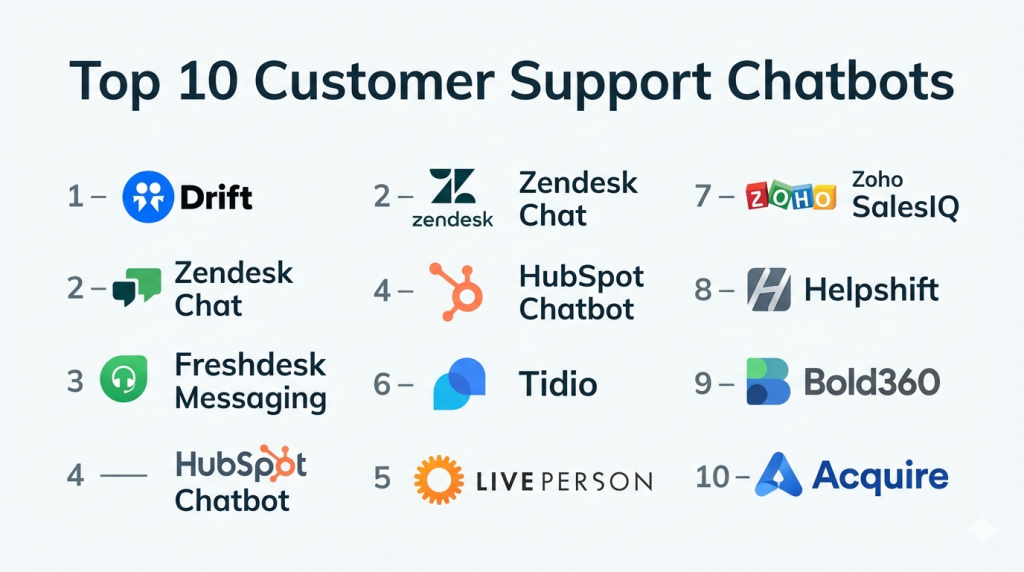
Top 10 Customer Support Chatbots
#1 — Intercom
Short description: Intercom is a versatile chatbot platform for customer engagement and support. It combines AI chatbots with human handoff, targeting SMBs and enterprise teams for real-time customer interactions.
Key Features
- AI-powered chat and automated responses
- Multi-channel support including web and mobile
- Integration with CRM and helpdesk tools
- Customizable conversation flows
- Customer segmentation for personalized messaging
- Analytics and reporting dashboard
Pros
- Smooth handoff to human agents
- Powerful automation capabilities
- Easy-to-use interface for teams
Cons
- Pricing can be high for small businesses
- Advanced features may require technical setup
- Some AI limitations for complex queries
Platforms / Deployment
- Web Windows macOS iOS Android
- Cloud
Security & Compliance
- Not publicly stated
Integrations & Ecosystem
Supports major CRM and support tools.
- Salesforce, HubSpot
- Slack, Jira
- Shopify, Zendesk
Support & Community
Documentation, webinars, and responsive support team.
#2 — Drift
Short description: Drift focuses on conversational marketing and support chatbots. It helps businesses qualify leads, automate conversations, and provide support across web and messaging channels.
Key Features
- AI chat for lead qualification
- Meeting scheduling automation
- Multi-channel support
- Conversational routing to agents
- Performance analytics
Pros
- Strong focus on sales and support automation
- Easy to set up and customize
- Multi-channel capabilities
Cons
- Can be expensive for small teams
- Limited features in free version
- Requires training for optimal AI responses
Platforms / Deployment
- Web iOS Android
- Cloud
Security & Compliance
- Not publicly stated
Integrations & Ecosystem
- Salesforce, HubSpot
- Slack, Zoom
- Marketo, Shopify
Support & Community
Knowledge base, online tutorials, and community forums.
#3 — Zendesk Chat
Short description: Zendesk Chat provides AI-powered chatbots within the Zendesk ecosystem. It automates support responses while integrating seamlessly with helpdesk operations.
Key Features
- AI response suggestions
- Pre-built conversation templates
- Ticket creation and routing
- Analytics and reporting
- Multi-language support
Pros
- Deep integration with Zendesk suite
- Easy to deploy
- Scalable for enterprises
Cons
- Limited AI intelligence outside Zendesk
- Customization can be complex
- Pricing varies per feature tier
Platforms / Deployment
- Web Windows macOS iOS Android
- Cloud
Security & Compliance
- Not publicly stated
Integrations & Ecosystem
- Zendesk Support
- Slack, Salesforce
- Shopify, Jira
Support & Community
Documentation, webinars, and support team access.
#4 — Freshdesk Messaging
Short description: Freshdesk Messaging combines AI chatbots with live chat and ticketing, suitable for businesses needing multi-channel support and automation.
Key Features
- AI chatbot and automation
- Ticket creation and routing
- Multi-channel support
- Customer satisfaction surveys
- Analytics and reporting
Pros
- Easy integration with Freshdesk ecosystem
- Automation for repetitive queries
- Simple setup for teams
Cons
- AI may not handle complex queries well
- Some advanced features require higher plans
- Limited customization outside default templates
Platforms / Deployment
- Web iOS Android
- Cloud
Security & Compliance
- Not publicly stated
Integrations & Ecosystem
- Freshdesk Support
- Slack, Salesforce
- WhatsApp, Messenger
Support & Community
Online documentation, webinars, and community forums.
#5 — Tidio
Short description: Tidio is a lightweight chatbot for small and medium businesses. It combines live chat and AI responses to provide instant support and lead generation.
Key Features
- AI-powered responses
- Live chat integration
- Email and Messenger support
- Pre-built automation templates
- Analytics dashboard
Pros
- Affordable for SMBs
- Easy to set up and manage
- Combines live chat and AI
Cons
- Limited advanced AI features
- Best suited for smaller teams
- Some integrations require paid plans
Platforms / Deployment
- Web iOS Android
- Cloud
Security & Compliance
- Not publicly stated
Integrations & Ecosystem
- Shopify, WordPress
- Messenger, WhatsApp
- Email automation tools
Support & Community
Documentation, chat support, and tutorials.
#6 — LivePerson
Short description: LivePerson offers enterprise-grade AI chatbots for customer support and engagement. It emphasizes NLP, conversational AI, and scalable deployment for large organizations.
Key Features
- Conversational AI
- Multi-channel support
- Routing to human agents
- Analytics and insights
- Customizable conversation flows
Pros
- Advanced AI capabilities
- Enterprise scalability
- Strong reporting and analytics
Cons
- Complex setup for small teams
- Higher cost for full features
- Requires technical expertise
Platforms / Deployment
- Web iOS Android
- Cloud
Security & Compliance
- Not publicly stated
Integrations & Ecosystem
- Salesforce, Zendesk
- Slack, Jira
- CRM and helpdesk platforms
Support & Community
Enterprise support, documentation, and onboarding resources.
#7 — Ada
Short description: Ada is a no-code AI chatbot platform that automates customer service and engagement, designed for rapid deployment by marketing and support teams.
Key Features
- No-code bot builder
- Multi-language support
- AI-driven responses
- Analytics and insights
- Human agent handoff
Pros
- Easy to use for non-technical staff
- Fast deployment
- Customizable conversation flows
Cons
- Limited control for complex AI logic
- Pricing may scale with usage
- Some integrations require developer help
Platforms / Deployment
- Web iOS Android
- Cloud
Security & Compliance
- Not publicly stated
Integrations & Ecosystem
- Salesforce, HubSpot
- Shopify, Zendesk
- Slack, WhatsApp
Support & Community
Documentation, online tutorials, and customer support.
#8 — ManyChat
Short description: ManyChat focuses on Messenger and social media chatbots for customer support and marketing automation. It allows businesses to interact with users on multiple messaging platforms.
Key Features
- Social media chatbot support
- Visual flow builder
- Marketing automation
- Customer segmentation
- Analytics and reporting
Pros
- Strong social media integration
- Easy visual builder
- Engaging automation capabilities
Cons
- Limited for traditional web support
- Advanced AI features are basic
- Some integrations require paid plan
Platforms / Deployment
- Web iOS Android
- Cloud
Security & Compliance
- Not publicly stated
Integrations & Ecosystem
- Facebook Messenger, Instagram
- Shopify, WooCommerce
- Email marketing platforms
Support & Community
Documentation, tutorials, and forums.
#9 — Bold360
Short description: Bold360 offers AI chatbots for customer service automation and engagement. It supports multi-channel communication and provides analytics for team performance.
Key Features
- AI chat automation
- Multi-channel support
- Live agent handoff
- Analytics dashboard
- Customizable conversational flows
Pros
- Scalable for enterprise
- Strong AI conversation capabilities
- Real-time insights
Cons
- Learning curve for non-technical users
- Higher cost than SMB-focused tools
- Setup can be complex
Platforms / Deployment
- Web iOS Android
- Cloud
Security & Compliance
- Not publicly stated
Integrations & Ecosystem
- Salesforce, Zendesk
- Slack, Jira
- CRM platforms
Support & Community
Documentation, webinars, and enterprise support.
#10 — HubSpot Service Hub
Short description: HubSpot Service Hub integrates AI chatbots with CRM and ticketing features. It automates customer support, qualifying leads and routing queries efficiently.
Key Features
- AI chat automation
- Ticket creation and routing
- CRM integration
- Multi-channel support
- Analytics and reporting
Pros
- Seamless HubSpot ecosystem
- Easy workflow automation
- Scalable for growing teams
Cons
- Best features require paid tiers
- AI sophistication varies
- Limited customization outside HubSpot
Platforms / Deployment
- Web iOS Android
- Cloud
Security & Compliance
- Not publicly stated
Integrations & Ecosystem
- HubSpot CRM
- Slack, Jira
- Social media and email platforms
Support & Community
Documentation, online tutorials, and support portals.
Comparison Table
| Tool Name | Best For | Platform(s) Supported | Deployment | Standout Feature | Public Rating |
|---|---|---|---|---|---|
| Intercom | SMB and Enterprise | Web iOS Android | Cloud | Real-time collaboration | N/A |
| Drift | Conversational marketing | Web iOS Android | Cloud | Lead qualification AI | N/A |
| Zendesk Chat | Helpdesk integration | Web Windows macOS iOS Android | Cloud | Seamless ticketing | N/A |
| Freshdesk Messaging | Multi-channel support | Web iOS Android | Cloud | Automated routing | N/A |
| Tidio | Small and medium businesses | Web iOS Android | Cloud | Live chat and AI | N/A |
| LivePerson | Enterprise support | Web iOS Android | Cloud | Conversational AI | N/A |
| Ada | No-code AI bots | Web iOS Android | Cloud | Rapid deployment | N/A |
| ManyChat | Social media support | Web iOS Android | Cloud | Messenger automation | N/A |
| Bold360 | Enterprise AI support | Web iOS Android | Cloud | Multi-channel AI | N/A |
| HubSpot Service Hub | CRM integrated support | Web iOS Android | Cloud | AI + ticketing | N/A |
Evaluation & Scoring
| Tool Name | Core 25% | Ease 15% | Integrations 15% | Security 10% | Performance 10% | Support 10% | Value 15% | Weighted Total |
|---|---|---|---|---|---|---|---|---|
| Intercom | 10 | 9 | 9 | 8 | 9 | 9 | 8 | 9.0 |
| Drift | 9 | 8 | 8 | 8 | 8 | 8 | 8 | 8.1 |
| Zendesk Chat | 9 | 8 | 9 | 8 | 8 | 8 | 8 | 8.3 |
| Freshdesk Messaging | 8 | 9 | 8 | 8 | 8 | 8 | 8 | 8.1 |
| Tidio | 7 | 9 | 7 | 7 | 8 | 7 | 8 | 7.6 |
| LivePerson | 10 | 7 | 8 | 8 | 8 | 7 | 7 | 8.0 |
| Ada | 8 | 9 | 8 | 7 | 8 | 7 | 8 | 7.9 |
| ManyChat | 7 | 9 | 7 | 7 | 7 | 7 | 7 | 7.4 |
| Bold360 | 9 | 7 | 8 | 8 | 8 | 8 | 7 | 7.9 |
| HubSpot Service Hub | 8 | 8 | 8 | 7 | 8 | 7 | 8 | 7.8 |
Which Customer Support Chatbot Is Right for You
Solo / Freelancer
Tidio, ManyChat, or Ada are ideal for small-scale support and basic automation without complex setup.
SMB
Intercom, Freshdesk Messaging, or HubSpot Service Hub provide multi-channel support and easy integration with CRM tools.
Mid-Market
Zendesk Chat, Drift, or Bold360 scale to larger teams with advanced automation, analytics, and collaboration.
Enterprise
LivePerson, Intercom, or Zendesk Chat deliver enterprise-grade AI, multi-channel engagement, and analytics capabilities.
Budget vs Premium
Budget: Tidio, ManyChat, Ada
Premium: Intercom, LivePerson, Zendesk Chat
Feature Depth vs Ease of Use
Advanced AI features in LivePerson and Intercom require some setup, while Tidio and ManyChat balance simplicity and automation.
Integrations & Scalability
Businesses needing strong ecosystem integrations should select Intercom, HubSpot Service Hub, or Zendesk Chat.
Security & Compliance Needs
Enterprises with strict compliance requirements should prioritize tools with enterprise-grade security features and CRM integrations.
Frequently Asked Questions
1. How much do customer support chatbots cost?
Pricing varies from affordable subscription models for SMBs to premium enterprise plans. Some platforms offer free tiers with limited features.
2. How long does setup take?
Simple bots like Tidio or ManyChat can be deployed in hours, while enterprise bots may require days for configuration and integration.
3. Can chatbots handle complex queries?
Advanced AI chatbots like LivePerson and Intercom can understand intent and route complex questions to human agents.
4. Do chatbots work across multiple channels?
Yes, most support web chat, mobile apps, social media, and messaging platforms for omnichannel customer engagement.
5. How do integrations work?
Chatbots integrate with CRMs, helpdesk software, email, and messaging platforms for seamless workflow automation.
6. Can chatbots improve customer satisfaction?
Yes, chatbots reduce response time, provide 24/7 support, and assist in consistent communication, enhancing satisfaction.
7. Are AI chatbots secure?
Enterprise chatbots follow encryption and access control protocols, though exact compliance varies by vendor.
8. Can chatbots replace human agents?
They handle routine queries and FAQs but complex or sensitive issues still require human intervention.
9. How scalable are chatbots?
Cloud-based platforms like Intercom, Zendesk, and LivePerson scale easily for growing customer volumes.
10. Are there analytics available?
Most platforms provide dashboards with response metrics, engagement data, and customer behavior insights.
Conclusion
Customer support chatbots streamline operations, improve customer satisfaction, and scale support without proportionally increasing staff. Tool choice depends on team size, AI sophistication, integration needs, and budget. SMBs can start with simpler platforms like Tidio or ManyChat, while mid-market and enterprise teams benefit from Intercom, Zendesk, or LivePerson for advanced automation and analytics. Evaluate shortlisted tools based on performance, integration, and security before full deployment. Piloting two or three bots ensures the best fit for your workflows. Selecting the right chatbot enables faster response times, higher customer retention, and optimized support operations across channels.

This was a helpful and easy-to-read article. The side-by-side comparison made it simple to understand which customer support chatbot might work best for different business needs.