Introduction
Modern digital marketing operations operate at an unprecedented scale and speed. To maintain high visibility across search engines, manage social channels, execute influencer partnerships, and maintain brand consistency, marketing teams frequently rely on a vast array of specialized technology tools. A typical enterprise or growing agency might deploy separate software for keyword tracking, technical auditing, backlink analysis, digital asset storage, project ticketing, and campaign performance reporting.
While specialized point solutions address isolated technical requirements, managing a fragmented technology stack introduces substantial operational friction. Information becomes trapped within disconnected applications, data updates out of sync, subscription costs compound, and team members waste valuable hours transferring assets and metrics across platforms manually. Strategic clarity degrades when search engine optimization strategies, content production, and media assets live in isolated silos.
To resolve these inefficiencies, forward-thinking organizations are transitioning toward a unified architecture. Implementing an all-in-one digital marketing platform replaces fragmented point tools with a single, collaborative workspace. Centralizing core marketing operations—from technical SEO and rank monitoring to workflow management and digital asset organization—helps businesses eliminate redundant tools, elevate team productivity, maintain strict data integrity, and accelerate campaign execution.
What Is an All-in-One Digital Marketing Platform?
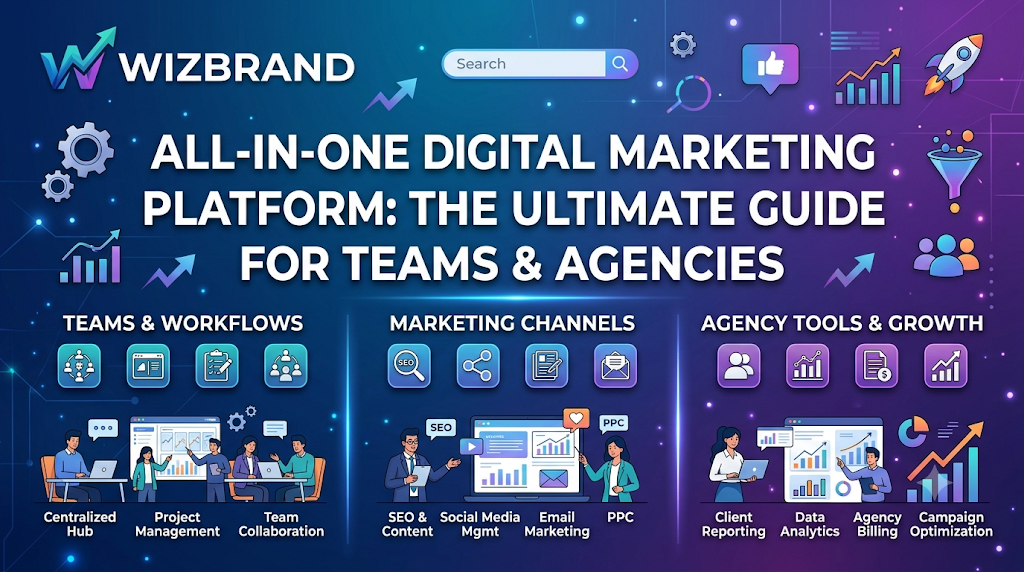
An all-in-one digital marketing platform is a centralized software ecosystem designed to manage, execute, monitor, and optimize cross-channel marketing operations from a single interface. Rather than requiring marketers to toggle between isolated tools for keyword research, media hosting, project management, and performance reporting, an integrated platform unifies these functions into a coherent, connected ecosystem.
┌─────────────────────────────────────────────────────────────────────────┐
│                      UNIFIED MARKETING ECOSYSTEM                        │
├──────────────┬──────────────┬──────────────┬──────────────┬─────────────┤
│   SEO &      │  WORKFLOW &  │   DIGITAL    │  INFLUENCER  │ ANALYTICS & │
│  RANKINGS    │ PROJECTS     │   ASSETS     │ MARKETPLACE  │ AUDITING    │
└──────────────┴──────────────┴──────────────┴──────────────┴─────────────┘
Core capabilities of an integrated digital marketing engine typically include:
- Centralized Marketing Operations: Consolidating website management, content calendars, client accounts, and performance metrics within a single dashboard.
- Comprehensive Campaign Management: Structuring end-to-end promotional initiatives, assigning team ownership, establishing milestones, and tracking deliverables in real time.
- SEO Management Software Features: Integrating rank tracking, technical site audits, competitor research, and backlink analysis directly alongside content production workflows.
- Automated Reporting & Analytics: Aggregating complex multi-channel data streams into executive dashboards, eliminating manual spreadsheet aggregation.
- Cross-Functional Collaboration: Facilitating task distribution, ticket tracking, file sharing, and internal approvals without requiring third-party messaging tools.
- Workflow Automation: Reducing manual administrative overhead through systematic task routing, scheduled monitoring, and recurring operational triggers.
- Centralized Digital Assets: Organizing collateral, brand guidelines, graphics, and documentation with granular access controls and strict version histories.
By replacing disconnected tools with an integrated system, organizations build a scalable framework where search engine optimization, content strategy, and project management reinforce one another.
Challenges of Managing Marketing with Multiple Tools
Operating a digital strategy across separate software solutions introduces hidden operational expenses, technical friction, and coordination overhead. When every department or specialized channel uses an isolated point tool, organizational performance suffers across several critical dimensions:
[Tool A: SEO Rank Tracker] ──> Manual Export ──┐
[Tool B: Asset Storage]    ──> Manual Transfer ┼──> [Fragmented Operations]
[Tool C: Project Management]──> Disconnected   ──┘
Disconnected Workflows
When keyword research happens in Tool A, visual asset storage in Tool B, and project management in Tool C, staff spend excessive time copying data and context between systems. This constant context switching disrupts focused execution and slows overall momentum.
Scattered Reports and Fragmented Insights
Analyzing search performance alongside business goals becomes difficult when data resides in separate tools. Marketing leaders are forced to spend hours manually extracting figures, formatting spreadsheets, and reconciling conflicting metrics from unintegrated data sources.
Inconsistent Collaboration and Communication Gaps
When copywriters, technical SEO engineers, content managers, and external agencies communicate across isolated platforms, critical context is lost. Strategic instructions get buried in email threads or chat channels, leading to misunderstandings, delayed reviews, and work that deviates from initial objectives.
Duplicate Media Assets and Version Drift
Without a single, secure library for media assets, team members often store design files, images, and content drafts locally or across scattered folders. This creates duplicate files, clutters storage, and increases the risk of publishing outdated graphics or off-brand assets.
Manual Reporting Overhead and Missed Deadlines
Compiling monthly status reports for stakeholders or agency clients using fragmented point tools requires significant manual effort. Pulling data by hand takes hours away from active campaign optimization and delays project timelines, making it harder to hit key operational milestones.
Introducing WizBrand
Addressing the friction of fragmented marketing environments requires a unified approach. WizBrand is an all-in-one digital marketing platform designed to bring clarity, structure, and execution speed to modern marketing operations.
WizBrand
                       ┌──────────────────────┐
                       │     WizBrand Hub     │
                       └──────────┬───────────┘
         ┌────────────────────────┼────────────────────────┐
         │                        │                        │
┌────────┴─────────┐    ┌─────────┴────────┐    ┌──────────┴─────────┐
│   SEO Toolkit    │    │ Digital Asset Hub│    │ Workflow Engine   │
│ Audits & Tracking│    │ Media & Content  │    │ Projects & Tasks  │
└──────────────────┘    └──────────────────┘    └──────────────────┘
Built to support digital marketers, SEO engineers, agencies, content creators, and brand managers, WizBrand provides an integrated workspace where planning, execution, asset management, and analytics exist in harmony.
Rather than acting simply as an isolated rank tracker or a static project board, WizBrand connects core marketing channels:
WizBrand
- SEO Operations: Combining technical auditing, keyword rank tracking, and backlink monitoring into actionable tasks. WizBrand
- Digital Asset Management (DAM): Storing, organizing, and tagging brand collateral directly where content plans are created.
- Workflow & Project Management: Structuring task delegation, ticketing, approvals, and accountability for technical and creative teams.
- Influencer Marketplace: Facilitating creator discovery, partnership execution, and campaign management in a single location.
By centralizing these functions, WizBrand helps organizations eliminate operational friction, lower software expenses, and build a systematic approach to digital expansion.
WizBrand
SEO Management Software
Search engine optimization is an ongoing operational process requiring continuous research, planning, technical maintenance, and analysis. Modern SEO management software must support strategy development alongside day-to-day execution.
┌────────────────────────────────────────────────────────────────────────┐
│                        SEO MANAGEMENT WORKFLOW                         │
│                                                                        │
│  [Keyword Discovery] ──> [Campaign Mapping] ──> [On-Page Optimization] │
│                                                                  │     │
│  [Strategic Refinement] <── [Performance Reporting] <────────────┘     │
└────────────────────────────────────────────────────────────────────────┘
A comprehensive SEO management framework enables teams to:
- Conduct In-Depth Keyword Research: Identify search intent, evaluate keyword difficulty, analyze search volume metrics, and spot content gaps across target markets.
- Map Search Intent to Content Strategy: Structure target keywords into logical topic clusters, ensuring landing pages and articles address specific user needs.
- Organize SEO Campaigns: Group optimization tasks by domain, client, strategic initiative, or target region to maintain focus and accountability.
- Monitor Technical Health: Schedule continuous site checks to catch crawl errors, broken redirects, missing meta tags, or performance degradation before they impact search rankings.
- Track Performance Metrics: Evaluate organic impressions, rankings, click-through rates, and conversions using clear executive dashboards.
Centralizing search engine optimization workflows prevents important optimization tasks from falling through the cracks, allowing teams to deliver steady search visibility improvements.
SEO Rank Tracking Tool
Rankings directly reflect how effectively a website satisfies search engine algorithms and user queries. An advanced SEO rank tracking tool gives marketing teams clear visibility into keyword position changes, SERP features, and competitive shifts across target locations.
DataOps School
Key capabilities of modern rank tracking include:
- Multi-Engine & Geo-Targeted Monitoring: Track keyword performance across major search engines, specifying country, region, city, or device type (mobile vs. desktop).
- SERP Feature Tracking: Monitor presence within featured snippets, local packs, image carousels, video blocks, and “People Also Ask” sections.
- Competitor Ranking Analysis: Benchmark keyword positions against direct industry competitors to identify ranking drops or unexpected gains.
- Ranking Trend Analysis: Evaluate historical rank movements to measure the true impact of recent site updates, content refreshes, or link acquisition initiatives.
- Automated Ranking Alerts: Receive immediate notifications when priority keywords experience significant rank shifts, allowing for fast tactical adjustments.
Reliable ranking insights remove guesswork from search optimization, helping marketing managers deploy resources where they will have the highest performance impact.
Technical SEO Site Audit Tool
High-quality content cannot rank effectively if underlying technical issues prevent search engine crawlers from indexing a website properly. A technical SEO site audit tool continuously scans site architecture to surface infrastructure flaws and security issues.
┌─────────────────────────────────────────────────────────────────────────┐
│                    TECHNICAL SITE AUDIT COVERAGE                        │
├───────────────────┬───────────────────┬─────────────────────────────────┤
│ Crawl & Indexing  │ On-Page Structure │ Performance & UX                │
│ - Status Codes    │ - Title Tags      │ - Core Web Vitals               │
│ - Canonical Tags  │ - Meta Descriptions│ - Mobile Responsiveness        │
│ - Sitemap Errors  │ - H1-H6 Structure │ - HTTPS Security                │
└───────────────────┴───────────────────┴─────────────────────────────────┘
Critical areas monitored during an automated technical audit include:
- Crawlability and Indexing: Uncover crawl errors, 404 page issues, infinite redirect loops, incorrect
robots.txtdirectives, and broken canonical tags. - On-Page HTML Structure: Identify duplicate title tags, missing meta descriptions, incorrect header hierarchies (
H1,H2,H3), and missing image alt attributes. - Core Web Vitals & Page Speed: Evaluate Largest Contentful Paint (LCP), Interaction to Next Paint (INP), and Cumulative Layout Shift (CLS) to maintain rapid page load speeds.
- Mobile Usability: Ensure layouts render properly on mobile screens, touch targets are spaced correctly, and responsive design guidelines are met.
- Architecture & Internal Links: Map site depth, identify orphaned pages, locate broken internal links, and ensure link equity flows efficiently to high-value URLs.
Automating technical audits ensures site issues are flagged early, protecting organic reach and keeping site architecture healthy.
Backlink Analysis Tool
Backlinks remain a primary search engine ranking signal, representing trust and authority across the web. A robust backlink analysis tool allows marketing teams to evaluate link profiles, monitor competitor link acquisitions, and protect their sites from toxic spam links.
Essential backlink monitoring features include:
- Link Quality & Authority Metrics: Analyze referring domain strength, page authority metrics, and overall link network distribution.
- Anchor Text Profile Analysis: Review anchor text distributions to ensure natural profiles and avoid over-optimization penalties.
- Toxic Link Identification: Detect suspicious, low-quality, or spammy inbound links that could trigger search engine penalties, allowing teams to generate disavow files quickly.
- Competitor Backlink Profiling: Analyze competitor link acquisition strategies to identify valuable guest posting opportunities, directory listings, or digital PR targets.
- New & Lost Link Tracking: Track real-time changes in backlink profiles to protect high-value inbound links and evaluate link building outreach.
Maintaining clean backlink profiles helps websites build search authority and protect hard-earned search rankings over the long term.
SEO Project Management Software
Executing search strategies requires coordination across writers, developers, designers, and managers. Generic project management tools often lack the custom fields and context needed for technical search workflows. Specialized SEO project management software solves this gap by connecting project management directly to search data.
┌────────────────────────────────────────────────────────────────────────┐
│                   SEO PROJECT MANAGEMENT FRAMEWORK                     │
│                                                                        │
│  [Audit Discovery]  ──>  [Ticket Assigned]  ──>  [Implementation]     │
│         │                       │                      │               │
│         ▼                       ▼                      ▼               │
│  (Crawl Error 404)       (Dev Team Assigned)     (Redirect Applied)    │
│                                                        │               │
│  [Verification & Closure] <── [Re-Audit Validation] <──┘               │
└────────────────────────────────────────────────────────────────────────┘
Core capabilities include:
- SEO Ticket Management: Translate audit errors (e.g., broken canonical tags or missing alt text) directly into trackable work tickets with clear assignees and due dates.
- Milestone & Campaign Planning: Map complex initiatives—such as site migrations or content updates—into structured project phases with defined deliverables.
- Cross-Functional Task Delegation: Assign tasks across copywriters, developers, and designers while keeping strategic notes attached to each task.
- Progress Tracking & Dashboards: Track completion rates, monitor pending approvals, and view project status across multiple domains or client accounts.
Connecting technical recommendations to project tasks helps teams execute optimizations faster and prevent strategy execution delays.
Digital Marketing Workflow Management Software
Marketing workflows involve multi-stage approval processes, asset creation, channel coordination, and scheduled distribution. Utilizing dedicated digital marketing workflow management software brings structure and speed to complex operational processes.
Key operational benefits include:
- Automated Approval Workflows: Route draft content, visual assets, and campaign plans automatically to designated managers, legal teams, or clients for sign-off.
- Standardized Production Pipelines: Establish clear processes for blog publishing, landing page launches, paid media campaigns, and email newsletters.
- Centralized Team Communications: Keep creative feedback, review notes, and status updates linked directly to campaign assets, eliminating email confusion.
- Workload Allocation & Capacity Management: Monitor team bandwidth to prevent burn-out, balance project assignments, and keep campaigns on schedule.
- Process Bottleneck Identification: Identify stages where tasks frequently stall, allowing managers to optimize processes and maintain campaign momentum.
Streamlining daily operations with workflow automation reduces administrative burdens and helps marketing teams focus on delivering strong campaign results.
Digital Asset Management Software for Marketing Teams
As marketing teams expand production across channels, managing digital files quickly becomes a challenge. Unorganized asset storage leads to lost files, duplicate work, and off-brand publishing. Purpose-built digital asset management software for marketing teams provides a central, secure repository for creative collateral.
┌─────────────────────────────────────────────────────────────────────────┐
│                     CENTRALIZED DIGITAL ASSET HUB                       │
├───────────────────┬───────────────────┬─────────────────────────────────┤
│ Media Storage     │ Organization      │ Security & Control              │
│ - Brand Graphics  │ - Tagging & Meta  │ - Role-Based Permissions        │
│ - Video Files     │ - Folder Trees    │ - Secure External Sharing       │
│ - Campaign Copy   │ - Version Control │ - Access Logs & Audit Trails    │
└───────────────────┴───────────────────┴─────────────────────────────────┘
Core digital asset management capabilities include:
- Centralized Brand Libraries: Store logos, approved imagery, typography guidelines, video templates, and brand collateral in an easily searchable central repository.
- Tagging and Search Filtering: Categorize files using custom tags, campaign labels, asset types, and project groups so team members can find files in seconds.
- Version Control & Revision Tracking: Maintain clear file history so team members always use the most up-to-date, approved creative assets.
- Granular Access Permissions: Set specific access roles for internal employees, freelancers, external agencies, and clients to protect proprietary assets.
- Seamless Campaign Integration: Attach assets directly to project management tickets and content calendars without needing third-party cloud storage links.
Centralizing digital asset management protects brand consistency, prevents file duplication, and ensures team members always have access to approved creative files.
Influencer Marketing Marketplace
Influencer marketing has evolved from an experimental strategy into a core brand growth channel. However, managing outreach, contract terms, creative assets, and campaign tracking via spreadsheets is inefficient. Integrating an influencer marketing marketplace directly within a broader marketing platform simplifies creator collaborations.
Key features of an integrated influencer marketplace include:
- Creator Discovery & Vetting: Discover verified creators and influencers across niches, evaluating audience demographics, engagement rates, and content quality.
- Direct Campaign Management: Brief creators, share brand assets, set content deadlines, and manage communication within a single dashboard.
- Performance Tracking & ROI Measurement: Track campaign reach, engagement metrics, referral traffic, and sales conversions generated by creator partnerships.
- Simplified Collaboration Workflows: Review, request edits for, and approve creator submissions before content goes live to maintain brand consistency.
Unifying creator partnerships with wider marketing operations helps brands build scalable influencer programs that drive measurable business growth.
SEO Software for Agencies
Digital marketing and SEO agencies face unique operational challenges. Managing multiple client accounts requires secure data segregation, white-label reporting, cross-account project management, and scalable workflows. Dedicated SEO software for agencies addresses these needs while simplifying client communications.
┌────────────────────────────────────────────────────────────────────────┐
│                        AGENCY MULTI-CLIENT HUB                         │
│                                                                        │
│                       [Agency Operations Center]                        │
│                                   │                                    │
│         ┌─────────────────────────┼─────────────────────────┐          │
│         ▼                         ▼                         ▼          │
│  [Client Account A]        [Client Account B]        [Client Account C]│
│  - Custom Portal           - Custom Portal           - Custom Portal   │
│  - Isolated Data           - Isolated Data           - Isolated Data   │
│  - Automated Reports       - Automated Reports       - Automated Reports│
└────────────────────────────────────────────────────────────────────────┘
Critical agency capabilities include:
- Multi-Client Account Architecture: Switch between isolated client environments seamlessly while maintaining clear data boundaries and user permissions.
- Automated Client Reporting: Schedule custom performance reports that aggregate search rankings, technical site health, backlink acquisition, and project status updates.
- Collaborative Client Portals: Provide clients with transparent access to review deliverables, approve content drafts, and track campaign milestones.
- Resource Management Across Accounts: Monitor staff capacity across client projects to optimize billable hours, prevent delivery bottlenecks, and scale operations efficiently.
- Integrated Workflow Ticketing: Convert campaign strategies and audit findings directly into client deliverables with clear ownership and accountability.
By unifying technical execution, asset storage, client communications, and reporting, agencies can scale their client roster without ballooning operational costs.
Real Business Use Cases
Integrated digital marketing platforms solve operational challenges across diverse business models and organization types.
Marketing Agencies
Agencies handling multiple clients can replace scattered tool stacks with a single, unified operations hub. Account managers track rankings, run technical audits, store client brand assets, assign developer tickets, and send automated performance reports—all from one platform.
E-commerce Brands
E-commerce operations manage thousands of product pages and technical dependencies. An integrated platform helps e-commerce teams monitor crawl errors, track high-intent product keywords, organize promotional campaign graphics, and execute influencer marketing campaigns to scale sales.
SaaS Companies
SaaS growth strategies rely heavily on organic search acquisition and inbound content marketing. SaaS marketing teams use unified platforms to map topic clusters, track software keywords, streamline content approvals, and manage technical SEO health as site features update.
Enterprise Corporations
Large enterprises operate across multiple brands, business units, and regions. Centralizing digital operations gives leadership oversight into team performance, maintains global brand consistency, protects digital assets, and standardizes technical optimization standards across all sites.
Small Businesses (SMBs)
Small businesses with lean marketing teams often struggle to manage complex, multi-tool setups. An all-in-one platform provides intuitive rank tracking, local SEO tools, content planning, and asset storage without the financial burden of multiple enterprise software subscriptions.
Internal Marketing Teams
In-house marketing teams managing copywriters, designers, SEO engineers, and media managers use unified systems to streamline project handoffs, track task status, organize marketing collateral, and report ROI clearly to executive leadership.
Independent Digital Consultants
Freelancers and consultants managing digital audits and campaigns use integrated platforms to deliver thorough site reviews, monitor target keywords, organize project tickets, and present polished reports that demonstrate strategy value.
Comparison Table
Table 1: Traditional Marketing Workflow vs. Integrated Digital Marketing Platform
| Operational Dimension | Traditional Marketing Workflow (Fragmented Stack) | Integrated Digital Marketing Platform (Unified Hub) |
|---|---|---|
| Tool Architecture | 5 to 10 disconnected point solutions with separate log-ins. | Single login with connected tool modules. |
| Data Synchronization | Manual CSV exports and spreadsheet compilation. | Automatic data sharing across modules in real time. |
| Asset Management | Files scattered across local drives, emails, and cloud drives. | Centralized, searchable brand library with permissions. |
| Task Delegation | Separate ticketing boards disconnected from marketing data. | Project tasks directly linked to SEO audits and campaigns. |
| Reporting Efficiency | Hours spent pulling metrics from multiple dashboards. | One-click automated reporting across all channels. |
| Cost Structure | Multiple escalating per-user subscription fees. | Single predictable subscription fee model. |
| Team Alignment | Fragmented communications across email and chats. | Contextual comments linked to assets and tasks. |
Feature Comparison
Table 2: Multiple Standalone Tools vs. WizBrand Platform
| Feature / Capability | Multiple Standalone Tools Stack | WizBrand Unified Platform |
|---|---|---|
| SEO Rank Tracking | Available via dedicated tools; isolated from asset libraries. | Native rank tracking linked to project tasks and content. |
| Technical Site Auditing | Requires independent crawlers; manual developer handoffs. | Built-in technical crawler with auto-generated fix tickets. |
| Backlink Monitoring | Tracked separately; difficult to connect to content strategy. | Built-in backlink tracking and link building project management. |
| Digital Asset Management | Basic file hosting without SEO or campaign context. | Full DAM with tagging, version control, and campaign mapping. |
| Workflow Management | Generic project boards missing marketing context. | Custom marketing pipelines, approvals, and SEO task views. |
| Influencer Marketplace | Requires third-party agency services or specialized software. | Native creator discovery, collaboration, and campaign tracking. |
| Agency Client Portals | Complex setup requiring custom web development. | Built-in client portal management and custom dashboards. |
Why Unified Marketing Platforms Are the Future
The digital marketing landscape is shifting away from fragmented point tools toward unified ecosystems. As AI-driven search, cross-channel social strategies, and content demands accelerate, operational agility depends on software integration.
┌────────────────────────────────────────────────────────────────────────┐
│                   THE FUTURE OF MARKETING OPERATIONS                   │
├────────────────────────────────────────────────────────────────────────┤
│  Data Integrity  ──> Eliminate silos & maintain single source of truth │
│  Team Velocity   ──> Automate routine checks & speed up approvals     │
│  Scalability     ──> Add clients & campaigns without adding complexity │
│  Cost Control    ──> Consolidate tools & eliminate redundant software  │
└────────────────────────────────────────────────────────────────────────┘
Key drivers shaping this evolution include:
- Improved Team Velocity and Efficiency: Unified platforms eliminate manual data transfers and status meetings, enabling teams to launch campaigns faster. WizBrand
- Centralized Data Integrity: Keeping technical SEO data, rank tracking, digital assets, and performance metrics in one system ensures everyone works from a single source of truth. WizBrand
- Scalability for Expanding Organizations: Unified software provides the structure needed to add client accounts, team members, and marketing channels without operational clutter.
- Cost Control and Operational Efficiency: Replacing multiple single-purpose subscriptions with an all-in-one platform lowers software spend while improving feature adoption. WizBrand
- Strategic Alignment: Connecting execution tasks directly to search data helps marketing teams ensure daily work aligns with core business goals.
Best Practices
To maximize the value of an integrated digital marketing platform, organizations should follow key operational standards:
1. Establish Structured SEO Management Processes
- Schedule automated technical site audits weekly to detect crawl errors, broken links, and metadata issues early.
- Group keyword rank tracking by topic clusters and user intent rather than tracking isolated terms.
- Connect technical audit recommendations directly to project management tickets with clear owners and due dates.
2. Standardize Digital Asset Organization
- Create a clean, standardized folder hierarchy within your digital asset management hub.
- Apply consistent metadata tagging conventions (e.g., campaign name, channel, asset type, resolution) to make files easy to find.
- Enforce version control policies so team members always use approved, current creative assets.
3. Optimize Marketing Workflows
- Build standardized workflow templates for recurring marketing initiatives like blog posts, site launches, and influencer campaigns. DataOps School
- Define clear approval steps to prevent content bottlenecks and ensure compliance before publishing.
- Use automated notifications to keep team members informed as project tasks advance through each stage. WizBrand
4. Maintain Systematic Campaign Reporting
- Set up executive dashboards that connect organic search traffic, keyword ranking shifts, and asset utilization directly to campaign goals.
- Automate monthly report distribution to stakeholders and clients to save time and maintain performance transparency.
- Review performance data regularly to adjust content and technical priorities based on real-world results.
Frequently Asked Questions
What is an all-in-one digital marketing platform?
An all-in-one digital marketing platform is an integrated software system that combines search engine optimization, rank tracking, technical auditing, digital asset management, project management, and campaign analytics into a single workspace.
How does an integrated marketing platform improve team productivity?
By consolidating workflows into a single interface, teams eliminate time spent switching between apps, manual data transfers, and scattered file searches, allowing them to focus on active campaign execution.
Why is centralized digital asset management important for marketing operations?
Centralized asset management provides a single, secure library for brand collateral, ensuring team members use approved creative files, preventing file duplication, and maintaining brand consistency across all channels.
Can an agency manage multiple client accounts within a single platform?
Yes. Enterprise platforms like WizBrand offer multi-client account structures, allowing agencies to manage isolated client environments, set custom access roles, and automate client performance reports from one central dashboard.
What key metrics should an SEO rank tracking tool monitor?
A comprehensive rank tracking tool should monitor keyword positions across desktop and mobile, local search visibility, SERP feature inclusions (snippets, local packs), competitor rank movements, and historical ranking trends.
How often should a company run a technical SEO site audit?
Organizations should schedule automated technical site audits at least once a week, as well as immediately following major site updates, migrations, or content refreshes to catch technical issues early.
How does SEO project management software differ from generic task tools?
SEO project management software connects task assignment directly to search performance data, allowing teams to convert technical crawl errors, keyword goals, and backlink initiatives into trackable development tickets seamlessly.
What is the benefit of integrating an influencer marketplace into a digital marketing platform?
Integrating an influencer marketplace allows brands to discover creators, manage campaign briefs, track deliverables, evaluate referral traffic, and measure ROI alongside their broader digital strategies.
Is an all-in-one marketing platform suitable for small businesses and startups?
Yes. Startups and small businesses benefit from lower total software costs, simpler workflows, and an easy-to-use platform that grows alongside their business needs without requiring complex enterprise tool stacks.
How does backlink analysis protect a website from search engine penalties?
Backlink analysis tools track inbound link growth, evaluate referring site quality, and flag toxic or spammy links, enabling SEO teams to generate disavow files before search engines apply ranking penalties.
Can automated reporting replace manual marketing performance decks?
Yes. Automated reporting features pull live performance metrics across rank tracking, site audits, project task status, and campaign outcomes directly into custom executive dashboards, eliminating hours of manual spreadsheet work.
How does platform consolidation lower digital marketing costs?
Consolidating tools replaces multiple individual software subscriptions with a single, predictable subscription, reducing software overhead while improving feature utilization across teams.
Conclusion
Managing modern digital marketing through a fragmented stack of disconnected tools introduces friction, raises operational costs, creates communication silos, and slows down campaign momentum. To maintain a competitive edge, organizations require a unified digital operational engine.
An integrated platform connects search engine optimization, rank tracking, technical auditing, backlink analysis, digital asset management, influencer collaboration, and project workflows into a single ecosystem. Unifying these operational areas gives businesses full visibility into campaign performance, protects brand consistency, accelerates project execution, and drives sustainable organic growth.
Platforms like WizBrand give agencies, enterprise teams, content managers, and growing businesses the centralized software infrastructure needed to streamline complex marketing operations. To learn how a unified platform can simplify your workflows, eliminate software silos, and elevate your search performance, explore the integrated marketing tools available on the official WizBrand platform today.
