Introduction
Ride-Hailing Apps are digital platforms that connect passengers with drivers through mobile applications, enabling on-demand transportation services. Instead of traditional taxi systems, these apps allow users to book rides instantly, track drivers in real time, and make cashless payments. They have transformed urban mobility by offering convenience, transparency, and flexibility.
With increasing urbanization, remote work patterns, and demand for flexible transportation, ride-hailing apps have become essential for individuals and businesses alike. Many platforms now include features like ride sharing, corporate travel integration, and AI-based route optimization, making them more efficient and cost-effective.
Common use cases include:
- Daily commuting for individuals
- Business travel and employee transportation
- Airport transfers and intercity rides
- Delivery and logistics services
- Corporate travel expense management
What buyers should evaluate:
- Availability in target regions
- Pricing and surge management
- Driver network and reliability
- Safety features
- Mobile app usability
- Payment options
- Integration with business tools
- Customer support quality
Best for: Individuals, SMBs, enterprises managing employee travel, and logistics operations requiring on-demand transportation.
Not ideal for: Areas with limited driver availability or users requiring fixed-route transportation.
Key Trends in Ride-Hailing Apps
- AI-based route optimization for faster rides
- Real-time ride tracking and safety monitoring
- Integration with corporate travel platforms
- Expansion into delivery and logistics services
- Electric vehicle adoption and sustainability focus
- Subscription-based ride plans
- Multi-modal transportation integration
- Enhanced driver verification and safety features
How We Selected These Tools
- Global and regional market adoption
- Platform reliability and performance
- Feature richness and innovation
- Safety and compliance measures
- Integration capabilities
- Coverage across different regions
- User experience and accessibility
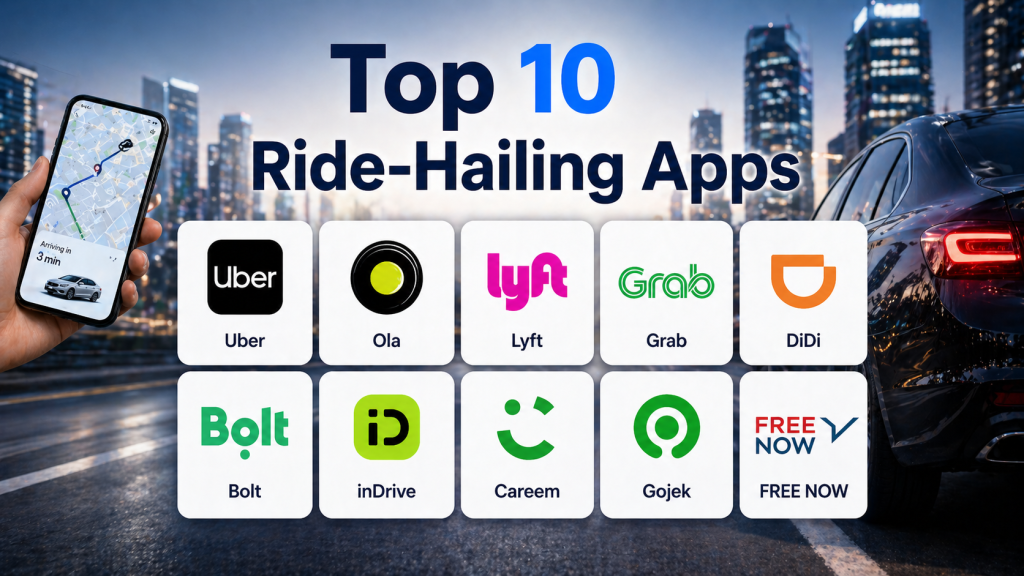
Top 10 Ride-Hailing Apps Tools
1 — Uber
Short description: Uber is one of the most widely used ride-hailing platforms globally, offering on-demand rides, deliveries, and corporate travel services. It operates in many countries and provides multiple ride options. The platform focuses on convenience and scalability. It is suitable for both individual and business users. Uber also supports cashless payments and real-time tracking.
Key Features
- On-demand ride booking
- Real-time driver tracking
- Multiple ride categories
- Cashless payments
- Corporate travel integration
Pros
- Wide global availability
- Strong technology platform
Cons
- Surge pricing
- Pricing variability
Platforms / Deployment
iOS, Android — Cloud
Security & Compliance
Basic safety features and authentication
Integrations & Ecosystem
Integrates with travel and expense platforms
Support & Community
Large user base and support system
2 — Ola
Short description: Ola is a leading ride-hailing platform in India and other markets, offering a wide range of ride options including autos and bikes. It focuses on affordability and accessibility. The platform supports multiple payment options. It is suitable for daily commuters and businesses. Ola also provides ride scheduling features.
Key Features
- Multiple vehicle options
- Affordable pricing
- Ride scheduling
- Digital payments
- Local market coverage
Pros
- Cost-effective
- Strong presence in India
Cons
- Limited global reach
- Service variability
Platforms / Deployment
iOS, Android — Cloud
Security & Compliance
Not publicly stated
Integrations & Ecosystem
Basic integrations
Support & Community
Regional support
3 — Lyft
Short description: Lyft is a popular ride-hailing platform mainly operating in North America. It offers standard and premium ride options. The platform focuses on user experience and safety. It supports ride-sharing and corporate programs. Lyft is suitable for urban transportation needs.
Key Features
- Ride booking
- Driver tracking
- Shared rides
- Payment options
- Corporate programs
Pros
- User-friendly interface
- Strong safety focus
Cons
- Limited geographic coverage
- Pricing fluctuations
Platforms / Deployment
iOS, Android — Cloud
Security & Compliance
Safety features included
Integrations & Ecosystem
Corporate integrations available
Support & Community
Good support system
4 — Grab
Short description: Grab is a leading ride-hailing platform in Southeast Asia, offering transportation, delivery, and financial services. It provides a wide range of ride options. The platform integrates multiple services in one app. It is suitable for both individuals and businesses. Grab focuses on convenience and regional dominance.
Key Features
- Ride booking
- Delivery services
- Payment wallet
- Multi-service platform
- Real-time tracking
Pros
- Strong regional presence
- Multi-service ecosystem
Cons
- Limited global availability
- Feature complexity
Platforms / Deployment
iOS, Android — Cloud
Security & Compliance
Not publicly stated
Integrations & Ecosystem
Integrated ecosystem with services
Support & Community
Strong regional support
5 — DiDi
Short description: DiDi is a global ride-hailing platform with a strong presence in Asia and Latin America. It offers multiple ride options and focuses on affordability. The platform includes safety and tracking features. It is suitable for large-scale operations. DiDi also supports driver incentives.
Key Features
- Ride booking
- Real-time tracking
- Multiple ride options
- Safety features
- Payment integration
Pros
- Competitive pricing
- Large driver network
Cons
- Limited availability in some regions
- Regulatory challenges
Platforms / Deployment
iOS, Android — Cloud
Security & Compliance
Not publicly stated
Integrations & Ecosystem
Basic integrations
Support & Community
Regional support
6 — Bolt
Short description: Bolt is a fast-growing ride-hailing platform popular in Europe and Africa. It offers affordable rides and quick booking. The platform focuses on efficiency and cost savings. It is suitable for urban commuters. Bolt also provides delivery services.
Key Features
- Fast booking
- Affordable pricing
- Real-time tracking
- Delivery options
- Driver network
Pros
- Low pricing
- Quick availability
Cons
- Limited coverage
- Smaller ecosystem
Platforms / Deployment
iOS, Android — Cloud
Security & Compliance
Not publicly stated
Integrations & Ecosystem
Limited integrations
Support & Community
Standard support
7 — inDrive
Short description: inDrive is a unique ride-hailing platform that allows users to negotiate fares with drivers. It focuses on transparency and flexibility. The platform is popular in emerging markets. It provides multiple ride options. It is suitable for cost-conscious users.
Key Features
- Fare negotiation
- Ride booking
- Real-time tracking
- Flexible pricing
- Multiple ride types
Pros
- Transparent pricing
- User control
Cons
- Inconsistent pricing
- Limited features
Platforms / Deployment
iOS, Android — Cloud
Security & Compliance
Not publicly stated
Integrations & Ecosystem
Basic integrations
Support & Community
Standard support
8 — Careem
Short description: Careem is a ride-hailing platform widely used in the Middle East and nearby regions. It offers transportation, delivery, and payment services. The platform focuses on reliability and convenience. It is suitable for both personal and business use. Careem provides strong local support.
Key Features
- Ride booking
- Delivery services
- Payment wallet
- Real-time tracking
- Multi-service app
Pros
- Strong regional presence
- Reliable service
Cons
- Limited global reach
- Feature overlap
Platforms / Deployment
iOS, Android — Cloud
Security & Compliance
Not publicly stated
Integrations & Ecosystem
Integrated ecosystem
Support & Community
Good regional support
9 — Gojek
Short description: Gojek is a super app offering ride-hailing, delivery, and digital payments primarily in Southeast Asia. It provides a wide range of services in one platform. The app focuses on convenience and integration. It is suitable for urban users. Gojek supports multiple payment options.
Key Features
- Ride booking
- Delivery services
- Payment integration
- Multi-service platform
- Real-time tracking
Pros
- All-in-one platform
- Strong ecosystem
Cons
- Regional limitation
- App complexity
Platforms / Deployment
iOS, Android — Cloud
Security & Compliance
Not publicly stated
Integrations & Ecosystem
Large ecosystem
Support & Community
Strong regional support
10 — FREE NOW
Short description: FREE NOW is a European ride-hailing platform offering taxi and private hire services. It focuses on quality and reliability. The platform integrates multiple transport options. It is suitable for urban mobility. FREE NOW supports cashless payments.
Key Features
- Ride booking
- Taxi integration
- Payment options
- Real-time tracking
- Multi-modal transport
Pros
- Reliable service
- European coverage
Cons
- Limited global presence
- Smaller network
Platforms / Deployment
iOS, Android — Cloud
Security & Compliance
Not publicly stated
Integrations & Ecosystem
Basic integrations
Support & Community
Standard support
Comparison Table
| Tool | Best For | Platforms | Deployment | Standout Feature |
|---|---|---|---|---|
| Uber | Global users | iOS, Android | Cloud | Global reach |
| Ola | India users | iOS, Android | Cloud | Affordable rides |
| Lyft | North America | iOS, Android | Cloud | User experience |
| Grab | Southeast Asia | iOS, Android | Cloud | Super app |
| DiDi | Asia markets | iOS, Android | Cloud | Large network |
| Bolt | Europe, Africa | iOS, Android | Cloud | Low cost |
| inDrive | Emerging markets | iOS, Android | Cloud | Fare negotiation |
| Careem | Middle East | iOS, Android | Cloud | Multi-service |
| Gojek | Southeast Asia | iOS, Android | Cloud | Ecosystem |
| FREE NOW | Europe | iOS, Android | Cloud | Taxi integration |
Evaluation & Scoring
| Tool | Core | Ease | Integrations | Security | Performance | Support | Value | Total |
|---|---|---|---|---|---|---|---|---|
| Uber | 9 | 9 | 8 | 7 | 9 | 8 | 7 | 8.3 |
| Ola | 7 | 8 | 6 | 6 | 7 | 7 | 9 | 7.4 |
| Lyft | 8 | 9 | 7 | 7 | 8 | 8 | 7 | 7.9 |
| Grab | 9 | 8 | 8 | 7 | 8 | 8 | 8 | 8.2 |
| DiDi | 8 | 8 | 7 | 6 | 8 | 7 | 8 | 7.8 |
| Bolt | 7 | 8 | 6 | 6 | 7 | 7 | 9 | 7.4 |
| inDrive | 6 | 7 | 5 | 6 | 7 | 6 | 9 | 6.9 |
| Careem | 8 | 8 | 7 | 6 | 8 | 8 | 8 | 7.9 |
| Gojek | 9 | 8 | 8 | 7 | 8 | 8 | 8 | 8.2 |
| FREE NOW | 7 | 8 | 6 | 6 | 7 | 7 | 7 | 7.2 |
These scores are based on overall platform capabilities, usability, and value. Higher scores indicate better performance in multiple categories, but the best choice depends on your region and usage. Some apps perform better in specific markets rather than globally. Businesses should align scoring with operational needs.
Which Ride-Hailing App Is Right for You
Solo / Freelancer
Uber, Ola, and Bolt are ideal for daily commuting due to availability and pricing.
SMB
Ola, Bolt, and inDrive provide cost-effective options for small teams.
Mid-Market
Lyft, Careem, and DiDi offer balanced features and reliability.
Enterprise
Uber and Grab are best for large-scale operations and corporate integration.
Budget vs Premium
Budget apps focus on affordability, while premium apps offer better service quality.
Feature Depth vs Ease of Use
Simple apps provide quick booking, while advanced apps offer multiple services.
Integrations & Scalability
Choose platforms that support corporate travel integrations.
Security & Compliance Needs
Focus on apps with strong safety features and tracking.
Frequently Asked Questions
1. What is a ride-hailing app
A ride-hailing app connects passengers with drivers through a mobile platform. Users can book rides instantly and track drivers in real time. It replaces traditional taxi services. It offers convenience and flexibility.
2. How much do ride-hailing services cost
Pricing depends on distance, time, and demand. Surge pricing may apply during peak hours. Some apps offer subscription plans. Costs vary by region. Users should compare options before booking.
3. Are ride-hailing apps safe
Most apps include safety features like tracking and driver verification. However, safety levels vary. Users should check app features. Ratings and reviews also help. Safety is improving continuously.
4. Can businesses use ride-hailing apps
Yes, many apps offer corporate travel solutions. Businesses can manage employee rides. Expense tracking is also available. It helps streamline travel management. Integration features vary.
5. Do these apps support cashless payments
Yes, most apps support digital payments. Users can pay via cards or wallets. Cash options may also be available. Payment flexibility improves convenience.
6. What are common issues with ride-hailing apps
Surge pricing and driver availability are common issues. Service quality may vary. App performance can differ. Users should choose reliable platforms.
7. Can I schedule rides in advance
Many apps allow ride scheduling. This is useful for airport transfers. Availability depends on region. Scheduling improves planning.
8. Are these apps available globally
Not all apps are global. Some focus on specific regions. Users should check availability. Local apps may perform better.
9. How do these apps handle complaints
Most apps provide in-app support. Users can report issues. Refunds may be provided. Support quality varies.
10. Can I switch between apps easily
Yes, users can use multiple apps. Switching is simple. Comparing prices helps save money. Having multiple apps is beneficial.
Conclusion
Ride-hailing apps have transformed how people and businesses approach transportation by offering fast, convenient, and flexible mobility solutions. These platforms provide more than just ride booking, with features like real-time tracking, digital payments, and integrated services that enhance user experience and efficiency. As urban mobility continues to evolve, ride-hailing apps play a critical role in connecting people with reliable transportation options.Each platform has its strengths, whether it is global coverage, affordability, or ecosystem integration. Users should consider factors like region availability, pricing, and features when selecting the right app. Businesses, in particular, benefit from platforms that offer corporate integrations and expense tracking capabilities.The best approach is to shortlist a few apps based on your location and usage needs, test their performance, and compare pricing and reliability. Using multiple apps can also provide flexibility and cost savings. Choosing the right ride-hailing platform can improve convenience, reduce travel time, and enhance overall mobility experience.

One factor that often matters more than pricing is reliability during peak hours. An app that consistently provides accurate pickup times and dependable driver availability can make a noticeable difference in the overall user experience.