Introduction
Data Clean Rooms are secure environments where multiple organizations can share, match, and analyze data without exposing raw customer information. These platforms allow advertisers, publishers, retailers, and enterprises to collaborate on analytics and audience insights while maintaining privacy and regulatory compliance. Instead of exchanging sensitive datasets directly, participants use privacy-preserving computation and controlled access methods to generate aggregated insights safely.
As privacy regulations become stricter and third-party cookies continue to decline, Data Clean Rooms have become critical for modern marketing, analytics, and partnership strategies. Businesses now rely on these platforms to measure campaign performance, improve audience targeting, and collaborate with partners without compromising customer trust.
Real-world use cases include:
- Measuring advertising campaign effectiveness across publishers and platforms
- Retail media network audience collaboration
- Secure customer identity matching between partners
- Cross-company analytics and attribution reporting
- Privacy-safe AI and machine learning data collaboration
Evaluation criteria for buyers:
- Privacy-preserving computation capabilities
- Identity resolution and audience matching
- Data governance and compliance controls
- Query performance and scalability
- AI and analytics capabilities
- Integration ecosystem and APIs
- Multi-cloud and hybrid support
- Ease of deployment and usability
- Collaboration workflows and access management
- Security certifications and audit capabilities
Best for: Enterprises, retailers, publishers, advertisers, agencies, healthcare organizations, and data-driven companies needing secure collaboration and analytics across organizations.
Not ideal for: Small businesses with minimal data collaboration requirements or teams only needing basic analytics without cross-party data sharing.
Key Trends in Data Clean Rooms
- Privacy-first analytics replacing third-party cookie tracking
- AI-powered audience modeling and predictive analytics
- Growth of retail media network clean room ecosystems
- Multi-cloud and hybrid deployment support
- Secure federated learning and collaborative AI workflows
- Differential privacy and encryption becoming standard features
- Real-time collaboration and activation capabilities
- Integration with CDPs, warehouses, and advertising platforms
- Increased regulatory focus on consent and governance
- Expansion of industry-specific clean rooms for healthcare, finance, and telecom
How We Selected These Tools
- Market adoption among enterprises and advertisers
- Strength of privacy-preserving technologies
- Analytics and collaboration feature completeness
- Security posture and governance capabilities
- Integration support across cloud, CRM, and analytics ecosystems
- Scalability for large data workloads
- Ease of onboarding and operational management
- AI and machine learning enablement features
- Vendor ecosystem maturity and support quality
- Suitability across different industries and organization sizes
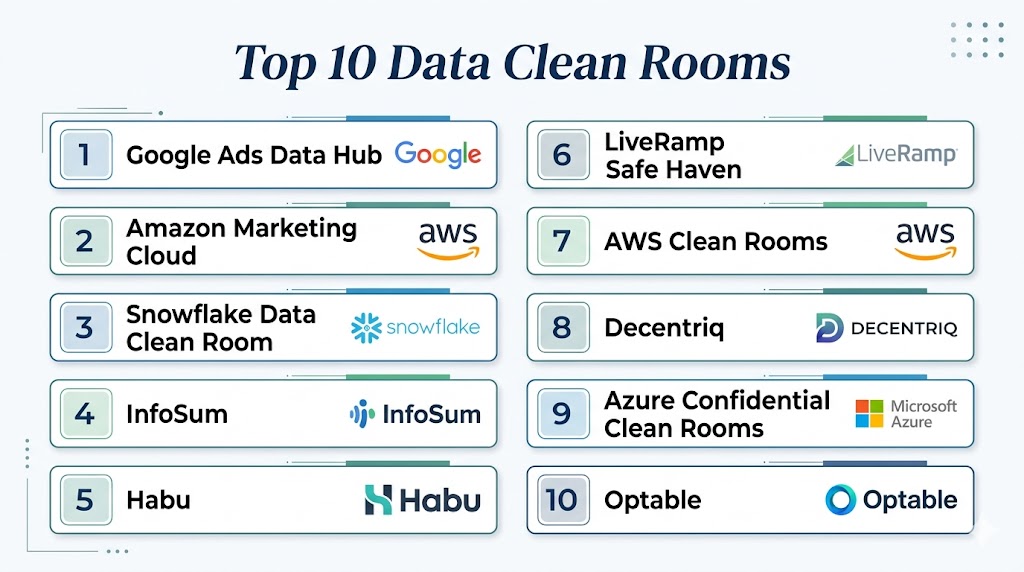
Top 10 Data Clean Rooms
#1 — Snowflake Data Clean Room
Short description: Snowflake Data Clean Room enables organizations to securely collaborate on datasets without exposing raw information. Built on the Snowflake Data Cloud, it is widely adopted by enterprises, media companies, and retailers for privacy-safe analytics and audience insights.
Key Features
- Secure multi-party data collaboration
- Privacy-preserving joins and matching
- Native integration with Snowflake ecosystem
- Role-based access controls
- Scalable cloud-native architecture
- Secure analytics and reporting
- Data governance and policy enforcement
Pros
- Strong scalability and cloud performance
- Extensive enterprise ecosystem integrations
- Flexible governance controls
- Suitable for large collaborative workloads
Cons
- Premium pricing for large-scale deployments
- Requires technical expertise for optimization
- Advanced configurations may be complex
Platforms / Deployment
- Web
- Cloud / Hybrid
Security & Compliance
- SOC 2
- ISO 27001
- GDPR support
- RBAC and encryption
- Audit logging
Integrations & Ecosystem
Snowflake integrates deeply with analytics, cloud, and advertising ecosystems for enterprise collaboration workflows.
- AWS
- Microsoft Azure
- Google Cloud
- Tableau
- Salesforce
- Databricks
Support & Community
- Enterprise support plans
- Strong documentation and training
- Large enterprise partner ecosystem
- Active developer community
#2 — Google Ads Data Hub
Short description: Google Ads Data Hub is Google’s clean room solution designed for advertisers and publishers to analyze campaign performance while preserving user privacy within the Google ecosystem.
Key Features
- Privacy-safe campaign analytics
- Audience overlap analysis
- Attribution and measurement reporting
- Query-based analytics environment
- Integration with Google advertising platforms
- Secure aggregated reporting
Pros
- Strong integration with Google Ads ecosystem
- Reliable campaign attribution insights
- High scalability for advertising analytics
- Strong privacy protections
Cons
- Limited outside Google ecosystem
- Requires SQL expertise for advanced queries
- Less flexible for custom workflows
Platforms / Deployment
- Web
- Cloud
Security & Compliance
- GDPR support
- Encryption in transit and at rest
- Access management controls
Integrations & Ecosystem
- Google Ads
- DV360
- BigQuery
- Google Analytics
Support & Community
- Enterprise support
- Extensive technical documentation
- Google partner ecosystem
#3 — Amazon Marketing Cloud
Short description: Amazon Marketing Cloud enables advertisers to analyze campaign data and audience insights securely across Amazon advertising properties and datasets.
Key Features
- Privacy-safe audience analytics
- Campaign attribution and measurement
- Custom SQL analytics
- Audience overlap reporting
- Integration with Amazon Ads ecosystem
- Scalable cloud infrastructure
Pros
- Strong retail and e-commerce insights
- Excellent advertising analytics
- Large-scale data processing
- Secure collaboration environment
Cons
- Focused primarily on Amazon ecosystem
- SQL expertise required
- Advanced workflows can be complex
Platforms / Deployment
- Web
- Cloud
Security & Compliance
- Encryption and access controls
- GDPR support
- Audit logging
Integrations & Ecosystem
- Amazon DSP
- Amazon Ads
- AWS services
- Retail media systems
Support & Community
- Enterprise support
- Technical documentation
- AWS partner network
#4 — InfoSum
Short description: InfoSum provides decentralized data collaboration technology that allows organizations to share insights without moving or exposing raw customer data.
Key Features
- Decentralized clean room architecture
- Privacy-preserving audience matching
- Identity resolution tools
- Multi-party collaboration workflows
- Real-time analytics support
- Flexible data federation
Pros
- Strong privacy-first architecture
- No raw data movement required
- Flexible partner collaboration
- Suitable for regulated industries
Cons
- Requires onboarding coordination between partners
- Advanced use cases may need technical expertise
- Smaller ecosystem than hyperscalers
Platforms / Deployment
- Web
- Cloud / Hybrid
Security & Compliance
- GDPR support
- Encryption and RBAC
- Audit controls
Integrations & Ecosystem
- Salesforce
- Snowflake
- AWS
- Media and advertising platforms
Support & Community
- Enterprise onboarding support
- Documentation and workshops
- Partner-focused ecosystem
#5 — Habu
Short description: Habu offers a multi-cloud data clean room platform that enables privacy-safe collaboration and analytics between advertisers, publishers, and enterprises.
Key Features
- Multi-cloud clean room support
- Privacy-safe data matching
- Audience analytics and attribution
- Data governance controls
- Collaboration templates
- Query and workflow automation
Pros
- Flexible deployment options
- Strong cross-cloud compatibility
- Easy partner collaboration workflows
- Scalable analytics environment
Cons
- Enterprise-focused pricing
- Some advanced workflows require technical teams
- Smaller community than hyperscale vendors
Platforms / Deployment
- Web
- Cloud / Hybrid
Security & Compliance
- Encryption
- GDPR support
- Access management and audit logging
Integrations & Ecosystem
- Snowflake
- AWS
- Google Cloud
- Databricks
Support & Community
- Enterprise support tiers
- Technical onboarding services
- Partner integration assistance
#6 — Databricks Clean Rooms
Short description: Databricks Clean Rooms allow enterprises to collaborate on analytics and machine learning securely while maintaining governance and privacy controls across the Lakehouse platform.
Key Features
- Secure data collaboration
- Lakehouse-native architecture
- AI and ML workflow support
- Fine-grained governance controls
- Multi-cloud scalability
- Secure query execution
Pros
- Strong AI and analytics ecosystem
- High-performance data processing
- Flexible collaboration workflows
- Scalable for enterprise data lakes
Cons
- Requires technical expertise
- Complex governance setup for beginners
- Premium enterprise pricing
Platforms / Deployment
- Web
- Cloud / Hybrid
Security & Compliance
- SOC 2
- ISO 27001
- RBAC and encryption
- Audit logging
Integrations & Ecosystem
- AWS
- Azure
- Google Cloud
- Tableau
- Power BI
Support & Community
- Enterprise support
- Large data engineering community
- Extensive documentation
#7 — LiveRamp Safe Haven
Short description: LiveRamp Safe Haven focuses on identity resolution and privacy-safe collaboration for advertisers, publishers, and enterprises managing customer data partnerships.
Key Features
- Identity resolution capabilities
- Audience collaboration workflows
- Attribution analytics
- Secure data onboarding
- Partner ecosystem connectivity
- Data governance controls
Pros
- Strong identity graph technology
- Broad advertising ecosystem integrations
- Reliable audience collaboration
- Strong enterprise adoption
Cons
- Pricing may be high for SMBs
- Setup can be complex
- Some workflows depend on external integrations
Platforms / Deployment
- Web
- Cloud
Security & Compliance
- GDPR support
- Encryption and access controls
- Audit logging
Integrations & Ecosystem
- Salesforce
- Adobe Experience Cloud
- Snowflake
- Google Ads
Support & Community
- Enterprise onboarding support
- Partner ecosystem assistance
- Knowledge base and documentation
#8 — Decentriq
Short description: Decentriq provides confidential data collaboration and clean room technology focused on secure analytics and privacy-preserving computation.
Key Features
- Confidential computing architecture
- Secure analytics workflows
- Privacy-preserving collaboration
- Federated query execution
- Encryption-first design
- Governance controls
Pros
- Strong privacy and confidentiality model
- Secure collaborative analytics
- Flexible enterprise use cases
- Modern architecture for regulated industries
Cons
- Smaller ecosystem compared to hyperscalers
- Advanced technical onboarding required
- Enterprise-focused pricing
Platforms / Deployment
- Web
- Cloud / Hybrid
Security & Compliance
- Encryption
- GDPR support
- Secure enclave technology
Integrations & Ecosystem
- Snowflake
- AWS
- Databricks
- BI platforms
Support & Community
- Enterprise support
- Technical onboarding guidance
- Documentation and workshops
#9 — Clean Rooms by Infosys
Short description: Infosys provides enterprise-focused clean room solutions for secure data collaboration, analytics, and regulatory compliance across industries.
Key Features
- Secure enterprise data collaboration
- Compliance and governance controls
- Industry-specific analytics workflows
- AI and reporting support
- Integration with enterprise systems
- Multi-party collaboration support
Pros
- Strong consulting and implementation services
- Enterprise-grade governance
- Industry-focused customization
- Scalable deployment options
Cons
- Implementation may require consulting engagement
- Longer deployment timelines
- Premium enterprise pricing
Platforms / Deployment
- Web
- Cloud / Hybrid
Security & Compliance
- Encryption and governance controls
- GDPR support
- RBAC and audit logging
Integrations & Ecosystem
- SAP
- Salesforce
- AWS
- Azure
Support & Community
- Enterprise consulting support
- Managed services options
- Training resources
#10 — Azure Clean Rooms
Short description: Azure Clean Rooms enables organizations to securely collaborate on data and analytics within Microsoft’s cloud ecosystem while preserving privacy and governance.
Key Features
- Secure multi-party analytics
- Microsoft cloud integration
- Governance and access management
- Scalable analytics infrastructure
- Privacy-preserving workflows
- Integration with enterprise AI tools
Pros
- Strong Microsoft ecosystem integration
- Enterprise scalability
- Flexible governance controls
- Suitable for hybrid environments
Cons
- Best suited for Microsoft-centric organizations
- Advanced configurations require expertise
- Enterprise pricing complexity
Platforms / Deployment
- Web
- Cloud / Hybrid
Security & Compliance
- SOC 2
- ISO 27001
- Encryption and RBAC
- GDPR support
Integrations & Ecosystem
- Azure Synapse
- Power BI
- Microsoft Fabric
- Dynamics 365
Support & Community
- Microsoft enterprise support
- Extensive documentation
- Large cloud partner ecosystem
Comparison Table
| Tool Name | Best For | Platforms Supported | Deployment | Standout Feature | Public Rating |
|---|---|---|---|---|---|
| Snowflake Data Clean Room | Enterprises | Web | Cloud / Hybrid | Secure large-scale collaboration | N/A |
| Google Ads Data Hub | Advertisers | Web | Cloud | Google campaign analytics | N/A |
| Amazon Marketing Cloud | Retail advertisers | Web | Cloud | Amazon ecosystem attribution | N/A |
| InfoSum | Privacy-first collaboration | Web | Cloud / Hybrid | Decentralized clean room model | N/A |
| Habu | Multi-cloud enterprises | Web | Cloud / Hybrid | Cross-cloud clean rooms | N/A |
| Databricks Clean Rooms | AI and analytics teams | Web | Cloud / Hybrid | Lakehouse-native collaboration | N/A |
| LiveRamp Safe Haven | Identity-driven marketing | Web | Cloud | Identity resolution ecosystem | N/A |
| Decentriq | Regulated industries | Web | Cloud / Hybrid | Confidential computing | N/A |
| Clean Rooms by Infosys | Large enterprises | Web | Cloud / Hybrid | Industry-specific implementations | N/A |
| Azure Clean Rooms | Microsoft enterprises | Web | Cloud / Hybrid | Azure ecosystem integration | N/A |
Evaluation & Scoring of Data Clean Rooms
| Tool Name | Core 25% | Ease 15% | Integrations 15% | Security 10% | Performance 10% | Support 10% | Value 15% | Weighted Total |
|---|---|---|---|---|---|---|---|---|
| Snowflake Data Clean Room | 9 | 8 | 9 | 9 | 9 | 8 | 7 | 8.5 |
| Google Ads Data Hub | 8 | 7 | 8 | 8 | 9 | 8 | 7 | 7.9 |
| Amazon Marketing Cloud | 8 | 7 | 8 | 8 | 9 | 8 | 7 | 7.9 |
| InfoSum | 9 | 7 | 7 | 9 | 8 | 7 | 7 | 7.9 |
| Habu | 8 | 7 | 8 | 8 | 8 | 7 | 7 | 7.7 |
| Databricks Clean Rooms | 9 | 6 | 9 | 9 | 9 | 8 | 6 | 8.1 |
| LiveRamp Safe Haven | 8 | 7 | 8 | 8 | 8 | 8 | 7 | 7.8 |
| Decentriq | 8 | 6 | 7 | 9 | 8 | 7 | 7 | 7.5 |
| Clean Rooms by Infosys | 8 | 6 | 8 | 8 | 8 | 8 | 6 | 7.4 |
| Azure Clean Rooms | 8 | 7 | 9 | 9 | 8 | 8 | 7 | 8.0 |
These scores are comparative and intended to help buyers evaluate overall suitability across enterprise collaboration, governance, scalability, and privacy requirements. Organizations should prioritize the categories most aligned with their operational and compliance goals.
Which Data Clean Rooms Tool Is Right for You?
Solo / Freelancer
Most Data Clean Rooms are enterprise-focused and may be excessive for solo users. Lightweight analytics and warehouse collaboration tools may be more practical.
SMB
SMBs working with retail media or advertising partnerships may benefit from Google Ads Data Hub or Amazon Marketing Cloud for focused campaign analytics.
Mid-Market
Habu, InfoSum, and LiveRamp Safe Haven provide flexible collaboration and audience analytics for growing organizations with cross-partner data initiatives.
Enterprise
Snowflake Data Clean Room, Databricks Clean Rooms, and Azure Clean Rooms are best for enterprises requiring scalable collaboration, governance, and AI-enabled analytics.
Budget vs Premium
- Budget-conscious: Google Ads Data Hub, Amazon Marketing Cloud
- Premium enterprise: Snowflake, Databricks, LiveRamp Safe Haven
Feature Depth vs Ease of Use
- Easier deployment: Google Ads Data Hub, Amazon Marketing Cloud
- Deep enterprise capabilities: Snowflake, Databricks, InfoSum
Integrations & Scalability
Organizations with large cloud ecosystems should prioritize Snowflake, Databricks, and Azure Clean Rooms due to broad integration and scalability support.
Security & Compliance Needs
Highly regulated industries should focus on platforms offering encryption, audit logging, RBAC, confidential computing, and strong governance controls.
Frequently Asked Questions
1. What is a Data Clean Room?
A Data Clean Room is a secure environment where organizations can analyze and collaborate on datasets without exposing raw customer data. These platforms use privacy-preserving technologies to generate insights safely.
2. Why are Data Clean Rooms important?
They enable privacy-safe analytics and collaboration while helping organizations comply with data privacy regulations and reduce risks associated with direct data sharing.
3. Are Data Clean Rooms only for advertisers?
No. While advertising and retail media are major use cases, healthcare, finance, telecom, and enterprise analytics teams also use clean rooms for secure collaboration.
4. How do Data Clean Rooms protect privacy?
Most platforms use encryption, RBAC, query restrictions, aggregation controls, and privacy-preserving computation methods to prevent exposure of sensitive information.
5. What integrations are commonly supported?
Common integrations include cloud warehouses, CRM systems, advertising platforms, BI tools, and machine learning environments.
6. Can Data Clean Rooms support AI workflows?
Yes. Many modern platforms support collaborative AI and machine learning use cases while maintaining governance and privacy controls.
7. Are these platforms cloud-based?
Most are cloud-native, though several support hybrid and multi-cloud deployments for enterprise flexibility and governance requirements.
8. How difficult is implementation?
Implementation complexity depends on the platform and use case. Enterprise deployments often require governance planning, integration setup, and technical onboarding.
9. What industries benefit most from Data Clean Rooms?
Advertising, retail, healthcare, telecom, finance, and large enterprises with cross-party collaboration needs gain the most value from these platforms.
10. What should buyers evaluate first?
Buyers should prioritize privacy controls, integrations, scalability, governance capabilities, and compatibility with their existing analytics ecosystem.
Conclusion
Data Clean Rooms are becoming foundational for secure data collaboration, privacy-safe analytics, and modern advertising measurement strategies. Enterprises increasingly rely on these platforms to balance customer privacy with actionable business insights across partnerships and ecosystems. The best solution depends on your organization’s cloud strategy, collaboration requirements, governance needs, and analytics maturity. Start by identifying the primary use cases, shortlist two or three platforms that align with your ecosystem, and run a pilot focused on integration, governance, and performance validation. A carefully selected Data Clean Room can improve collaboration, strengthen compliance, and unlock more valuable insights from shared data partnerships.

This is a well-structured comparison that simplifies the concept of data clean rooms and their practical applications. The feature analysis and pros-and-cons sections make it easier to evaluate the available options.