Introduction
Competitive Intelligence Platforms are software tools that help businesses gather, analyze, and act on information about competitors, markets, customers, and industry trends. These platforms centralize data from multiple sources, normalize insights, and provide visual analytics that inform strategic decisions, product planning, pricing, positioning, and growth initiatives.
Real‑world use cases include tracking competitor product launches and pricing changes, monitoring sentiment and brand reputation, analyzing market share shifts, benchmarking performance metrics, identifying emerging threats and opportunities, supporting go‑to‑market strategy, augmenting sales intelligence with competitive context, and aligning leadership with factual data. These tools reduce manual research, minimize blind spots, and enable proactive strategic action based on data.
Evaluation criteria include data coverage and accuracy, real‑time monitoring and alerts, analytics and visualization, ease of use, integration with business systems (CRM, BI, platforms), competitive benchmarking, sentiment and social listening, customization and reporting, scalability, and pricing.
Best for: Strategy teams, product managers, marketing leaders, sales enablement teams, and executives in mid‑sized to enterprise organizations that compete in dynamic markets.
Not ideal for: Companies in very narrow, non‑digital markets with limited external data or those with minimal competitive complexity.
Key Trends in Competitive Intelligence Platforms
- AI‑driven insights and automated anomaly detection
- Real‑time monitoring of competitors’ digital activities
- Integration with CRM, business intelligence, and analytics stacks
- Social listening and sentiment analysis
- Benchmarking across pricing, features, and customer feedback
- Market mapping and ecosystem visualization
- Predictive analytics for trend forecasting
- Automated alerts and signals workflows
- Multi‑language and global data coverage
- Secure role‑based access and collaboration features
How We Selected These Tools
We evaluated tools using the following logic:
- Depth and breadth of competitive data coverage
- Real‑time and automated monitoring capabilities
- Quality of analytics dashboards and visualization
- Ease of use and customization for non‑technical teams
- Integration potential with CRM, analytics, and data platforms
- Competitive benchmarking and comparison features
- Sentiment, social listening, and brand monitoring
- Scalability for enterprise‑level data volumes
- Security, access control, and compliance signals
- Customer support, documentation, and adoption
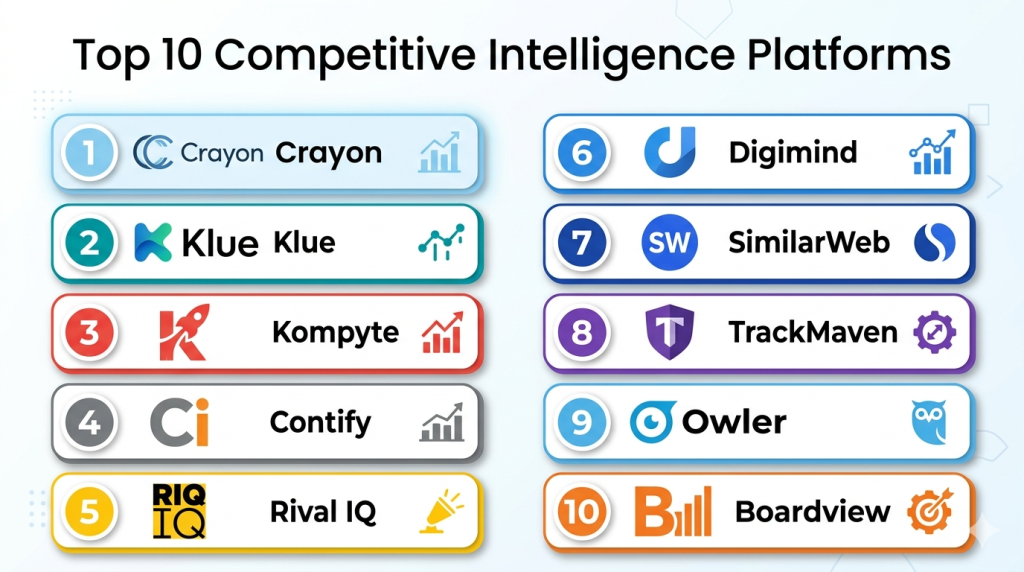
Top 10 Competitive Intelligence Platforms
#1 — Crayon
Short description: Crayon provides comprehensive competitive intelligence, digital footprint tracking, and market insights for strategy, sales, and product teams.
Key Features
- Real‑time competitor tracking
- Digital footprint and web activity monitoring
- Pricing and feature change alerts
- Benchmarking dashboards
- Integrations with CRM and analytics
Pros
- Broad competitive coverage
- Easy alerts and notification workflows
Cons
- Learning curve for advanced analysis
- Subscription pricing for larger teams
Platforms / Deployment
- Web
- Cloud
Security & Compliance
- Secure login and encryption
- Not publicly stated
Integrations & Ecosystem
- CRM tools
- Analytics platforms
- Workflow and alerting systems
Support & Community
- Tutorials
- Customer support
- Knowledge base
#2 — Similarweb
Short description: Similarweb provides digital market intelligence with competitive benchmarking across traffic, engagement, and audience data.
Key Features
- Website traffic and engagement metrics
- Industry and competitor benchmarking
- Channel performance insights
- Audience demographics
- Industry trend reports
Pros
- Strong external traffic and digital signals
- Easy‑to‑use dashboards
Cons
- Limited deep competitor product insights
- Data may be generalized for smaller domains
Platforms / Deployment
- Web
- Cloud
Security & Compliance
- Secure data processing
- Not publicly stated
Integrations & Ecosystem
- BI platforms
- Marketing tools
- Analytics systems
Support & Community
- Tutorials
- Customer support
- Knowledge base
#3 — SEMrush
Short description: SEMrush is a competitive SEO, PPC, and digital marketing intelligence platform that provides keyword, backlink, and competitor campaign insights.
Key Features
- Search performance benchmarking
- Keyword and backlink analysis
- Competitive advertising insights
- Market share indicators
- Custom reporting
Pros
- Deep SEO and SEM competitor data
- Strong for digital marketing teams
Cons
- Less focus on non‑digital market signals
- Requires SEO knowledge for full value
Platforms / Deployment
- Web
- Cloud
Security & Compliance
- Secure login and encrypted data
- Not publicly stated
Integrations & Ecosystem
- Analytics platforms
- Marketing systems
- Reporting tools
Support & Community
- Knowledge base
- Customer support
- User community
#4 — Klue
Short description: Klue delivers competitive intelligence workflows and battlecards to support sales, marketing, and product teams with real‑time competitor insights.
Key Features
- Automated competitor tracking
- Competitive battlecards
- Custom alerts
- Sales enablement integration
- Analytics dashboards
Pros
- Great for cross‑team collaboration
- Focused sales enablement features
Cons
- Enterprise pricing
- Requires internal alignment for best use
Platforms / Deployment
- Web
- Cloud
Security & Compliance
- Secure authentication
- Not publicly stated
Integrations & Ecosystem
- CRM and sales tools
- Collaboration platforms
- Analytics systems
Support & Community
- Tutorials
- Customer support
- Knowledge base
#5 — Brandwatch
Short description: Brandwatch is a social listening and competitive intelligence platform with deep sentiment analysis and brand monitoring.
Key Features
- Social listening and sentiment tracking
- Competitor brand benchmarking
- Trend and topic analysis
- Alerts and notifications
- Custom dashboards
Pros
- Excellent social and customer insight signals
- Deep sentiment analytics
Cons
- Less product‑feature benchmarking
- Data volume complexity
Platforms / Deployment
- Web
- Cloud
Security & Compliance
- Secure login and data encryption
- Not publicly stated
Integrations & Ecosystem
- CRM
- Analytics platforms
- Marketing tools
Support & Community
- Tutorials
- Customer support
- Knowledge base
#6 — Kompyte
Short description: Kompyte automates competitor tracking and delivers market signals, ad intelligence, and analytics for strategy and growth teams.
Key Features
- Competitor content and spend tracking
- Advert performance and strategy insights
- Real‑time alerts
- Benchmark dashboards
- Workflow integrations
Pros
- Strong ad and competitor spend insights
- Real‑time alerts
Cons
- Requires setup for full value
- Pricing tends toward enterprise
Platforms / Deployment
- Web
- Cloud
Security & Compliance
- Secure data handling
- Not publicly stated
Integrations & Ecosystem
- CRM and analytics tools
- Alert systems
- Reporting systems
Support & Community
- Customer support
- Tutorials
- Knowledge base
#7 — Owler
Short description: Owler provides market and competitive intelligence with news tracking, competitor alerts, and company benchmarking.
Key Features
- Competitor news and signal alerts
- Market trend tracking
- Company benchmarking
- Executive summaries
- Email notifications
Pros
- Easy to use for quick insights
- Great news and alert coverage
Cons
- Less depth in analytics
- Limited export and reporting
Platforms / Deployment
- Web
- Cloud
Security & Compliance
- Secure login
- Not publicly stated
Integrations & Ecosystem
- Email systems
- CRM tools
- Analytics dashboards
Support & Community
- Tutorials
- Customer support
#8 — Crunchbase
Short description: Crunchbase aggregates company data, funding, acquisitions, and market signals valuable for competitive and market intelligence.
Key Features
- Company profiles and metrics
- Funding and M&A tracking
- Competitor lists and signals
- Custom alerts
- Sector benchmarking
Pros
- Excellent for company signal tracking
- Broad market coverage
Cons
- Less real‑time monitoring
- Focused more on company business signals
Platforms / Deployment
- Web
- Cloud
Security & Compliance
- Secure data access
- Not publicly stated
Integrations & Ecosystem
- CRM
- Analytics tools
- Reporting systems
Support & Community
- Knowledge base
- Customer support
#9 — NetBase Quid
Short description: NetBase Quid combines AI‑powered market intelligence with competitive analysis and social signal monitoring.
Key Features
- AI‑driven insights
- Social and market signal analysis
- Competitor benchmarking
- Trend forecasting
- Custom dashboards
Pros
- Strong AI analytics
- Broad data coverage
Cons
- Pricing geared toward enterprise
- Complexity for smaller teams
Platforms / Deployment
- Web
- Cloud
Security & Compliance
- Secure login and encrypted data
- Not publicly stated
Integrations & Ecosystem
- CRM and analytics integrations
- Alerting tools
- Collaboration platforms
Support & Community
- Tutorials
- Customer support
- Knowledge base
#10 — SimilarTech
Short description: SimilarTech specializes in tracking technology adoption and digital footprints across competitors’ tech stacks and web presence.
Key Features
- Technology usage tracking
- Competitor web footprint insights
- Market trend signals
- Alerts and tracking
- Analytics dashboards
Pros
- Specialized tech adoption insights
- Useful for product and sales teams
Cons
- Limited broader competitive signals
- Smaller data sets for niche markets
Platforms / Deployment
- Web
- Cloud
Security & Compliance
- Secure login
- Not publicly stated
Integrations & Ecosystem
- Analytics tools
- CRM integrations
- Alert systems
Support & Community
- Tutorials
- Customer support
Comparison Table
| Tool Name | Best For | Platform(s) Supported | Deployment | Standout Feature | Public Rating |
|---|---|---|---|---|---|
| Crayon | Strategy and product teams | Web | Cloud | Real‑time competitor tracking | N/A |
| Similarweb | Digital traffic and benchmarking | Web | Cloud | Traffic and audience insights | N/A |
| SEMrush | SEO and PPC competitor signals | Web | Cloud | Search and digital marketing insights | N/A |
| Klue | Sales enablement | Web | Cloud | Competitive battlecards | N/A |
| Brandwatch | Social listening and sentiment | Web | Cloud | Deep sentiment and trend analysis | N/A |
| Kompyte | Advert and spend intelligence | Web | Cloud | Ad spend tracking | N/A |
| Owler | Quick competitive alerts | Web | Cloud | News and signal alerts | N/A |
| Crunchbase | Company market signals | Web | Cloud | Company profiles and trends | N/A |
| NetBase Quid | AI‑driven market intelligence | Web | Cloud | AI analytics and forecasting | N/A |
| SimilarTech | Tech stack and web presence | Web | Cloud | Technology adoption insights | N/A |
Evaluation & Scoring
| Tool Name | Core (25%) | Ease (15%) | Integrations (15%) | Security (10%) | Performance (10%) | Support (10%) | Value (15%) | Weighted Total |
|---|---|---|---|---|---|---|---|---|
| Crayon | 9 | 8 | 8 | 8 | 8 | 8 | 8 | 8.2 |
| Similarweb | 8 | 9 | 7 | 8 | 8 | 8 | 7 | 7.8 |
| SEMrush | 8 | 8 | 8 | 8 | 8 | 8 | 7 | 7.9 |
| Klue | 9 | 7 | 8 | 8 | 8 | 7 | 7 | 7.8 |
| Brandwatch | 8 | 8 | 7 | 8 | 8 | 8 | 7 | 7.8 |
| Kompyte | 8 | 7 | 8 | 8 | 8 | 7 | 7 | 7.7 |
| Owler | 7 | 9 | 7 | 8 | 7 | 7 | 7 | 7.4 |
| Crunchbase | 8 | 8 | 7 | 8 | 8 | 7 | 7 | 7.7 |
| NetBase Quid | 9 | 7 | 8 | 8 | 8 | 8 | 7 | 7.9 |
| SimilarTech | 7 | 8 | 7 | 8 | 7 | 7 | 7 | 7.2 |
Which Competitive Intelligence Platform Is Right for You?
Strategy and Product Teams
Crayon, SEMrush, and NetBase Quid provide deep data, alerts, and analytic context that support strategic planning and product benchmarking.
Digital Marketing Focus
Similarweb and SEMrush deliver strong external digital signals, traffic insights, and marketing performance context.
Sales Enablement
Klue and Kompyte provide battlecards, alerts, and competitor spend insights that empower sales teams in competitive conversations.
Social and Brand Signals
Brandwatch excels at sentiment analysis, social listening, and trend tracking for brand reputation and market context.
Company and Market Signals
Crunchbase and Owler provide broad company data, funding news, and executive alerts to support strategic discussion and opportunity spotting.
Technology and Adoption Insights
SimilarTech delivers technology usage signals useful for product teams and sales strategists looking at adoption patterns.
Frequently Asked Questions
1. What is a competitive intelligence platform?
A competitive intelligence platform helps businesses gather, analyze, and act on data about competitors, markets, and trends to inform strategic decisions.
2. Do these tools monitor competitor pricing?
Yes. Many platforms track price changes and market moves in real‑time or on scheduled intervals.
3. Can I integrate these tools with my CRM?
Yes. Many platforms offer CRM and data platform integrations for centralizing insights.
4. Are social signals included?
Some platforms, like Brandwatch and NetBase Quid, include social listening and sentiment analysis features.
5. Do they alert me to changes?
Yes. Alerts for competitor news, product changes, or signals can be automated.
6. Are these tools suitable for small companies?
Some, like Owler and SEMrush, offer scalable options; enterprise tools may be overkill for small operations.
7. Can these platforms help sales teams?
Yes. Platforms like Klue provide competitive battlecards and context tailored for sales interactions.
8. Do they provide trend forecasting?
Yes. Tools with predictive analytics help forecast shifts and market trends.
9. Is training required?
Some enterprise tools have learning curves and benefit from onboarding or tutorials.
10. How do I choose the right platform?
Consider primary use cases (strategy, marketing, sales), data sources needed, integration requirements, and budget.
Conclusion
Competitive Intelligence Platforms provide strategic visibility into competitor behavior, market trends, and performance signals that support decision‑making across strategy, marketing, product, and sales teams. Digital marketing intelligence platforms like Similarweb and SEMrush excel at traffic, search, and campaign insights. Strategy teams will benefit from Crayon and NetBase Quid’s broader competitive signals and analytics, while sales enablement gains value from Klue and Kompyte’s battlecards and alerting. Social and sentiment‑centric needs are best served by Brandwatch, and broad company signal tracking is provided by Crunchbase and Owler. Evaluate your primary use cases, data sources, integration needs, and budget to shortlist two to three platforms, implement pilot workflows, and build a data‑driven approach to outperform competitors.

This is a well-written comparison that highlights how competitive intelligence platforms help businesses track market trends and competitor activities. The clear breakdown of features and limitations makes the evaluation process much more straightforward.