Introduction
Online Course Marketplaces are digital platforms where educators, experts, and organizations can create, host, and sell courses, while learners can discover and enroll in courses across diverse topics. These marketplaces provide tools for content creation, monetization, marketing, and learner engagement, offering a centralized hub for educational experiences. They are essential for reaching global audiences and enabling flexible, self-paced learning.
Real-world use cases include professionals upskilling in technology and business, students accessing supplementary courses in STEM or humanities, organizations providing employee training, hobbyists exploring creative skills, and educators monetizing their expertise. Online Course Marketplaces streamline course delivery, support multimedia content, and provide assessment and certification capabilities.
Evaluation criteria include course creation tools, platform reach and discovery, monetization options, analytics and learner insights, multimedia support, assessment and certification features, ease of use, pricing and revenue sharing, community engagement tools, and integration with external systems.
Best for: Educators, trainers, institutions, and creators seeking to reach global audiences, monetize expertise, and provide structured online learning experiences.
Not ideal for: Those producing content for private or internal use only, or users seeking standalone LMS platforms without a marketplace ecosystem.
Key Trends in Online Course Marketplaces
- AI-driven course recommendations and personalization for learners
- Integrated marketing tools for course promotion and engagement
- Multimedia-rich course creation with video, quizzes, and assignments
- Certification and badge issuance for skill validation
- Gamification to enhance learner motivation
- Subscription and bundle options for flexible pricing
- Analytics dashboards for learner tracking and retention
- Mobile-first experiences for learning on-the-go
- Community engagement through discussion forums and Q&A
- Integration with external tools like Zoom, Slack, and LMS platforms
How We Selected These Tools
- Evaluated global reach and marketplace adoption
- Assessed course creation and multimedia support
- Reviewed monetization and pricing flexibility
- Checked analytics and reporting capabilities
- Examined learner engagement features
- Considered certification and assessment tools
- Evaluated mobile accessibility and device support
- Reviewed integration with external platforms
- Assessed ease of use for creators and learners
- Compared support resources and community presence
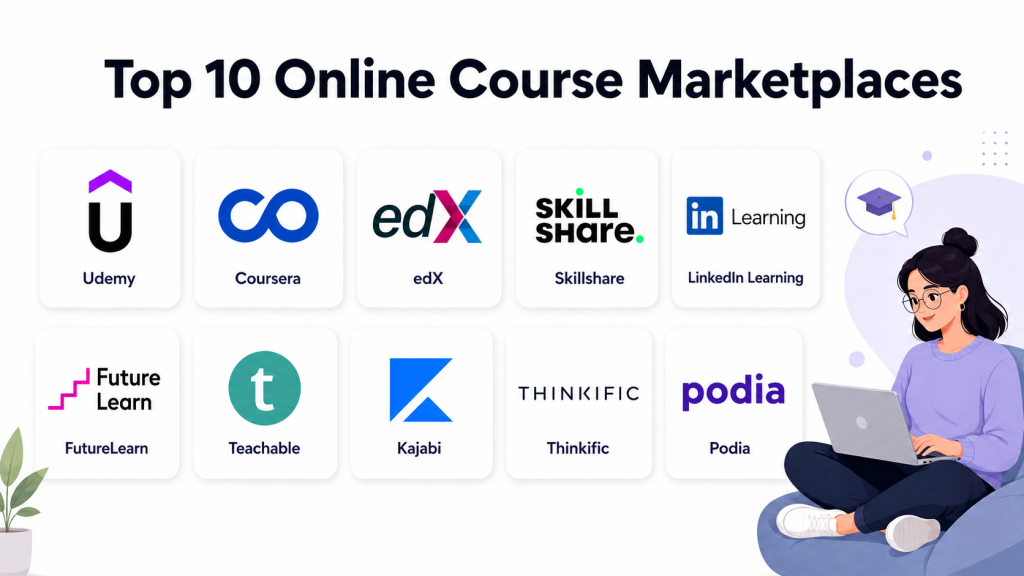
Top 10 Online Course Marketplaces
#1 — Udemy
Short description: Udemy is a leading marketplace offering a vast catalog of courses across diverse subjects, with robust tools for course creation, promotion, and learner engagement.
Key Features
- Large global audience and discoverability
- Multimedia content support
- Quizzes, assignments, and assessments
- Certification upon course completion
- Mobile and web access
- Marketing and analytics tools
Pros
- Massive learner base
- Easy course creation and promotion
Cons
- Revenue sharing can be high for instructors
- Competition among courses can be intense
Platforms / Deployment
- Web, iOS, Android
- Cloud
Security & Compliance
- Secure platform access
- Not publicly stated for certifications
Integrations & Ecosystem
- Zoom, Slack, and LMS integrations
- Marketing analytics
- Mobile notifications
Support & Community
- Help center and documentation
- Instructor community forums
- Customer support
#2 — Coursera
Short description: Coursera partners with universities and organizations to offer accredited courses, professional certificates, and degree programs online.
Key Features
- University and industry-led courses
- Certification and degrees
- Quizzes, projects, and peer assessments
- Multimedia content delivery
- Mobile and web access
Pros
- High credibility and recognized certifications
- Wide range of professional programs
Cons
- Less flexible pricing for instructors
- Enrollment process can be formal
Platforms / Deployment
- Web, iOS, Android
- Cloud
Security & Compliance
- Secure authentication
- Not publicly stated for certifications
Integrations & Ecosystem
- LMS integration
- Mobile apps
- Peer assessment and forums
Support & Community
- Tutorials
- Instructor support
- Learner forums
#3 — Skillshare
Short description: Skillshare is a subscription-based marketplace focusing on creative, design, and professional development courses, enabling instructors to reach engaged learners.
Key Features
- Subscription access for learners
- Video-based lessons with project assignments
- Community feedback and projects
- Analytics for instructors
- Mobile and web access
Pros
- Engaged community
- Supports creative skill development
Cons
- Less emphasis on formal certification
- Revenue tied to subscription model
Platforms / Deployment
- Web, iOS, Android
- Cloud
Security & Compliance
- Secure platform access
- Not publicly stated
Integrations & Ecosystem
- Social sharing
- Project submissions
- Learning analytics
Support & Community
- Help documentation
- Instructor forums
- Customer support
#4 — Teachable
Short description: Teachable allows creators to build and sell courses with a custom-branded experience, offering payment processing, multimedia support, and marketing tools.
Key Features
- Custom course websites
- Multimedia lessons including video, text, and quizzes
- Payment and subscription management
- Analytics dashboards
- Certificates for learners
Pros
- Full control over branding and pricing
- Flexible monetization options
Cons
- Requires marketing effort to attract learners
- Monthly subscription cost
Platforms / Deployment
- Web, iOS, Android
- Cloud
Security & Compliance
- Payment security
- Not publicly stated
Integrations & Ecosystem
- Email marketing tools
- Zoom integration
- Analytics and reporting
Support & Community
- Knowledge base
- Instructor community
- Support tickets
#5 — LinkedIn Learning
Short description: LinkedIn Learning provides professional development courses tied to skills, certifications, and career growth, leveraging LinkedIn’s professional network.
Key Features
- Skill-based course catalog
- Certificates and badges
- Video lessons with assessments
- Career integration with LinkedIn profiles
- Mobile and web access
Pros
- Professional credibility
- Integration with career development
Cons
- Less creative-focused content
- Subscription required for access
Platforms / Deployment
- Web, iOS, Android
- Cloud
Security & Compliance
- Secure authentication
- Not publicly stated
Integrations & Ecosystem
- LinkedIn profiles
- HR and LMS tools
- Mobile notifications
Support & Community
- Tutorials
- Instructor support
- Learner forums
#6 — Thinkific
Short description: Thinkific enables creators to build, market, and sell online courses with full website integration, multimedia support, and learner management.
Key Features
- Course builder and website integration
- Multimedia lesson support
- Payment and subscription management
- Quizzes, surveys, and certificates
- Analytics and reporting
Pros
- Full control over courses
- Supports various content types
Cons
- Marketing and traffic acquisition is on the instructor
- Paid subscription needed
Platforms / Deployment
- Web, iOS, Android
- Cloud
Security & Compliance
- Secure payment processing
- Not publicly stated
Integrations & Ecosystem
- Email marketing
- Payment gateways
- LMS integration
Support & Community
- Knowledge base
- Community forums
- Support tickets
#7 — Kajabi
Short description: Kajabi is an all-in-one platform for creating, marketing, and selling online courses, memberships, and coaching programs.
Key Features
- Course creation and website builder
- Membership site support
- Email marketing and automation
- Quizzes and assessments
- Certificates and completion tracking
Pros
- Complete platform for creators
- Automation for marketing and engagement
Cons
- Higher subscription pricing
- May be complex for beginners
Platforms / Deployment
- Web, iOS, Android
- Cloud
Security & Compliance
- Secure authentication
- Not publicly stated
Integrations & Ecosystem
- Payment gateways
- Marketing tools
- LMS integration
Support & Community
- Tutorials and guides
- Community forums
- Customer support
#8 — Podia
Short description: Podia provides a platform for selling courses, digital downloads, and memberships with a focus on simplicity and marketing support.
Key Features
- Course and digital product hosting
- Membership subscriptions
- Email campaigns
- Quizzes and certificates
- Analytics dashboards
Pros
- Simple setup and management
- Supports multiple monetization types
Cons
- Limited customization
- Less robust advanced features
Platforms / Deployment
- Web, iOS, Android
- Cloud
Security & Compliance
- Secure payments
- Not publicly stated
Integrations & Ecosystem
- Payment processing
- Email marketing tools
- LMS integration
Support & Community
- Help documentation
- Tutorials
- Support tickets
#9 — Skillport
Short description: Skillport offers corporate training courses with integrated learning management, assessments, and tracking for enterprise use.
Key Features
- Professional development courses
- Assessment and reporting
- LMS integration
- Mobile and desktop access
- Certification tracking
Pros
- Enterprise-focused
- Structured corporate training
Cons
- Less suitable for individual creators
- Limited creative content
Platforms / Deployment
- Web, iOS, Android
- Cloud
Security & Compliance
- Secure authentication
- Not publicly stated
Integrations & Ecosystem
- HR systems
- LMS integration
- Reporting dashboards
Support & Community
- Corporate support
- Tutorials
- Help desk
#10 — Udacity
Short description: Udacity focuses on career-oriented programs in technology, data science, and AI, offering nanodegree programs with projects and mentorship.
Key Features
- Project-based learning
- Mentorship support
- Nanodegree certifications
- Industry-aligned curriculum
- Mobile and web access
Pros
- High-quality, career-oriented courses
- Industry-recognized credentials
Cons
- Higher tuition fees
- Limited range of non-technical topics
Platforms / Deployment
- Web, iOS, Android
- Cloud
Security & Compliance
- Secure authentication
- Not publicly stated
Integrations & Ecosystem
- Project submission portals
- LMS compatibility
- Mentor communication tools
Support & Community
- Mentor support
- Tutorials
- Community forums
Comparison Table
| Tool Name | Best For | Platform(s) Supported | Deployment | Standout Feature | Public Rating |
|---|---|---|---|---|---|
| Udemy | Global audience, varied courses | Web, iOS, Android | Cloud | Large course catalog | N/A |
| Coursera | University and professional | Web, iOS, Android | Cloud | Accredited certificates | N/A |
| Skillshare | Creative and professional | Web, iOS, Android | Cloud | Project-based creative learning | N/A |
| Teachable | Custom course branding | Web, iOS, Android | Cloud | Full course and payment control | N/A |
| LinkedIn Learning | Professional development | Web, iOS, Android | Cloud | Career-focused courses | N/A |
| Thinkific | Full website course management | Web, iOS, Android | Cloud | Course + website builder | N/A |
| Kajabi | All-in-one creator platform | Web, iOS, Android | Cloud | Marketing automation | N/A |
| Podia | Simple course and membership | Web, iOS, Android | Cloud | Digital product hosting | N/A |
| Skillport | Corporate training | Web, iOS, Android | Cloud | Enterprise LMS integration | N/A |
| Udacity | Technology career programs | Web, iOS, Android | Cloud | Industry-aligned nanodegrees | N/A |
Evaluation & Scoring
| Tool Name | Core (25%) | Ease (15%) | Integrations (15%) | Security (10%) | Performance (10%) | Support (10%) | Value (15%) | Weighted Total |
|---|---|---|---|---|---|---|---|---|
| Udemy | 9 | 8 | 8 | 8 | 8 | 7 | 8 | 8.1 |
| Coursera | 9 | 8 | 8 | 8 | 8 | 8 | 8 | 8.2 |
| Skillshare | 8 | 9 | 7 | 7 | 8 | 7 | 7 | 7.8 |
| Teachable | 8 | 8 | 8 | 8 | 8 | 7 | 8 | 7.9 |
| LinkedIn Learning | 9 | 8 | 8 | 8 | 8 | 8 | 8 | 8.2 |
| Thinkific | 8 | 8 | 8 | 8 | 8 | 7 | 8 | 7.9 |
| Kajabi | 9 | 7 | 8 | 8 | 8 | 7 | 8 | 7.9 |
| Podia | 8 | 8 | 7 | 8 | 8 | 7 | 7 | 7.6 |
| Skillport | 8 | 7 | 7 | 8 | 8 | 7 | 7 | 7.4 |
| Udacity | 9 | 8 | 8 | 8 | 8 | 8 | 8 | 8.1 |
Which Online Course Marketplace Is Right for You?
Solo / Individual Creators
Udemy, Skillshare, and Podia allow easy access to global learners and flexible monetization.
Educators / Schools
Teachable, Thinkific, and Kajabi offer customization, branding, and control over course content and pricing.
Mid-Market / Institutions
Coursera and LinkedIn Learning provide professional and accredited courses for employees and students.
Enterprise / Corporates
Skillport and Udacity support structured professional development, certifications, and corporate training programs.
Budget vs Premium
Podia and Skillshare provide cost-effective entry points, while Udacity, Kajabi, and Coursera offer premium experiences with advanced tools.
Feature Depth vs Ease of Use
Teachable and Kajabi offer advanced control and monetization features, while Skillshare and Udemy prioritize simplicity and reach.
Integrations & Scalability
Udemy, Coursera, and LinkedIn Learning scale well for large audiences and integrate with LMS and corporate training workflows.
Security & Compliance
Platforms ensure secure access, payment processing, and compliance with data protection standards for learners and instructors.
Frequently Asked Questions
1. How do online course marketplaces work?
They allow instructors to create, host, and sell courses, providing learners with centralized access to diverse educational content.
2. Can I monetize my course?
Yes. Platforms offer multiple monetization options including one-time payments, subscriptions, or bundles.
3. Do these marketplaces provide analytics?
Yes, most platforms provide dashboards to track student enrollment, engagement, completion rates, and revenue.
4. Are certifications included?
Many platforms like Coursera, LinkedIn Learning, and Udacity provide certificates or badges for completed courses.
5. Can I use multimedia content?
Yes, videos, quizzes, assignments, PDFs, and interactive content are supported for enhanced learning experiences.
6. Do they support mobile learning?
Most platforms provide mobile apps for iOS and Android, allowing learners to access courses on-the-go.
7. How do I attract learners to my course?
Platforms offer discovery through marketplaces, SEO, marketing tools, and promotional campaigns to increase visibility.
8. Can I integrate with external tools?
Yes. Many platforms integrate with LMS, email marketing, Zoom, and analytics tools.
9. Are there free course options?
Some platforms provide free courses for learners or trial access for instructors.
10. How do I choose the best marketplace?
Consider your audience, course type, monetization model, marketing support, and platform features to select the most suitable marketplace.
Conclusion
Online Course Marketplaces enable educators, trainers, and creators to reach learners globally while providing robust tools for content creation, monetization, and analytics. Choosing the right platform depends on your audience, course type, and desired features. Solo instructors benefit from Udemy, Skillshare, and Podia, while educators and institutions leverage Teachable, Thinkific, and Kajabi for branded courses. Professional certifications and corporate training are best supported by Coursera, LinkedIn Learning, Skillport, and Udacity. Shortlist two or three platforms, pilot your courses, and evaluate engagement and monetization before scaling to maximize impact and reach.
