Introduction
Mindfulness & Meditation Apps are digital tools designed to help users cultivate focus, calm, emotional balance, stress reduction, improved sleep, and overall mental wellbeing. These apps provide guided meditations, breathing exercises, mindfulness reminders, sleep soundscapes, journaling features, and personalized plans that suit both beginners and long‑time practitioners. They have become integral to modern wellness routines as people increasingly seek mental health support, stress management, and habits that support long‑term resilience.
In everyday life, these apps are used to maintain calm in high‑stress work environments, enhance concentration before meetings or exams, improve sleep after a long day, manage anxiety and depressive symptoms, support mindful parenting, and embed short mindful breaks into daily routines. For organizations, mindfulness tools can support employee wellbeing, reduce burnout, and build a culture that values mental health alongside productivity.
When evaluating mindfulness and meditation apps, buyers should consider quality of guidance, variety of content, personalization, ease of use, platform support, offline access, community engagement, pricing, evidence‑based content, and integration with wearable devices.
Best for: Individuals seeking mental wellbeing support, stress reduction, improved sleep, focus enhancement, mindfulness training, and emotional balance.
Not ideal for: Users seeking clinical mental health treatment instead of supportive wellness tools, individuals with serious psychiatric conditions needing professional care, or people who prefer in‑person meditation practice rather than app‑based guidance.
Key Trends in Mindfulness & Meditation Apps
- Increased integration with wearable devices for heart rate and stress tracking
- Personalized meditation paths powered by AI
- On‑demand micro practices for busy daily schedules
- Real‑time mood check‑ins and reflective journaling features
- Sleep stories and soundscapes tailored to relaxation science
- Team and community features that promote shared wellbeing
- Evidence‑based programs created by mindfulness researchers
- Multilingual content for global audiences
- Gamification elements to improve habit building and consistency
- Focus on breathwork and nervous system regulation tools
How We Selected These Tools
- Evaluated user adoption across individual wellbeing and enterprise wellness programs
- Assessed breadth of meditation and mindfulness content
- Reviewed personalization and adaptive guidance features
- Considered expert‑led and evidence‑based mindfulness content
- Verified platform support for mobile, web, and wearables
- Reviewed offline accessibility and content downloads
- Judged community engagement, reminders, and habit tracking
- Balanced price, subscription options, and value
- Considered data privacy and security practices
- Evaluated UX design and ease of use for beginners and experienced users
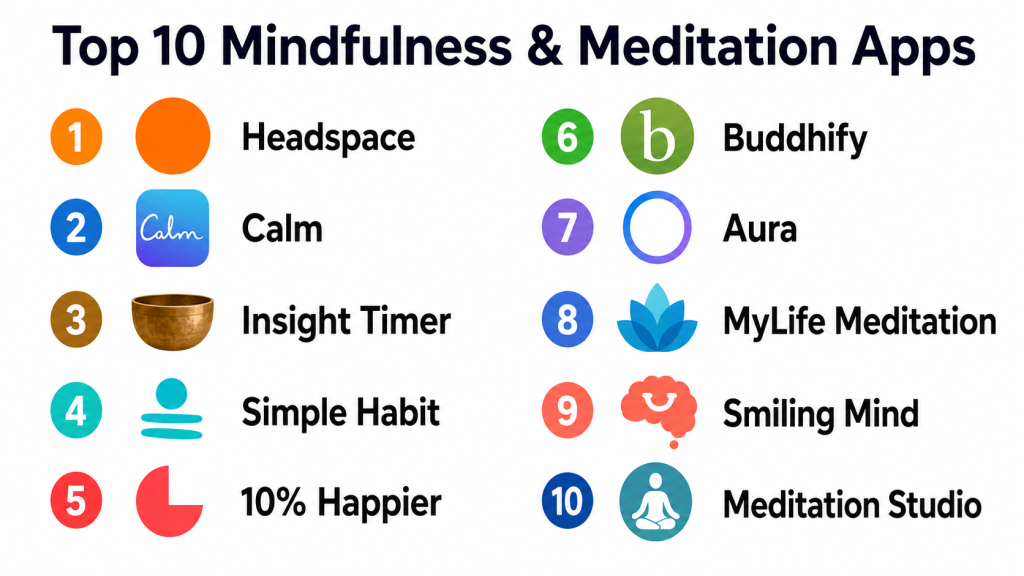
Top 10 Mindfulness & Meditation Apps
#1 — Calm
Short description: Calm is a comprehensive mindfulness and meditation app focusing on stress relief, focus, sleep support, and emotional wellbeing. It offers a variety of guided meditations, soundscapes, breathing tools, sleep stories, and expert talks, making it a strong choice for users interested in holistic mental health support.
Key Features
- Guided meditations for stress, anxiety, focus, and sleep
- Sleep stories and soundscapes
- Daily mindfulness insights
- Breathwork and body scan tools
- Music for focus and relaxation
- Personalized meditation plans
Pros
- Wide range of high‑quality content
- Sleep‑focused sound and narrative features
- Calm design and intuitive interface
- Suitable for both beginners and advanced users
Cons
- Premium subscription needed for full content
- High content volume may feel overwhelming
- Limited offline access in free tier
- Some practices repeat across categories
Platforms / Deployment
- iOS, Android, Web
Security & Compliance
Not publicly stated
Integrations & Ecosystem
Calm works with mobile ecosystems and may support wearables for tracking, reminders, and audio playback.
- Apple Health integration
- Wearable audio syncing
- Sleep tracking features
- Reminders and notifications
- Personalized meditation sequences
Support & Community
Documentation, guided tutorials, and community resources help users learn and explore mindfulness techniques.
#2 — Headspace
Short description: Headspace is a popular mindfulness and meditation app offering guided sessions, mindful workouts, sleep tools, and stress‑management exercises. It uses friendly narratives and engaging programs to help users build mental resilience over time.
Key Features
- Progressive meditation courses
- Sleep sound mixes and bedtime stories
- Mindful movement sessions
- Breathing exercises
- Focus and productivity meditations
Pros
- Structured learning paths for consistency
- Engaging narration and approachable tone
- Good content for stress and focus management
- Accessible for beginners
Cons
- Premium subscription required for best value
- Some users may prefer deeper expert content
- Limited advanced meditation practices
- Offline content limited to premium subscribers
Platforms / Deployment
- iOS, Android, Web
Security & Compliance
Not publicly stated
Integrations & Ecosystem
Headspace syncs with wearable devices and focus tracking tools.
- Mindfulness reminders
- Integration with focus calendars
- Daily mindfulness streaks
- Wearable stress tracking
- Personalized schedules
Support & Community
Headspace offers in‑app guidance, help articles, and community challenges to help users stick with their meditation practice.
#3 — Insight Timer
Short description: Insight Timer is a meditation platform that offers a massive library of free guided meditations, music, and talks from instructors worldwide. It’s ideal for users who want diversity in teacher styles, spiritual perspectives, and meditation formats.
Key Features
- Thousands of guided meditations
- Music for relaxation and focus
- Timer mode for custom meditation sessions
- Community groups and live events
- Courses from mindfulness teachers
Pros
- Large free content library
- Diverse instructor voices and styles
- Community interaction and local groups
- Timer option for custom sessions
Cons
- Content quality varies by creator
- Navigation may feel complex for new users
- Some advanced features behind subscription
- Less structured learning path than competitors
Platforms / Deployment
- iOS, Android, Web
Security & Compliance
Not publicly stated
Integrations & Ecosystem
Insight Timer supports community features, social groups, and user challenges.
- Meditation goals and streaks
- Community groups
- Event schedules
- Timer modes
- Personalized playlists
Support & Community
Insight Timer has deep community engagement, instructor forums, and user playlists to encourage consistent practice.
#4 — Ten Percent Happier
Short description: Ten Percent Happier blends scientific mindfulness guidance with approachable meditation teaching. It focuses on stress, anxiety, resilience, and habit building using practical techniques grounded in research.
Key Features
- Evidence‑based guided meditations
- Brief daily lessons
- Stress and anxiety‑focused programs
- Breathwork and mindful movement
- Personalized recommendations
Pros
- Practical, research‑based content
- Helpful for skeptics of meditation
- Short session options for busy routines
- Encouraging, non‑spiritual tone
Cons
- Subscription needed for most content
- Smaller content library than larger competitors
- Features trend toward practical guidance rather than spiritual depth
- Less community interaction than some apps
Platforms / Deployment
- iOS, Android, Web
Security & Compliance
Not publicly stated
Integrations & Ecosystem
Ten Percent Happier focuses on personalized meditation experiences that align with user goals.
- Daily check‑in prompts
- Personalized progress tracking
- Stress scoring and reminders
- Session playlists
- Breathwork guidance
Support & Community
Active help resources and user guidance are available to support understanding and sustained practice.
#5 — Simple Habit
Short description: Simple Habit focuses on short guided practices designed for busy lifestyles. It offers quick sessions for stress relief, sleep prep, focus, commuting, and coping with daily pressures, making it practical for users needing short mindful breaks.
Key Features
- Five‑minute mindful meditations
- Sessions for stress, sleep, focus, and anxiety
- Personalized recommendations
- Daily mindfulness tracker
- Offline download in premium tier
Pros
- Short sessions fit into busy schedules
- Practical topic‑based meditations
- Simple, easy interface
- Personalized reminders
Cons
- Premium subscription needed for best content
- Less depth than structured long courses
- Sleep soundscapes are fewer than specialized platforms
- Some content may feel superficial
Platforms / Deployment
- iOS, Android, Web
Security & Compliance
Not publicly stated
Integrations & Ecosystem
Simple Habit supports habit tracking and notifications across devices.
- Notifications and reminders
- Personalized session suggestions
- Topic focus playlists
- Sleep prep sessions
- Offline downloads
Support & Community
Guided documentation and help resources help users build consistent meditation habits.
#6 — Aura
Short description: Aura is a mindfulness app centered on short, personalized micro‑meditations, stories, and music. It adapts its content based on user mood check‑ins and preference settings. Aura’s personalized approach helps users find the right session quickly.
Key Features
- Adaptive short meditations
- Mood check‑in system
- Life lesson micro sessions
- Sleep stories and focus music
- Gratitude journaling tools
Pros
- Personalized mood‑based recommendations
- Very short sessions for busy days
- Journaling support to deepen practice
- Sleep and focus audio categories
Cons
- Premium subscription needed for full library
- Shorter sessions may not satisfy deep meditation seekers
- Less structured course content
- Community features are limited
Platforms / Deployment
- iOS, Android, Web
Security & Compliance
Not publicly stated
Integrations & Ecosystem
Aura integrates mood tracking, micro meditations, and sleep audio into a single personalized experience.
- Mood tagging
- Daily check‑ins
- Personalized session queues
- Sleep soundscapes
- Journal reminders
Support & Community
Help resources, onboarding guidance, and practice reminders support user engagement.
#7 — Breethe
Short description: Breethe offers mindfulness, sleep, and stress management content with guided meditations, sleep mixes, breathing exercises, and mindful movement tracks. It is useful for users who want everyday stress relief and restful sleep support.
Key Features
- Guided meditations for anxiety, stress, and focus
- Sleep content and soundscapes
- Breathwork and relaxation tracks
- Meditation timer function
- Personalized plans
Pros
- Strong blend of sleep and stress support
- Calm voice and approachable content
- Personalized practice plans
- Variety of guided session lengths
Cons
- Premium subscription for deep access
- Navigation may feel crowded
- Some users report repetition across sessions
- Offline features limited in free tier
Platforms / Deployment
- iOS, Android, Web
Security & Compliance
Not publicly stated
Integrations & Ecosystem
Breethe supports reminders, playlists, and tailored stress‑relief programs.
- Sleep playlists
- Daily mood check‑in
- Goal tracking
- Custom meditation lengths
- Offline downloads in premium
Support & Community
Help articles and guided onboarding support consistency and long‑term usage.
#8 — Mindfulness Coach
Short description: Mindfulness Coach provides structured modules focused on breathing, awareness, grounding techniques, PTSD‑related mindfulness support, self‑paced learning, and tracking. It is designed for users seeking psychology‑aligned mindfulness support rather than purely relaxation content.
Key Features
- Structured mindfulness lessons
- Daily mindfulness assessments
- Stress and anxiety skill building
- Personalized sessions
- Journal and reflection tools
Pros
- Structured learning for deeper mindfulness skills
- Self‑paced progression
- Focus on skill building and awareness
- Helpful for clinically oriented users
Cons
- Less emphasis on sleep content
- Not as visually rich as consumer wellness apps
- Some modules may feel clinical
- Limited public community features
Platforms / Deployment
- iOS, Android, Web
Security & Compliance
Not publicly stated
Integrations & Ecosystem
Mindfulness Coach integrates structured modules, assessments, and progress tracking into user wellbeing dashboards.
- Daily dose check‑ins
- Skill mastery workflows
- Breathing exercises
- Journal tools
- Personalized recommendations
Support & Community
Offers user guides, help resources, and structured exercises to support learning.
#9 — MyLife Meditation
Short description: MyLife Meditation offers personalized mindfulness and meditation sessions based on mood, stress level, and life situations. It aims to help users stay centered through quick sessions and adaptive guidance across daily routines.
Key Features
- Mood‑based session recommendations
- Breathwork exercises for stress relief
- Mindful movement tracks
- Sleep scenes
- Daily check‑in reminders
Pros
- Personalized content based on user mood
- Helpful for quick support during stress
- Variety of session types
- Quick breathing and focus sessions
Cons
- Premium access needed for full content
- Personalized recommendations may not suit all users
- Sleep library not as diverse as specialized apps
- Community features limited
Platforms / Deployment
- iOS, Android, Web
Security & Compliance
Not publicly stated
Integrations & Ecosystem
MyLife Meditation ties mood tracking to personalized meditation queues.
- Mood graphs
- Daily reminders
- Session suggestions
- Sleep scenes
- Breathwork timers
Support & Community
Offers onboarding guidance, mood tracking insights, and help resources.
#10 — Smiling Mind
Short description: Smiling Mind is a mindfulness platform designed for all ages, with structured programs for students, educators, and families. It emphasizes mental health support through age‑appropriate modules, breathing exercises, and awareness sessions.
Key Features
- Age‑appropriate mindfulness programs
- Classroom and family modules
- Guided breathing and awareness sessions
- Mood check‑ins
- Tracking and progress lessons
Pros
- Great option for families and educators
- Free access to structured programs
- Supports beginner meditation needs
- Simple interface for all ages
Cons
- Less deep content than premium apps
- Limited sleep soundscape variety
- Personalized recommendations less robust
- Fewer community networking features
Platforms / Deployment
- iOS, Android, Web
Security & Compliance
Not publicly stated
Integrations & Ecosystem
Smiling Mind supports mindfulness workflows tailored for schools, families, and younger users.
- Mood tracking
- Structured lesson plans
- Daily reminders
- Progress tracking
- Classroom modules
Support & Community
Help guides, educator support materials, and onboarding content enhance usability.
Comparison Table (Top 10)
| Tool Name | Best For | Platform(s) Supported | Deployment | Standout Feature | Public Rating |
|---|---|---|---|---|---|
| Calm | Stress & sleep support | iOS, Android, Web | Cloud | Sleep stories | N/A |
| Headspace | Meditation learning paths | iOS, Android, Web | Cloud | Structured courses | N/A |
| Insight Timer | Diverse meditation library | iOS, Android, Web | Cloud | Massive free library | N/A |
| Ten Percent Happier | Research‑based practices | iOS, Android, Web | Cloud | Evidence‑based content | N/A |
| Simple Habit | Busy lifestyle support | iOS, Android, Web | Cloud | Five‑minute sessions | N/A |
| Aura | Personalized micro meditations | iOS, Android, Web | Cloud | Mood‑based sessions | N/A |
| Breethe | Sleep & stress blend | iOS, Android, Web | Cloud | Stress management focus | N/A |
| Mindfulness Coach | Structured skill building | iOS, Android, Web | Cloud | Psychology‑aligned learning | N/A |
| MyLife Meditation | Mood‑guided sessions | iOS, Android, Web | Cloud | Adaptive guidance | N/A |
| Smiling Mind | Families & educators | iOS, Android, Web | Cloud | Age‑appropriate modules | N/A |
Evaluation & Scoring
| Tool Name | Core | Ease | Integrations | Security | Performance | Support | Value | Weighted Total |
|---|---|---|---|---|---|---|---|---|
| Calm | 9 | 8 | 7 | 7 | 9 | 8 | 8 | 8.2 |
| Headspace | 9 | 8 | 7 | 7 | 9 | 8 | 8 | 8.2 |
| Insight Timer | 8 | 8 | 7 | 7 | 8 | 9 | 9 | 8.0 |
| Ten Percent Happier | 8 | 8 | 7 | 7 | 8 | 8 | 8 | 7.8 |
| Simple Habit | 8 | 9 | 7 | 7 | 8 | 7 | 8 | 7.8 |
| Aura | 8 | 9 | 7 | 7 | 8 | 7 | 8 | 7.9 |
| Breethe | 8 | 8 | 7 | 7 | 8 | 7 | 8 | 7.8 |
| Mindfulness Coach | 7 | 8 | 6 | 7 | 7 | 7 | 7 | 7.3 |
| MyLife Meditation | 8 | 8 | 7 | 7 | 8 | 7 | 8 | 7.8 |
| Smiling Mind | 7 | 9 | 6 | 7 | 7 | 7 | 9 | 7.8 |
Scores reflect comparative strengths across content quality, ease of use, integration depth, performance, support, and price value. A higher weighted total indicates better overall readiness for individual or team wellbeing use.
Which Mindfulness & Meditation App Is Right for You
Solo / Freelancer
Solo users can start with Calm for well‑rounded stress and sleep support, Insight Timer for a diverse range of free content, or Headspace for structured learning paths that build consistency.
SMB
Small teams interested in supporting employee wellbeing might benefit from Calm group plans, Headspace for team habit building, Simple Habit for short sessions during work breaks, or Aura for personalized micro practices.
Mid‑Market
Organizations needing habit tracking and integrations with HR or wellness programs may prefer Calm, Headspace, or Insight Timer for broad content libraries and customizable challenges.
Enterprise
Enterprises that want structured mindfulness programs, research‑aligned stress management, and customizable dashboards should consider Calm for broader wellbeing support, Headspace for team learning journeys, and Ten Percent Happier for evidence‑based guidance.
Budget vs Premium
Budget users can get excellent value from Insight Timer’s free library and Smiling Mind’s structured modules. Premium subscribers will find deeper sleep stories, personalized courses, and advanced breathwork features in Calm, Headspace, and Aura.
Feature Depth vs Ease of Use
For maximum content variety, Insight Timer and Calm offer massive libraries. For beginner guidance and structured learning paths, Headspace and Ten Percent Happier provide clear progressions. Simple Habit and Aura are great for quick sessions.
Integrations & Scalability
Apps that sync with wearable devices and wellness reminders such as Calm, Headspace, Simple Habit, and Aura are useful for users who want integrated tracking across their digital wellbeing ecosystems.
Security & Compliance Needs
Because mental wellbeing content often involves personal tracking data, users with strict privacy needs should review each provider’s privacy practice before adoption. Many tools offer basic data privacy controls, but enterprise purchasers may need to verify details during implementation.
Frequently Asked Questions
1. What is a mindfulness and meditation app?
A mindfulness and meditation app provides guided sessions designed to help users reduce stress, improve focus, build emotional resilience, and support sleep. These apps deliver audio or video guidance for breathing exercises, meditation practices, movement, and habit building.
2. How often should I meditate using an app?
Most apps recommend daily practice, even if short, to build a habit. Starting with five‑minute sessions and gradually increasing time helps beginners adjust without feeling overwhelmed.
3. Can mindfulness apps help with sleep?
Yes, many apps include sleep stories, soundscapes, and guided relaxation designed to calm the nervous system and prepare the body for restful sleep.
4. Do these apps work for beginners?
Most mindfulness apps offer beginner‑friendly content that introduces foundational concepts, simple breathing techniques, and guided lessons that don’t assume prior experience.
5. Is meditation research‑based?
Many apps incorporate evidence‑based programs developed by psychologists, mindfulness teachers, and clinical researchers. Quality varies, so users should explore offerings that suit their goals.
6. Can I use these apps offline?
Some platforms allow downloading sessions for offline use, but this feature may require a premium subscription. Offline access helps users maintain practice without internet connectivity.
7. Can mindfulness apps measure progress?
Several apps use check‑ins, streaks, mood tracking, daily reminders, and progress dashboards to help users see consistency and growth over time.
8. Are these apps suitable for kids or families?
Certain apps offer age‑appropriate or family‑focused modules that introduce children to mindfulness basics with engaging, simple scripts and activities.
9. Is premium subscription necessary?
Free tiers provide basics and introductory content, but premium subscriptions unlock more guided content, sleep audio, personalized paths, offline access, and deeper mindfulness programs.
10. Can mindfulness apps replace therapy?
Mindfulness apps are wellness tools that support stress relief and emotional regulation, but they are not substitutes for clinical mental health care. Users with serious conditions should seek professional support.
Conclusion
Mindfulness and meditation apps provide accessible, structured, and personalized pathways to calm, focus, emotional balance, stress management, and better sleep. The right app depends on your preferred style of guidance, level of experience, device ecosystem, and willingness to engage in daily practice. Solo users may start with Calm, Headspace, or Insight Timer for comprehensive content, while busy professionals may prefer Simple Habit or Aura for quick sessions. Organizations supporting employee wellbeing can adopt team features and guided learning paths. Exploring multiple apps and commitment to regular practice helps users get the most value from digital mindfulness, builds resilience, and supports long‑term wellbeing habits. A thoughtful choice enhances peace of mind, supports mental clarity, reduces stress, and contributes to a balanced life.
