Introduction
Print-on-demand (POD) platforms are digital solutions that enable creators, entrepreneurs, and businesses to sell customized products without holding inventory. These platforms handle printing, packaging, and shipping while allowing users to focus on design and marketing. In 2026+, POD has become increasingly popular due to the growth of e-commerce, personalized products, and low-risk business models for creators and small brands.
Real-world use cases include:
- Selling custom apparel, accessories, and merchandise
- Launching limited-edition product lines without inventory risk
- Offering personalized gifts and branded products for businesses
- Integrating POD with e-commerce stores and marketplaces
- Testing new product concepts before scaling production
Key evaluation criteria for buyers:
- Range of products available for customization
- Printing quality and fulfillment speed
- Integration with e-commerce platforms and marketplaces
- Branding options including custom packaging and inserts
- Pricing, shipping options, and global fulfillment
- Order tracking and customer support
- Design tools and templates
- Multi-channel sales support
- Analytics and reporting for sales and fulfillment
- Scalability and production capacity
Best for: Independent creators, e-commerce entrepreneurs, small businesses, and brands looking to sell customized merchandise.
Not ideal for: Businesses needing bulk production or highly specialized manufacturing beyond POD capabilities.
Key Trends in Print-on-Demand Platforms
- AI-powered design tools and product mockups
- Integration with major e-commerce platforms like Shopify, WooCommerce, and Etsy
- Expanded product catalogs including apparel, home goods, and accessories
- Global fulfillment networks for faster shipping and reduced costs
- Branded packaging and inserts for enhanced customer experience
- Multi-currency and international shipping support
- Analytics dashboards for sales, fulfillment, and inventory insights
- On-demand personalization and limited edition product runs
- Subscription and recurring merchandise models for fan-based sales
- Eco-friendly and sustainable printing options
How We Selected These Tools (Methodology)
- Evaluated adoption among independent creators, brands, and e-commerce entrepreneurs
- Assessed product range and customization options
- Reviewed printing quality, fulfillment speed, and reliability
- Examined e-commerce and marketplace integrations
- Measured branding and packaging flexibility
- Analyzed pricing, shipping, and international capabilities
- Reviewed analytics, reporting, and insights dashboards
- Considered scalability for growing sales volumes
- Evaluated design tools and user experience
- Reviewed support, onboarding, and documentation
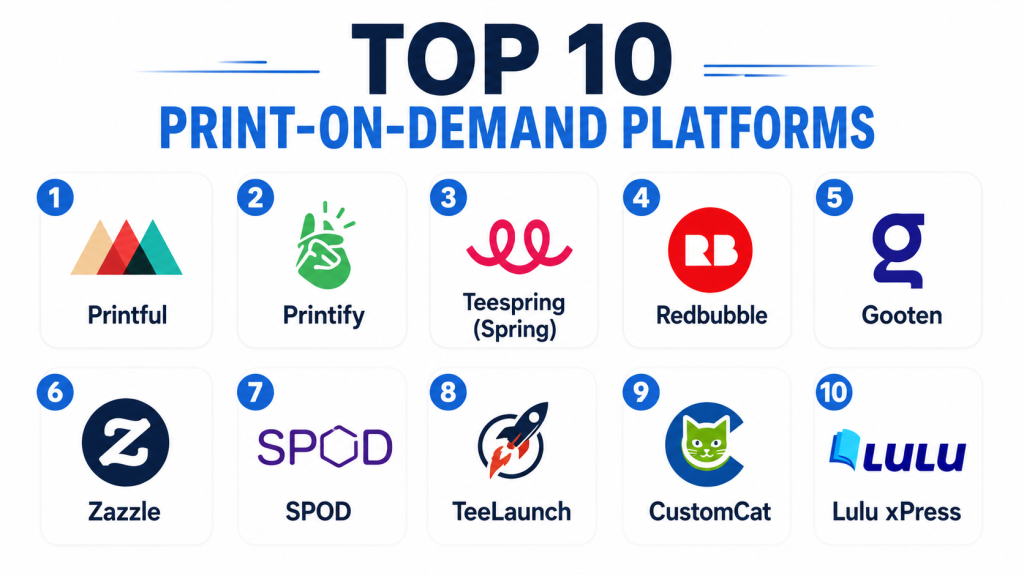
Top 10 Print-on-Demand Platforms
#1 — Printful
Short description (4–5 lines): Printful is a leading POD platform offering apparel, accessories, and home goods with integrated printing and fulfillment services. Ideal for creators and e-commerce entrepreneurs.
Key Features
- Wide product catalog including apparel, accessories, and home goods
- Global fulfillment network
- Custom branding with packaging and inserts
- Integration with Shopify, Etsy, WooCommerce, and marketplaces
- Mockup generator and design tools
Pros
- Reliable fulfillment and global shipping
- High-quality printing
Cons
- Slightly higher product costs
- Limited discounting options
Platforms / Deployment
- Web; Cloud-based
Security & Compliance
- Not publicly stated
Integrations & Ecosystem
- Shopify, Etsy, WooCommerce, Squarespace
- API access for custom integrations
- Design and mockup tools
Support & Community
Documentation, tutorials, and support team.
#2 — Printify
Short description (4–5 lines): Printify connects users to a network of print providers worldwide, offering flexibility in products and fulfillment. Suitable for entrepreneurs and brands seeking multiple fulfillment options.
Key Features
- Multiple print provider options
- Large product catalog
- Integration with major e-commerce platforms
- Mockup generator and design tools
- Global shipping and fulfillment
Pros
- Choice of print providers for pricing and location
- Flexible fulfillment options
Cons
- Quality may vary between providers
- Setup can be complex
Platforms / Deployment
- Web; Cloud-based
Security & Compliance
- Not publicly stated
Integrations & Ecosystem
- Shopify, Etsy, WooCommerce, Wix
- APIs for automation
- Design tools and mockups
Support & Community
Documentation, support team, and tutorials.
#3 — Teespring (now Spring)
Short description (4–5 lines): Teespring provides creators with an easy way to sell customized merchandise online with integrated design, production, and fulfillment. Ideal for influencers and social media creators.
Key Features
- Apparel, home goods, and accessories
- Integrated storefront and design tools
- Branding options for packaging
- Social media integrations for promotion
- Analytics dashboards for sales and engagement
Pros
- Quick setup and easy use
- Direct promotion to social media audiences
Cons
- Limited product range compared to other POD platforms
- Fulfillment times may vary
Platforms / Deployment
- Web; Cloud-based
Security & Compliance
- Not publicly stated
Integrations & Ecosystem
- YouTube, TikTok, Instagram integrations
- API access
- Design tools
Support & Community
Documentation, support team, and tutorials.
#4 — Redbubble
Short description (4–5 lines): Redbubble is a marketplace-based POD platform allowing artists to sell art on apparel, home decor, and accessories. Ideal for independent artists reaching a global audience.
Key Features
- Marketplace for artist merchandise
- Wide product selection
- Printing and fulfillment handled by Redbubble
- Artist analytics and dashboard
- International shipping support
Pros
- Built-in audience and marketplace
- No upfront costs
Cons
- Limited control over pricing and branding
- Marketplace competition
Platforms / Deployment
- Web; Cloud-based
Security & Compliance
- Not publicly stated
Integrations & Ecosystem
- Website embedding
- Social sharing tools
- Analytics dashboard
Support & Community
Artist forums, documentation, and support.
#5 — Zazzle
Short description (4–5 lines): Zazzle enables creators to sell customizable products via a marketplace with print-on-demand services. Suitable for artists, designers, and small businesses.
Key Features
- Extensive product catalog
- Marketplace exposure
- Custom product design tools
- Fulfillment and shipping
- Analytics and reporting
Pros
- Large marketplace reach
- Customization tools
Cons
- Limited branding control
- Higher fees for marketplace exposure
Platforms / Deployment
- Web; Cloud-based
Security & Compliance
- Not publicly stated
Integrations & Ecosystem
- Marketplace and design tools
- API for custom solutions
- Analytics dashboards
Support & Community
Documentation and support resources.
#6 — Society6
Short description (4–5 lines): Society6 is a POD platform focused on art prints, home decor, and apparel, catering to artists and creative entrepreneurs. Ideal for designers selling art-focused merchandise.
Key Features
- Art-focused product catalog
- Marketplace for exposure
- Fulfillment and shipping handled by Society6
- Analytics for sales performance
- Artist dashboards
Pros
- Focused on art and design products
- Marketplace audience built-in
Cons
- Limited product types
- Less flexibility in pricing
Platforms / Deployment
- Web; Cloud-based
Security & Compliance
- Not publicly stated
Integrations & Ecosystem
- Marketplace integration
- Social media promotion
- Analytics dashboards
Support & Community
Documentation, tutorials, and support team.
#7 — PrintAura
Short description (4–5 lines): PrintAura provides POD services for e-commerce store owners, integrating with Shopify, WooCommerce, and Etsy for seamless fulfillment. Ideal for online merchants.
Key Features
- Integration with e-commerce platforms
- Wide product catalog
- Fulfillment and shipping automation
- Branding and packaging options
- Order management dashboard
Pros
- Seamless e-commerce integration
- Automated fulfillment
Cons
- Limited marketplace exposure
- Learning curve for new users
Platforms / Deployment
- Web; Cloud-based
Security & Compliance
- Not publicly stated
Integrations & Ecosystem
- Shopify, WooCommerce, Etsy
- API for automation
- Analytics dashboards
Support & Community
Documentation and support resources.
#8 — TeePublic
Short description (4–5 lines): TeePublic is a marketplace POD platform allowing creators to sell apparel and accessories featuring their designs. Suitable for artists seeking marketplace exposure.
Key Features
- Apparel and accessories
- Marketplace sales and exposure
- Automated fulfillment
- Designer dashboards
- International shipping
Pros
- Built-in marketplace audience
- Simple setup
Cons
- Limited control over pricing
- Marketplace competition
Platforms / Deployment
- Web; Cloud-based
Security & Compliance
- Not publicly stated
Integrations & Ecosystem
- Social media promotion
- Analytics dashboard
- Marketplace integration
Support & Community
Documentation and support team.
#9 — Gooten
Short description (4–5 lines): Gooten provides POD services with integration for Shopify, WooCommerce, and marketplaces, offering flexible fulfillment and branding options. Ideal for e-commerce store owners.
Key Features
- Product catalog with multiple categories
- Integration with e-commerce platforms
- Automated fulfillment and shipping
- Custom branding and packaging
- Analytics dashboard
Pros
- Flexible fulfillment and branding
- Wide product selection
Cons
- Platform fees
- Setup can be complex
Platforms / Deployment
- Web; Cloud-based
Security & Compliance
- Not publicly stated
Integrations & Ecosystem
- Shopify, WooCommerce, Etsy
- API access for custom integration
- Analytics dashboards
Support & Community
Documentation, tutorials, and support.
#10 — Teelaunch
Short description (4–5 lines): Teelaunch provides print-on-demand services with integration for e-commerce stores, offering products from apparel to home goods. Suitable for small to mid-sized online merchants.
Key Features
- E-commerce platform integration
- Wide range of products
- Automated fulfillment
- Branding options
- Analytics and order management
Pros
- Seamless e-commerce integration
- Wide product variety
Cons
- Marketplace exposure limited
- Setup complexity for beginners
Platforms / Deployment
- Web; Cloud-based
Security & Compliance
- Not publicly stated
Integrations & Ecosystem
- Shopify, WooCommerce, Etsy
- API for automation
- Analytics dashboards
Support & Community
Documentation and support resources.
Comparison Table (Top 10)
| Tool Name | Best For | Platforms Supported | Deployment | Standout Feature | Public Rating |
|---|---|---|---|---|---|
| Printful | Creators & entrepreneurs | Web, iOS, Android | Cloud | Global fulfillment & branding | N/A |
| Printify | Flexible fulfillment | Web, iOS, Android | Cloud | Multiple print providers | N/A |
| Teespring | Social media creators | Web, iOS, Android | Cloud | Social integrations | N/A |
| Redbubble | Independent artists | Web | Cloud | Marketplace exposure | N/A |
| Zazzle | Artists & designers | Web | Cloud | Customization & marketplace | N/A |
| Society6 | Art-focused creators | Web | Cloud | Art & home decor marketplace | N/A |
| PrintAura | E-commerce merchants | Web | Cloud | E-commerce platform integration | N/A |
| TeePublic | Independent designers | Web | Cloud | Marketplace exposure | N/A |
| Gooten | Online merchants | Web | Cloud | Flexible fulfillment & branding | N/A |
| Teelaunch | Small to mid-size stores | Web | Cloud | E-commerce integration | N/A |
Evaluation & Scoring of Print-on-Demand Platforms
| Tool Name | Core (25%) | Ease (15%) | Integrations (15%) | Security (10%) | Performance (10%) | Support (10%) | Value (15%) | Weighted Total |
|---|---|---|---|---|---|---|---|---|
| Printful | 9 | 8 | 8 | 8 | 8 | 7 | 7 | 7.90 |
| Printify | 8 | 8 | 8 | 8 | 8 | 7 | 7 | 7.80 |
| Teespring | 8 | 9 | 7 | 8 | 8 | 7 | 7 | 7.80 |
| Redbubble | 8 | 8 | 7 | 8 | 8 | 7 | 7 | 7.75 |
| Zazzle | 8 | 8 | 7 | 8 | 8 | 7 | 7 | 7.75 |
| Society6 | 8 | 8 | 7 | 8 | 8 | 7 | 7 | 7.75 |
| PrintAura | 8 | 8 | 8 | 8 | 8 | 7 | 7 | 7.80 |
| TeePublic | 8 | 8 | 7 | 8 | 8 | 7 | 7 | 7.75 |
| Gooten | 8 | 8 | 8 | 8 | 8 | 7 | 7 | 7.80 |
| Teelaunch | 8 | 8 | 8 | 8 | 8 | 7 | 7 | 7.80 |
Which Print-on-Demand Platform Is Right for You?
Solo / Small Creators
Teespring, Redbubble, or Society6 provide easy marketplace access and simple setup for beginners.
SMB / E-commerce Entrepreneurs
Printful, Printify, and Gooten offer integration with online stores and multiple fulfillment options.
Enterprise / Large Merchants
Printful, Printify, and PrintAura provide global fulfillment, custom branding, and robust analytics for scaling large e-commerce operations.
Budget vs Premium
Small creators can leverage Redbubble or TeePublic for low-cost entry. Premium platforms like Printful and Printify offer expanded product catalogs, faster shipping, and advanced branding.
Feature Depth vs Ease of Use
Enterprise-level tools provide multiple fulfillment providers and custom branding, while marketplace-focused platforms prioritize simplicity.
Integrations & Scalability
Platforms with API and e-commerce integration can scale with audience growth and product variety.
Security & Compliance Needs
Ensure PCI-compliance and secure handling of customer data and payments.
Frequently Asked Questions (FAQs)
1. What is a print-on-demand platform?
A service that prints and ships products on demand, allowing creators to sell merchandise without holding inventory.
2. Can I sell apparel and accessories?
Yes, most platforms offer a wide range of products including clothing, mugs, and home goods.
3. Is branding possible?
Many platforms support custom packaging, labels, and inserts for brand consistency.
4. Are payouts automated?
Yes, payment is processed and delivered to the creator via integrated payment gateways.
5. Do they integrate with e-commerce stores?
Yes, platforms like Printful, Printify, and PrintAura integrate with Shopify, Etsy, WooCommerce, and more.
6. Is international shipping supported?
Most major POD platforms provide global shipping and multi-currency support.
7. Can I use multiple platforms simultaneously?
Yes, many creators use multiple POD platforms to diversify product offerings and fulfillment.
8. How is product quality ensured?
Top POD providers maintain quality control and use reputable print partners.
9. Are analytics available?
Yes, dashboards provide sales, revenue, and fulfillment metrics.
10. How do I choose the right platform?
Evaluate product range, integration needs, fulfillment speed, pricing, and audience reach.
Conclusion
Print-on-demand platforms enable creators and businesses to sell customized merchandise without upfront inventory, reducing risk and expanding revenue streams. Small creators can start with TeePublic, Redbubble, or Society6 for marketplace access and simple setup. Mid-sized entrepreneurs benefit from Printful, Printify, or Gooten for integration with online stores and fulfillment flexibility. Enterprises requiring global shipping and advanced branding can leverage Printful, Printify, or PrintAura. Consider product catalog, fulfillment speed, pricing, and integrations when selecting a platform. Start by shortlisting 2–3 options, testing product quality, and ensuring e-commerce integration to build a scalable, profitable POD business.
