Introduction
Enterprise Risk Management (ERM) Tools are integrated software platforms that help organizations identify, assess, monitor, and mitigate risks across the entire enterprise—including financial, operational, strategic, regulatory, cyber, and reputational risks. Unlike traditional risk tools that focus on isolated departments, ERM systems provide a single unified view of organizational risk exposure and align risk management with business strategy.
Modern ERM platforms are essential because organizations now face interconnected risks such as supply chain disruptions, cyberattacks, regulatory complexity, and market volatility. These tools use dashboards, AI analytics, risk scoring, and automation to help leadership make data-driven, proactive decisions instead of reactive responses.
Real-world use cases include:
- Enterprise-wide risk identification and risk registers
- Regulatory compliance tracking and audit readiness
- Cyber, financial, and operational risk modeling
- Board-level risk reporting and dashboards
- Scenario analysis and stress testing
- Risk control mapping and mitigation tracking
Key evaluation criteria for buyers:
- Risk identification and assessment depth
- Risk register and workflow automation
- Scenario analysis and stress testing capabilities
- Integration with GRC, audit, and compliance systems
- Reporting dashboards and executive visibility
- AI/analytics and predictive risk modeling
- Regulatory alignment (COSO, ISO 31000, Basel frameworks)
- Scalability across global enterprises
- Security, RBAC, and audit trail support
- Ease of deployment and usability
Best for: Large enterprises, financial institutions, insurance companies, healthcare systems, government agencies, and regulated industries needing centralized risk governance.
Not ideal for: Small businesses with minimal regulatory exposure or teams only needing simple incident tracking or spreadsheets.
Key Trends in Enterprise Risk Management Tools
- AI-driven risk scoring and predictive risk analytics
- Continuous risk monitoring instead of periodic assessments
- Integration of cyber, financial, and operational risk into one platform
- Real-time dashboards and board-ready reporting automation
- Strong alignment with GRC (Governance, Risk, Compliance) ecosystems
- Scenario simulation for geopolitical, cyber, and supply chain risks
- Increased adoption of ISO 31000 and COSO ERM frameworks
- API-first architectures for enterprise integration
- Cloud-native ERM platforms replacing legacy on-prem systems
- Embedded regulatory intelligence and compliance automation
- Risk quantification in financial terms for executive decision-making
How We Selected These Tools
The tools in this list were selected based on:
- Market adoption and enterprise presence
- Depth of ERM capabilities (risk register, scoring, workflows)
- Integration with GRC, audit, and compliance systems
- Scenario modeling and risk analytics maturity
- Security, governance, and enterprise readiness
- Support for regulatory frameworks (COSO, ISO 31000, Basel)
- Reporting and executive dashboard quality
- Scalability across industries and geographies
- Automation and AI capabilities
- Vendor maturity and ecosystem strength
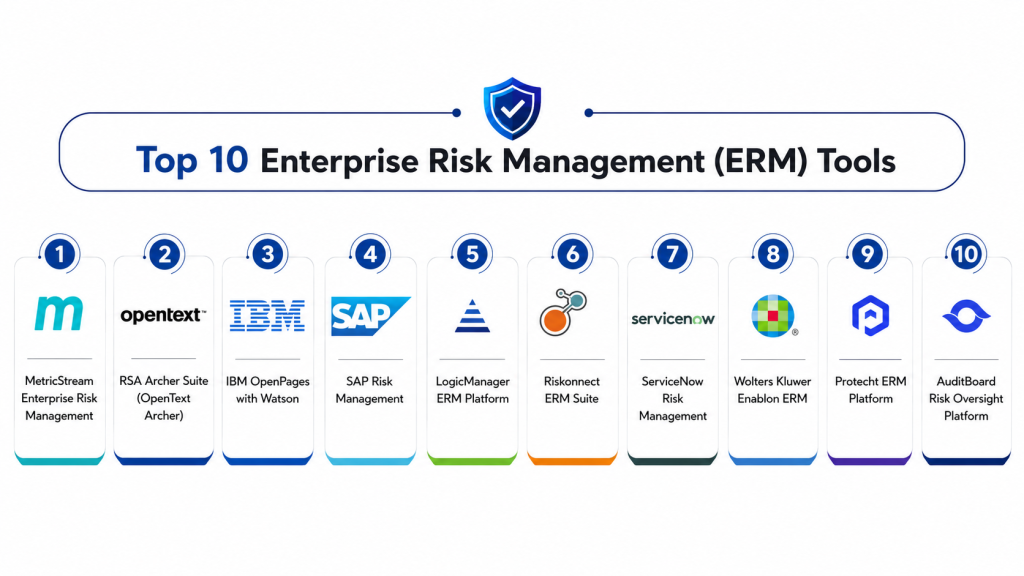
Top 10 Enterprise Risk Management (ERM) Tools
1 — MetricStream ERM
Short description: MetricStream is a leading enterprise-grade ERM platform that provides risk identification, assessment, mitigation, and compliance tracking within a unified GRC ecosystem. It is widely used in regulated industries for end-to-end risk governance.
Key Features
- Enterprise risk register and taxonomy
- Risk scoring and assessment workflows
- Heatmaps and visualization dashboards
- Compliance and regulatory mapping
- Incident and issue management
- Control testing and monitoring
- Advanced reporting and analytics
Pros
- Strong enterprise GRC integration
- Highly configurable risk models
- Scalable for global enterprises
- Strong regulatory alignment
Cons
- Complex implementation
- Requires expert configuration
- Higher cost structure
- Training needed for full adoption
Platforms / Deployment
- Web / Cloud / On-Premises (varies by deployment)
Security & Compliance
- RBAC
- Encryption
- Audit logs
- Strong compliance alignment (COSO, ISO 31000)
Integrations & Ecosystem
MetricStream integrates deeply with enterprise GRC, audit, and compliance ecosystems.
- ERP systems
- Audit platforms
- BI tools
- APIs
- Security systems
Support & Community
Enterprise-grade support with global consulting partners.
2 — ServiceNow Integrated Risk Management (IRM)
Short description: ServiceNow IRM provides a unified platform for enterprise risk, compliance, and operational resilience using workflow automation and real-time risk visibility.
Key Features
- Risk and control management
- Workflow automation for risk mitigation
- Policy and compliance tracking
- Audit management
- Risk dashboards and reporting
- Third-party risk management
- Scenario analysis
Pros
- Strong workflow automation
- Unified enterprise platform
- Excellent integration ecosystem
- Real-time visibility
Cons
- Requires ServiceNow ecosystem investment
- Complex configuration
- High enterprise cost
- Learning curve for teams
Platforms / Deployment
- Web / Cloud
Security & Compliance
- RBAC
- Encryption
- Audit logging
- Enterprise governance controls
Integrations & Ecosystem
Strong integration within IT, security, and enterprise operations.
- ITSM systems
- Security tools
- ERP systems
- APIs
- Analytics platforms
Support & Community
Large enterprise ecosystem and strong support network.
3 — RSA Archer (Archer IRM)
Short description: RSA Archer is a widely adopted ERM and GRC platform that provides risk management, compliance tracking, and audit governance for large organizations.
Key Features
- Enterprise risk register
- Control and compliance management
- Audit and issue tracking
- Risk scoring and assessments
- Policy management
- Reporting dashboards
- Third-party risk monitoring
Pros
- Mature GRC platform
- Strong customization options
- Deep risk workflows
- Enterprise scalability
Cons
- Complex deployment
- UI feels dated in some areas
- Requires skilled administrators
- Higher operational overhead
Platforms / Deployment
- Web / Cloud / On-Premises
Security & Compliance
- RBAC
- Encryption
- Audit trails
- Compliance frameworks support
Integrations & Ecosystem
Integrates with enterprise systems and compliance tools.
- ERP systems
- Security platforms
- BI tools
- APIs
Support & Community
Strong enterprise support and consulting ecosystem.
4 — IBM OpenPages
Short description: IBM OpenPages is an AI-enabled GRC and ERM platform designed for large enterprises to unify risk, compliance, and audit processes.
Key Features
- AI-assisted risk analysis
- Risk and control mapping
- Compliance tracking
- Audit management
- Policy lifecycle management
- Advanced reporting
- Scenario modeling
Pros
- Strong AI capabilities
- Enterprise-grade scalability
- Deep analytics integration
- Robust governance tools
Cons
- Complex implementation
- High cost
- Requires IBM ecosystem familiarity
- Heavy configuration needs
Platforms / Deployment
- Web / Cloud / Hybrid
Security & Compliance
- RBAC
- Encryption
- Audit logging
- Enterprise compliance support
Integrations & Ecosystem
Integrates with IBM and enterprise ecosystems.
- IBM Cloud
- Analytics tools
- ERP systems
- APIs
Support & Community
Strong enterprise support from IBM ecosystem.
5 — Diligent ERM (HighBond / AI Risk Essentials)
Short description: Diligent provides AI-powered ERM and governance tools designed to help organizations identify risks, monitor controls, and support board-level decision-making.
Key Features
- AI-driven risk identification
- Risk dashboards and heatmaps
- Regulatory and compliance tracking
- Risk register management
- Board reporting tools
- Third-party risk monitoring
- Incident tracking
Pros
- Strong board-level reporting
- AI-assisted risk insights
- Excellent governance alignment
- Fast deployment compared to legacy tools
Cons
- Premium pricing
- Enterprise-focused
- Requires structured governance processes
- Limited SMB suitability
Platforms / Deployment
- Web / Cloud
Security & Compliance
- RBAC
- Encryption
- Audit logs
- Regulatory compliance support
Integrations & Ecosystem
Integrates with enterprise governance and compliance systems.
- Audit systems
- BI tools
- ERP systems
- APIs
Support & Community
Strong governance-focused enterprise support.
6 — LogicManager ERM
Short description: LogicManager is a configurable ERM platform that helps organizations identify, assess, and mitigate risks with strong workflow automation and risk visibility.
Key Features
- Risk register and scoring
- Control mapping
- Risk mitigation tracking
- Compliance workflows
- Heatmaps and dashboards
- Issue tracking
- Reporting automation
Pros
- User-friendly ERM design
- Strong configurability
- Good risk visualization
- Mid-to-enterprise fit
Cons
- UI simplicity limits advanced modeling
- Requires setup effort
- Integration depth varies
- Not fully AI-driven
Platforms / Deployment
- Web / Cloud
Security & Compliance
- RBAC
- Encryption
- Audit logs
Integrations & Ecosystem
Integrates with enterprise governance systems.
- ERP systems
- BI tools
- APIs
Support & Community
Good enterprise support with onboarding assistance.
7 — Riskonnect ERM
Short description: Riskonnect provides a unified ERM and GRC platform offering real-time risk visibility, analytics, and enterprise-wide risk integration.
Key Features
- Risk identification and assessment
- Real-time dashboards
- Scenario modeling
- Incident management
- Risk aggregation across business units
- Compliance tracking
- Audit workflows
Pros
- Strong enterprise integration
- Real-time risk insights
- Flexible architecture
- Good scalability
Cons
- Complex deployment
- Requires training
- Higher cost tier
- Custom configuration needed
Platforms / Deployment
- Web / Cloud
Security & Compliance
- RBAC
- Encryption
- Audit logging
- Compliance controls
Integrations & Ecosystem
- ERP systems
- Security platforms
- BI tools
- APIs
Support & Community
Strong enterprise GRC support ecosystem.
8 — SAP GRC (Enterprise Risk & Compliance)
Short description: SAP GRC provides risk management, compliance, and audit tools integrated with SAP enterprise systems for large organizations.
Key Features
- Risk analysis and mapping
- Access control and segregation of duties
- Compliance monitoring
- Audit management
- Policy enforcement
- Workflow automation
- Reporting dashboards
Pros
- Deep SAP ecosystem integration
- Strong enterprise control
- Robust compliance features
- Scalable globally
Cons
- SAP ecosystem dependency
- Complex implementation
- High cost
- Requires SAP expertise
Platforms / Deployment
- Web / Cloud / On-Premises
Security & Compliance
- RBAC
- Encryption
- Audit logs
- Enterprise compliance frameworks
Integrations & Ecosystem
- SAP ERP
- SAP S/4HANA
- BI tools
- APIs
Support & Community
Enterprise SAP support ecosystem.
9 — Archer Engage / Fusion Risk Management (Resilience + ERM)
Short description: Fusion Risk Management focuses on operational resilience, business continuity, and enterprise risk integration.
Key Features
- Risk and resilience planning
- Business continuity management
- Scenario simulations
- Incident tracking
- Risk dashboards
- Crisis management workflows
- Reporting tools
Pros
- Strong resilience focus
- Good crisis management tools
- Enterprise alignment
- Scenario planning capability
Cons
- Less traditional ERM depth
- Complex implementation
- Enterprise-only focus
- Requires structured governance
Platforms / Deployment
- Web / Cloud
Security & Compliance
- RBAC
- Encryption
- Audit logs
Integrations & Ecosystem
- ERP systems
- Security platforms
- APIs
- BI tools
Support & Community
Enterprise resilience-focused support.
10 — Oracle Risk Management Cloud
Short description: Oracle Risk Management Cloud provides integrated ERM, compliance, and financial risk controls within Oracle’s enterprise cloud ecosystem.
Key Features
- Risk control automation
- Compliance monitoring
- Financial risk tracking
- Audit workflows
- Access control management
- Reporting dashboards
- Analytics integration
Pros
- Strong Oracle ecosystem integration
- Robust compliance features
- Enterprise scalability
- Financial risk alignment
Cons
- Oracle dependency
- Complex configuration
- High licensing cost
- Requires enterprise IT support
Platforms / Deployment
- Web / Cloud
Security & Compliance
- RBAC
- Encryption
- Audit logs
- Compliance frameworks
Integrations & Ecosystem
- Oracle ERP
- Oracle Cloud
- BI tools
- APIs
Support & Community
Enterprise Oracle support ecosystem.
Comparison Table
| Tool | Best For | Platform | Deployment | Standout Feature | Public Rating |
|---|---|---|---|---|---|
| MetricStream | Enterprise GRC | Web | Cloud/On-Prem | Full ERM suite | N/A |
| ServiceNow IRM | Workflow-driven ERM | Web | Cloud | Automation engine | N/A |
| RSA Archer | GRC-heavy orgs | Web | Cloud/On-Prem | Deep configurability | N/A |
| IBM OpenPages | AI ERM | Web | Hybrid | AI risk modeling | N/A |
| Diligent | Board reporting | Web | Cloud | AI governance insights | N/A |
| LogicManager | Mid-enterprise ERM | Web | Cloud | Risk visualization | N/A |
| Riskonnect | Real-time ERM | Web | Cloud | Unified risk view | N/A |
| SAP GRC | SAP enterprises | Web | Hybrid | SAP integration | N/A |
| Fusion Risk | Resilience focus | Web | Cloud | Scenario resilience | N/A |
| Oracle Risk Mgmt | Oracle enterprises | Web | Cloud | Financial risk control | N/A |
Evaluation & Scoring of ERM Tools
| Tool | Core | Ease | Integrations | Security | Performance | Support | Value | Weighted Total |
|---|---|---|---|---|---|---|---|---|
| MetricStream | 9.5 | 7.5 | 9.4 | 9.3 | 9.2 | 9.1 | 7.8 | 8.84 |
| ServiceNow IRM | 9.4 | 8.0 | 9.5 | 9.4 | 9.3 | 9.2 | 8.0 | 8.96 |
| RSA Archer | 9.2 | 7.6 | 9.2 | 9.1 | 9.0 | 9.0 | 7.7 | 8.74 |
| IBM OpenPages | 9.3 | 7.4 | 9.3 | 9.2 | 9.1 | 9.0 | 7.6 | 8.72 |
| Diligent | 9.0 | 8.1 | 9.0 | 9.1 | 9.0 | 9.0 | 8.2 | 8.88 |
| LogicManager | 8.6 | 8.5 | 8.5 | 8.7 | 8.6 | 8.6 | 8.3 | 8.54 |
| Riskonnect | 9.1 | 7.8 | 9.1 | 9.1 | 9.0 | 8.9 | 8.0 | 8.74 |
| SAP GRC | 9.2 | 7.2 | 9.4 | 9.3 | 9.2 | 9.1 | 7.5 | 8.68 |
| Fusion Risk | 8.8 | 8.0 | 8.8 | 9.0 | 8.8 | 8.7 | 8.1 | 8.66 |
| Oracle Risk Mgmt | 9.0 | 7.3 | 9.3 | 9.2 | 9.1 | 9.0 | 7.6 | 8.69 |
Which ERM Tool Is Right for You?
Solo / Small Teams
ERM tools are typically too heavy; lighter GRC or risk dashboards are better.
Mid-Market Enterprises
Best choices: LogicManager, Riskonnect, Diligent
- Balanced usability and enterprise capability
Large Enterprises
Best choices: MetricStream, ServiceNow IRM, IBM OpenPages
- Deep governance, automation, and scalability
Regulated Industries
Best choices: SAP GRC, Oracle Risk Management, Archer
- Strong compliance, audit, and control frameworks
Budget vs Premium
- Budget: LogicManager, Riskonnect
- Premium: MetricStream, IBM OpenPages, SAP GRC
Feature Depth vs Ease of Use
- Easier tools: LogicManager, Diligent
- Advanced tools: ServiceNow IRM, IBM OpenPages
Integrations & Scalability
Enterprise ERM tools excel in ERP, audit, and security integrations.
Security & Compliance Needs
All major ERM platforms support RBAC, encryption, audit logs, and regulatory frameworks like COSO and ISO 31000.
Frequently Asked Questions
1. What is Enterprise Risk Management software?
ERM software is a platform that helps organizations identify, assess, and manage risks across all departments in a unified system.
2. How is ERM different from traditional risk management?
ERM is organization-wide and strategic, while traditional risk management is siloed and department-specific.
3. What industries use ERM tools?
Banks, insurance companies, healthcare providers, government agencies, and large enterprises use ERM tools.
4. Do ERM tools use AI?
Yes, many modern platforms use AI for risk scoring, prediction, and scenario analysis.
5. What is a risk register?
A risk register is a centralized list of all identified risks and their status, impact, and mitigation plans.
6. What frameworks do ERM tools support?
Common frameworks include COSO ERM, ISO 31000, and Basel standards.
7. Can ERM tools integrate with ERP systems?
Yes, most enterprise ERM tools integrate with ERP, HR, finance, and security systems.
8. How long does implementation take?
Implementation can take weeks for mid-market tools or several months for enterprise systems.
9. What is risk scoring?
Risk scoring assigns numerical values to risks based on likelihood and impact.
10. What is the ROI of ERM software?
ROI comes from reduced losses, better compliance, improved decision-making, and risk prevention.
Conclusion
Enterprise Risk Management Tools are essential for organizations that want a unified, strategic approach to identifying and mitigating risks across all business functions. Platforms like ServiceNow IRM, MetricStream, and IBM OpenPages deliver deep enterprise governance and automation, while LogicManager, Diligent, and Riskonnect provide more accessible yet powerful risk management capabilities. The right ERM solution depends on organizational size, regulatory requirements, integration needs, and risk maturity. Companies should prioritize scalability, automation, and real-time visibility to build a resilient and proactive risk culture.

This article gives a clear overview of enterprise risk management tools and explains how they help organizations identify, assess, and manage risks across different business areas. It also highlights how these platforms support better decision-making, compliance, and long-term business stability.
Enterprise risk management is most effective when it becomes part of everyday business planning rather than a periodic reporting exercise. As organizations launch new products, enter new markets, or adopt emerging technologies, risk profiles can change much faster than traditional review cycles. Including guidance on continuous risk monitoring, business strategy alignment, and cross-functional risk ownership would provide readers with a more practical understanding of how ERM platforms support proactive decision-making.