Introduction
Risk Management Information Systems (RMIS) are enterprise software platforms designed to collect, analyze, and manage risk-related data across an organization. These systems help businesses centralize risk information such as insurance claims, policy details, incident reports, compliance data, audits, and safety records into a single unified system.
RMIS platforms are widely used by enterprises, insurers, government bodies, and large organizations to reduce operational risks, improve decision-making, and ensure regulatory compliance. They are especially critical in industries like insurance, healthcare, manufacturing, logistics, construction, and energy where risk exposure is high and data is fragmented across systems.
Modern RMIS solutions combine analytics, workflow automation, dashboards, and predictive modeling to help organizations proactively identify risks before they escalate into costly incidents.
Real-world use cases include:
- Enterprise risk monitoring and reporting
- Insurance claims and policy risk tracking
- Workplace safety and incident management
- Regulatory compliance and audit tracking
- Vendor and third-party risk management
- Enterprise-wide risk dashboards for leadership
Key evaluation criteria:
- Centralized risk data aggregation capability
- Incident and claims management workflows
- Regulatory compliance tracking
- Reporting and analytics dashboards
- Integration with insurance, ERP, and HR systems
- Automation of risk workflows
- Predictive risk analytics and scoring
- Scalability across global enterprises
- Security, audit logs, and governance
- Ease of deployment and usability
Best for: large enterprises, insurance companies, risk managers, compliance teams, safety departments, and organizations with high operational risk exposure.
Not ideal for: small businesses with low compliance complexity or companies without structured risk or incident tracking processes.
Key Trends in Risk Management Information Systems (RMIS)
- AI-powered risk prediction and scoring models for proactive mitigation
- Real-time risk dashboards for enterprise decision-making
- Integrated claims + incident + compliance data platforms
- Cloud-native RMIS adoption for global accessibility
- Advanced analytics and visualization for executive reporting
- Third-party and vendor risk monitoring modules
- Automated regulatory compliance workflows
- IoT-driven risk inputs from operational environments
- Integration with insurance and ERP ecosystems
- ESG and sustainability risk tracking capabilities
How We Selected These Tools
- Evaluated adoption across insurance and enterprise risk sectors
- Reviewed incident, claims, and risk workflow capabilities
- Assessed analytics and predictive risk modeling strength
- Considered integration with ERP, HR, and insurance systems
- Evaluated compliance and audit readiness features
- Reviewed scalability for global enterprises
- Assessed automation and workflow orchestration capabilities
- Considered security, governance, and role-based access controls
- Evaluated vendor maturity in risk and insurance technology
- Reviewed reporting and executive dashboard capabilities
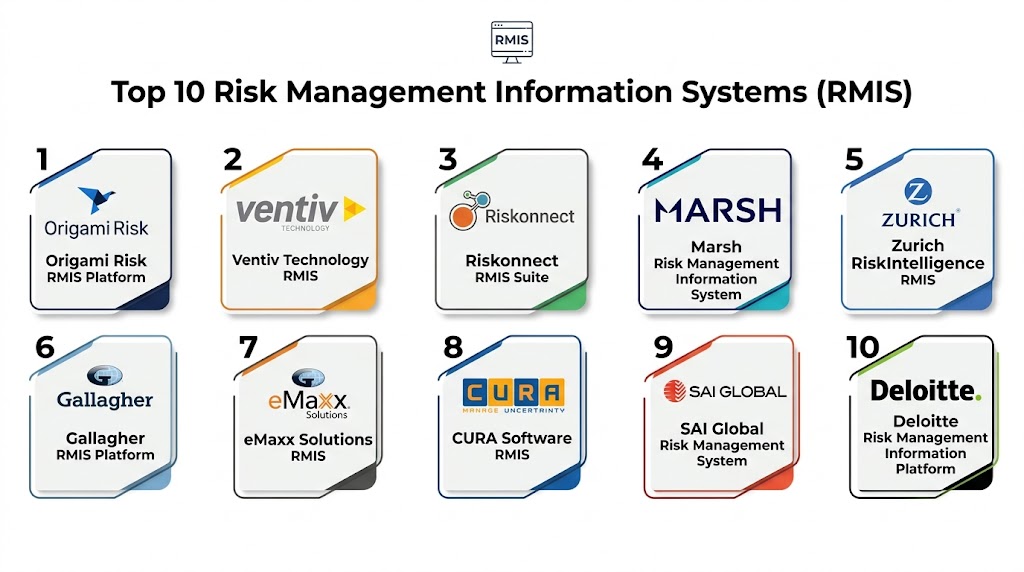
Top 10 Risk Management Information Systems (RMIS)
#1 — Origami Risk Platform
Short description: Origami Risk is a leading RMIS platform that provides enterprise-grade risk, claims, safety, and compliance management. It centralizes risk data and offers advanced analytics, automation, and reporting tools. It is widely used by insurers, corporations, and public sector organizations.
Key Features
- Incident and claims management
- Risk data centralization
- Safety and compliance tracking
- Automated workflows
- Advanced analytics dashboards
- Policy and coverage tracking
- Vendor risk management
Pros
- Strong enterprise adoption
- Highly configurable workflows
- Excellent reporting capabilities
- Unified risk + claims platform
Cons
- Complex implementation
- Enterprise pricing
- Requires training for full use
- Integration effort needed
Platforms / Deployment
- Web
- Cloud
Security & Compliance
- RBAC
- MFA
- Encryption
- Audit logging
Integrations & Ecosystem
Integrates with enterprise insurance and operational systems.
- ERP systems
- HR platforms
- Insurance systems
- BI tools
- APIs
Support & Community
Strong enterprise risk management support and consulting services.
#2 — Riskonnect RMIS
Short description: Riskonnect is a widely adopted RMIS platform offering risk management, incident tracking, compliance, and claims management capabilities. It provides unified dashboards for enterprise risk visibility and supports multiple risk domains.
Key Features
- Enterprise risk management
- Incident and claims tracking
- Compliance management
- Vendor risk monitoring
- Risk analytics dashboards
- Workflow automation
- Audit management
Pros
- Strong enterprise risk visibility
- Flexible configuration
- Good analytics and reporting
- Wide industry adoption
Cons
- Complex setup
- High enterprise cost
- Requires onboarding effort
- UI learning curve
Platforms / Deployment
- Web
- Cloud
Security & Compliance
- RBAC
- MFA
- Encryption
- Audit logs
Integrations & Ecosystem
Integrates with enterprise systems and insurance tools.
- ERP platforms
- HR systems
- Insurance systems
- Data warehouses
- APIs
Support & Community
Strong global enterprise support.
#3 — Ventiv IRM (Integrated Risk Management)
Short description: Ventiv IRM provides risk, claims, and safety management in a unified platform designed for enterprises and insurers. It enables organizations to track incidents, manage claims, and monitor risk exposure in real time.
Key Features
- Risk and claims management
- Incident tracking
- Safety management
- Compliance workflows
- Analytics dashboards
- Policy tracking
- Vendor risk management
Pros
- Strong insurance alignment
- Good claims integration
- Scalable enterprise system
- Robust reporting tools
Cons
- Complex deployment
- Requires configuration expertise
- Enterprise pricing
- Integration effort required
Platforms / Deployment
- Web
- Cloud
Security & Compliance
- RBAC
- MFA
- Encryption
- Audit logs
Integrations & Ecosystem
Integrates with insurance and enterprise systems.
- Insurance platforms
- ERP systems
- HR tools
- BI systems
- APIs
Support & Community
Enterprise-level support and consulting.
#4 — Origami Risk Claims + Safety Suite
Short description: This suite extends Origami’s RMIS capabilities into claims and safety management, enabling organizations to manage workplace incidents, claims workflows, and risk mitigation programs in one system.
Key Features
- Claims lifecycle management
- Safety incident reporting
- Risk scoring
- Compliance tracking
- Workflow automation
- Analytics dashboards
- Audit trails
Pros
- Unified claims and risk system
- Strong safety workflows
- High configurability
- Good enterprise scalability
Cons
- Complex onboarding
- Enterprise cost structure
- Requires training
- Integration effort
Platforms / Deployment
- Web
- Cloud
Security & Compliance
- RBAC
- MFA
- Encryption
- Audit logs
Integrations & Ecosystem
Integrates with enterprise systems.
- Insurance systems
- ERP tools
- HR systems
- Analytics platforms
- APIs
Support & Community
Strong enterprise support.
#5 — SAI360 Risk Management
Short description: SAI360 is an integrated risk management platform that combines compliance, ethics, risk, and ESG management. It is widely used for enterprise governance and regulatory compliance programs.
Key Features
- Risk and compliance management
- ESG tracking
- Incident reporting
- Audit management
- Policy management
- Training modules
- Analytics dashboards
Pros
- Strong governance capabilities
- Good ESG integration
- Comprehensive compliance tools
- Scalable platform
Cons
- Complex configuration
- Enterprise pricing
- Requires training
- Integration effort needed
Platforms / Deployment
- Web
- Cloud
Security & Compliance
- RBAC
- MFA
- Encryption
- Audit logs
Integrations & Ecosystem
Integrates with enterprise governance systems.
- ERP platforms
- HR systems
- Compliance tools
- BI systems
- APIs
Support & Community
Strong governance and compliance support.
#6 — Resolver RMIS
Short description: Resolver provides enterprise risk management software focusing on incident tracking, risk assessments, audit management, and compliance workflows. It is widely used in corporate risk and security environments.
Key Features
- Incident management
- Risk assessments
- Audit workflows
- Compliance tracking
- Risk dashboards
- Workflow automation
- Case management
Pros
- Strong usability
- Good risk visualization
- Flexible workflows
- Fast deployment
Cons
- Limited advanced analytics
- Enterprise customization needed
- Integration effort required
- Moderate scalability
Platforms / Deployment
- Web
- Cloud
Security & Compliance
- RBAC
- MFA
- Encryption
- Audit logs
Integrations & Ecosystem
Integrates with enterprise systems.
- ERP systems
- HR platforms
- BI tools
- Security systems
- APIs
Support & Community
Active enterprise support community.
#7 — LogicManager RMIS
Short description: LogicManager is an enterprise governance, risk, and compliance (GRC) platform that includes RMIS capabilities. It helps organizations identify, assess, and manage risk across departments.
Key Features
- Risk assessment tools
- Compliance management
- Incident tracking
- Audit workflows
- Vendor risk management
- Reporting dashboards
- Policy management
Pros
- Strong GRC integration
- Good risk visibility
- Flexible framework
- Scalable for enterprises
Cons
- Requires configuration
- Learning curve
- Enterprise pricing
- Integration complexity
Platforms / Deployment
- Web
- Cloud
Security & Compliance
- RBAC
- MFA
- Encryption
- Audit logs
Integrations & Ecosystem
Integrates with enterprise governance systems.
- ERP platforms
- HR systems
- Compliance tools
- BI platforms
- APIs
Support & Community
Strong enterprise governance support.
#8 — RiskWatch RMIS
Short description: RiskWatch provides risk assessment and compliance management software focused on enterprise risk visibility and regulatory compliance. It helps organizations automate risk scoring and reporting.
Key Features
- Risk assessments
- Compliance tracking
- Audit workflows
- Risk scoring models
- Reporting dashboards
- Vendor risk management
- Analytics tools
Pros
- Strong compliance focus
- Good risk scoring models
- Easy reporting tools
- Flexible deployment
Cons
- Limited claims management
- Moderate ecosystem
- Requires setup effort
- Less enterprise depth
Platforms / Deployment
- Web
- Cloud
Security & Compliance
- RBAC
- Encryption
- Audit logs
Integrations & Ecosystem
Integrates with enterprise tools.
- ERP systems
- BI tools
- Compliance systems
- HR platforms
- APIs
Support & Community
Standard enterprise support.
#9 — Camms.Risk
Short description: Camms.Risk is a cloud-based risk management platform that provides risk identification, assessment, and reporting tools. It is widely used in public sector and enterprise risk programs.
Key Features
- Risk registers
- Incident tracking
- Compliance management
- Audit workflows
- Dashboards and reporting
- Risk scoring
- Workflow automation
Pros
- Easy-to-use interface
- Strong risk visualization
- Cloud-native platform
- Good reporting tools
Cons
- Limited claims integration
- Moderate analytics depth
- Requires customization
- Enterprise scaling limits
Platforms / Deployment
- Web
- Cloud
Security & Compliance
- RBAC
- MFA
- Encryption
- Audit logs
Integrations & Ecosystem
Integrates with enterprise systems.
- ERP platforms
- HR systems
- BI tools
- API systems
- Data platforms
Support & Community
Good global support for enterprise users.
#10 — OneTrust Risk Management
Short description: OneTrust provides risk management as part of its broader governance, privacy, and compliance platform. It focuses heavily on enterprise risk, third-party risk, and compliance automation.
Key Features
- Third-party risk management
- Compliance tracking
- Risk assessments
- Vendor onboarding workflows
- Audit management
- Reporting dashboards
- Policy management
Pros
- Strong governance ecosystem
- Excellent third-party risk tools
- High enterprise adoption
- Strong compliance capabilities
Cons
- Complex implementation
- Enterprise pricing
- Requires training
- Overkill for smaller firms
Platforms / Deployment
- Web
- Cloud
Security & Compliance
- RBAC
- MFA
- Encryption
- Audit logs
Integrations & Ecosystem
Integrates with enterprise governance systems.
- ERP systems
- HR platforms
- Security tools
- BI systems
- APIs
Support & Community
Strong enterprise compliance ecosystem.
Comparison Table
| Tool Name | Best For | Platform(s) Supported | Deployment | Standout Feature | Public Rating |
|---|---|---|---|---|---|
| Origami Risk | Enterprise RMIS | Web | Cloud | Claims + risk integration | N/A |
| Riskonnect | Enterprise risk | Web | Cloud | Unified risk dashboards | N/A |
| Ventiv IRM | Insurance risk | Web | Cloud | Claims + safety integration | N/A |
| SAI360 | Governance & ESG | Web | Cloud | Compliance + ESG tools | N/A |
| Resolver | Security & risk ops | Web | Cloud | Incident management | N/A |
| LogicManager | GRC programs | Web | Cloud | Risk governance framework | N/A |
| RiskWatch | Compliance focus | Web | Cloud | Risk scoring engine | N/A |
| Camms.Risk | Public sector | Web | Cloud | Risk visualization tools | N/A |
| OneTrust | Third-party risk | Web | Cloud | Vendor risk automation | N/A |
| Ventiv Suite | Claims-heavy orgs | Web | Cloud | Insurance risk integration | N/A |
Evaluation & Scoring of RMIS Platforms
| Tool Name | Core (25%) | Ease (15%) | Integrations (15%) | Security (10%) | Performance (10%) | Support (10%) | Value (15%) | Weighted Total |
|---|---|---|---|---|---|---|---|---|
| Origami Risk | 9 | 7 | 9 | 9 | 9 | 9 | 7 | 8.4 |
| Riskonnect | 9 | 7 | 9 | 9 | 9 | 9 | 7 | 8.4 |
| Ventiv IRM | 8 | 7 | 8 | 9 | 8 | 8 | 7 | 7.9 |
| SAI360 | 8 | 7 | 8 | 9 | 8 | 8 | 7 | 7.9 |
| Resolver | 8 | 8 | 8 | 8 | 8 | 8 | 7 | 7.9 |
| LogicManager | 8 | 7 | 8 | 9 | 8 | 8 | 7 | 7.8 |
| RiskWatch | 7 | 8 | 7 | 8 | 8 | 8 | 7 | 7.6 |
| Camms.Risk | 7 | 8 | 7 | 8 | 8 | 8 | 7 | 7.6 |
| OneTrust | 8 | 7 | 9 | 9 | 8 | 8 | 7 | 8.0 |
| Ventiv Suite | 8 | 7 | 8 | 9 | 8 | 8 | 7 | 7.9 |
Which RMIS Platform Is Right for You?
Small Organizations
Smaller firms should prioritize usability and quick deployment. Resolver and Camms.Risk are suitable entry-level RMIS options.
Mid-Market Enterprises
Mid-sized organizations benefit from balanced functionality and scalability. LogicManager, SAI360, and RiskWatch are strong choices.
Large Enterprises
Large corporations and insurers require full-scale RMIS with claims integration and analytics. Origami Risk, Riskonnect, and Ventiv IRM are best suited.
Insurance-Focused Organizations
Insurance-heavy environments benefit from platforms like Origami Risk, Ventiv IRM, and Riskonnect.
Budget vs Premium
Budget tools focus on risk tracking and reporting, while premium platforms provide claims integration, AI analytics, and enterprise automation.
Feature Depth vs Ease of Use
Advanced RMIS tools offer deep analytics but require configuration, while simpler tools prioritize usability.
Integrations & Scalability
Ensure integration with ERP, HR, insurance, and BI systems for full enterprise visibility.
Security & Compliance Needs
RMIS platforms must support RBAC, MFA, encryption, audit trails, and regulatory governance frameworks.
Frequently Asked Questions
1- What is an RMIS system?
An RMIS is software that helps organizations manage risk data, incidents, compliance, insurance claims, and audits in a centralized system.
2- Who uses RMIS platforms?
Enterprises, insurers, healthcare organizations, manufacturers, and government agencies use RMIS tools.
3- What data do RMIS systems manage?
They manage risk incidents, insurance claims, audits, compliance records, vendor risks, and safety data.
4- Do RMIS tools use AI?
Yes, modern RMIS platforms use AI for risk prediction, anomaly detection, and scoring.
5- Are RMIS systems cloud-based?
Most modern RMIS platforms are cloud-native or hybrid.
6- What is the biggest benefit of RMIS?
Centralized risk visibility and improved decision-making across the organization.
7- Can RMIS integrate with ERP systems?
Yes, most platforms integrate with ERP, HR, and insurance systems.
8- What is third-party risk management?
It is tracking and assessing risks from vendors and external partners.
9- Is RMIS only for insurance companies?
No, it is used across many industries including healthcare, manufacturing, and government.
10- What is the main challenge of RMIS?
Implementation complexity and system integration across enterprise platforms.
Conclusion
Risk Management Information Systems (RMIS) are essential for modern enterprises seeking to centralize risk, compliance, claims, and operational safety data. These platforms enable organizations to move from reactive risk handling to proactive risk prevention through analytics, automation, and AI-driven insights. Enterprise leaders should evaluate integration capabilities, scalability, and workflow depth before selecting a platform. The right RMIS solution can significantly improve governance, reduce losses, and strengthen organizational resilience.

This article provides a clear overview of risk management information systems and explains how they help organizations track claims, manage compliance, and reduce operational risks more efficiently. It also gives useful insights into how RMIS platforms improve reporting and overall risk visibility across businesses.
A Risk Management Information System becomes far more valuable when it helps organizations identify emerging patterns rather than simply recording historical incidents. Correlating claims, operational events, audit findings, and external risk indicators can reveal trends that individual reports might miss. Exploring predictive analytics, cross-domain risk intelligence, and executive decision support would add valuable insight into how RMIS platforms can drive proactive risk management instead of functioning primarily as record-keeping systems.