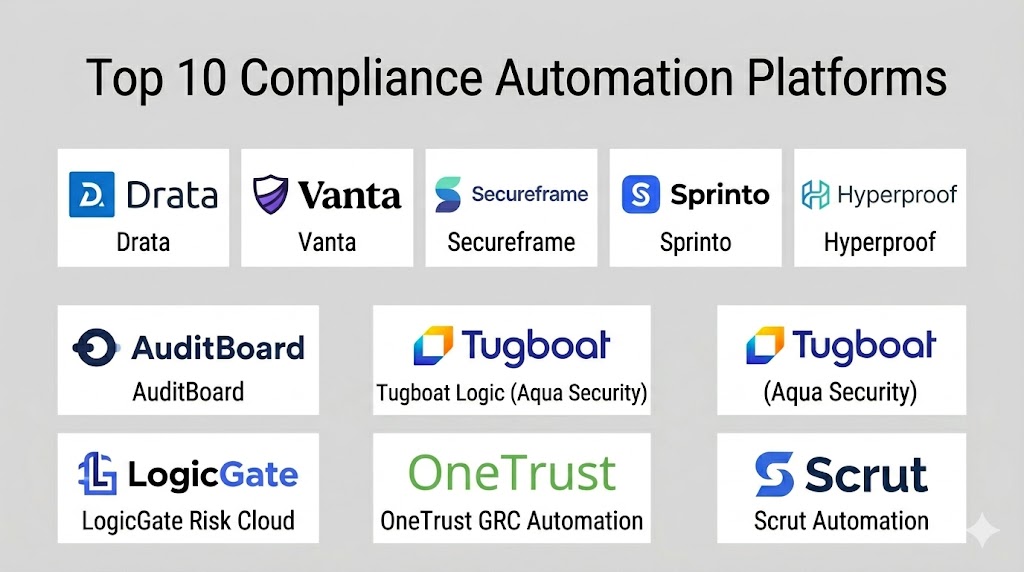
Introduction
Compliance Automation Platforms are tools that help organizations automatically manage regulatory compliance, security standards, audit readiness, and risk controls across their IT systems, cloud infrastructure, and business processes. Instead of manually collecting evidence and preparing audits, these platforms continuously monitor systems and generate compliance reports in real time.
In 2026 and beyond, compliance has become more complex due to multi-cloud adoption, AI-driven systems, global regulations (GDPR, HIPAA, SOC 2, ISO 27001, DORA, NIS2), and faster audit cycles. Manual compliance management is no longer scalable for modern enterprises.
Common use cases include SOC 2 and ISO 27001 certification readiness, continuous compliance monitoring, automated evidence collection, vendor risk management, audit reporting, policy enforcement, and regulatory change tracking.
Buyers should evaluate automation depth, framework coverage, integration ecosystem, real-time monitoring capability, evidence collection accuracy, risk mapping, scalability, reporting flexibility, security controls, and ease of audit preparation.
Best for: security teams, GRC teams, compliance officers, SaaS companies, fintech organizations, healthcare providers, and enterprises managing multi-framework compliance.
Not ideal for: very small businesses with minimal regulatory requirements or teams without cloud-based infrastructure.
Key Trends in Compliance Automation Platforms
- Continuous compliance monitoring replaces point-in-time audits
- AI-driven control testing and evidence collection is becoming standard
- Unified GRC platforms combining risk, audit, and compliance workflows
- Policy-as-code automation for infrastructure compliance enforcement
- Real-time audit readiness dashboards are replacing manual reporting
- Regulatory change tracking using AI + knowledge graphs
- Deep integration with cloud providers (AWS, Azure, GCP)
- Automated vendor and third-party risk assessment is expanding
- Zero trust + compliance convergence across identity and access controls
- GenAI-assisted audit documentation and compliance reporting is emerging
How We Selected These Tools
- Focused on platforms offering continuous compliance automation capabilities
- Included both pure compliance automation and full GRC platforms
- Prioritized tools with evidence collection and audit readiness features
- Evaluated support for major compliance frameworks (SOC 2, ISO 27001, HIPAA, GDPR, NIST)
- Considered integration with cloud infrastructure and SaaS tools
- Included AI-driven compliance and policy automation solutions
- Reviewed scalability for enterprise and mid-market organizations
- Ensured support for multi-framework compliance management
- Included tools used in modern DevSecOps and GRC environments
- Used Not publicly stated where compliance or ratings are unknown
Top 10 Compliance Automation Platforms
1- Vanta
Short description: Vanta is a leading compliance automation platform that helps organizations continuously monitor security controls, collect audit evidence, and maintain readiness for frameworks like SOC 2, ISO 27001, and HIPAA. It is widely used by SaaS companies and startups scaling security compliance.
Key Features
- Continuous compliance monitoring
- Automated evidence collection
- Pre-built compliance frameworks
- Risk management dashboards
- Vendor security assessments
- Access control monitoring
- Audit readiness reporting
Pros
- Extremely fast audit readiness
- Strong automation capabilities
- Easy integration with cloud tools
- Widely adopted in SaaS ecosystem
Cons
- Can become expensive at scale
- Limited deep customization
- Best suited for standard frameworks
- Requires dependency on integrations
Platforms / Deployment
Cloud-based SaaS platform
Security & Compliance
Supports encryption, RBAC, audit logging, and secure integrations. Compliance certifications are Not publicly stated.
Integrations & Ecosystem
- AWS, Azure, GCP
- SaaS applications
- Identity providers
- HR systems
- DevOps tools
Support & Community
Strong onboarding support and enterprise customer success programs.
2- Drata
Short description: Drata is a compliance automation platform that continuously monitors security controls and automatically collects evidence to maintain audit readiness across multiple compliance frameworks.
Key Features
- Continuous control monitoring
- Automated audit evidence collection
- Compliance dashboard
- Risk management workflows
- Security posture tracking
- Framework mapping (SOC 2, ISO, HIPAA)
- Third-party integrations
Pros
- Strong continuous monitoring engine
- Excellent automation depth
- Good scalability for growing companies
- Reduces manual audit workload significantly
Cons
- Pricing can scale quickly
- Requires integration setup effort
- Limited offline capabilities
- Some advanced features require tuning
Platforms / Deployment
Cloud-based SaaS platform
Security & Compliance
Includes encryption, RBAC, and audit logs. Compliance details are Not publicly stated.
Integrations & Ecosystem
- Cloud providers
- Identity systems
- SaaS applications
- Security tools
- APIs
Support & Community
Strong enterprise support and compliance onboarding assistance.
3- Secureframe
Short description: Secureframe is a compliance automation platform designed to simplify SOC 2, ISO 27001, HIPAA, and PCI DSS compliance through continuous monitoring and automated evidence collection.
Key Features
- Continuous compliance monitoring
- Automated evidence gathering
- Compliance framework templates
- Risk assessment tools
- Vendor security management
- Policy management
- Audit workflows
Pros
- Easy to use for non-technical teams
- Fast compliance onboarding
- Strong framework coverage
- Good automation for audits
Cons
- Limited advanced customization
- Smaller ecosystem than leaders
- Pricing increases with scale
- Less suitable for complex enterprises
Platforms / Deployment
Cloud-based SaaS platform
Security & Compliance
Includes encryption and access controls. Compliance is Not publicly stated.
Integrations & Ecosystem
- Cloud platforms
- SaaS tools
- Identity providers
- HR systems
- API integrations
Support & Community
Good customer support and onboarding services.
4- Sprinto
Short description: Sprinto is a compliance automation platform that helps cloud-native companies maintain continuous compliance with frameworks like SOC 2 and ISO 27001.
Key Features
- Automated compliance workflows
- Continuous control monitoring
- Evidence collection automation
- Cloud security tracking
- Audit readiness dashboards
- Risk management tools
- Policy enforcement
Pros
- Strong cloud-native focus
- Fast deployment
- Good automation capabilities
- Suitable for SaaS companies
Cons
- Limited enterprise customization
- Smaller ecosystem
- Requires integration dependency
- Some learning curve
Platforms / Deployment
Cloud-based SaaS platform
Security & Compliance
Includes RBAC, encryption, and audit logging. Compliance is Not publicly stated.
Integrations & Ecosystem
- AWS, Azure, GCP
- SaaS tools
- Identity providers
- DevOps systems
- APIs
Support & Community
Strong support for startup and mid-market customers.
5- Hyperproof
Short description: Hyperproof is a GRC and compliance automation platform that centralizes compliance programs, audit workflows, and risk management into a unified system.
Key Features
- Compliance program management
- Evidence tracking and automation
- Risk assessment workflows
- Audit preparation tools
- Control mapping
- Policy management
- Reporting dashboards
Pros
- Strong enterprise compliance capabilities
- Good multi-framework support
- Flexible workflows
- Strong audit readiness features
Cons
- Complex setup for beginners
- Requires process maturity
- UI can feel dense
- Enterprise-focused pricing
Platforms / Deployment
Cloud-based SaaS platform
Security & Compliance
Includes encryption, RBAC, and audit trails. Compliance is Not publicly stated.
Integrations & Ecosystem
- Cloud platforms
- GRC systems
- SaaS tools
- APIs
- Identity providers
Support & Community
Strong enterprise support and onboarding programs.
6- LogicGate Risk Cloud
Short description: LogicGate Risk Cloud is a no-code GRC platform that enables organizations to build custom compliance and risk workflows with high flexibility and automation.
Key Features
- No-code workflow builder
- Compliance automation engine
- Risk management dashboards
- Audit tracking system
- Policy lifecycle management
- Vendor risk management
- Reporting and analytics
Pros
- Highly customizable workflows
- Strong enterprise flexibility
- Good scalability
- Suitable for complex compliance needs
Cons
- Long implementation time
- Requires skilled administrators
- Steeper learning curve
- Complex configuration
Platforms / Deployment
Cloud-based SaaS platform
Security & Compliance
Includes enterprise security controls. Compliance is Not publicly stated.
Integrations & Ecosystem
- Enterprise SaaS tools
- Cloud systems
- APIs
- ITSM platforms
- Identity providers
Support & Community
Strong enterprise onboarding and consulting support.
7- OneTrust
Short description: OneTrust is a leading privacy, risk, and compliance platform that helps organizations manage data privacy regulations and compliance frameworks at scale.
Key Features
- Privacy compliance automation
- Data mapping and governance
- Risk management tools
- Vendor risk assessments
- Consent management
- Policy lifecycle automation
- Audit reporting
Pros
- Strong privacy compliance capabilities
- Excellent enterprise scalability
- Wide regulatory coverage
- Strong third-party risk tools
Cons
- Complex platform structure
- High cost for enterprise use
- Requires implementation effort
- UI complexity
Platforms / Deployment
Cloud-based SaaS platform
Security & Compliance
Enterprise-grade security with RBAC, encryption, and audit logging. Compliance is Not publicly stated.
Integrations & Ecosystem
- SaaS applications
- Cloud providers
- Identity systems
- Data platforms
- APIs
Support & Community
Strong global enterprise support.
8- ServiceNow GRC
Short description: ServiceNow GRC is an enterprise-grade governance, risk, and compliance platform that automates compliance workflows and integrates deeply with IT operations.
Key Features
- Risk and compliance management
- Automated control monitoring
- Audit workflow automation
- Policy lifecycle management
- Incident integration
- Reporting dashboards
- Regulatory tracking
Pros
- Strong enterprise workflow automation
- Deep ITSM integration
- Highly scalable platform
- Unified operations and compliance
Cons
- Complex implementation
- Expensive enterprise licensing
- Requires platform expertise
- Overkill for SMBs
Platforms / Deployment
Cloud-based enterprise platform
Security & Compliance
Includes enterprise RBAC, audit logs, and encryption. Compliance is Not publicly stated.
Integrations & Ecosystem
- ITSM tools
- Cloud platforms
- Security systems
- DevOps tools
- APIs
Support & Community
Strong enterprise support ecosystem.
9- MetricStream
Short description: MetricStream is a mature enterprise GRC platform that supports compliance automation, risk management, and audit workflows across large organizations.
Key Features
- Enterprise compliance management
- Risk assessment frameworks
- Audit management tools
- Regulatory compliance tracking
- Control testing automation
- Reporting and dashboards
- Third-party risk management
Pros
- Strong enterprise GRC depth
- Highly scalable platform
- Good regulatory alignment
- Mature ecosystem
Cons
- Complex deployment
- High cost structure
- Requires training
- Less modern UX
Platforms / Deployment
Cloud and hybrid environments
Security & Compliance
Enterprise security controls included. Compliance is Not publicly stated.
Integrations & Ecosystem
- Enterprise systems
- Cloud platforms
- APIs
- Security tools
- IT systems
Support & Community
Strong enterprise consulting and support services.
10- Workiva
Short description: Workiva is a compliance and reporting platform that automates financial, audit, and regulatory reporting with strong data integrity controls.
Key Features
- Regulatory reporting automation
- Audit workflow management
- Data linking and validation
- Compliance documentation tools
- Risk reporting dashboards
- Collaboration tools
- Governance workflows
Pros
- Strong financial compliance focus
- Excellent reporting accuracy
- Good collaboration features
- Trusted enterprise platform
Cons
- Less focused on real-time security compliance
- High enterprise cost
- Requires structured data input
- Limited DevSecOps integration
Platforms / Deployment
Cloud-based SaaS platform
Security & Compliance
Includes encryption, RBAC, and audit logging. Compliance is Not publicly stated.
Integrations & Ecosystem
- ERP systems
- Finance tools
- Enterprise SaaS
- APIs
- Reporting systems
Support & Community
Strong enterprise support and training programs.
Comparison Table
| Tool Name | Best For | Platforms Supported | Deployment | Standout Feature | Public Rating |
|---|---|---|---|---|---|
| Vanta | SaaS compliance automation | Cloud | Cloud | Fast audit readiness | N/A |
| Drata | Continuous compliance | Cloud | Cloud | Real-time monitoring | N/A |
| Secureframe | SMB compliance | Cloud | Cloud | Easy onboarding | N/A |
| Sprinto | Cloud-native startups | Cloud | Cloud | Fast automation setup | N/A |
| Hyperproof | Enterprise compliance | Cloud | Cloud | Audit workflows | N/A |
| LogicGate | Custom workflows | Cloud | Cloud | No-code GRC builder | N/A |
| OneTrust | Privacy compliance | Cloud | Cloud | Data privacy leadership | N/A |
| ServiceNow GRC | Enterprise IT compliance | Cloud | Cloud | Workflow automation | N/A |
| MetricStream | Large enterprises | Cloud/Hybrid | Hybrid | Mature GRC suite | N/A |
| Workiva | Financial compliance | Cloud | Cloud | Reporting automation | N/A |
Evaluation & Scoring of Compliance Automation Platforms
| Tool Name | Core 25% | Ease 15% | Integrations 15% | Security 10% | Performance 10% | Support 10% | Value 15% | Weighted Total |
|---|---|---|---|---|---|---|---|---|
| Vanta | 9.4 | 9.0 | 9.2 | 9.0 | 9.0 | 9.0 | 8.8 | 9.1 |
| Drata | 9.3 | 8.8 | 9.2 | 9.0 | 9.0 | 9.0 | 8.7 | 9.0 |
| Secureframe | 8.9 | 9.2 | 8.8 | 8.8 | 8.8 | 8.8 | 9.0 | 8.8 |
| Sprinto | 8.8 | 9.0 | 8.8 | 8.8 | 8.8 | 8.7 | 8.9 | 8.8 |
| Hyperproof | 9.0 | 8.0 | 9.0 | 9.0 | 9.0 | 8.8 | 8.5 | 8.8 |
| LogicGate | 8.9 | 7.8 | 8.9 | 9.0 | 8.9 | 8.8 | 8.6 | 8.7 |
| OneTrust | 9.2 | 7.8 | 9.2 | 9.2 | 9.0 | 9.0 | 8.3 | 8.8 |
| ServiceNow GRC | 9.3 | 7.5 | 9.3 | 9.3 | 9.2 | 9.0 | 8.2 | 8.8 |
| MetricStream | 9.1 | 7.5 | 9.0 | 9.2 | 9.0 | 9.0 | 8.0 | 8.7 |
| Workiva | 8.9 | 8.5 | 8.8 | 9.0 | 8.8 | 8.8 | 8.6 | 8.8 |
Which Compliance Automation Platform Is Right for You?
Solo / Freelancer
Workiva or basic compliance tracking tools are enough for documentation-focused workflows.
SMB
Vanta, Drata, Secureframe, and Sprinto are ideal for fast compliance readiness.
Mid-Market
Hyperproof, OneTrust, and LogicGate provide stronger governance and workflow flexibility.
Enterprise
ServiceNow GRC, MetricStream, and OneTrust dominate large-scale compliance environments.
Budget vs Premium
Sprinto and Secureframe are cost-efficient, while ServiceNow and OneTrust are premium platforms.
Feature Depth vs Ease of Use
Vanta and Drata are easiest to adopt, while MetricStream and LogicGate offer deeper customization.
Integrations & Scalability
Enterprise tools should integrate with cloud platforms, identity systems, and DevOps pipelines.
Security & Compliance Needs
Organizations should prioritize continuous monitoring, audit readiness, and multi-framework support.
Frequently Asked Questions
1. What is a compliance automation platform?
A compliance automation platform is a tool that helps organizations manage regulatory requirements automatically. It continuously monitors systems for compliance. It collects audit evidence without manual effort. It simplifies certification processes.
2. Why is compliance automation important?
It reduces manual workload in audits and compliance tracking. It ensures continuous compliance instead of periodic checks. It improves accuracy and reduces human error. It speeds up audit readiness.
3. What frameworks do these tools support?
Most tools support SOC 2, ISO 27001, HIPAA, GDPR, PCI DSS, and NIST. Some also support regional regulations like DORA and NIS2. Coverage depends on vendor capabilities. Enterprise platforms support more frameworks.
4. How does compliance automation work?
It connects to cloud systems, SaaS apps, and infrastructure. It continuously monitors security controls. It collects evidence automatically. It generates compliance reports.
5. Are compliance platforms only for enterprises?
No, many platforms are designed for startups and SMBs. Tools like Vanta and Drata are widely used by SaaS startups. Enterprises use more advanced GRC platforms. SMB adoption is increasing rapidly.
6. Do these tools replace auditors?
No, they do not replace auditors. They simplify audit preparation. Auditors still verify compliance independently. These tools reduce audit effort significantly.
7. Are compliance tools secure?
Yes, they use encryption, RBAC, and audit logs. They follow industry security standards. However, security depends on vendor implementation. Enterprises should verify compliance certifications.
8. Do these tools integrate with cloud platforms?
Yes, most tools integrate with AWS, Azure, and Google Cloud. They also connect to SaaS apps and identity systems. Integration is essential for automation. It ensures accurate data collection.
9. Are compliance automation tools expensive?
Pricing varies widely based on scale and features. SMB tools are more affordable. Enterprise GRC platforms can be expensive. Cost depends on integrations and data volume.
10. What is the best compliance automation platform?
There is no single best platform. Vanta and Drata are leaders for SMBs and startups. ServiceNow and OneTrust are best for enterprises. The right choice depends on compliance needs.
Conclusion
Compliance automation platforms are essential in modern organizations because they eliminate manual compliance work and ensure continuous audit readiness across complex cloud and SaaS environments. Tools like Vanta, Drata, and Secureframe help startups achieve fast compliance, while enterprise platforms like ServiceNow GRC, MetricStream, and OneTrust provide deep governance and risk management capabilities. As regulatory complexity increases globally, these platforms are becoming a critical part of security, DevSecOps, and enterprise risk management strategies. The best choice depends on company size, compliance frameworks, and integration needs, but every organization benefits from automated compliance workflows and continuous monitoring.

This article clearly explains secure email gateway tools and how they help organizations protect against phishing, spam, and other email-based security threats before they reach inboxes.
Helpful comparison guide that clearly breaks down different compliance automation platforms, making it easier to understand their features, strengths, and practical business use cases.
An important consideration is whether the platform can continuously adapt to evolving regulations without creating excessive maintenance and audit overhead.